

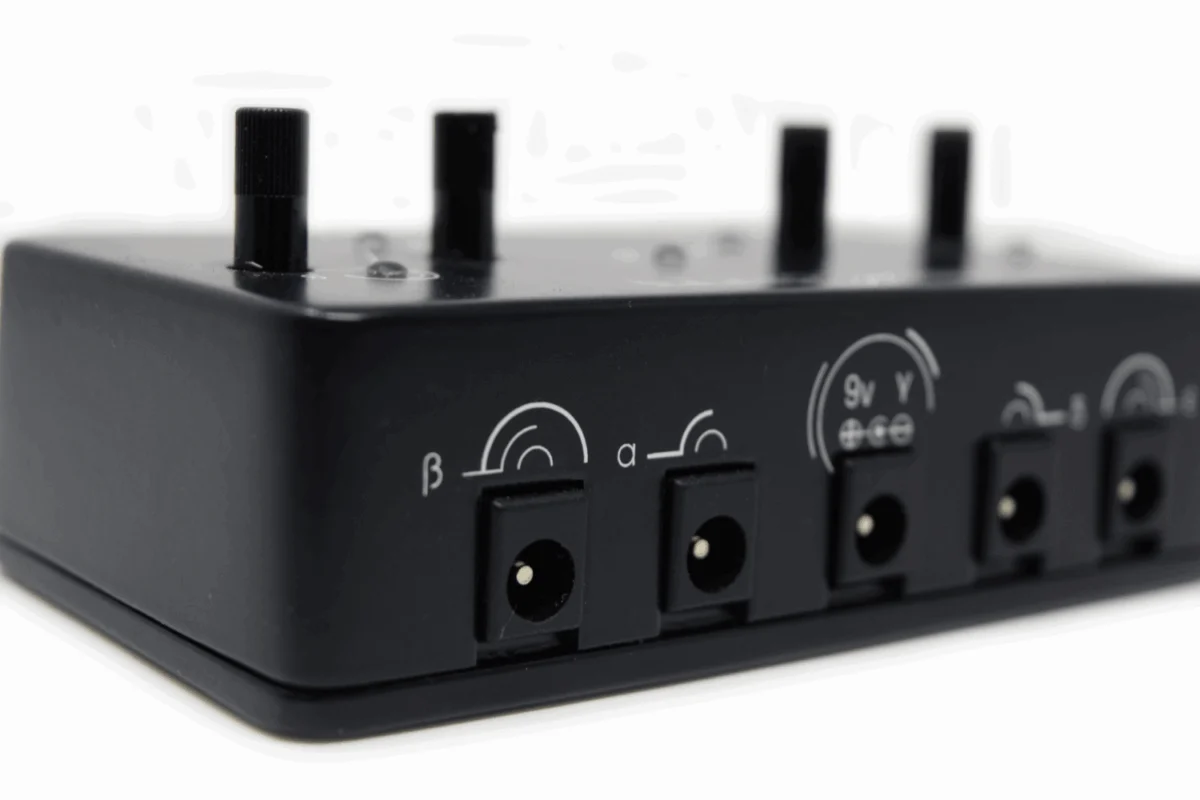
The Berlin-based boutique hardware manufacturer KOMA Elektronik has officially launched Kassiopeia, a specialized four-channel DC interface designed to translate digital and analog musical signals into physical motion. This sophisticated hardware solution allows musicians, sound designers, and installation artists to control a wide array of non-musical devices—including DC motors, solenoids, cooling fans, LEDs, and incandescent lamps—using standard MIDI or Control Voltage (CV/Gate) protocols. By providing a professional-grade bridge between the world of electronic sequencing and kinetic mechanical action, Kassiopeia addresses a growing demand for physical, tactile sound generation in both studio environments and live performance settings.
The release marks a significant milestone in the evolution of electro-acoustic instrumentation, offering a streamlined alternative to the complex, often fragile DIY circuitry previously required to integrate robotics into musical setups. Priced at $369 USD (approximately €298), the unit arrives as a complete ecosystem, with KOMA Elektronik simultaneously offering compatible DC motors and solenoids to ensure a seamless "out-of-the-box" experience for creators exploring the intersection of robotics and acoustics.
A Collaboration Rooted in Cinematic Innovation
The development of Kassiopeia was not an isolated engineering feat but rather a collaborative effort born from the rigorous demands of professional avant-garde performance. KOMA Elektronik worked in close partnership with the Academy Award-winning composer and cellist Hildur Guðnadóttir and her collaborative ensemble, Osmium. Guðnadóttir, widely acclaimed for her haunting, textural scores for films such as Joker and the television miniseries Chernobyl, has long been a pioneer in pushing the boundaries of what constitutes an acoustic instrument.
Central to this collaboration was the Halldorophone, a feedback-based string instrument developed by Halldór Úlfarsson. During the production of the Joker soundtrack and subsequent live performances with Osmium, the need arose for a more reliable method of manipulating physical instruments via automated systems. Osmium utilizes custom robotic string instruments that require precise control over solenoids and motors to strike, bow, or vibrate strings at specific intervals and intensities.
Kassiopeia incorporates the specific design requirements requested by these artists, ensuring that the interface can handle the high-current demands of physical actuators while maintaining the micro-timing precision required for musical rhythm. The device essentially acts as the "nervous system" for robotic ensembles, translating the compositional intent of a MIDI sequencer or a modular synthesizer into the physical striking of a drum or the spinning of a motorized resonator.
Technical Architecture and Versatility
At its core, Kassiopeia is a high-current power interface that interprets incoming data to regulate the flow of direct current (DC) to four independent channels. Each channel is designed to handle different types of physical tasks, categorized broadly into "triggers" and "continuous voltages."
For percussive applications, the interface can deliver short, high-energy bursts of power to solenoids. These electromagnetic actuators are commonly used to create "solenoid drummers," where a plunger physically strikes an object—such as a cymbal, a wooden block, or a found object—in response to a MIDI note. This allows for a level of dynamic variation and "human" imperfection that is difficult to replicate with digital samples, as the physical interaction between the solenoid and the instrument changes subtly with every hit.
For applications requiring sustained motion, such as controlling the speed of a DC motor or the brightness of a lamp, Kassiopeia provides continuous voltage control. This is particularly useful for creators building rotating speakers, motorized percussion (such as "hurdy-gurdy" style wheels), or automated lighting rigs that pulse in sync with a musical tempo. The ability to switch between these modes per channel makes the device an exceptionally flexible tool for multi-media installations.
The unit features a robust set of inputs, including standard 5-pin MIDI and 3.5mm CV/Gate jacks, making it compatible with everything from modern Digital Audio Workstations (DAWs) to vintage modular synthesizers. The integration of MIDI allows for velocity sensitivity, meaning a harder strike on a MIDI keyboard can translate to a higher voltage pulse to a solenoid, resulting in a louder physical sound.
The Evolution of Kinetic Sound: A Chronological Context
The launch of Kassiopeia is the latest chapter in a long history of mechanical music, but it represents a modern shift toward accessibility. To understand its impact, one must look at the chronology of automated instrumentation.
In the early 20th century, player pianos and orchestrions used punched paper rolls to trigger mechanical actions. By the 1960s and 70s, composers like Pierre Bastien began experimenting with "mechanical orchestras" built from Meccano parts and simple motors. However, these systems were largely bespoke and difficult to synchronize with the emerging world of electronic music.
In the 2010s, KOMA Elektronik established itself as a leader in this niche field with the release of the "Field Kit" and "Field Kit FX." These devices encouraged musicians to find sounds in the "real world" using contact microphones and electromagnetic sensors. The Field Kit included a basic DC output for small motors, but it was limited in power and scale.
Kassiopeia represents the professional scaling of these concepts. Where previous tools were designed for experimental hobbyists, Kassiopeia is built for the touring professional. Its development timeline reflects a move from the "bench-top experiment" to the "stadium stage," catalyzed by the high-stakes requirements of Guðnadóttir’s international performances.
Industry Implications and Market Analysis
The introduction of a dedicated 4-channel DC interface at this price point suggests a maturing market for "kinetic audio." For decades, artists wishing to explore robotics were forced to learn Arduino programming and breadboard circuit design—skills that are often a barrier to entry for purely classically trained musicians or sound designers.
By providing a "plug-and-play" solution, KOMA Elektronik is effectively democratizing the field of musical robotics. This has several implications for the industry:
- The "Post-Digital" Aesthetic: As digital synthesis becomes increasingly perfect and ubiquitous, there is a counter-movement toward "tangible" sound. Kassiopeia allows artists to introduce the chaos and physical presence of real-world objects into their electronic compositions without the sterility of software emulation.
- Educational Applications: Institutions teaching music technology now have a standardized tool for demonstrating the principles of Control Voltage and mechanical transduction, providing students with a physical manifestation of their programming.
- Live Performance Reliability: For touring acts like Osmium, the reliability of hardware is paramount. Bespoke DIY rigs are prone to failure under the stress of travel and fluctuating power grids. A dedicated, encased interface like Kassiopeia provides the structural integrity needed for global tours.
Supporting Data and Technical Specifications
To support the heavy lifting required by mechanical actuators, Kassiopeia is designed with specific power tolerances. While standard modular synth signals are low-power, the solenoids and motors controlled by this interface often require significantly more amperage.
- Channels: 4 independent DC outputs.
- Control Inputs: MIDI (In/Thru) and CV/Gate (3.5mm).
- Functionality: Supports both momentary (Trigger) and latched (Gate) modes, as well as Pulse Width Modulation (PWM) for speed and brightness control.
- Power Compatibility: Designed to work with standard 9V-12V DC power supplies, capable of driving most common small-to-medium solenoids and hobbyist motors.
- Pricing: $369.00 USD / €298.00.
KOMA Elektronik has confirmed that the device is available for immediate shipping through their webshop and selected retailers. The company also stocks a curated selection of "Kassiopeia-ready" actuators, reducing the technical friction for newcomers who may not know which motors or solenoids are compatible with the voltage outputs of the device.
Official Responses and Artistic Impact
While formal press releases focus on the technical specifications, the artistic community’s reaction has centered on the creative freedom the device provides. Representatives from the development team at KOMA Elektronik noted that the goal was to create a tool that "disappears" into the workflow, allowing the artist to focus on the physical choreography of the sound rather than the underlying electronics.
Members of Osmium have signaled that the Kassiopeia interface was instrumental in achieving the specific "industrial-organic" sound of their latest projects. By automating the Halldorophone and other custom instruments, they have been able to create complex polyphonic rhythms that would be physically impossible for a human performer to execute on a single stringed instrument.
Future Outlook
As the boundaries between computer music, robotics, and traditional acoustic performance continue to blur, devices like Kassiopeia will likely become staples in the modern studio. The move toward "Physical Computing for Musicians" is a trend that shows no signs of slowing down.
Looking forward, the success of Kassiopeia may pave the way for even larger-scale interfaces or perhaps a new category of "smart" acoustic instruments designed from the ground up to be played by DC-driven actuators. For now, KOMA Elektronik has provided a powerful, reliable, and artist-tested solution for anyone looking to step out of the box and into the physical world of sound.
