

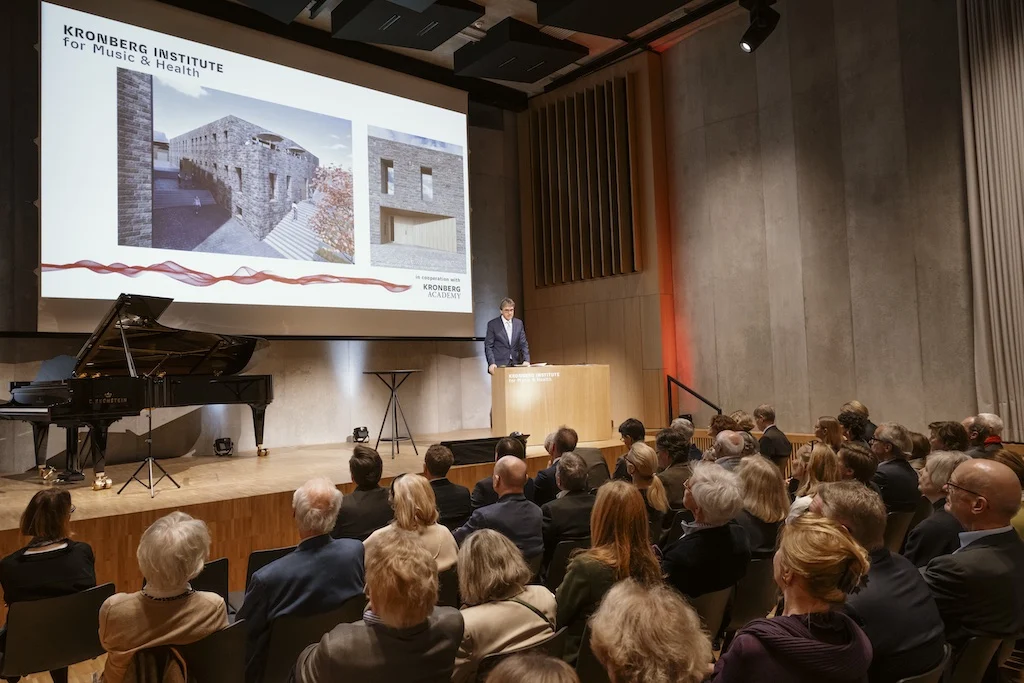
In a landmark development for both the international music community and the field of medical science, the Kronberg Institute for Music and Health has been officially established within the renowned Music Quarter of Kronberg im Taunus. Situated in the immediate vicinity of the Casals Forum and the world-renowned Kronberg Academy, this innovative research facility is designed to bridge the gap between high-level artistic performance and rigorous scientific inquiry. The institute aims to explore the profound effects of music on human health and psychological well-being through a multidisciplinary approach, utilizing state-of-the-art diagnostic tools such as motion-capture technology, pupillometry, and heart rate variability monitoring. By situating the research within a hub of musical excellence, the project seeks to move beyond sterile laboratory environments, instead capturing the transformative power of music as it occurs in real-time, high-stakes performance settings.
A Strategic Vision for Interdisciplinary Research
The founding of the Kronberg Institute for Music and Health (KIMH) represents a strategic expansion of Kronberg’s cultural footprint, evolving from a center for elite musical education into a holistic site for scientific discovery. The primary objective of the institute is to conduct interdisciplinary research into how music affects the human body and psyche. This mission is rooted in the pursuit of evidence-based findings that can be applied to preventative medicine, clinical therapy, and the enhancement of social participation.
To achieve this, the institute integrates perspectives from neurology, psychology, music pedagogy, and the performing arts. This collaborative framework ensures that the research is not only scientifically sound but also artistically relevant. The institute operates under the premise that music is a fundamental human resource—a biological and cultural tool that, when properly understood, can significantly improve quality of life and alleviate the burdens on modern healthcare systems.
Architectural Integration and the Strauss Family Philanthropy
The physical home of the institute will be an extension building of the Kronberg Academy located at Beethovenplatz. This new structure is designed to complement the existing architectural landscape of the Music Quarter, sitting adjacent to the Casals Forum, which is celebrated for its world-class acoustics. The realization of this ambitious building project has been made possible through a significant private donation from the Strauss family.
During the official ceremony marking the institute’s founding, Steffen Strauss emphasized that health promotion is a core tenet of the family’s entrepreneurial philosophy. By providing the necessary infrastructure, the Strauss family aims to create a dedicated space where the "healing and positive power of music" can be systematically harnessed for the public good. Construction is slated to begin in the autumn of 2026, with the full completion of the facility expected by the end of 2028. Once finished, the Kronberg Academy will take over the operational management of the building, ensuring a seamless integration with its existing educational and performance programs.
The Living Lab: Research Under Real-World Conditions
At the heart of the new extension is the "Living Lab," a specialized, smaller-scale concert hall designed specifically for scientific observation. Unlike traditional laboratories, which can often strip music of its emotional and social context, the Living Lab allows researchers to study audiences and performers under genuine concert conditions. This "in-vivo" approach is considered a game-changer in the field of music psychology and physiology.
The technological suite within the Living Lab is among the most advanced in the world. Motion-capture systems will track the physical synchrony between performers and listeners, providing data on how music influences non-verbal communication and physical relaxation. Pupillometry—the measurement of pupil dilation—will be used to gauge emotional arousal and cognitive engagement in real-time. Additionally, continuous heart rate monitoring will allow scientists to map the autonomic nervous system’s response to various musical structures and intensities.
Raimund Trenkler, the founder and Intendant of the Kronberg Academy, noted that while Kronberg has long been synonymous with artistic excellence, the new institute allows this "experiential space" to become a laboratory for the future. The goal is to quantify the "magic" of a live performance, providing a data-driven understanding of why music has such a profound impact on the human condition.
Scientific Leadership and International Expertise
The strategic and scientific direction of the Kronberg Institute for Music and Health is guided by a team of internationally recognized experts. The Foundation Board, responsible for the institute’s strategic orientation and international networking, is chaired by Prof. Dr. Michael Madeja. A distinguished neuroscientist and foundation manager, Madeja brings extensive experience in building research institutions and fostering interdisciplinary cooperation. He has publicly stated that the scientific application of music could serve as a vital tool for relieving the financial and structural pressures on the global healthcare system.
The Scientific Directorate, which oversees the specific research content, is led by Prof. Dr. Stefan Kölsch, a neuroscientist and music psychologist based at the University of Bergen, Norway. Kölsch, the author of the influential work Good Vibrations: The Healing Power of Music, has long advocated for moving research out of the lab and into the concert hall. He is joined by Prof. Dr. med. Eckart Altenmüller, a neurologist and pioneer in music physiology from Hanover, and Prof. Dr. Christian Gold, a renowned music therapy researcher from the University of Vienna and the University of Bergen. This trio represents the pinnacle of European research into the neurological and therapeutic benefits of sound.
Strengthening Existing Collaborations and Future Projects
Although the physical building is still in the planning phase, the institute’s research activities are already underway. A major focus of the KIMH is the expansion of existing partnerships with clinical and academic institutions. Current collaborators include the Hohe Mark Clinic in Oberursel and the Dr. Amelung Private Clinic in Königstein, where music-based interventions are being tested in psychiatric and psychosomatic settings.
Furthermore, the institute maintains a close relationship with the Goethe University Frankfurt. One of the flagship projects already in operation is the "Interactive Lecture Concerts for People with Dementia." This initiative combines high-level musical performance with scientific monitoring to explore how music can unlock memories and foster social connection in individuals with cognitive impairments. By analyzing the reactions of dementia patients in a controlled yet artistic environment, researchers hope to develop new protocols for cultural participation and elderly care.
The Max Planck Institute for Empirical Aesthetics in Frankfurt has also been secured as a key cooperation partner. This partnership is expected to yield significant insights into the fundamental nature of aesthetic perception and its physiological correlates.
Socio-Economic Implications and the Future of Music in Healthcare
The establishment of the Kronberg Institute for Music and Health comes at a time when healthcare providers worldwide are increasingly looking toward non-pharmacological interventions to manage chronic stress, neurological disorders, and age-related illnesses. The data generated in Kronberg could provide the empirical foundation needed for "social prescribing," where doctors prescribe musical engagement as part of a holistic treatment plan.
From an economic perspective, the institute’s work holds the potential to demonstrate the cost-effectiveness of music-based therapies. If music can reduce the need for sedative medications or shorten recovery times in clinical settings, the financial implications for insurance providers and public health budgets would be substantial. Professor Madeja has highlighted that the institute aims to be an international pioneer in this regard, positioning Germany at the forefront of the "Arts in Health" movement.
Timeline and Project Milestones
The roadmap for the Kronberg Institute for Music and Health is clearly defined:
- March 2026: Official announcement and constitution of the Foundation Board.
- Autumn 2026: Commencement of construction on the Beethovenplatz extension building.
- 2027: Expansion of pilot research projects with partner clinics and the Max Planck Institute.
- Late 2028: Completion of the extension building and the official opening of the Living Lab.
- 2029 and Beyond: Implementation of full-scale international longitudinal studies on music and longevity.
By systematically merging artistic excellence with scientific evidence, the Kronberg Institute for Music and Health is set to redefine music as more than just a cultural luxury. It is being positioned as a vital resource for health, human well-being, and social cohesion. As the project moves toward its 2028 completion, it promises to provide the global community with the tools to understand—and utilize—the healing power of music with unprecedented precision.
