

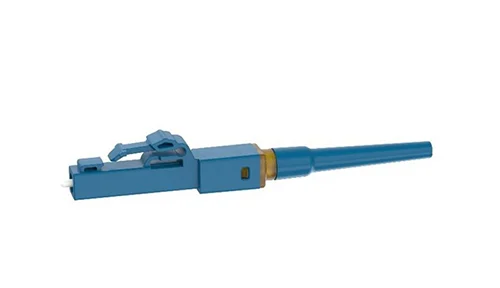
The global landscape of digital infrastructure is undergoing a radical transformation, driven by the insatiable demand for bandwidth and the rapid proliferation of Edge computing and hyperscale data centers. In response to these evolving requirements, Panduit, a global leader in physical network and electrical infrastructure solutions, has officially announced the launch of OmniSplice. This new generation of fusion-spliced fiber optic connectors is designed to streamline field terminations while ensuring the high-performance levels required by modern enterprise networks and mission-critical data environments. By integrating the splice point directly within the connector housing, Panduit aims to eliminate traditional installation bottlenecks, providing a pragmatic solution for high-density environments where space, speed, and precision are paramount.
The Evolution of Field Termination in Fiber Optics
For decades, network installers have faced a choice between the speed of mechanical splicing and the superior performance of fusion splicing. While mechanical connectors offered a quick setup, they often suffered from higher insertion loss and lower long-term reliability compared to fusion splicing. Conversely, traditional fusion splicing required the use of pigtails—short lengths of fiber with factory-installed connectors—which necessitated the use of bulky splice trays and complex cable management.
The introduction of OmniSplice represents a significant milestone in the chronology of fiber optic connectivity. By utilizing a "splice-on connector" (SOC) architecture, Panduit has effectively bridged the gap between field-installed convenience and factory-grade performance. This innovation arrives at a critical juncture as the industry transitions toward 400G and 800G Ethernet standards, where the margin for error in signal loss is narrower than ever before.
Technical Specifications and Design Innovations
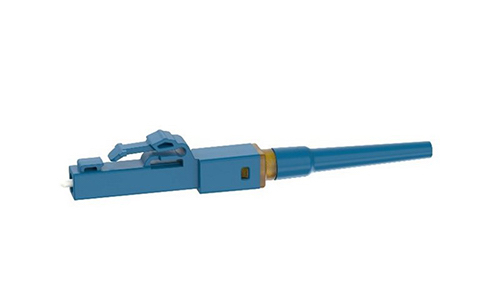
The OmniSplice system is engineered as a pre-polished splice connector, featuring a factory-cleaved fiber stub within the ferrule. This design ensures that the most critical part of the connection—the polished end-face—is handled in a controlled manufacturing environment, leaving only the fusion splice to be performed in the field.
One of the central technical breakthroughs of the OmniSplice is its specialized holder design. This component is compatible with a wide array of commercially available active-cladding or core-alignment fusion splicers. By ensuring compatibility with existing tools, Panduit allows contractors and maintenance teams to adopt the new technology without the need for significant capital expenditure on specialized proprietary equipment.
Furthermore, the integration of the splice point within the connector body itself offers several mechanical advantages. In traditional setups, the splice is a point of vulnerability that must be protected by a heat-shrink sleeve and stored in a tray. OmniSplice internalizes this protection, resulting in a compact form factor that is virtually indistinguishable from a standard factory-terminated LC or SC connector. This "pigtail-free" approach reduces the physical footprint of the connection, which is essential for high-density patch panels where airflow and cable routing are constant challenges.
Streamlining Installation Workflows and Reducing MAC Costs
In the realm of modern data center management, the frequency of Moves, Adds, and Changes (MACs) has increased significantly. Traditional termination methods can be time-consuming and prone to human error, especially when working under the pressure of tight maintenance windows. OmniSplice addresses these challenges by simplifying the termination process into a few repeatable steps.
The process begins with the preparation of the field fiber, followed by the fusion of the fiber to the internal stub of the OmniSplice connector. Because the connector uses a pre-cleaved stub and a dedicated holder, the alignment is nearly automatic. This reduces the "skill gap" often found in field installations, allowing technicians with varying levels of experience to achieve professional-grade results with minimal rework.
From an operational perspective, the elimination of pigtails and splice trays translates directly into reduced labor costs and simplified documentation. Project managers no longer need to account for the additional space required for splice management in their rack elevations. This efficiency is particularly beneficial in Edge computing deployments, where space is at a premium and sites are often located in remote or cramped environments.
Supporting Data: The Impact of Low Insertion Loss
In high-speed optical networking, the "link loss budget" is the total amount of signal attenuation allowed between a transmitter and a receiver. As data rates climb, these budgets shrink. Supporting data from industry benchmarks suggests that fusion splicing typically yields a loss of less than 0.1 dB per splice, whereas mechanical connectors can vary between 0.2 dB and 0.5 dB.
By utilizing fusion technology, OmniSplice ensures that field-terminated connections meet the stringent requirements of high-speed protocols like InfiniBand and 400G-DR4. Furthermore, the return loss—the amount of signal reflected back toward the source—is significantly improved with fusion splicing, which is vital for maintaining the integrity of sensitive optical transceivers.
Panduit’s internal testing indicates that the OmniSplice system maintains its mechanical and optical integrity across a wide temperature range and under significant tensile loads. This makes it an ideal candidate for industrial environments and telecommunications rooms that may not have the same climate-controlled precision as a primary data center.
Industry Reactions and Market Context
Industry analysts view the launch of OmniSplice as a strategic move by Panduit to consolidate its position in the fiber optic market. As organizations move away from traditional centralized architectures toward distributed Edge models, the demand for reliable, field-terminable solutions has surged.
"The industry is seeing a shift toward ‘plug-and-play’ infrastructure, but there will always be a need for field termination to accommodate custom cable lengths and rapid repairs," noted a leading telecommunications infrastructure consultant. "Panduit’s approach with OmniSplice acknowledges this reality by making fusion splicing as accessible and streamlined as possible. It removes the ‘fear factor’ associated with complex fiber terminations."
While official statements from Panduit emphasize the technical superiority of the product, the market also recognizes the logistical benefits. By providing a holistic fiber optic system—including cables, patch panels, and now the OmniSplice connectors—Panduit offers a "single pane of glass" for infrastructure procurement. This reduces compatibility issues and simplifies the warranty process for large-scale deployments.
Broader Implications for Infrastructure and Sustainability
The introduction of the OmniSplice system also carries implications for environmental sustainability and resource efficiency. Traditional pigtail splicing often results in significant waste, as excess fiber lengths are trimmed and discarded. Additionally, the need for large plastic splice trays adds to the material overhead of a project.
By eliminating the pigtail and the tray, OmniSplice reduces the total material volume required for a fiber installation. Over the course of a large-scale data center build-out involving tens of thousands of connections, these savings in plastic and fiber waste become substantial. Moreover, the increased density allowed by the pigtail-free design can lead to more efficient use of floor space, potentially reducing the energy required for cooling and lighting in the facility.
Looking forward, the success of solutions like OmniSplice will likely encourage further innovation in "active" termination technologies. As fiber-to-the-desk (FTTD) and 5G small cell deployments continue to grow, the ability to perform high-quality terminations in unconventional environments will remain a top priority for network engineers.
Conclusion: A New Standard for Fiber Connectivity
Panduit’s OmniSplice represents more than just a new product; it is a refinement of the field-termination philosophy. By prioritizing precision, compatibility, and simplicity, Panduit has addressed the most common pain points associated with fiber optic deployment. As the digital economy continues to expand, the reliability of the underlying physical layer remains the foundation upon which all other technological advancements are built.
With the launch of OmniSplice, Panduit reaffirms its commitment to providing comprehensive, end-to-end solutions for the modern enterprise. Whether it is a hyperscale data center, a regional Edge node, or a high-performance corporate LAN, the ability to deliver fast, reliable, and precise fiber terminations will be a key differentiator for organizations looking to stay ahead in an increasingly connected world. The integration of the splice within the connector housing marks a definitive step toward a more efficient and robust future for fiber optic infrastructure.
