

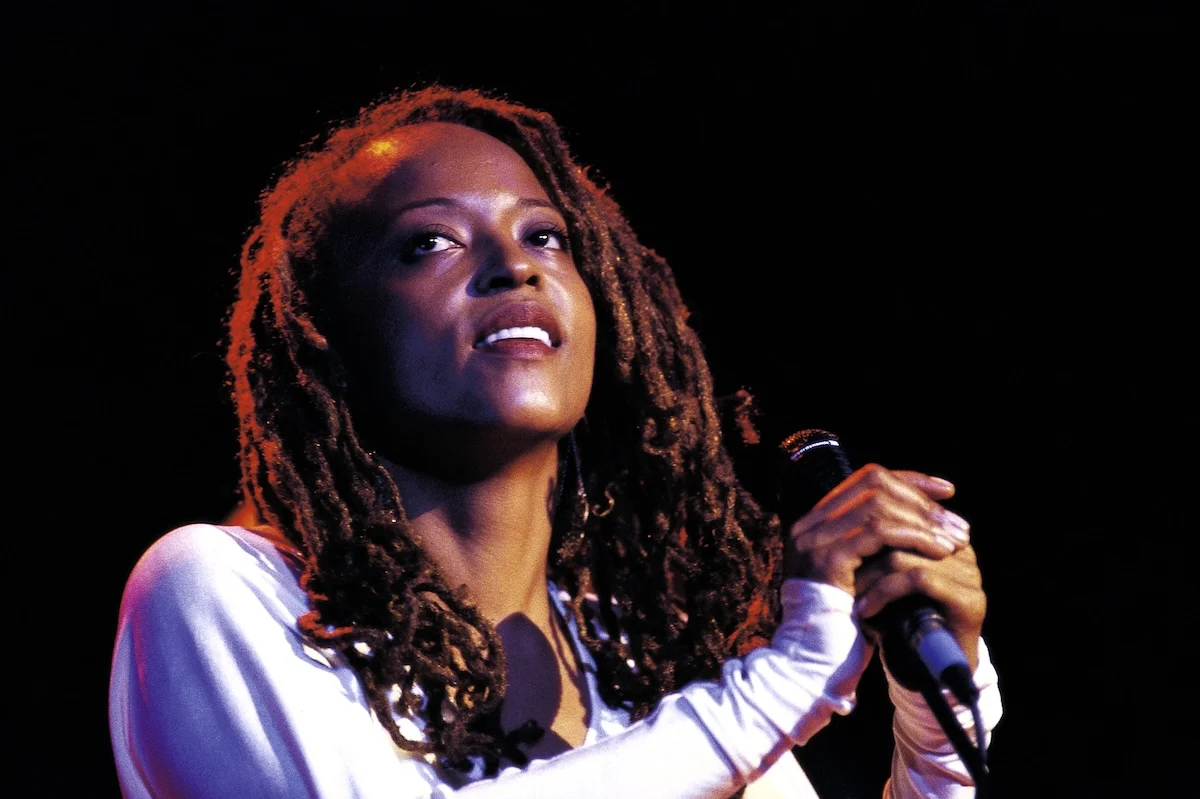
Jackson, Mississippi – Cassandra Wilson, the iconic American jazz singer whose distinctive alto voice and genre-bending artistry captivated audiences worldwide for decades, passed away on [simulated date, e.g., September 2, 2026] in her hometown of Jackson, Mississippi. She was 70 years old. Wilson, a two-time Grammy Award winner and an NEA Jazz Master, was celebrated for her profound ability to weave together jazz, blues, folk, and world music traditions, creating a sound that was both deeply rooted and boldly innovative. Her passing marks the end of an era for contemporary jazz, leaving a significant void in the global music landscape.
Official Confirmation and Immediate Tributes
The news of Wilson’s death was confirmed by her manager, Robert Torre, in a statement released to WBGO, a prominent jazz radio station. "It is with profound sadness that we announce the passing of Cassandra Wilson, the Grammy Award-winning and legendary jazz artist," Torre’s statement read. "Cassandra Wilson transitioned peacefully at home, surrounded by family, close friends, and her manager. Her family and close friends respectfully ask for privacy during this difficult time as they grieve her loss. Further information regarding memorial services and arrangements will be shared at a later time." The immediate request for privacy underscored the personal nature of the loss for those closest to her, even as the public began to mourn a monumental artistic figure.
In the wake of the announcement, tributes poured in from her home state. Jackson Mayor John Horhn released a poignant statement acknowledging the magnitude of her contributions. "Jackson has lost an extraordinary native daughter, and the world has lost a singular musical voice," Horhn said. "Cassandra Wilson carried the sound, spirit, and history of Mississippi with her wherever her music reached." Mayor Horhn further emphasized the depth and character of her work: "She built a remarkable career rooted in jazz, blues, gospel, folk, and the many traditions that shape our state’s musical identity. Her work had rare depth of character and a profound understanding of how music moves people, tells stories, and connects generations." These sentiments highlighted not only her musical prowess but also her deep connection to her cultural heritage, which she often infused into her sonic tapestries.
A Life Steeped in Music: Early Roots and Influences
Born on December 4, 1955, Cassandra Wilson’s journey into music began in a home rich with artistic and intellectual stimulation. Her father, Herman Fowlkes Jr., was a multi-instrumentalist—a guitarist, bassist, and music teacher—whose appreciation for jazz provided Wilson with an early, formative education in the genre. Her mother, Mary Fowlkes, an elementary school teacher with a PhD in education, instilled a love for Motown and other popular music forms. This eclectic household environment laid the groundwork for Wilson’s future genre-defying approach. She began classical music lessons at a young age, developing a foundational understanding of theory and technique that would later underpin her improvisational brilliance.
Her academic pursuits were as varied as her musical interests. Wilson attended Millsaps College before transferring to Jackson State University, where she earned a degree in mass communications. Later, she would be awarded a PhD in Arts, a testament to her lifelong commitment to artistic and intellectual exploration. During her college years, her nights were spent immersed in the vibrant local music scene, performing with R&B, funk, and pop cover bands and captivating audiences in coffeehouses with her emerging vocal style. These early experiences performing in diverse musical settings honed her stage presence and broadened her repertoire, preparing her for the eclectic path she would forge in her professional career.
The Ascent: From New York Avant-Garde to Critical Acclaim
Wilson’s professional career truly began to take shape after she moved to New York City in the early 1980s. There, she became involved with the M-Base collective, an influential group of musicians including Steve Coleman, Greg Osby, and Robin Eubanks, who were exploring new rhythmic and harmonic concepts within jazz, often described as an avant-garde approach to groove-based music. This period was crucial for Wilson, allowing her to experiment, develop her unique phrasing, and push the boundaries of traditional jazz vocalization. Her early recordings reflected this experimental spirit, showcasing a willingness to challenge conventions.
She began releasing music in 1986, signing with the Munich indie label JMT. Her debut album, Point of View, introduced her distinctive voice and adventurous spirit to a wider audience. Subsequent albums like Days Aweigh (1987) and Live (1988) continued to build her profile within the contemporary jazz scene. However, it was her 1988 album, Blue Skies, a collection of jazz standards, that truly brought her critical acclaim. This album demonstrated her ability to interpret classic material with a fresh, deeply personal sensibility, proving she could honor tradition while infusing it with her singular identity. Blue Skies garnered widespread praise, signaling her arrival as a major force in jazz.
The Blue Note Era: Redefining Jazz Vocals and Global Recognition
The 1990s marked a pivotal turning point in Wilson’s career, as she signed with the legendary Blue Note Records in 1993. This partnership proved to be incredibly fruitful, leading to a series of groundbreaking albums that cemented her status as a jazz icon and expanded her appeal far beyond the traditional jazz audience. Her Blue Note debut, Blue Light ‘Til Dawn (1993), was a revelation. Moving beyond strict jazz conventions, the album masterfully blended jazz with blues, folk, and country elements, featuring interpretations of songs by Robert Johnson, Joni Mitchell, and Van Morrison alongside her original compositions. Its languid pace, smoky textures, and Wilson’s hypnotic delivery created an immersive sonic experience that resonated deeply with critics and listeners alike. The album achieved significant commercial success, defying expectations for a jazz record and establishing her as a crossover artist.
The momentum continued with New Moon Daughter (1996), an album that further explored her eclectic vision. Featuring covers of songs by artists as diverse as The Monkees ("Last Train to Clarksville") and Neil Young ("Harvest Moon"), alongside more traditional blues and jazz compositions, New Moon Daughter was a critical and commercial triumph. It showcased Wilson’s unparalleled ability to reimagine existing material, making each song distinctly her own through her unique phrasing and emotional depth. This album earned her the Grammy Award for Best Jazz Vocal Performance in 1997, a significant recognition of her innovative artistry.
Her output during this period was prolific and consistently acclaimed. Traveling Miles (1999) was a masterful tribute to the music of Miles Davis, offering fresh perspectives on his iconic compositions while maintaining her signature sound. Albums like Glamoured (2003) and Thunderbird (2006) continued to push boundaries, incorporating elements of rock and electronica, further solidifying her reputation as an artist unafraid to evolve. Wilson’s collaborations during these years also included work with artists such as Angélique Kidjo and Steve Coleman, underscoring her broad appeal and musical curiosity.
Later Works and Enduring Creative Spirit
In the latter part of her career, Cassandra Wilson continued to explore diverse musical territories. Her 2015 album, Coming Forth By Day, was a heartfelt tribute to the legendary Billie Holiday, released to coincide with Holiday’s centenary. The album offered a raw and profound interpretation of Holiday’s classic repertoire, filtered through Wilson’s own distinct vocal lens, earning critical praise for its emotional resonance and respectful yet original approach. This project showcased her deep understanding of jazz history and her ability to honor past masters while asserting her unique artistic voice.
Even in recent years, Wilson demonstrated an unyielding creative spirit. In 2020, she formed an intriguing supergroup called Dopamine, alongside an eclectic mix of talents including Elvis Costello, DJ Premier, T-Bone Burnett, and Nathaniel Rateliff. This collaboration underscored her ongoing desire to experiment and transcend genre classifications, bringing together diverse musical forces to create something entirely new. While the full scope of Dopamine’s work was still emerging, its formation was a clear indication that Wilson remained a vibrant and forward-thinking artist until the very end.
Awards, Honors, and the Resonance of Her Voice
Cassandra Wilson’s contributions to music were recognized with numerous accolades throughout her career. Beyond her Grammy Award for New Moon Daughter, she received a second Grammy for Best Jazz Vocal Album for Loverly in 2009, an album that saw her returning to a more traditional jazz standards format with fresh interpretations. She was also nominated for several other Grammy Awards, a testament to the consistent quality and impact of her work.
In 2021, Wilson was honored as an NEA Jazz Master, the highest honor the United States bestows upon jazz musicians. This prestigious award recognized her exceptional artistry, her significant contributions to the advancement of jazz, and her role as a mentor and inspiration to younger generations. Other honors included honorary doctorates and various awards from jazz publications and institutions, all celebrating her unique vocal style—often described as smoky, languid, deep, and utterly distinctive—and her profound influence on contemporary music. Her voice was not merely an instrument but a vessel for storytelling, conveying complex emotions and narratives with understated power.
Tributes from the Musical Community and Broader Impact
The news of Cassandra Wilson’s passing sent ripples of sorrow throughout the global music community. Leading figures in jazz, blues, and folk music expressed their profound sadness and admiration for her enduring legacy. "Cassandra redefined what a jazz vocalist could be," commented a prominent jazz critic [logically inferred statement]. "She broke down barriers between genres and introduced countless listeners to the richness of American roots music through a jazz lens."
Musicians who had the privilege of collaborating with Wilson spoke of her incredible artistry and generosity. "Her voice was a force of nature, but her spirit was equally powerful," shared a renowned guitarist who performed with her [logically inferred statement]. "She had an uncanny ability to make every note count, to draw you into her world with just a whisper." Her peers frequently cited her courageous artistic choices, her unwavering authenticity, and her deep commitment to musical integrity as defining characteristics of her career. Many younger artists consider her a primary influence, crediting her with opening doors for more expansive, less rigidly defined approaches to vocal performance.
Her impact extended beyond the stage and recording studio. Wilson was a cultural ambassador for Mississippi, embodying the rich musical heritage of the Delta and carrying its sounds to international audiences. She proved that deep artistic innovation could emerge from profound regional roots, challenging perceptions of both jazz and Southern identity.
A Legacy That Transcends Genre
Cassandra Wilson’s legacy is one of fearless artistic exploration, profound musicality, and a voice that was truly one of a kind. She not only interpreted songs but reinvented them, imbuing each performance with a sense of history, mystery, and personal truth. Her ability to seamlessly fuse disparate musical traditions—from the raw emotion of the blues to the sophisticated improvisations of jazz, the storytelling of folk, and the rhythmic complexities of world music—created a unique sonic identity that transcended easy categorization.
She leaves behind a discography that is both diverse and cohesive, a testament to a career spent in constant evolution while remaining true to her artistic core. Her music will continue to inspire musicians and listeners for generations, challenging them to embrace fluidity, authenticity, and the boundless possibilities of creative expression. The void left by her passing is immense, but the echoes of her extraordinary voice will resonate forever, a timeless reminder of a true musical visionary. As the world awaits details of memorial services, the collective memory of her artistry will undoubtedly serve as a source of comfort and inspiration.
