

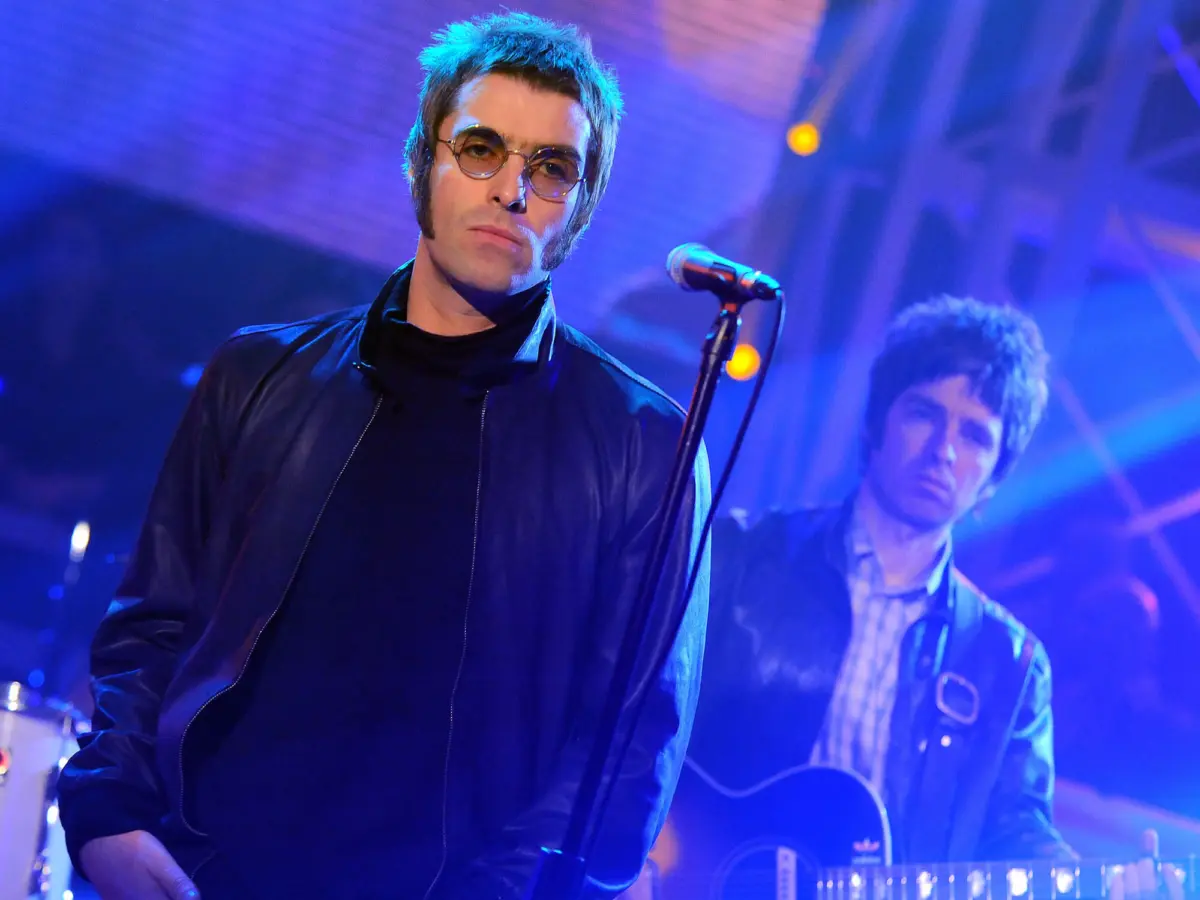
Liam Gallagher, the iconic frontman of Oasis, has unequivocally declared his refusal to attend the band’s induction into the Rock & Roll Hall of Fame on November 14, choosing instead to "stack the dishwasher" rather than participate in what he has consistently branded as an uninteresting and "bollocks" institution. This decision, communicated through a series of characteristic social media posts and interviews, underscores Gallagher’s long-standing skepticism towards formal industry accolades and highlights a recurring tension between rock’s rebellious spirit and its institutional recognition.
The Rock & Roll Hall of Fame: A Legacy of Recognition and Controversy
The Rock & Roll Hall of Fame, established in 1983 and located in Cleveland, Ohio, serves as a museum and archival institution dedicated to chronicling the history of rock and roll music and honouring artists, producers, engineers, and other influential figures who have significantly impacted the genre. Inductees are chosen by a voting body of over 1,000 artists, historians, and industry members, following a nomination process that requires an artist to have released their first commercial recording at least 25 years prior. The annual induction ceremony, often held in high-profile locations like New York or Los Angeles, is a star-studded event featuring performances and speeches, designed to celebrate the enduring legacy of rock music.
However, the Hall has frequently faced criticism regarding its selection criteria, perceived omissions of deserving artists, and the broad interpretation of what constitutes "rock and roll." Debates often erupt over the inclusion of artists from genres like pop, R&B, or hip-hop, leading to accusations of diluting the Hall’s core purpose. Such controversies have, over the years, led some artists to express indifference or even outright rejection of the honour, viewing it as an unnecessary validation from an industry they may have spent careers rebelling against. This backdrop provides crucial context for understanding Liam Gallagher’s particular and very public stance.
Oasis: A Defining Force of Britpop and Global Rock
Oasis, formed in Manchester in 1991, quickly rose to prominence in the mid-1990s, becoming one of the most successful and influential British bands of their era. Comprising brothers Liam and Noel Gallagher, alongside various rotating members, the band spearheaded the Britpop movement with their anthemic rock songs, swaggering attitude, and distinctive sound. Albums like Definitely Maybe (1994) and (What’s the Story) Morning Glory? (1995) achieved massive commercial success, selling millions worldwide and producing timeless hits such as "Wonderwall," "Don’t Look Back in Anger," and "Live Forever."
Their raw energy, working-class roots, and unapologetic rock and roll ethos resonated deeply with a generation, establishing them as cultural icons. The band’s turbulent history, marked by sibling rivalry and numerous lineup changes, only added to their legendary status. Despite their eventual breakup in 2009, Oasis’s music continues to influence contemporary artists and remains a staple on rock radio globally, solidifying their place in rock history. Their induction into the Rock & Roll Hall of Fame, therefore, represents a formal acknowledgement of their undeniable impact on music, regardless of the internal dynamics or individual members’ opinions.
Liam Gallagher’s Unwavering Disdain: A Chronology of Rejection
Liam Gallagher’s aversion to the Rock & Roll Hall of Fame is not a recent development but rather a consistent thread throughout his public discourse over several years. His stance has been clear, unwavering, and delivered with his signature bluntness.
2021: Initial Disinterest Declared
The earliest notable public expression of his feelings dates back to 2021. At that time, while speculation about Oasis’s future eligibility for induction began to surface, Gallagher insisted he wasn’t "interested" in that form of recognition. This initial dismissal set the tone for his future comments, signaling a deep-seated lack of regard for such institutions.
Early 2024: "Load of Bollocks" and the "Wank Award"
As Oasis became eligible and discussions around their potential induction intensified, Gallagher’s rhetoric escalated. In early 2024, he eloquently branded the institution "a load of bollocks" on social media. Expanding on this sentiment in an interview with The Sunday Times that same year, he articulated a more detailed critique of the Hall’s selection process, deeming it arbitrary and thus rendering any recognition from it "pointless."
He specifically honed in on the inclusion of artists like Mariah Carey, not to disparage her talent, but to question the Hall’s genre boundaries. "As much as I love Mariah Carey and all that, I want to say: do me a favour and f*** off," Gallagher stated. "It’s like putting me in the rap hall of fame, and I don’t want to be part of anything that mentally disturbed. Besides, I’ve done more for rock n’ roll than half of them clowns on that board." This highlights his view that the Hall has strayed too far from its rock and roll roots, making its awards meaningless to someone who prides himself on being a pure rock artist. He further dismissed any potential award as a "wank award" from "some geriatric in a cowboy hat," embodying his anti-establishment, anti-authoritarian persona.
April 2026: Sarcasm and Clarification
When the news of Oasis’s official nomination for induction broke in April 2026, Gallagher initially fooled many fans with a highly sarcastic "thank you" message. He tweeted, "I wanna thank all the people who voted for us it’s a real honour… ever since I was a little kid and singing in the shower I’d dream about 1 day being in the RnR Hall of Fame. It’s true what they say: anything is possible if you have a dream."
The deadpan delivery and unexpected positivity momentarily confused followers, some of whom genuinely believed he had softened his stance. However, Gallagher quickly followed up with a clarifying post that laid bare his sarcasm. He humorously recounted a fictional conversation with his mother: "Well I was speaking to my mummy last night when the news broke and she thinks I may have been a little hasty with my perception of the organization she’s told me to stop being a dick and go to the awards and behave and you never know you might enjoy it." This subsequent tweet firmly re-established his true feelings, ensuring no ambiguity remained regarding his disdain for the institution.
November 2026: The Final Refusal – "Stack the Dishwasher"
As the November 14 induction ceremony approached, Gallagher solidified his non-attendance. His ultimate reasoning, delivered with characteristic bluntness on X (formerly Twitter), was both simple and provocative: he would rather "stack the dishwasher" than fly to Los Angeles for the event.
He elaborated on his reasoning: "Everyone’s a soft c these days. [Award shows are] boring as f. Everyone’s up their own arse and far too sensitive. I’d rather stay and stack the dishwasher." This statement not only dismisses the event itself but also criticizes the perceived pretentiousness and overly sensitive nature of the contemporary music industry and its award circuits.
Gallagher did, however, offer a slight concession regarding the location. He admitted that his decision might have been different if the ceremony were closer to home. "If it was in the UK I’d be there," he stated on X. "For some reason it’s in LA and that’s miles away. It’s too far to be going for the night I got s*** to do – it’s Christmas." While the distance and proximity to the holiday season were cited, these reasons appeared secondary to his fundamental philosophical objection to the Hall itself, serving more as convenient excuses to bolster his core argument.
Responding to a fan who expressed sadness over his apparent change of heart since his sarcastic April tweets, Gallagher remained firm, offering a quintessentially British and dismissive piece of advice: "Lucy you do know your allowed to change your mind stop crying your heart out and go put the kettle on." This final retort underscored his consistent position and his general lack of concern for external opinions regarding his choices.
Broader Implications: Authenticity, Industry Validation, and Fan Perception
Liam Gallagher’s steadfast refusal to attend the Rock & Roll Hall of Fame induction ceremony for Oasis carries several broader implications for the music industry, the institution itself, and the band’s legacy.
The Enduring Appeal of the Anti-Establishment Persona: Gallagher’s stance reinforces his image as an authentic, uncompromising rock and roll figure who prioritizes artistic integrity and personal conviction over industry validation. In an era where many artists meticulously manage their public image, Gallagher’s bluntness and rejection of formal honours resonate with a segment of fans who appreciate his refusal to conform. This act could be seen not as disrespect for Oasis’s legacy, but as a reaffirmation of the very rebellious spirit that defined the band. It aligns perfectly with the "mardy Manc" persona that has endeared him to millions, ensuring his reputation as an unpretentious voice in a sometimes overly polished industry remains intact.
Challenging the Credibility of Award Institutions: High-profile rejections from artists like Gallagher can subtly erode the perceived authority and significance of award institutions like the Rock & Roll Hall of Fame. While the Hall’s prestige is largely cemented, repeated public dismissals from influential figures might lead younger artists or a new generation of fans to question the relevance of such accolades. It highlights an ongoing tension between the artistic desire for creative freedom and the industry’s need for formal structures of recognition. If enough artists follow suit, it could prompt the Hall to re-evaluate its outreach and engagement strategies to maintain its cultural currency.
Impact on Oasis’s Legacy and Reunion Speculation: Oasis’s induction into the Hall of Fame is a significant milestone, cementing their place among rock’s greats. However, Liam’s non-attendance, particularly if his brother Noel also chooses not to attend (which, given their fractured relationship, is a distinct possibility, though not confirmed by the original article), means the induction will lack the symbolic moment of the band accepting the honour together. This absence might overshadow the achievement itself for some fans, especially those who constantly hope for an Oasis reunion. Instead of a celebration of unity, it becomes another chapter in the ongoing narrative of the Gallagher brothers’ estrangement and Liam’s defiance. The image of the band’s most iconic members absent from such a pivotal moment will undoubtedly be noted and discussed.
Fan Engagement and Loyalty: While some fans may be disappointed by the lack of a full Oasis presence at the ceremony, many others will likely appreciate Gallagher’s consistency and commitment to his principles. His direct communication with fans on social media, advising them to "stop crying your heart out and go put the kettle on," demonstrates a continued connection that transcends formal industry events. It reinforces the idea that true recognition for Oasis comes from their music and their fans, not from a Hall of Fame plaque.
Ultimately, Liam Gallagher’s decision to prioritize domestic chores over a trip to Los Angeles for the Rock & Roll Hall of Fame induction is more than just a personal choice; it is a powerful statement. It speaks to a broader cultural debate about authenticity versus institutional validation, the evolving nature of celebrity, and the enduring allure of rock and roll’s rebellious spirit. As Oasis takes its rightful place in the Hall of Fame on November 14, it will do so without its most iconic frontman physically present, a testament to Liam Gallagher’s unwavering commitment to his own distinctive vision of what it means to be a rock star.
