

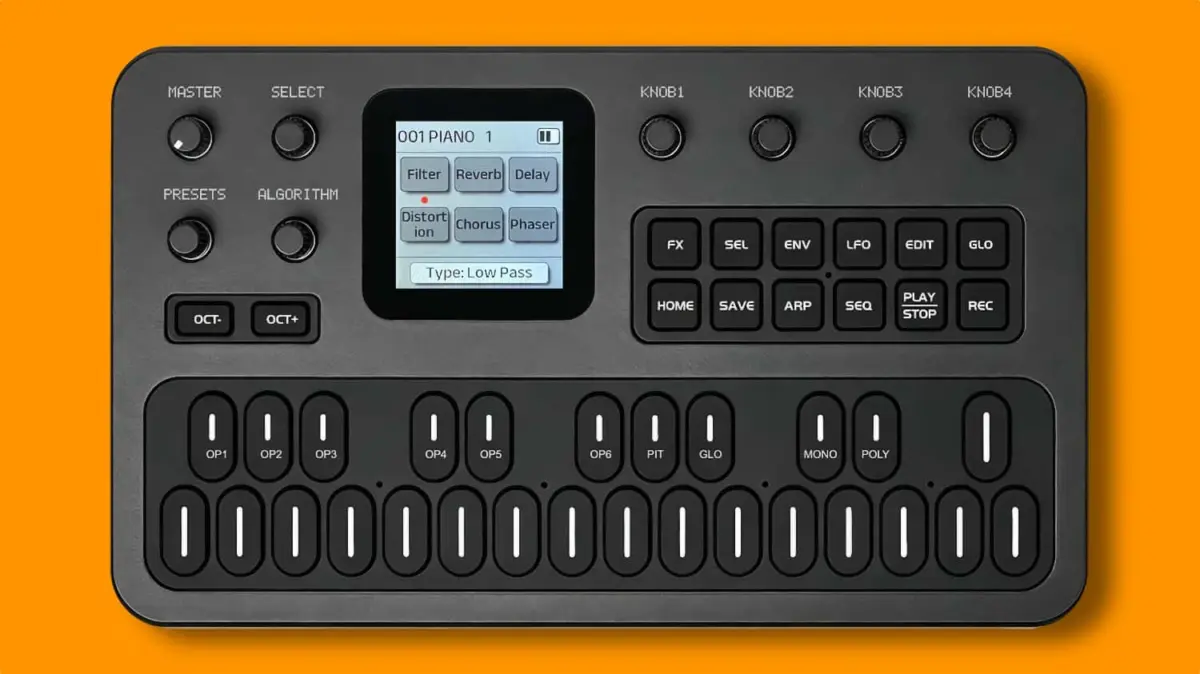
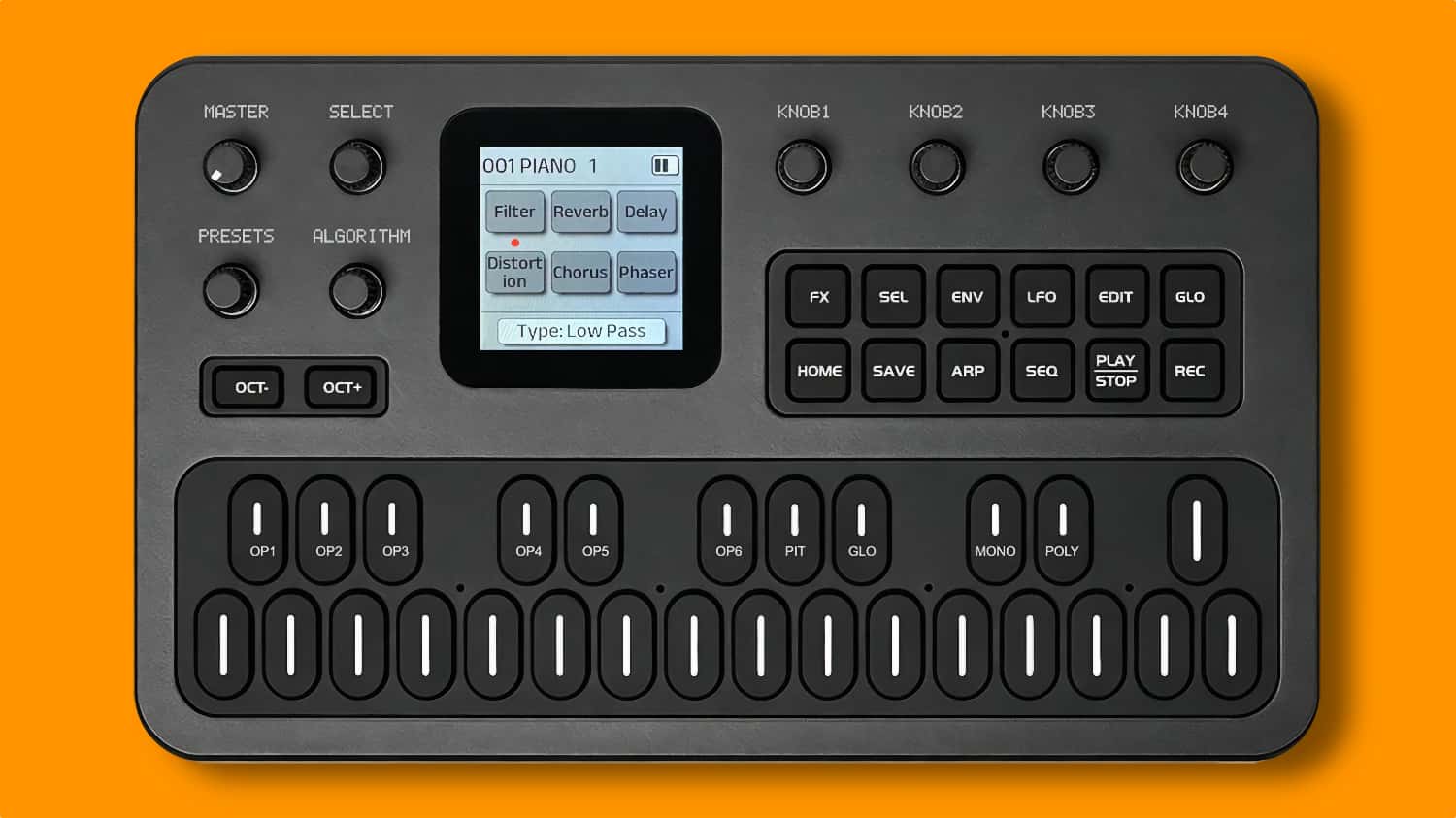
In a significant shift for the affordable music technology market, M-VAVE has announced the official release of FM1 Open, a comprehensive open-source firmware project designed for its popular FM-1 compact synthesizer. This move represents a strategic pivot for the manufacturer, transitioning from a traditional proprietary hardware model to a community-centric platform. The initiative includes the release of the instrument’s open firmware, a browser-based "Workbench" for real-time sound design and project management, and a robust Software Development Kit (SDK) intended to empower third-party developers to create entirely new applications and functionalities for the hardware.
The decision to open the FM-1’s architecture follows a period of intense community-driven innovation. Since the synthesizer’s release, a growing ecosystem of independent developers has been reverse-engineering the device to create custom firmware, adding features that were not present in the original factory software. By launching FM1 Open, M-VAVE is effectively legitimizing these efforts and providing an official framework to facilitate more stable and advanced development. This approach mirrors successful strategies seen in higher-end boutique synthesisers, but its application in the budget-tier market marks a potential turning point for the industry.
The Evolution of the FM-1 Synthesizer Platform
The M-VAVE FM-1 originally entered the market as a highly portable, battery-powered Frequency Modulation (FM) synthesizer, praised primarily for its low price point and surprisingly capable sound engine. Historically, devices at this price tier have been "black box" products—closed systems with limited update paths. However, the FM-1’s hardware, which utilizes modern microcontrollers capable of handling complex digital signal processing (DSP), made it an attractive target for the "synth hacking" community.
Prior to the official open-source announcement, the FM-1 had already become a cult favorite among DIY enthusiasts. Developers had successfully implemented new oscillator types, expanded MIDI capabilities, and even alternative synthesis methods on the hardware. M-VAVE’s leadership noted that rather than attempting to restrict these modifications, the company chose to provide the necessary tools—including source code and documentation—to ensure that the hardware remains relevant and versatile for years to come.
Technical Components of the FM1 Open Ecosystem
The FM1 Open project is built upon three primary pillars, each designed to serve different segments of the user base, from casual musicians to advanced software engineers.
1. The Open Firmware and GitHub Repository
At the heart of this announcement is the release of the FM-1’s source code on GitHub. By making the code available under an open-source license, M-VAVE allows users to see exactly how the synthesis engine operates. This transparency is crucial for developers who wish to optimize the code for better performance or to fix bugs that may have persisted in the original proprietary version. The repository includes the core synthesis logic, the MIDI handling protocols, and the user interface mapping.
2. The Browser-Based FM1 Workbench
Recognizing that not all musicians are comfortable with coding or compiling firmware, M-VAVE has launched the FM1 Workbench. This is a web-based application that utilizes the Web MIDI API to communicate directly with the synthesizer through a compatible browser (such as Google Chrome or Microsoft Edge). The Workbench allows users to edit patches, manage presets, and update firmware through a visual interface. This eliminates the need for specialized software installations and makes the synthesizer much more accessible to the average user.
3. The Software Development Kit (SDK)
The SDK is perhaps the most significant offering for the long-term growth of the platform. It provides the headers, libraries, and documentation required to compile custom C and C++ code for the FM-1’s internal processor. With the SDK, developers are no longer limited to tweaking the existing FM engine; they can theoretically transform the device into a granular synthesizer, a drum machine, or a dedicated MIDI controller.
A Chronology of the Open-Source Shift in Music Technology
The launch of FM1 Open is part of a broader historical trend where hardware manufacturers have realized the value of community-sourced research and development.
- 2010–2015: The rise of the Arduino and Teensy platforms began to influence DIY synth building, leading to products like the MeeBlip, which was open-source from its inception.
- 2018: Korg released the Prologue and later the Minilogue XD, featuring the "logue SDK." This allowed users to load custom oscillators and effects into a flagship commercial synthesizer, proving that professional-grade hardware could benefit from community input.
- 2020–2023: The pandemic era saw a surge in home-based music production and coding hobbies. Devices like the Daisy Seed by Electrosmith became standard platforms for DSP development.
- 2024: M-VAVE joins the movement, becoming one of the first manufacturers of "budget-friendly" Chinese-manufactured synthesizers to officially support and provide an open-source firmware ecosystem.
This timeline highlights a shift from "planned obsolescence" toward "planned evolution," where the lifespan of a product is extended by the creativity of its user base.
Analysis of FM Synthesis Architecture in the Open Era
Frequency Modulation synthesis, popularized in the 1980s by the Yamaha DX7, is notoriously difficult to program due to its reliance on mathematical "operators" and "algorithms" rather than traditional filters and oscillators. The FM-1 hardware typically employs a 4-operator architecture. In a 4-operator system, four sine wave oscillators (operators) interact in various configurations. Some act as "carriers" (the sounds we hear), while others act as "modulators" (changing the timbre of the carriers).
By opening the firmware, M-VAVE allows developers to experiment with the fundamental math of these interactions. Potential improvements include:
- Custom Waveforms: Moving beyond simple sine waves to include sawtooth, square, or noise operators.
- Enhanced Feedback Loops: Allowing more complex routing of signals back into themselves to create grit and harmonic complexity.
- Expanded Polyphony: Optimizing the DSP code to allow for more simultaneous notes without audio artifacts.
- Microtonal Tuning: Implementing non-Western scales and custom tuning maps, a feature often requested by experimental composers.
Market Implications and Industry Reaction
The industry response to M-VAVE’s announcement has been largely positive, particularly among educators and hobbyists. By providing an open platform at a low entry price, M-VAVE has effectively created an "educational sandbox" for students learning digital audio electronics.
Market analysts suggest that this move is a defensive strategy against the commoditization of budget hardware. In a market flooded with inexpensive MIDI controllers and mini-synths, the "value add" of a dedicated developer community can be the deciding factor for a consumer. If a $50 synthesizer has a library of 1,000 community-created patches and five different "modes" (e.g., a mode that turns it into a TB-303 clone or a mode that makes it a drone machine), it becomes significantly more valuable than a closed-system competitor.
Furthermore, this move places pressure on other manufacturers in the budget space. Companies that previously relied on proprietary secrets may find themselves losing market share to "transparent" platforms where the user has total control over the internal software.
Future Outlook: The "Hardware as a Service" Paradigm
The launch of FM1 Open signals a future where the hardware purchase is merely the beginning of the product’s life cycle. As the GitHub repository matures, we can expect to see "forks" of the firmware tailored to specific genres of music. One developer might focus on creating the ultimate "80s Pop" firmware, while another might focus on "Industrial Noise."
M-VAVE has stated that they intend to monitor the GitHub contributions and potentially integrate the most stable and popular community features into future official firmware releases. This creates a feedback loop where the company benefits from free R&D, and the users benefit from a more powerful, stable instrument.
The FM1 Open project is currently live, with the source code available for download and the Workbench accessible via M-VAVE’s official developer portal. As the community begins to populate the repository with new features, the FM-1 is poised to evolve from a simple budget synth into one of the most versatile development platforms in the modern music technology landscape. This democratization of synthesis technology ensures that the power to innovate is no longer restricted to large corporations, but is instead placed directly into the hands of the musicians and programmers who use the instruments every day.
