

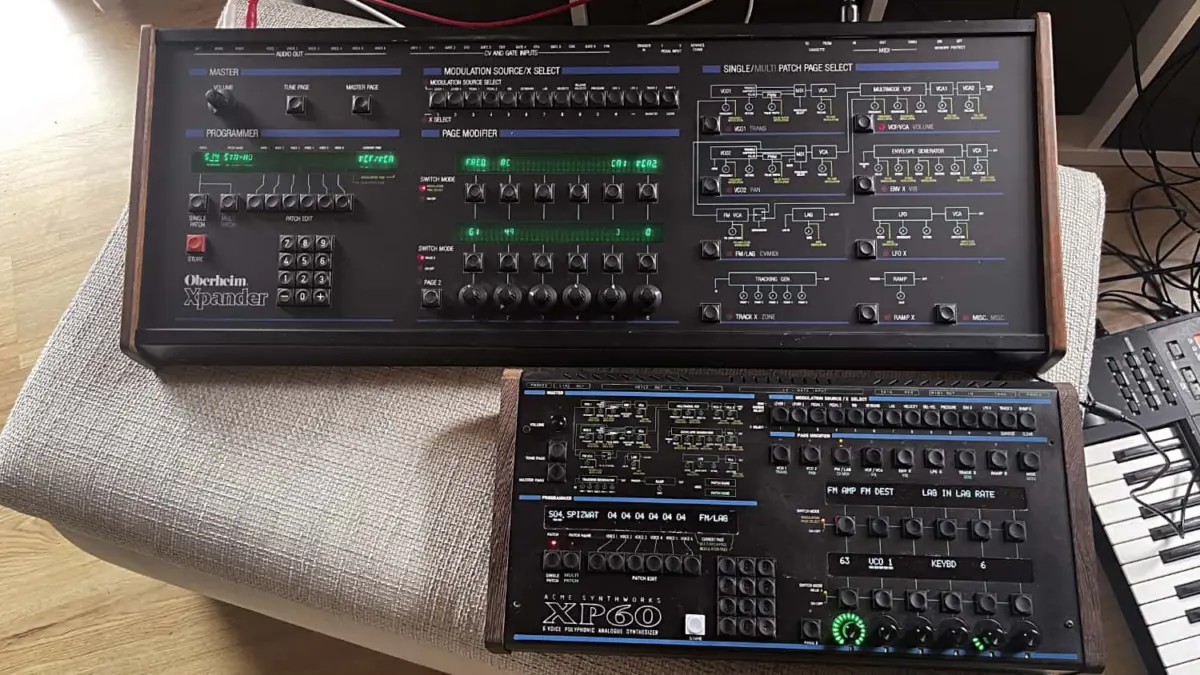
The ACME Synthworks XP60 has officially entered the high-end musical instrument market, offering a sophisticated six-voice polyphonic analog synthesis system that meticulously recreates the architecture and operational logic of the legendary Oberheim Xpander. Developed by engineer Markus Malik, the XP60 is designed to bridge the gap between mid-1980s analog depth and the rigorous demands of contemporary studio environments. By housing a complex, multi-processor engine within a modern 19-inch desktop enclosure, ACME Synthworks aims to provide professional musicians and sound designers with a stable, reliable, and sonically authentic alternative to aging vintage hardware.
The project is the culmination of extensive research into the "Matrix" modulation systems that defined a generation of subtractive synthesis. According to Malik, the decision to develop the XP60 was driven by the realization that the original Xpander was not merely a classic instrument, but a fundamentally superior architectural system whose logic remains unsurpassed in terms of flexibility and hardware tactile control. The XP60 serves as a functional tribute, ensuring that this specific workflow—noted for its depth and complexity—continues to be available to a new generation of performers.
Technical Architecture and Voice Structure
At the core of the XP60 is a six-voice polyphonic engine, with each voice utilizing two precision analog voltage-controlled oscillators (VCOs). This dual-oscillator-per-voice configuration allows for thick, detuned textures, complex interval tracking, and the rich harmonic content associated with the golden era of American analog synthesis. Each oscillator features dedicated level control via a Voltage Controlled Amplifier (VCA) and sophisticated waveshape mixing capabilities, allowing users to blend waveforms to create unique timbral foundations before the signal reaches the filter stage.
The filtering section of the XP60 is a direct nod to the versatile 15-mode filter found in the 1984 Oberheim original. This multimode filter is a significant departure from the standard four-pole low-pass filters found in many contemporary analog synthesizers. The 15 modes typically include various configurations of low-pass (1, 2, 3, and 4-pole), high-pass, band-pass, notch, and phase-shift filters. This variety allows the XP60 to produce a vast spectrum of sounds, from aggressive, resonant leads to subtle, airy pads that sit perfectly within a dense mix.
To manage the immense complexity of the modulation routings, the XP60 employs a dual-processor architecture. This design is critical for maintaining the specific operating behavior and "feel" of the original hardware, ensuring that the timing of envelopes and LFOs remains consistent with the vintage experience. The manufacturer has emphasized that this processing power is dedicated to preserving the instrument’s organic response, preventing the "stepping" or latency issues sometimes associated with modern digital control of analog components.
Historical Context: The Oberheim Xpander Legacy
To understand the significance of the XP60, one must look back to the introduction of the Oberheim Xpander in 1984. At the time of its release, the Xpander was considered a revolutionary "brain" for the electronic music studio. It moved away from the traditional fixed-path signal flow of earlier synthesizers, introducing a "Matrix Modulation" system that allowed almost any source to modulate any destination.
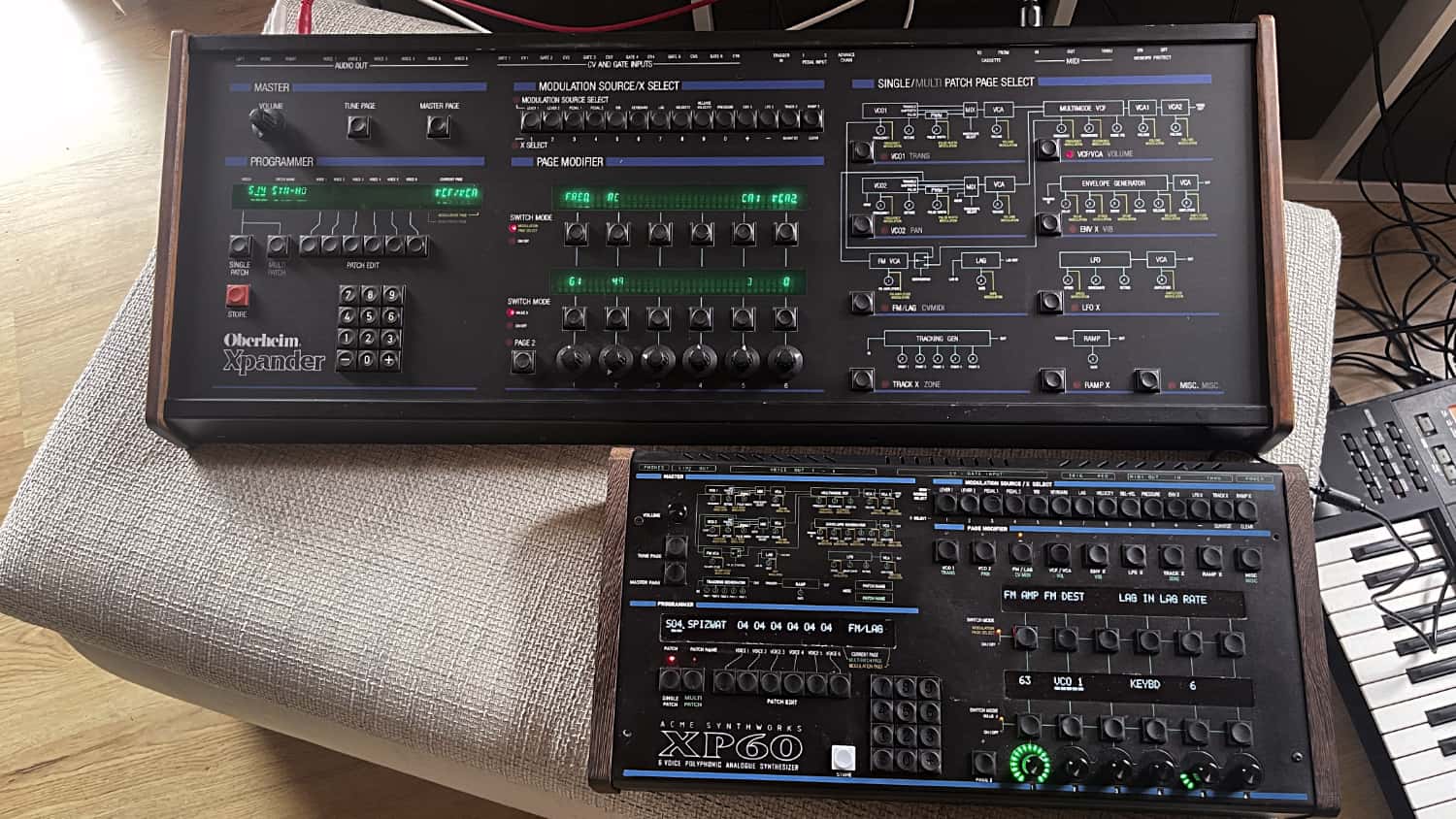
The original Xpander was equipped with an unprecedented amount of modulation power per voice: five Low-Frequency Oscillators (LFOs), five multi-stage envelope generators, a lag processor, four ramp generators, and three tracking generators. This allowed for sounds that evolved over long periods, mimicking the complexity of acoustic instruments or creating entirely alien soundscapes. Furthermore, the Xpander was a pioneer in hybrid connectivity, featuring both MIDI (then a brand-new standard) and six individual CV/Gate inputs for integration with older modular systems.
ACME Synthworks has integrated these specific specifications into the XP60, recognizing that the "deep" synthesis offered by five LFOs and five envelopes per voice is still a rarity in the modern hardware market. By replicating this density, the XP60 positions itself as a "composer’s synthesizer," capable of intricate sound design that exceeds the capabilities of standard subtractive poly-synths.
Modern Enhancements and Connectivity
While the internal logic of the XP60 remains faithful to the 1984 classic, its physical and digital interface has been updated for the 21st century. The unit is housed in a robust 19-inch desktop chassis, making it suitable for rack-mounting in professional studios or sitting as a centerpiece on a producer’s desk. This form factor addresses one of the primary complaints regarding vintage Xpanders: their massive footprint and heavy weight.
In terms of digital integration, the XP60 is fully compatible with Xplorer, a well-regarded SysEx editor originally designed for the Xpander. This compatibility ensures that users can manage patches, perform deep edits via a computer interface, and back up their sound libraries with ease. The inclusion of modern MIDI implementation alongside the classic voice architecture allows the XP60 to function seamlessly within a Digital Audio Workstation (DAW) environment while maintaining its pure analog signal path.
The rear panel of the device reflects its professional aspirations, featuring high-quality audio outputs and expanded connectivity options. While the original Xpander was known for its individual voice outputs and CV/Gate integration, the XP60 modernizes these connections to ensure lower noise floors and better impedance matching with modern audio interfaces and mixers.
Market Analysis and Industry Reception
The release of the XP60 comes at a time when the "boutique" synthesizer market is experiencing a significant resurgence. High-end recreations of classic instruments have become a staple for professional studios that require the specific sonic character of vintage gear without the maintenance risks associated with 40-year-old electronics.
At a starting price of approximately €2,699, the XP60 is positioned as a premium instrument. This price point places it in direct competition with other high-end polyphonic synthesizers from established brands like Sequential, Moog, and Oberheim’s own modern iterations. However, the XP60 carves out a unique niche by focusing specifically on the Xpander’s multi-processor modulation logic and 15-mode filter—features that are distinct from the more common Prophet or OB-X style architectures.
Industry analysts suggest that the XP60 will appeal particularly to film composers and electronic music producers who value "matrix-style" synthesis. The ability to route five LFOs and five envelopes per voice provides a level of movement and animation that is often difficult to achieve in hardware without moving to a fully modular setup. By offering this in a stable, polyphonic, and recallable format, ACME Synthworks is addressing a specific demand for "complex analog" hardware.
Chronology of Development and Availability
The journey of the XP60 began several years ago as a passion project by Markus Malik, who sought to modernize the Xpander’s internal hardware while keeping its soul intact. Following a period of prototype testing and software refinement, the project gained momentum as early demos showcased the unit’s ability to replicate the sought-after "Xpander brass" and "complex pads" with startling accuracy.
Official pre-orders for the XP60 have now opened through the ACME Synthworks website. The company has indicated a structured rollout, with the first production units expected to begin shipping to early adopters later this month. This rapid transition from announcement to shipping suggests that the manufacturing process is already well-established, a move likely intended to build consumer confidence in the new brand.
Implications for the Future of Analog Synthesis
The arrival of the XP60 represents a broader trend in the music technology industry: the "New-Vintage" era. As the components required to build high-quality analog circuits become more accessible through modern manufacturing, smaller firms like ACME Synthworks are able to tackle complex designs that were previously the sole domain of large corporations.
Furthermore, the XP60’s focus on "operating logic" over mere "circuit cloning" highlights a shift in what users value. While the sound of analog oscillators is important, the way a musician interacts with the modulation and the filter is what defines the instrument’s character. By prioritizing the dual-processor behavior of the original Xpander, Malik is asserting that the "software" (the logic governing the analog components) is just as vital as the "hardware" (the oscillators and filters themselves).
As shipping commences, the XP60 will likely be scrutinized by vintage purists and modern synthesists alike. If it succeeds in delivering the stability and integration of a modern device alongside the vast, swirling modulation of the 1984 classic, it may set a new standard for how legacy instruments are reimagined for the future. For now, the XP60 stands as a bold statement of intent from ACME Synthworks, signaling that the era of deep, complex analog poly-synthesis is far from over.
