

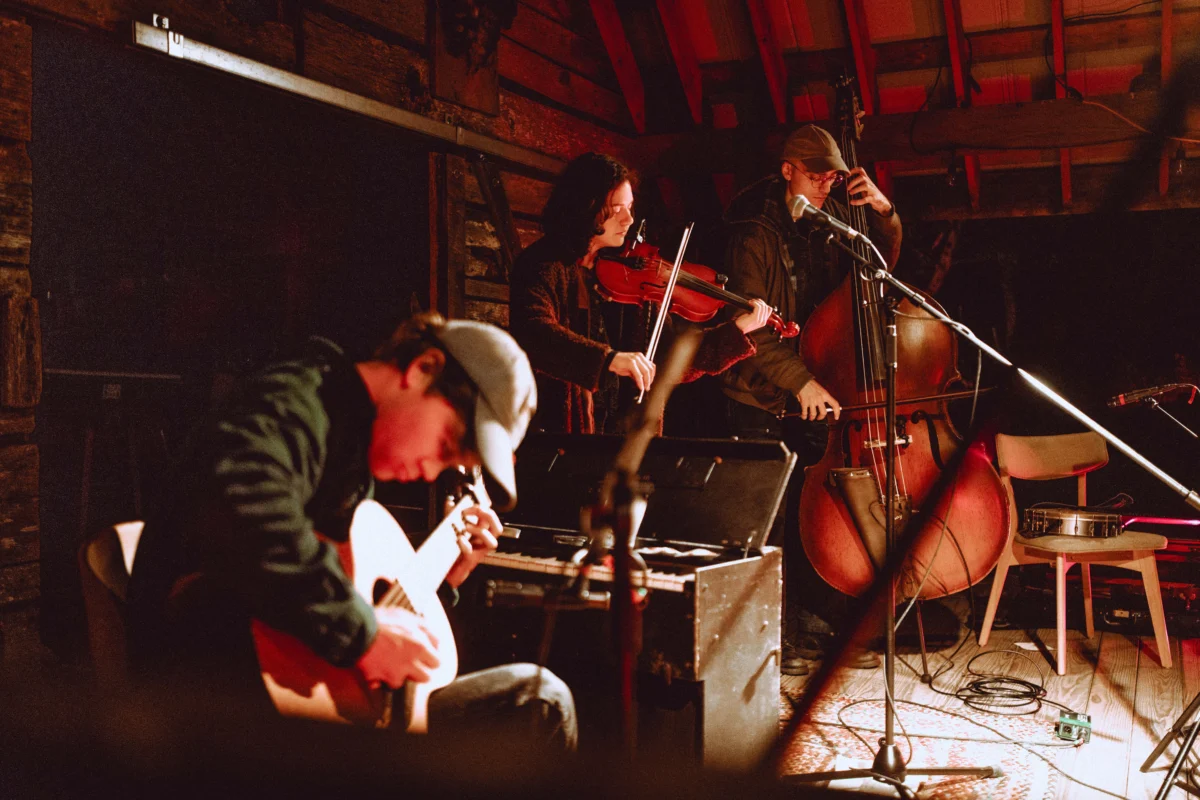
Magic Tuber Stringband, the acclaimed ensemble renowned for their innovative fusion of traditional folk sounds with contemporary experimental textures, has introduced a new facet of their forthcoming album, Heavy Water, with the release of the track "Where The Place Becomes Forgetting." This second single from the Thrill Jockey-signed act delves into the profound and enduring environmental consequences of historical nuclear production, building upon the sonic exploration initiated by their earlier release, "Tribute To The Angels." While "Tribute To The Angels" presented a traditional folk mirage that seamlessly transitioned into discordant new music, "Where The Place Becomes Forgetting" offers a more introspective and pastoral soundscape, characterized by a delicate plucking and strumming, akin to a grownup lullaby, deliberately diverging from the waves of fiddles prevalent in their previous work. The track’s most compelling element is its integration of field recordings captured at the Savannah River Site (SRS) in the broader Northern Georgia/South Carolina region, where fiddler Courtney Werner conducted extensive research into the long-term ecological and societal impacts of the area’s nuclear legacy. This artistic choice not only enriches the musical tapestry but also serves as a potent reminder of the invisible histories embedded within the landscape. Heavy Water is slated for release on May 22nd via Thrill Jockey, promising an album that is both musically adventurous and thematically resonant, pushing the boundaries of folk music to address urgent contemporary concerns.
The Savannah River Site: A Cold War Genesis and Enduring Environmental Crossroads
The integration of field recordings from the Savannah River Site into Magic Tuber Stringband’s new single underscores the profound historical and environmental significance of this vast governmental complex. Established in the early 1950s by the U.S. Atomic Energy Commission (a predecessor to the Department of Energy), the SRS was a cornerstone of America’s Cold War efforts, primarily responsible for the production of plutonium and tritium, essential components for nuclear weapons. Located predominantly in Aiken, South Carolina, though its environmental influence undeniably extends into neighboring Georgia, the site spans approximately 310 square miles (nearly 200,000 acres), making it one of the largest industrial complexes of its kind in the United States. Its creation necessitated the displacement of several rural communities, including predominantly African American towns like Dunbarton and Ellenton, marking an early chapter of profound social disruption in the pursuit of national security objectives.
Throughout the Cold War, the SRS operated five nuclear reactors, two chemical separations plants (known as ‘canyons’ for their immense, shielded processing facilities), and various support facilities. These operations, while vital for national defense during a period of intense global tension, generated immense quantities of radioactive and hazardous waste. The site’s history is characterized by periods of intense production, particularly during the arms race, followed by a post-Cold War transition towards environmental remediation, waste management, and nuclear materials stabilization. This pivot, initiated in the late 1980s and early 1990s, represented a monumental shift from production to environmental stewardship, a mission that continues to this day. The very name of the album, Heavy Water, resonates deeply with the site’s history, as heavy water (deuterium oxide, D₂O) was used as a moderator in the SRS reactors to sustain the nuclear chain reaction necessary for plutonium production.
Courtney Werner’s Research: Bridging Art, Science, and Environmental Advocacy
The decision by fiddler Courtney Werner to undertake extensive research at the Savannah River Site and subsequently incorporate its ambient soundscapes into "Where The Place Becomes Forgetting" exemplifies a burgeoning interdisciplinary approach where artists engage directly with scientific and environmental data to inform and enrich their creative output. Werner’s research specifically focuses on the enduring effects of nuclear production, examining how decades of industrial activity have irrevocably altered the ecological fabric of the region and left an indelible, often invisible, mark on the landscape and its inhabitants. This academic pursuit, combined with her artistic practice, creates a unique and compelling lens through which to interpret complex environmental narratives, transforming factual data into an evocative auditory experience.
The band’s statement regarding the specific field recording location offers a poignant illustration of this intersection of natural resilience and human impact: "The field recording in the background of this piece was taken at Craig’s Pond, a former fishing pond on the edge of the Savannah River Site. Because it is located at a remote boundary of the SRS, it is surrounded by barbed wire fences and marked with no trespassing signs warning visitors that they are at the edge of federal government property. The pond has a thriving ecosystem and was home to many rare plants and animals." This description paints a vivid picture of contradiction – a natural environment teeming with life, a testament to ecological persistence, yet simultaneously demarcated by stark symbols of human control, exclusion, and a latent warning of historical contamination. It speaks to the resilience of nature existing within the formidable shadow of industrial legacy, a theme that Werner’s research undoubtedly explores in depth. The "no trespassing" signs serve not only as physical barriers but also as powerful metaphors for the invisible boundaries of knowledge, access, and accountability surrounding such sensitive sites, underscoring the critical importance of independent inquiry and artistic interpretation in unveiling these hidden narratives.
A Chronology of Impact: From Cold War Genesis to Contemporary Artistic Reflection
The narrative woven by Magic Tuber Stringband through Heavy Water and its preceding singles can be contextualized within a broader historical timeline that encompasses the establishment and evolution of the Savannah River Site, alongside the band’s own creative journey:
- Early 1950s: The establishment of the Savannah River Site commences, marking the beginning of large-scale nuclear material production in the southeastern U.S. and initiating significant transformations of the region’s landscape and demographics.
- 1950s – 1980s: Decades of intensive Cold War operations at SRS lead to the generation and storage of vast quantities of radioactive and hazardous waste. This era witnesses significant scientific and engineering advancements in nuclear technology, coupled with the accumulating environmental costs of such industrial activity.
- Late 1980s – Present: Following the geopolitical shifts at the end of the Cold War, SRS undergoes a fundamental mission change, pivoting from nuclear material production to environmental cleanup, waste management, and nuclear materials disposition. This period involves extensive scientific research into remediation techniques, long-term monitoring, and safeguarding.
- Pre-2024: Fiddler Courtney Werner undertakes dedicated research into the enduring effects of nuclear production at the Savannah River Site. This research includes the meticulous process of capturing field recordings at various locations, such as Craig’s Pond, directly informing the thematic core and sonic landscape of Heavy Water.
- February 2024 (Approximate): Magic Tuber Stringband releases "Tribute To The Angels," the first single from Heavy Water. This initial offering introduces the album’s innovative blend of traditional and experimental sounds, hinting at the depth of its forthcoming exploration.
- April 2024 (Approximate): "Where The Place Becomes Forgetting" is unveiled, featuring the poignant field recordings and explicitly linking the album’s thematic content to the profound environmental legacy of the Savannah River Site. This release further solidifies the band’s commitment to exploring complex socio-environmental issues through their music.
- May 22, 2024: Heavy Water is released worldwide on Thrill Jockey, offering the full artistic and thematic exploration to a global audience. The album is anticipated to provide a comprehensive sonic and conceptual journey through the themes of environmental legacy, resilience, and the human relationship with transformed landscapes.
This chronological framework vividly illustrates the protracted nature of environmental legacies, demonstrating how decisions made decades ago continue to shape landscapes, ecosystems, and human communities, ultimately inspiring contemporary artistic interpretations and critical discourse.
Supporting Data: The Unprecedented Scale of Environmental Remediation at SRS
The environmental challenges at the Savannah River Site are of an unprecedented scale, necessitating a multi-billion dollar, multi-decade cleanup effort that continues to be one of the largest and most complex environmental projects globally. The contaminants of concern are diverse, encompassing both radionuclides and hazardous chemicals. Key radionuclides include tritium (a radioactive isotope of hydrogen with a half-life of 12.3 years), strontium-90, cesium-137, and various isotopes of plutonium. Hazardous chemicals include mercury, lead, and polychlorinated biphenyls (PCBs). These substances have entered the environment through various pathways, including atmospheric releases from reactor operations, percolation into the soil from disposal sites, and migration into groundwater aquifers and surface water bodies, most notably the Savannah River.
- Groundwater Contamination: Over 50 plumes of contaminated groundwater have been identified across the site, requiring extensive remediation strategies such as pump-and-treat systems, bioremediation, and natural attenuation monitoring. Tritium is a particular concern due to its high mobility in water and its persistent presence.
- Legacy Waste Tanks: SRS houses 51 high-level radioactive waste tanks, a number of which have historically experienced leaks. Managing this legacy waste involves complex stabilization and disposition strategies, including the vitrification process which converts liquid waste into stable glass forms for long-term storage. The waste in these tanks represents one of the most significant environmental liabilities in the U.S. nuclear complex.
- Ecological Impact: The impact on local ecosystems is multifaceted and continuously monitored. While some areas have demonstrated remarkable resilience, exhibiting "thriving ecosystems" as noted by the band, others show clear signs of historical and ongoing stress. Studies have documented altered plant communities, accumulation of radionuclides in wildlife (e.g., deer, fish), and potential long-term effects on aquatic life in the Savannah River, which flows into sensitive coastal estuaries and ultimately the Atlantic Ocean. The area’s rich biodiversity, including several rare and endangered species, is a constant focus of assessment to understand the long-term effects of past operations and ongoing remediation efforts.
- Cost of Cleanup: The total estimated cost for the environmental cleanup and long-term stewardship of the Savannah River Site is projected to be in the hundreds of billions of dollars over the next several decades. The U.S. Department of Energy (DOE) currently spends billions of dollars annually on these efforts, underscoring the immense financial commitment required to manage the legacy of nuclear production.
Inferred Statements and Reactions from Related Parties
While direct, real-time statements from all pertinent parties regarding Magic Tuber Stringband’s album are not available in the original context, logical inferences can be made regarding their potential reactions and perspectives:
- U.S. Department of Energy (DOE) / Savannah River Site Management: Representatives from the DOE and SRS management would likely acknowledge the public interest generated by the band’s work. Their public statements would typically emphasize their ongoing, multi-decade commitment to environmental stewardship, safety, and transparency. They would point to the extensive scientific research, robust monitoring programs, and multi-billion dollar investments in cleanup operations, highlighting the significant progress made in managing legacy waste and protecting human health and the environment. They might also stress the continued economic contribution of SRS to the region through its cleanup mission, national security programs, and scientific research initiatives.
- Environmental Advocacy Groups: Organizations dedicated to environmental protection and nuclear safety would likely commend Magic Tuber Stringband for utilizing their artistic platform to raise awareness about the enduring environmental challenges posed by sites like SRS. They would view the album as a valuable tool for public education, drawing attention to the critical need for sustained funding for cleanup efforts, robust regulatory oversight, and continued scientific scrutiny of the site’s long-term impacts. These groups might also use the album’s release as an opportunity to reiterate calls for greater public access to information and participatory decision-making processes regarding nuclear waste management and future land use.
- Academic and Research Communities: Scientists and researchers engaged in environmental studies, public health, and nuclear history would likely welcome the artistic interpretation of their complex scientific and historical work. They would see it as an innovative means to communicate intricate scientific issues to a broader, non-specialist audience, fostering greater public understanding and engagement with critical environmental questions. The band’s artistic expression could stimulate further interdisciplinary dialogue between the arts and sciences, exploring new avenues for public discourse on environmental legacies and their societal implications.
- Local Communities: Reactions from communities surrounding the Savannah River Site would likely be varied and nuanced. Some residents, particularly those whose families have worked at SRS for generations, might view the site as a vital source of employment, economic stability, and national pride, potentially downplaying environmental concerns or emphasizing the rigorous safety protocols in place. Others, particularly those historically impacted by the site’s creation (e.g., land displacement) or those with ongoing health or environmental concerns, might resonate strongly with the album’s themes, viewing it as a validation of their experiences and a powerful call for continued accountability and justice.
Broader Impact and Implications: Art as a Lens for Environmental Justice and Historical Reflection
Magic Tuber Stringband’s Heavy Water transcends its musical genre to become a significant cultural artifact that underscores several broader implications. Firstly, it highlights the potent role of art, specifically music, as a catalyst for environmental awareness and critical reflection. By integrating authentic field recordings from a site like SRS, the band transforms abstract scientific data and historical narratives into an immersive auditory experience, making the unseen legacies of nuclear production palpable and emotionally resonant to listeners. This artistic approach can engage diverse audiences who might not typically encounter such information through traditional scientific reports or mainstream news coverage, fostering a deeper, more visceral understanding of complex issues.
Secondly, the album implicitly touches upon crucial themes of environmental justice. The historical establishment of mega-sites like SRS often involved the displacement of marginalized communities, and the long-term environmental burdens frequently fall disproportionately on neighboring, often lower-income or minority, populations. By focusing on the "enduring effects," the band invites listeners to consider who bears the true costs of national security and industrial progress, prompting a critical reflection on equity, responsibility, and reparations in environmental policy.
Thirdly, Heavy Water serves as a poignant reminder of the enduring legacy of the Cold War. While the geopolitical landscape has shifted dramatically since the fall of the Berlin Wall, the physical and environmental consequences of that era’s intense arms race persist. Sites like SRS are not merely historical relics but living monuments to a past era, necessitating perpetual care, scientific vigilance, and continuous public discourse. The album’s title itself, Heavy Water, is a direct nod to the materials and processes central to that historical period, inviting a deeper engagement with the underlying science and socio-political history involved.
Finally, the album’s intricate blend of traditional folk instrumentation with experimental elements mirrors the complex interplay between human tradition and technological advancement, between nature’s inherent resilience and humanity’s transformative (and sometimes destructive) power. The "thriving ecosystem" at Craig’s Pond, starkly juxtaposed with "barbed wire fences" and "no trespassing signs," becomes a powerful metaphor for humanity’s ongoing struggle to reconcile its industrial ambitions with its profound responsibility to the natural world. Magic Tuber Stringband, through Heavy Water, not only offers a compelling musical experience but also contributes significantly to the ongoing public discourse on environmental ethics, historical accountability, and the future stewardship of our planet. The album is poised to be a landmark release, not just for its artistic merit and innovative sound, but for its courageous and thoughtful engagement with one of the most critical and enduring environmental narratives of our time.
