

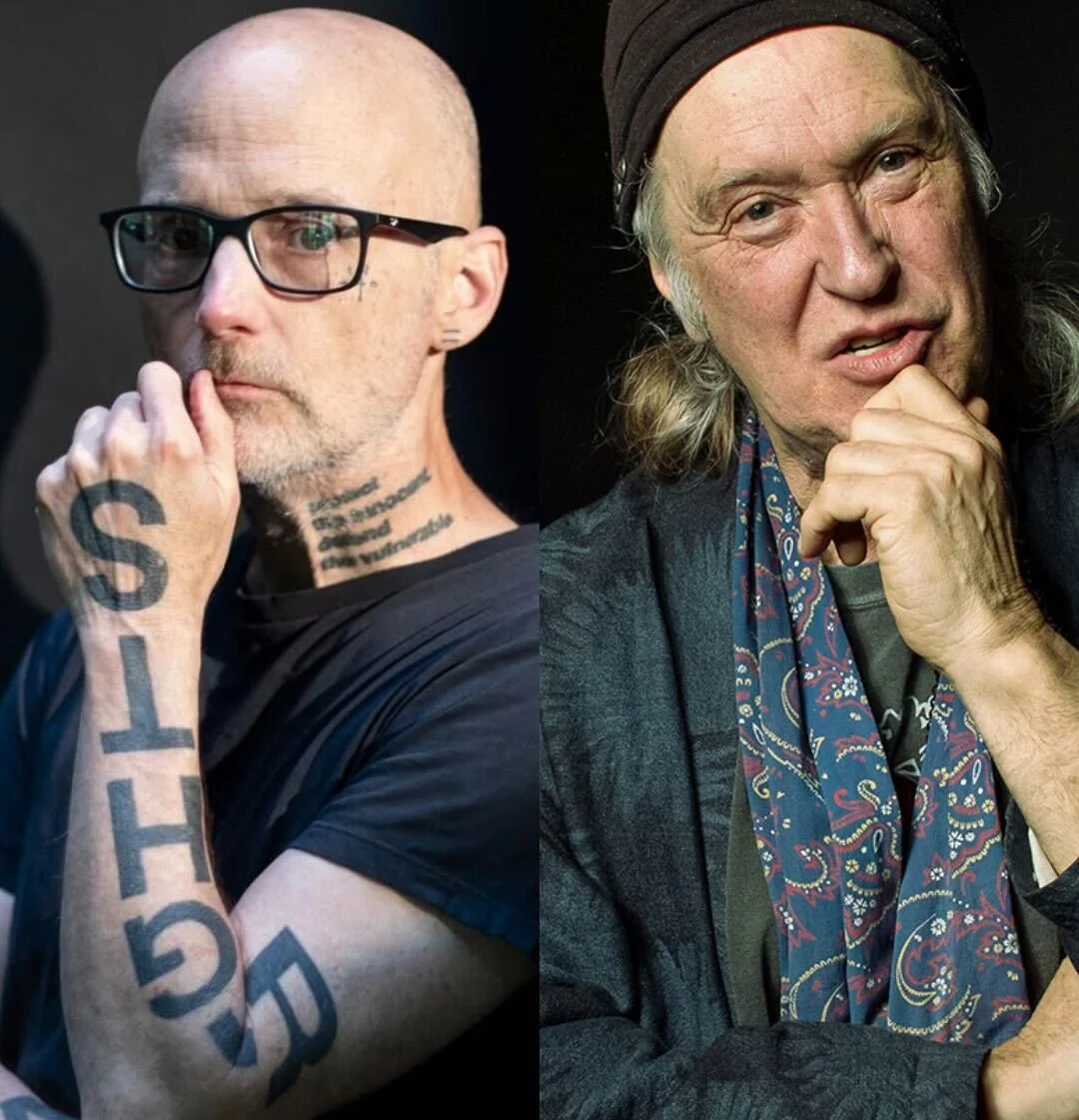
In a recent installment of The Guardian‘s popular "Honest Playlist" column on March 22, 2026, acclaimed musician and activist Moby sparked a significant cultural discussion by revealing that he can no longer listen to The Kinks’ iconic 1970 hit, "Lola." Citing the song’s lyrics as "gross and transphobic," Moby’s remarks have drawn swift and passionate responses, particularly from The Kinks’ camp and pioneering transgender artist Jayne County, who offered a powerful counter-narrative affirming the song’s historical significance as an LGBTQ+ anthem. This incident underscores the ongoing complexities of re-evaluating legacy art through a contemporary lens, particularly concerning evolving social sensitivities and the intent versus impact of artistic expression.
The Initial Spark: Moby’s "Honest Playlist" Revelation
Moby, known for his groundbreaking electronic music and outspoken activism on various social and ethical issues, shared his personal aversion to "Lola" after encountering it on a Spotify playlist. "I like their early music, but I was really taken aback at how unevolved the lyrics are," he stated, without specifying the exact lines that prompted his strong reaction. The Kinks’ "Lola," penned by lead singer Ray Davies, famously recounts a man’s encounter with a mysterious figure in a Soho club, culminating in the memorable lines: "Girls will be boys and boys will be girls / It’s a mixed up, muddled up, shook up world, except for Lola." Moby’s assertion that the song’s lyrics are "gross and transphobic" immediately resonated with some contemporary listeners who scrutinize historical works for potentially harmful or outdated representations, while simultaneously surprising many who have long celebrated "Lola" as a groundbreaking and progressive piece of popular music.
"Lola" Through the Ages: A Lyrical and Cultural Retrospective
Released in June 1970, "Lola" became a global sensation, reaching number two on the UK Singles Chart and number nine on the US Billboard Hot 100. Its success was pivotal for The Kinks, revitalizing their career after a period of declining commercial fortunes. The song’s distinctive guitar riff, catchy melody, and narrative storytelling captured the zeitgeist of an era undergoing significant social upheaval.
From its inception, "Lola" courted controversy, albeit primarily for a different reason. The initial lyrics mentioned "Coca-Cola," which violated BBC’s strict advertising rules, forcing Ray Davies to famously re-record the line as "cherry cola" for radio play. However, the song’s narrative exploring gender fluidity and sexual ambiguity was, for many, its most daring aspect. The lyrics describe a man’s attraction to Lola, gradually revealing her gender ambiguity ("I know what I am and I’m glad I’m a man / And so is Lola," followed by "Well I’m not the world’s most masculine man / But I know what I am and I’m glad I’m a man / And so is Lola"). The concluding lines, "Girls will be boys and boys will be girls / It’s a mixed up, muddled up, shook up world, except for Lola," were widely interpreted as an embrace of gender non-conformity rather than a dismissal or mockery.
Historically, "Lola" emerged at a crucial juncture for LGBTQ+ rights. The Stonewall Riots in New York City had occurred just a year prior in 1969, catalyzing the modern gay liberation movement. While mainstream society largely remained conservative and discriminatory towards gender and sexual minorities, "Lola" presented a narrative that, for many, offered a rare glimpse of acceptance or at least playful curiosity. Music historians and cultural critics have frequently cited "Lola" as one of the earliest mainstream pop songs to openly address themes of transgender identity or gender non-conformity, contributing to its enduring status as an early, albeit imperfect, LGBTQ+ anthem. Its inclusion in countless pride playlists and its consistent mention in discussions of queer music history attest to this long-held interpretation.
Ray Davies’ Original Intent and Subsequent Affirmations
The songwriter himself, Ray Davies, has consistently maintained that the song was intended as a celebration of self-expression and an acknowledgment of gender diversity, not a denigration. In a 50-year retrospective interview in The New York Times in 2020, Davies elaborated on his creative process: "I did a bit of research with drag queens. I admire anyone who can get up and be what they want to be." This statement directly addresses the intentionality behind the lyrics, suggesting a respectful and inquisitive approach to a subject that was largely taboo in popular culture at the time. Davies’s research and admiration for drag culture indicate a deliberate effort to portray Lola with a degree of authenticity and respect, challenging Moby’s recent characterization of the lyrics as "unevolved."
The Kinks, a seminal band of the British Invasion, were renowned for their observational lyrics and ability to capture vignettes of English life, often with a nuanced social commentary. Songs like "Dedicated Follower of Fashion" and "Waterloo Sunset" demonstrated Davies’s keen eye for character and culture. "Lola" fit this pattern, offering a narrative that, while potentially ambiguous to some, was widely embraced by counter-culture audiences and the nascent LGBTQ+ community as a sign of progress.
The Defense Rises: Dave Davies’ Counter-Statement
In the wake of Moby’s comments, Dave Davies, Ray’s brother and The Kinks’ lead guitarist, quickly came to his sibling’s defense. Expressing strong disapproval of Moby’s critique, Dave Davies issued a statement challenging the accusations of transphobia. "I am highly insulted that Moby would accuse my brother of being ‘unevolved’ or transphobic in any way," he wrote. This swift and protective response highlights the deep personal and professional connection the Davies brothers have to their work, and their sensitivity to criticisms that could tarnish the legacy of a song they believe was ahead of its time.
Dave Davies’s statement was more than just a fraternal defense; it served as a preamble to a much more authoritative voice: that of Jayne County. By invoking County’s perspective, Dave Davies aimed to provide unimpeachable evidence of "Lola"’s positive reception within the very community Moby claimed it offended.
A Pioneer’s Perspective: Jayne County’s Powerful Endorsement
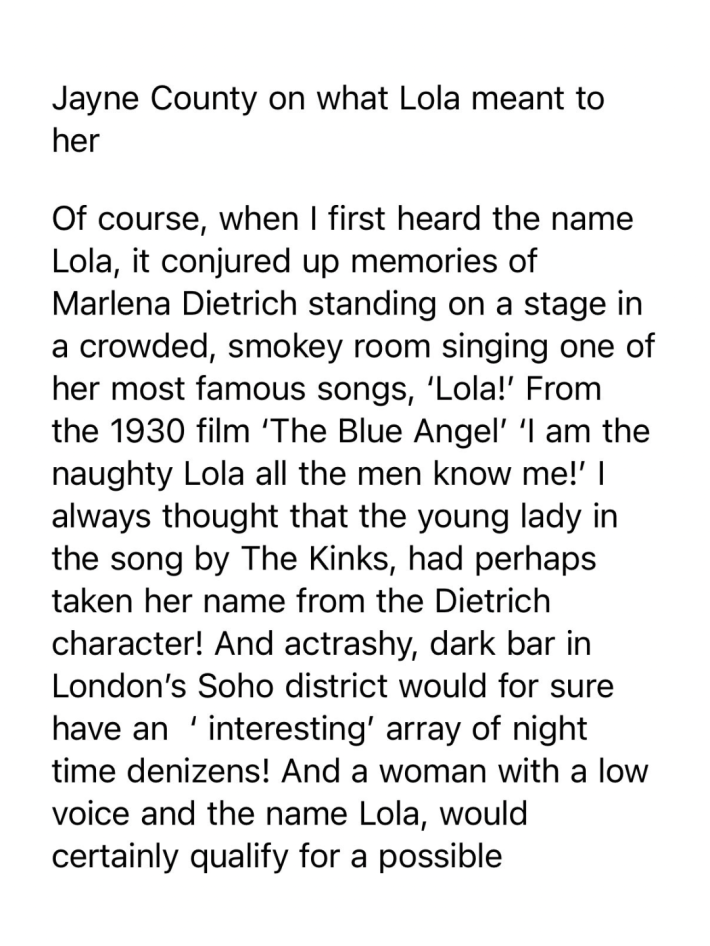
Perhaps the most compelling rebuttal to Moby’s critique came from Jayne County, a legendary figure in punk rock and a trailblazing transgender artist. County’s statement, shared by Dave Davies, offers an invaluable firsthand account from a prominent member of the transgender community who experienced "Lola" upon its original release.
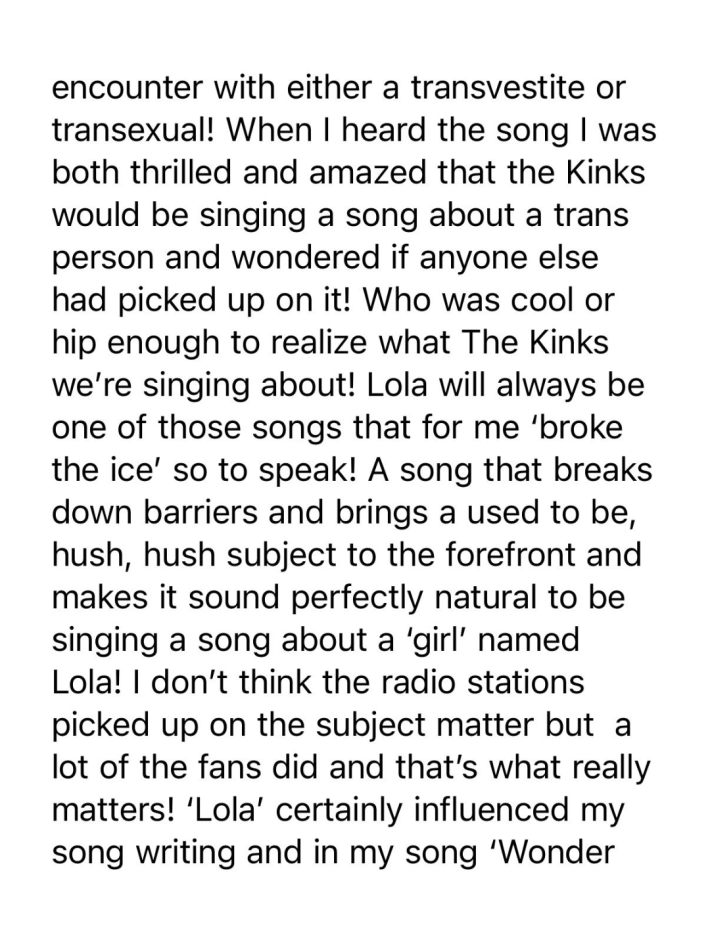
County’s statement reads in part: "When I heard the song I was both thrilled and amazed that The Kinks would be singing a song about a trans person and wondered if anyone else had picked up on it! Who was cool or hip enough to realize what The Kinks were singing about! Lola will always be one of those songs that for me ‘broke the ice’ so to speak! A song that breaks down barriers and brings a used to be, hush, hush subject to the forefront and makes it sound perfectly natural to be singing a song about a ‘girl’ named Lola! I don’t think the radio stations picked up on the subject matter but a lot of the fans did and that’s what really matters… Being Trans myself this will always be a very special song to me."
Jayne County’s words carry immense weight. As a pioneer of transgender visibility and punk artistry, her life and work have consistently challenged societal norms. Her enthusiastic endorsement of "Lola" as a barrier-breaking anthem directly contradicts Moby’s interpretation. Her testimony underscores that, for many within the LGBTQ+ community, "Lola" was not a source of offense but a beacon of recognition and acceptance in a hostile world. County’s perspective emphasizes the impact of the song on its intended audience and those who saw themselves reflected in Lola’s story, regardless of the mainstream media’s understanding or the nuances of 21st-century language. Her sentiment that the song "breaks down barriers" and makes a "hush, hush subject… sound perfectly natural" highlights its revolutionary aspect for its time.
Broader Cultural Crossroads: Re-evaluating Art in a Modern Context
The exchange between Moby and The Kinks, amplified by Jayne County’s intervention, encapsulates a broader cultural phenomenon: the continuous re-evaluation of historical art through contemporary ethical and social frameworks. This debate often pits the original intent and historical context of a work against its potential for modern misinterpretation or perceived harm.
Intent vs. Impact: Moby’s critique appears to focus on the perceived impact of the lyrics, suggesting they are "unevolved" by today’s standards. Ray Davies’s and Jayne County’s responses, however, emphasize the original intent and positive impact the song had on many, particularly within the LGBTQ+ community, at the time of its release. This tension is central to many current discussions about "cancel culture" and artistic legacy. Is a work’s value solely determined by its creator’s intent, or must it withstand scrutiny from evolving societal norms?
Evolving Language and Sensitivities: The language used to discuss gender identity has undergone significant transformation since 1970. Terms like "transgender" were not widely understood or used in popular discourse. While "Lola" may not employ the precise, nuanced vocabulary of today, its exploration of gender fluidity was radical for its era. Critics of Moby’s stance might argue that judging a 1970 song by 2026 linguistic standards is anachronistic and fails to appreciate its historical context and progressive spirit for its time. Conversely, proponents of Moby’s view might contend that artistic works, regardless of historical context, should still be assessed for their potential to perpetuate harmful stereotypes, even unintentionally.
The Role of Celebrity and Activism: Moby’s status as a prominent musician and activist lends weight to his statements. His decision to highlight "Lola" in The Guardian‘s column draws attention to the ongoing need for critical engagement with cultural artifacts. However, it also opens him up to criticism from those who feel he may be misinterpreting a historically significant work or overlooking the voices of those it positively impacted. This incident highlights the responsibility that comes with public commentary on cultural works, especially when it involves sensitive topics like gender identity.
Implications for The Kinks’ Legacy and Future Discourse
For The Kinks, "Lola" remains one of their most beloved and commercially successful songs. Its place in rock history and LGBTQ+ cultural history is firmly established. While Moby’s comments might prompt some listeners to revisit the lyrics with a more critical eye, Jayne County’s powerful testimony serves as a robust defense, reaffirming the song’s positive legacy for many. This debate is unlikely to fundamentally alter The Kinks’ standing but rather adds another layer to the ongoing discussion about how classic rock, and indeed all art, navigates the shifting sands of social progress.
This incident also serves as a reminder that the interpretation of art is rarely monolithic. A single work can hold vastly different meanings for different individuals and communities, especially across generations and identities. "Lola," through its journey from a 1970 chart-topper to a subject of contemporary debate, exemplifies the dynamic and often contentious relationship between historical artistic creation and modern societal values. The conversation Moby initiated, and the responses it generated, particularly from a voice as significant as Jayne County’s, ensure that "Lola"’s complex legacy will continue to be discussed, understood, and appreciated in its multifaceted glory. The dialogue underscores the importance of nuance, historical context, and listening to diverse voices when engaging with art that touches upon evolving human identities and experiences.
