

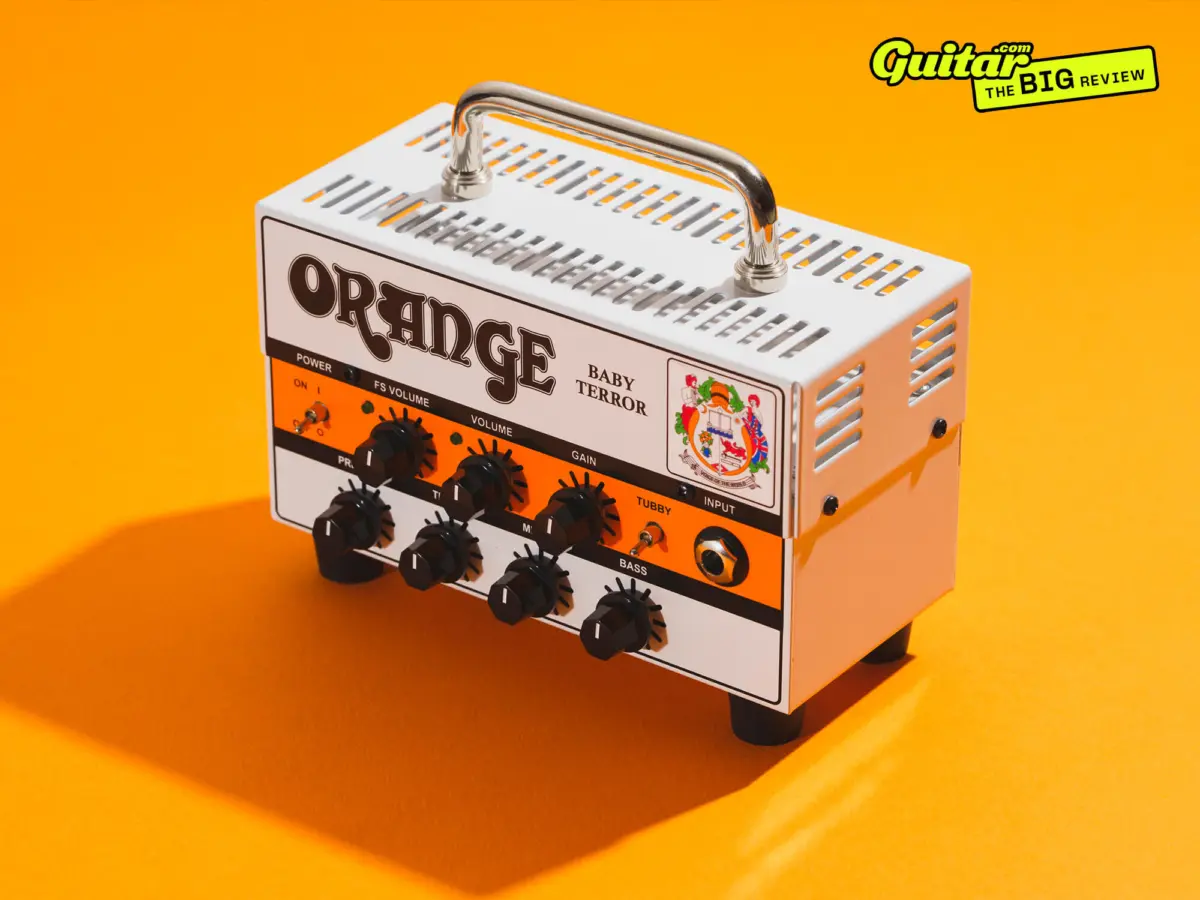
Orange Amplification, a name synonymous with iconic British rock tone, has introduced its latest innovation, the Baby Terror, priced at $249/£199. This new amplifier head marks a significant evolution in the company’s celebrated Terror series, seamlessly blending the enhanced versatility of Orange’s ‘Baby’ range with the compact form factor that made the original Micro Terror a global sensation. Positioned as a fully solid-state amplifier, the Baby Terror seeks to redefine expectations for portable, affordable, and feature-rich guitar amplification in a market increasingly leaning towards flexible and reliable solutions.
The Enduring Legacy of the Terror Series: A Chronological Evolution
The story of the Baby Terror is deeply intertwined with Orange Amplification’s pioneering journey in the realm of compact, high-performance amplifier heads. Founded in 1968 by Clifford Cooper, Orange quickly established itself as a cornerstone of the British music scene, known for its distinctive sound and vibrant visual identity. For decades, Orange amplifiers powered some of the most influential rock and heavy music acts, building a reputation for robust construction and unique tonal characteristics.
A pivotal moment in Orange’s modern history arrived in 2007 with the launch of the Tiny Terror. This 15-watt, all-tube "lunchbox" head was a game-changer, democratizing access to authentic tube tone in a portable, studio-friendly package. Its success is widely credited with kickstarting the entire lunchbox amplifier trend, proving that powerful, professional-grade sound didn’t require cumbersome, oversized cabinets. Following the Tiny Terror, Orange expanded the series with models like the Dark Terror, offering a more aggressive, high-gain voice, and the Micro Terror, which introduced a hybrid design (tube preamp, solid-state power amp) to further reduce size and cost. The Micro Terror, in particular, became an instant hit, celebrated for its astonishing volume and classic Orange character despite its diminutive stature (850 grams). The Micro Dark later built on this with an added effects loop and a darker tonal palette.
The introduction of the Baby Terror represents a further strategic step in this evolution. While previous Terror models, even the hybrid Micro Terror, retained a tube in their preamp stage, the Baby Terror embraces a fully solid-state architecture. This decision aligns with a broader industry trend towards reliable, maintenance-free, and increasingly sophisticated solid-state technology. It also draws heavily from Orange’s "Baby" series, which typically features more expansive control sets and greater connectivity than the earlier Micro models, albeit often at higher power ratings (e.g., 100-watt Class AB power amps). The Baby Terror, however, maintains the 20-watt power output of the Micro Terror, striking a balance between portability, affordability, and enhanced functionality.

Design and Engineering: A Compact Powerhouse
The Orange Baby Terror measures a mere 16.5cm by 14cm by 10cm, making it nearly identical in footprint to its predecessor, the Micro Terror. However, significant engineering refinements are evident both internally and externally. The Baby Terror boasts a robust, all-metal chassis, weighing in at 1.5 kilograms – a noticeable increase over the Micro Terror’s 850 grams. This added heft contributes to a more reassuring and stable presence, addressing a common observation with ultra-light mini-heads where vigorous playing could cause them to shift or even fall off their cabinets.
The most prominent enhancements are found in its expanded control set and comprehensive connectivity. Departing from the Micro Terror’s minimalist single-knob tone control, the Baby Terror features a more sophisticated front panel. It includes a three-band EQ (Bass, Middle, Treble), a dedicated Presence control, and a Gain knob, providing players with significantly greater tonal sculpting capabilities. In a practical design choice, Orange has opted for pedal-style indented knobs rather than its traditional rounded ones, facilitating easier, more precise adjustments on the compact front panel. The addition of dual master volume controls, switchable via an external footswitch, offers a practical solution for on-the-fly volume boosts, particularly useful for solos in live performance settings. A unique "Tubby" switch acts as a low-end boost, further expanding tonal possibilities.
The rear panel reveals a crucial upgrade in connectivity. An integrated effects loop (send and return) allows for the seamless integration of time-based and modulation effects (like reverb and delay) after the preamp stage, preserving their clarity and fidelity when combined with the amplifier’s distortion. This is a highly sought-after feature often absent in amplifiers at this price point. Furthermore, a dry, direct line-out from the preamp provides a clean signal for recording or routing to a larger PA system, though it lacks a cabinet simulator, necessitating external solutions for direct-to-desk applications. The footswitch jack for the dual master volume rounds out a remarkably flexible I/O for such a compact unit.
Performance and Tonal Versatility
Despite its fully solid-state design, the Baby Terror delivers a range of tones that firmly establish its Orange pedigree. Upon initial engagement with controls set to noon, the amplifier produces a surprisingly clean yet slightly overdriven sound. This initial cleanliness belies Orange’s reputation for aggressive drive, but the amplifier quickly reveals a versatility uncommon for single-channel designs.

The Gain control is highly interactive, featuring three distinct "zones" of tonal character:
- Sparkling Clean (Below 40% Gain): This zone offers articulate clean tones, though they can lean towards thinness without assistance. Engaging the "Tubby" switch significantly enhances this region, adding warmth and roundness reminiscent of classic Fender tones, preventing an "anaemic" or "dry" sound.
- Edge-of-Breakup to Bluesy Overdrive (40-60% Gain): This mid-gain territory is particularly dynamic, allowing players to manipulate the level of breakup with picking dynamics. It’s an inspiring range for blues, classic rock, and expressive playing.
- Fuzzy High Gain (Above 70% Gain): Pushing the gain into its upper echelons unlocks a pleasingly fuzzy, distorted sound. While it doesn’t quite achieve the "wall of thick, overblown doominess" of higher-wattage tube amps like the Orange OR15, it retains a classic Orange "throatiness" in the midrange, perfectly suited for the iconic riffs of C#-era Black Sabbath or stoner rock. It’s important to note that the "Tubby" switch, while beneficial for cleans, tends to make high-gain tones sound "flubby" rather than "tubby," and is generally best disengaged in this territory.
A key implication of the single-channel design is the absence of true clean-to-dirty channel switching. For players requiring this functionality within a song or set, external drive pedals become essential. The Baby Terror performs admirably as a pedal platform for classic ragged rock and scuzzy doom sounds when paired with pedals like Big Muffs and RATs, delivering compelling tones for its price point. However, it exhibits some limitations when attempting tighter, modern metal chug or when boosted with TS-style pedals, often producing excessive high-end fizz and a low-end that can be difficult to tighten, even with the "Tubby" switch disengaged. This characteristic is often attributed to the inherent differences in how solid-state input stages react to boost pedals compared to their tube counterparts.
The integrated effects loop stands out as a critical feature, particularly for players utilizing time-based and modulation effects. By allowing these pedals to operate after the preamp’s gain stage, it ensures their clarity and prevents them from becoming muddy or distorted. This also opens up the possibility of bypassing the Baby Terror’s preamp entirely, allowing users to run preamp pedals or digital modellers (like the upcoming NAM A2-capable units) directly into its 20-watt solid-state power amp, offering immense flexibility for gigging musicians on a budget.
Practical Applications and Market Positioning
In terms of sheer volume, the Baby Terror is surprisingly potent. Its 20 watts are more than capable of being "antisocial at home" and provide ample headroom for practice rooms and most small to medium-sized gigs, especially when mic’d through a PA system. The footswitchable volume control is a significant asset for live performance, offering a dedicated solo boost without the need for additional pedals.
Orange has made a deliberate choice regarding the amplifier’s direct output. The dry line-out functions as a balanced version of the preamp send, crucially lacking any integrated cabinet simulation. This means that for direct-to-desk recording or FOH (Front-of-House) applications in a live setting, an external cabinet simulator or impulse response loader would be necessary to achieve a polished, speaker-emulated sound. This omission distinguishes it from some modern practice amps that offer built-in cab sims.

Another notable decision is the absence of a headphone jack, a feature present on the Micro Terror. Orange’s strategy here appears to acknowledge the proliferation of sophisticated, digitally-driven mini practice amplifiers from brands like Positive Grid and Blackstar. These dedicated devices, such as the Spark Go/Mini or Blackstar Beam Mini, offer comprehensive practice solutions with built-in effects, backing tracks, and robust headphone connectivity. By omitting this feature, Orange seems to be positioning the Baby Terror as a purist, compact gigging and recording head rather than an all-in-one coffee table practice unit, assuming users will leverage other, more specialized tools for silent practice.
Statements and Industry Analysis
An Orange Amplification spokesperson commented on the Baby Terror, stating, "Our goal with the Baby Terror was to deliver the unmistakable Orange sound and robust functionality in our most portable and accessible solid-state package yet. We’ve listened to the demands of modern guitarists who need reliability, versatility, and great tone without compromise, whether they’re practicing at home, recording in the studio, or playing a small club gig. The fully solid-state design, combined with features like the effects loop and comprehensive EQ, represents our commitment to innovation while staying true to our analogue roots."
Industry analysts have weighed in on Orange’s strategic direction. "The Baby Terror is a smart move for Orange," remarked one analyst specializing in the guitar amplification market. "It taps into the growing demand for reliable, low-maintenance solid-state amps that offer performance approaching their tube counterparts, but at a more accessible price point. The decision to go fully solid-state, while maintaining Orange’s signature tonal character, positions them strongly against both traditional tube amps and the rapidly evolving digital modelling market. It’s a testament to how far solid-state technology has come."
Musicians who have previewed the Baby Terror have generally praised its portability, robust build, and surprising tonal depth for its size and cost. "It’s incredible what Orange has packed into such a small head," noted a session guitarist. "The effects loop alone makes it a game-changer for my pedalboard, and the sheer volume it puts out is astonishing for 20 watts. It’s a proper gigging amp you can throw in your backpack."
Competitive Landscape and Alternatives

At its $249/£199 price point, the Orange Baby Terror enters a competitive market segment, offering distinct advantages and catering to specific player needs.
- Orange Micro Terror ($159/£139): The Baby Terror’s direct predecessor remains a strong alternative for players who prioritize absolute minimalism and cost savings. Its hybrid design with a 12AX7 tube in the preamp offers a classic tube-like feel for those who primarily rely on fuzz or overdrive pedals into a simple setup, and it includes a headphone output for silent practice. However, it lacks the effects loop, comprehensive EQ, and footswitchable volume of the Baby Terror.
- Laney Ironheart Foundry Series IRF Leadtop ($299.99/£149.99): For players seeking a more modern, tighter, and chuggier high-gain sound, Laney’s solid-state offerings provide a compelling alternative. The IRF Leadtop is designed with contemporary metal and rock tones in mind, offering a different tonal flavour than Orange’s characteristic midrange throatiness.
- Orange Tour Baby 100 ($599/£459): For those who love the Orange solid-state sound but require significantly more power for larger stages or louder band situations, the Tour Baby 100 is an excellent, albeit more expensive, option. It offers 100 watts of Class AB power, providing greater headroom and low-end impact, while retaining the versatility and features of the ‘Baby’ range.
- Digital Practice Amplifiers (Blackstar Beam Mini $229/£169, Positive Grid Spark Go $99/£95, Spark Mini $199/£199): For home users whose primary need is quiet practice, playing along to tracks, and headphone connectivity, these digitally-driven mini amps offer unparalleled flexibility. They integrate effects, amp models, and often Bluetooth connectivity, making them ideal all-in-one solutions for casual play and learning. They are distinct from the Baby Terror, which is primarily designed as a robust and portable gigging/recording head.
Broader Impact and Future Implications
The Orange Baby Terror signifies more than just another amplifier release; it reflects broader shifts in the guitar amplification market. Its fully solid-state design, combined with its feature set and price, positions it at the forefront of a solid-state renaissance. Modern solid-state technology has advanced to a point where it can convincingly emulate classic tube characteristics while offering superior reliability, consistency, and lower maintenance costs. This makes amplifiers like the Baby Terror incredibly attractive to a new generation of musicians, as well as seasoned players seeking practical, grab-and-go solutions.
By offering its distinct, "loud-as-hell, analogue-as-possible" character in such a versatile and affordable package, Orange reinforces its brand identity in a crowded and evolving market. The Baby Terror caters directly to the needs of gigging musicians on a budget, home recording enthusiasts, and players who prioritize portability without sacrificing genuine amplifier tone. Its existence challenges the long-held dogma that authentic tone must come from tubes, demonstrating that innovative solid-state engineering can deliver compelling and inspiring sounds. This strategic move by Orange is likely to further accelerate the adoption of advanced solid-state technology across the industry, shaping the future of compact and high-performance guitar amplification.
