

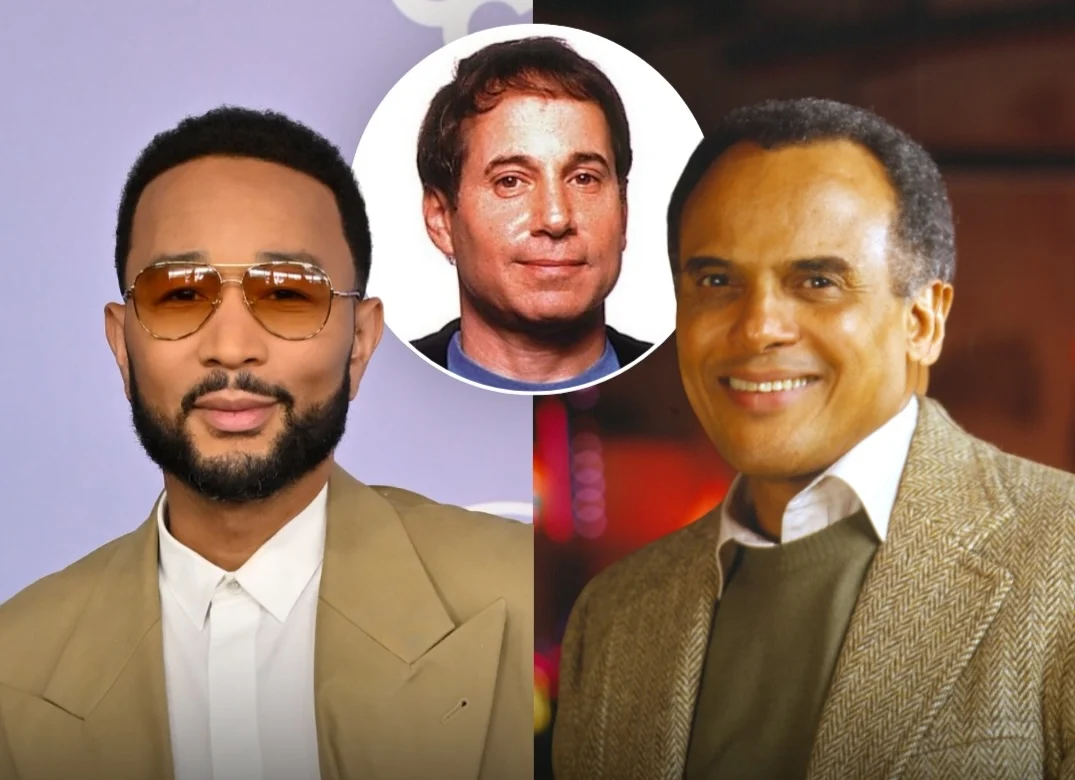
A forthcoming cinematic endeavor, The Road Home, helmed by Oscar-winning director Bill Condon, is set to delve into the complex and often contentious narrative surrounding Paul Simon’s seminal 1986 album, Graceland. Far from a conventional biopic focusing solely on Simon, the film will pivot its perspective, primarily exploring the challenging decisions faced by South African jazz legend Hugh Masekela during the politically charged era of apartheid and his subsequent involvement in the Graceland tour. The production, currently underway in South Africa, promises to revisit a pivotal moment in music history, one inextricably linked with the global anti-apartheid movement and the enduring debates around cultural exchange amidst political boycotts.
The Enduring Legacy of Graceland and Its Thorny Genesis
Released in August 1986, Paul Simon’s Graceland was an immediate and resounding success, both critically and commercially. The album, celebrated for its innovative fusion of pop, rock, and South African township music, garnered widespread acclaim, earning Simon the Grammy Award for Album of the Year in 1987. Its singles, including "You Can Call Me Al," "The Boy in the Bubble," and the title track, became global hits, propelling Graceland to multi-platinum status worldwide, selling over 16 million copies to date. Critics lauded its vibrant soundscapes, sophisticated songwriting, and its role in introducing a generation of listeners to the rich musical traditions of Southern Africa.
However, the album’s genesis was not without significant controversy. Simon’s decision to travel to apartheid-era South Africa in 1985 to record with local musicians, including Ladysmith Black Mambazo, Ray Phiri, and Bakithi Kumalo, sparked a fierce debate within the international anti-apartheid movement. At the time, the United Nations, alongside the African National Congress (ANC) and various artists’ unions, had imposed a cultural boycott on South Africa, urging international artists not to perform or collaborate with the regime in an effort to isolate the apartheid government. This boycott was a crucial component of the broader sanctions regime designed to pressure Pretoria into dismantling its discriminatory system of racial segregation.
Simon, in his defense, maintained that his intentions were purely artistic and that he sought to collaborate with and celebrate the talent of South African musicians, providing them with a global platform. He argued that his project was not an endorsement of apartheid but rather a direct engagement with its victims, offering economic opportunities and artistic recognition to those marginalized by the regime. However, critics, including prominent anti-apartheid figures, contended that by entering South Africa without explicit permission from the ANC or the United Nations Special Committee Against Apartheid, Simon had violated the spirit and letter of the boycott, inadvertently legitimizing a regime that was systematically oppressing its black majority.
The Cultural Boycott: A Weapon Against Apartheid
To fully appreciate the intensity of the Graceland controversy, it is essential to understand the context of the cultural boycott. Initiated in the early 1960s and gaining momentum throughout the 1970s and 80s, the boycott was a powerful non-violent tool wielded by the international community against the apartheid government. Organizations like Artists United Against Apartheid, formed in 1985, mobilized global musicians to take a stand, famously releasing the protest song "Sun City." The boycott aimed to deny the apartheid regime any semblance of normalcy or international acceptance, underscoring its pariah status.
The rules of the boycott were clear: no cultural visits, performances, or collaborations with South African institutions or individuals without explicit approval from the liberation movements, primarily the ANC. This was to ensure that cultural interactions did not inadvertently serve as propaganda for the regime or undermine the efforts to isolate it. Simon’s failure to consult these bodies before his trip was seen by many as a unilateral act that disregarded the collective strategy of the anti-apartheid struggle, leading to calls for his own boycott by some activists upon Graceland‘s release and subsequent tour.
Hugh Masekela’s Pivotal Role: The Film’s Central Narrative
The Road Home distinguishes itself by shifting the narrative focus from Paul Simon to the late South African jazz trumpeter and activist, Hugh Masekela. Masekela, a towering figure in African music whose 1968 instrumental "Grazing in the Grass" topped American charts, spent decades in exile due to his outspoken opposition to apartheid. His return to his homeland would only occur after the release of Nelson Mandela and the dismantling of apartheid. The film explores the immense pressure and ethical dilemma Masekela faced when Simon invited him to join the Graceland tour.
For Masekela, a staunch anti-apartheid campaigner who had personally endured the pains of exile and fought for the liberation of his people, the decision to collaborate with Simon, who many believed had breached the cultural boycott, was fraught with complexity. The tour presented an unparalleled opportunity to showcase South African music and its musicians on a global stage, potentially bringing broader awareness to the plight of those suffering under apartheid. However, accepting the invitation also risked alienating his fellow activists and undermining the very boycott he had supported for years. The film, written by Michael Bronner (known for The Mauritanian) and brought to the screenwriter by the Hugh Masekela Heritage Foundation, aims to illuminate this profound personal and political struggle, offering a nuanced portrayal of Masekela’s motivations and the difficult choices he navigated.
A Distinguished Cast Brings History to Life
The ensemble cast for The Road Home features a blend of established talents and rising stars, promising compelling portrayals of these historical figures. British actor and musician Johnny Flynn, notably born in apartheid-era South Africa, will embody Paul Simon. Flynn’s unique background could lend a particular sensitivity to his interpretation of Simon’s complex position.
Taking on the central role of Hugh Masekela is South African actor Thabo Rametsi, known for his work in The Mauritanian and Kalushi: The Story of Solomon Mahlangu. Rametsi’s casting signals a commitment to authenticity and a deep understanding of Masekela’s cultural and political significance.
Joining them is the acclaimed Tony and Grammy Award-winning actress Cynthia Erivo, who will portray Miriam Makeba, another iconic South African musician and anti-apartheid activist. Makeba, known as "Mama Africa," spent over three decades in exile, using her voice to condemn apartheid on the international stage. Her involvement in the Graceland tour alongside Masekela was equally significant and controversial, highlighting the multifaceted perspectives within the exiled South African artistic community.
Adding further gravitas to the cast is John Legend, the multi-platinum recording artist and Oscar-winning songwriter, who steps into the role of Harry Belafonte. Belafonte, a legendary entertainer and formidable civil rights leader, played a significant, albeit complex, advisory role in Simon’s initial inquiries about visiting South Africa. Legend, while primarily a musician, has demonstrated his acting prowess in various projects and, importantly, shares Belafonte’s commitment to social justice, making his casting particularly resonant. Legend himself expressed his profound respect for Belafonte, stating: "I was honored to know Mr. Belafonte as my friend, mentor and collaborator in the struggle for justice. He was an incredible human being who lived a monumental, revolutionary life. He was the epitome of an artist and activist who set a standard for me and so many others who stand on his shoulders. I count it a privilege to be entrusted with the role of Harry Belafonte in this special film."
Veteran actor Guy Pearce rounds out the announced cast as Archbishop Trevor Huddleston, a prominent British anti-apartheid activist who spent years in South Africa and was a vocal proponent of the cultural boycott. Huddleston reportedly urged Masekela to join the boycott, further underscoring the moral and political pressures at play.
The Graceland Tour: A Global Stage for South African Music
The Graceland tour, which kicked off in Zimbabwe in 1987, became a global phenomenon, featuring Simon alongside a large ensemble of South African musicians, including Masekela, Makeba, Ladysmith Black Mambazo, and others. The tour played to sold-out stadiums worldwide, introducing millions to the vibrant sounds of mbaqanga, isicathamiya, and township jazz. For many, it was an exhilarating celebration of South African culture, a testament to the power of music to transcend political barriers.
However, the tour remained contentious. While it undeniably raised the international profile of South African music and musicians, it continued to be met with protests from anti-apartheid activists who maintained that Simon had undermined the boycott. The debate raged: did the tour primarily benefit Simon, or did it genuinely serve the interests of the oppressed musicians and the broader anti-apartheid cause by giving them a voice and a platform? The Road Home promises to explore these conflicting interpretations, particularly through the eyes of Masekela and Makeba, who navigated the delicate balance between artistic opportunity and political solidarity.
Harry Belafonte’s Counsel and the Nuances of Activism
Harry Belafonte’s involvement in the Graceland story adds another layer of complexity. Simon reportedly consulted Belafonte, a leading figure in both the civil rights movement and the anti-apartheid struggle, during their collaboration on the "We Are The World" charity single. Belafonte, renowned for his activism and deep ties to various liberation movements, was a respected authority on such matters. While initial reports suggested Belafonte might have given Simon the green light for his South African trip, implying a misunderstanding on Simon’s part regarding the breadth of the boycott’s enforcement, the full scope of their conversation and Belafonte’s precise advice remains subject to historical interpretation.
Belafonte himself later clarified his position, acknowledging the complexity and emphasizing that while he understood Simon’s artistic motivations, the decision ultimately rested with Simon to navigate the political landscape. The Road Home is expected to explore these nuanced interactions, highlighting that even within the anti-apartheid movement, there could be differing perspectives on the most effective strategies for challenging the regime. John Legend’s portrayal will likely capture Belafonte’s sagacity and his consistent commitment to justice, even amidst difficult choices.
Broader Implications and the Legacy of Cultural Exchange
The Road Home arrives at a time when discussions about cultural appropriation, artistic freedom, and the ethical responsibilities of artists remain highly relevant. By focusing on Hugh Masekela’s perspective, the film seeks to reframe the Graceland narrative, moving beyond Simon’s intentions to foreground the experiences and moral quandaries of the South African artists themselves. This shift in perspective offers an opportunity to delve into the lasting impact of such collaborations on individual lives, artistic legacies, and the broader historical understanding of the anti-apartheid movement.
The film’s exploration of the Graceland controversy will undoubtedly reignite discussions about the efficacy of cultural boycotts, the role of art in political struggles, and the power dynamics inherent in cross-cultural artistic endeavors. It prompts viewers to consider who truly benefits from such collaborations, whose voices are amplified, and how historical events are remembered and reinterpreted. By giving a platform to the South African voices at the heart of the story, The Road Home has the potential to enrich our understanding of a complex historical chapter and its enduring lessons for cultural diplomacy and social justice.
Production Underway
The Road Home is currently in production in South Africa, bringing this pivotal historical narrative to life on the very ground where much of the story unfolded. With Bill Condon’s seasoned direction and a powerful story championed by the Hugh Masekela Heritage Foundation, the film is poised to offer a compelling and timely re-examination of one of music’s most celebrated, yet controversial, albums. Its release will undoubtedly spark renewed debate and reflection on the intricate interplay of art, politics, and morality in a globalized world.
