

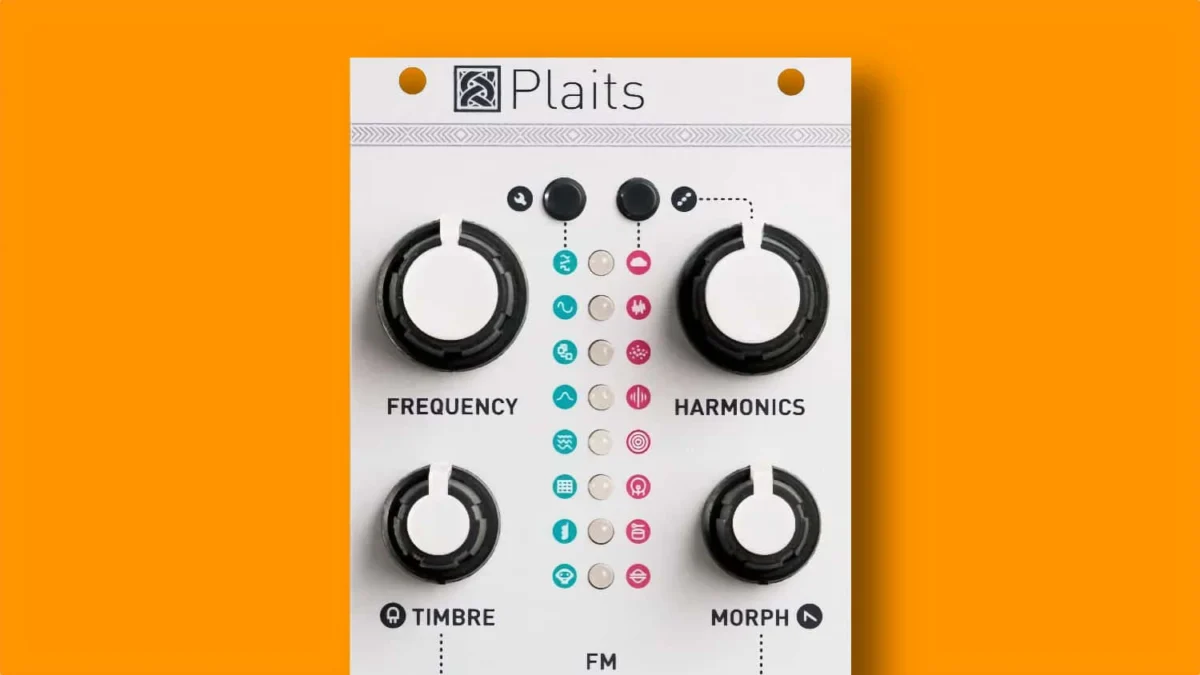
The landscape of modular synthesis has been fundamentally altered by the introduction of Plaits Palette, a free, browser-based utility developed by Rubato Audio. This tool provides users of the Mutable Instruments Plaits—and its numerous hardware clones—with the ability to generate custom firmware through a streamlined graphical user interface. By eliminating the need for complex coding environments or specialized toolchains, Plaits Palette democratizes the process of module customization, allowing synthesists to reconfigure the internal architecture of one of the most significant digital oscillators in the history of the Eurorack format.
Technical Overview of Plaits Palette
Plaits Palette functions as a compiler-wrapper that operates within modern web browsers, leveraging the open-source code base of the original Mutable Instruments firmware. The tool allows users to curate their own selection of synthesis models from a comprehensive library, effectively letting them decide which algorithms occupy the module’s internal memory slots.
The original Plaits module features two banks of eight models each, covering a range of synthesis techniques from virtual analog to physical modeling. With the advent of Plaits Palette, users can now access up to four banks of models, significantly expanding the sonic palette available at any given time. Beyond simple model selection, the utility provides deep-tier customization for specific engines. This includes the ability to modify chord tables for the additive and string synthesis engines, customize speech models for the vocal synthesis engine, and, perhaps most notably, load custom Yamaha DX7 patches into the 6-operator FM engine.
Historical Context: The Legacy of Mutable Instruments
To understand the significance of Plaits Palette, one must examine the history of the hardware it supports. Mutable Instruments, founded by Émilie Gillet, released Plaits in 2018 as a successor to the Braids macro-oscillator. While Braids was known for its vast array of digital sounds, it was often criticized for its complex menu-diving interface. Plaits solved this by offering a "macro" approach: a single module with two knobs for primary parameters (Harmonics, Timbre, and Morph) and a simplified selection system.
Upon its release, Plaits quickly became a cornerstone of modern Eurorack systems. Its design philosophy—providing high-level access to complex digital synthesis—influenced an entire generation of hardware. In late 2022, Mutable Instruments announced it would cease operations, marking the end of an era for the modular community. However, because Gillet released the source code and hardware schematics under open-source licenses (GPL3.0 and Creative Commons), the module has lived on through community-driven updates and third-party hardware reproductions.
Chronology of Plaits Development and Community Innovation
The journey from the original 2018 release to the launch of Plaits Palette involves several key milestones in the modular synthesis timeline:
- March 2018: Mutable Instruments officially releases Plaits. It features 16 models, including virtual analog, wavetable, FM, and percussive engines.
- 2019–2021: The "Clone Era" begins. Numerous manufacturers, ranging from boutique builders to large-scale operations like Behringer (with their "Brains" module), utilize the open-source files to create compatible hardware.
- Late 2022: Mutable Instruments transitions into a legacy support phase, eventually ceasing production of all modules.
- December 2022: Émilie Gillet releases a final official firmware update for Plaits (v1.2), which introduces a DX7-compatible FM engine and additional synthesis models, expanding the module’s versatility.
- 2023: Independent developers begin experimentations with the v1.2 source code, creating "alt-firmwares" that include hidden features and expanded bank access.
- 2024: Rubato Audio launches Plaits Palette, providing a user-friendly interface for these complex firmware modifications, effectively bridging the gap between hardcore developers and casual users.
Supporting Data and Module Capabilities
The Plaits architecture is based on the STM32F373 microcontroller, a choice that originally dictated the module’s processing power and memory limits. Despite these constraints, the firmware is remarkably efficient. Plaits Palette allows users to manipulate several data-heavy components:
- Frequency Modulation (FM): The module includes a 6-operator FM engine. Plaits Palette enables the importation of Sysex files, allowing users to utilize thousands of vintage DX7 patches within their Eurorack system.
- Wavetables: Users can select specific wavetables to be loaded into the digital synthesis slots, tailoring the harmonic content to specific musical genres.
- Speech Synthesis: The vocal engine in Plaits relies on specific word lists and formant data. The Palette tool allows for the customization of these lists, enabling the module to "speak" user-defined phrases or phonemes.
- Chord Tables: The "Chords" model uses predefined intervals. Through the web interface, users can define custom intervals, moving beyond standard major/minor triads into microtonal or complex jazz voicings.
Industry Reactions and User Integration
The release of Plaits Palette has been met with widespread acclaim from the modular synthesis community. Jimmy Cuadra, a prominent voice in the synthesis world known as Perceptes, recently highlighted the tool’s ease of use. In a detailed overview, Cuadra demonstrated how the browser-based workflow removes the "friction" associated with firmware updates. Traditionally, modifying Eurorack firmware required a working knowledge of GitHub, C++, and command-line interfaces. Plaits Palette reduces this to a series of clicks and a simple audio file download.
Similarly, the synthesizer reviewer known as The Unperson has emphasized the sonic expansion capabilities of the tool. Analysts in the music technology sector note that Plaits Palette represents a growing trend of "software-as-a-service" (SaaS) models supporting legacy hardware. By providing a free tool to keep a discontinued module relevant, Rubato Audio has fostered significant goodwill within the enthusiast market.
While there has been no official statement from the now-dormant Mutable Instruments, the project aligns perfectly with Émilie Gillet’s original vision of open-source hardware. The community’s ability to take the "DNA" of Plaits and continue evolving it is a testament to the robustness of the original design.
Broader Impact on the Modular Ecosystem
The implications of Plaits Palette extend beyond a single module. This tool serves as a case study for the longevity of digital hardware in an increasingly disposable tech world.
The Democratization of DSP
Digital Signal Processing (DSP) was once the domain of specialized engineers. Tools like Plaits Palette suggest a future where the "average" musician can act as a sound designer at the architectural level. By allowing users to swap synthesis engines as easily as they might change a preset on a VST, the line between hardware and software continues to blur.
Preservation of Legacy Hardware
As more classic modules enter "end-of-life" status, community-driven software tools will become essential for their preservation. Plaits Palette ensures that even as the original hardware ages, its functional capabilities can continue to expand to meet modern production standards.
Impact on the Second-Hand Market
The secondary market for Eurorack modules is highly volatile. The introduction of a tool that adds value to a module often leads to a stabilization or increase in its resale price. Industry observers have noted that the "Plaits ecosystem"—including clones like the CalSynth Malachy or the Michigan Synth Works Beehive—remains one of the most active segments of the used market, largely due to the continuous stream of software innovations like those provided by Rubato Audio.
Technical Execution and Safety
One of the most innovative aspects of Plaits Palette is its delivery system. To update the firmware, the tool generates a .wav file. The user then plays this audio file into the "Model" input of the Plaits module while it is in bootloader mode. This "audio-as-data" approach was pioneered by Mutable Instruments to ensure that users without specialized programming headers (like ST-Link) could still update their modules.
Plaits Palette maintains this safety standard. The generated audio files include checksums to prevent the installation of corrupted data, which could potentially "brick" the module. This high level of technical reliability has been a key factor in the tool’s rapid adoption.
Conclusion and Future Outlook
Plaits Palette by Rubato Audio stands as a significant achievement in the field of music technology. It honors the legacy of Mutable Instruments while pushing the boundaries of what is possible with existing hardware. By providing a bridge between complex code and creative expression, it ensures that the Plaits architecture will remain a vital part of the synthesis landscape for years to come.
As the Eurorack community continues to evolve, the success of Plaits Palette may encourage other developers to create similar "palettes" for other open-source modules, such as those from the Mutable Instruments Clouds or Rings lines. For now, users of the world’s most popular macro-oscillator have been granted a nearly infinite set of new sonic possibilities, all accessible through a simple web browser.
