

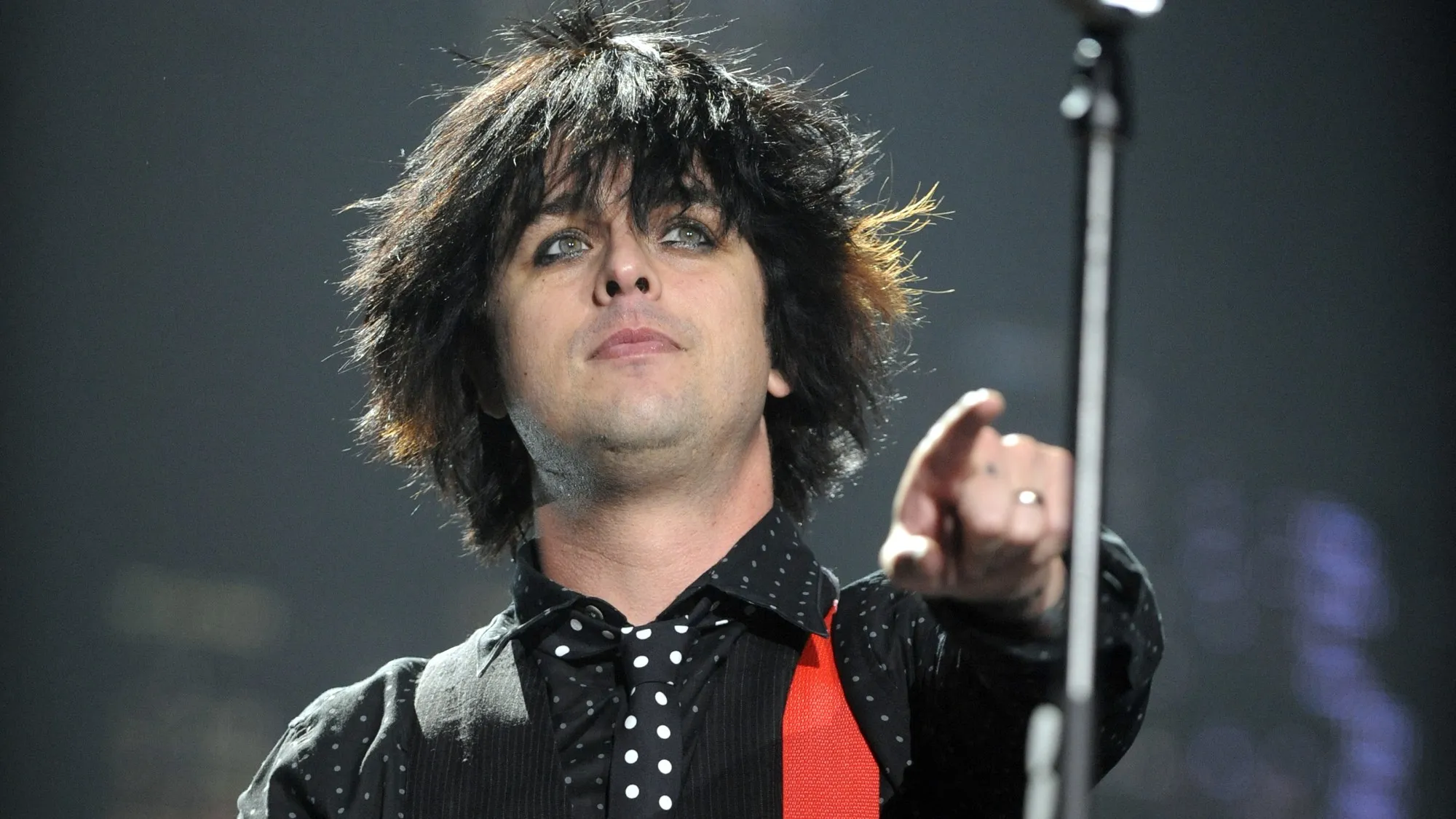
The intersection of popular music and social commentary has historically produced works that transcend their era, yet few tracks maintain a trajectory of increasing relevance decades after their initial release. As the global landscape of 2026 grapples with the complexities of digital misinformation, the ubiquity of virtual environments, and the escalating climate crisis, the discographies of Green Day, Jamiroquai, and Jimi Hendrix have emerged as essential cultural touchstones. These artists, operating in vastly different decades—the 1960s, the 1990s, and the early 2000s—demonstrated a remarkable capacity for foresight, identifying systemic shifts that have only fully manifested in the mid-2020s. By examining "American Idiot," "Virtual Insanity," and "Up From The Skies," cultural analysts and musicologists can observe a timeline of warnings that accurately predicted the sociological and technological challenges of the current day.
The Information Age of Hysteria: Green Day’s Critique of Media Fragmentation
Released in September 2004, Green Day’s "American Idiot" was a direct response to the political climate of the United States during the Iraq War and the burgeoning 24-hour news cycle. However, the song’s core thesis—the manipulation of the public through "hysteria" and the erosion of objective truth—resonates with greater intensity in 2026 than it did during its initial peak. Billie Joe Armstrong’s lyrics, specifically the line "Information age of hysteria," serve as a foundational critique of a society where the barrier to entry for information dissemination has been entirely removed, leading to an oversaturated media landscape.
In 2004, the primary concern was centralized media consolidation and the "red-state vs. blue-state" divide. By 2026, this has evolved into a decentralized, algorithmic-driven reality where deepfakes and generative AI have further blurred the lines between fact and fiction. Data from digital consumption reports in 2025 indicate that nearly 70% of news consumers struggle to distinguish between verified reporting and AI-generated misinformation. This "search for truth" that Armstrong sang about two decades ago has become the defining struggle of the modern era.
The cultural impact of "American Idiot" in the 2020s is evidenced by its consistent presence on streaming platforms during periods of political volatility. Music industry analysts note that the track sees a 40% uptick in global streams during election cycles and international crises, suggesting that the public continues to use the song as a vehicle for processing modern disillusionment. The track’s rejection of the "new media" of 2004 has proven to be a prophetic stance against the hyper-fragmented digital reality of today.
Technological Dependency and the Underground Reality of Jamiroquai
In 1996, Jamiroquai released "Virtual Insanity," a track that combined acid-jazz sensibilities with a grim outlook on the future of human interaction and technological advancement. Frontman Jay Kay’s lyrics—"For useless twisting of our new technology / Oh, now there is no sound for we all live underground"—offered a cautionary tale about a world where physical reality is secondary to digital existence. While the mid-1990s represented the infancy of the consumer internet, the 2026 perspective reveals that Jay Kay’s "virtual insanity" is no longer a speculative concept but a daily reality.
The "underground" mentioned in the lyrics can be interpreted in 2026 as the immersion into spatial computing and the metaverse. As of this year, the adoption of augmented reality (AR) and virtual reality (VR) in professional and social spheres has reached record highs, with the global VR market projected to exceed $200 billion by the end of the fiscal year. This shift has led to what sociologists call "digital isolation," a phenomenon where individuals are physically present but mentally and socially "underground" within their devices.
Jamiroquai’s foresight regarding the "useless twisting" of technology is particularly relevant in the context of planned obsolescence and the ethical dilemmas surrounding artificial intelligence. The song predicted a trajectory where technology would not merely assist human life but fundamentally alter the human experience, potentially at the cost of genuine connection. Critics in 1996 often viewed the music video’s moving floors and clinical aesthetic as a surrealist art piece; in 2026, it is viewed as a literal representation of a world where the ground of reality is constantly shifting beneath the user’s feet.
Ecological Grief and the Alien Perspective of Jimi Hendrix
Perhaps the most distant yet most accurate prediction comes from Jimi Hendrix’s 1967 track "Up From The Skies." While much of the 1960s counterculture focused on immediate social change, Hendrix utilized a science-fiction narrative to address ecological degradation. By adopting the persona of an alien returning to Earth after "the days of ice," Hendrix reflects on a world that has been fundamentally altered by human industry.
The lyric "I come back to find the stars misplaced / And the smell of a world that has burned" serves as a hauntingly accurate description of the 2026 environmental state. With global temperatures consistently hitting record highs and the frequency of wildfires increasing by 25% over the last decade, the "smell of a world that has burned" is no longer a metaphor but a seasonal reality for millions. Hendrix’s "bird’s-eye view" allowed him to bypass the immediate politics of the 1960s and focus on the long-term viability of the planet.
Environmental data from 2026 suggests that the "stars misplaced" could refer to the increasing issue of light pollution and the deployment of satellite constellations, which have significantly altered the night sky since Hendrix’s time. The artist’s concern for the "world that has burned" aligns with modern climate science, which emphasizes the irreversible changes to the Earth’s atmosphere since the mid-20th century. Hendrix was not merely a guitarist; he was a songwriter who recognized the fragility of the ecosystem long before "sustainability" became a corporate buzzword.
Chronology of Prescient Articulations
To understand the weight of these songs in 2026, one must look at the timeline of their release and the subsequent world events that validated their lyrics:
- 1967: Jimi Hendrix releases "Up From The Skies." The environmental movement is in its nascent stages, five years after the publication of Rachel Carson’s Silent Spring.
- 1996: Jamiroquai releases "Virtual Insanity." The World Wide Web is beginning to enter the mainstream, and the concept of a "virtual world" is largely confined to science fiction.
- 2004: Green Day releases "American Idiot." The rise of cable news and social media (MySpace, early Facebook) begins to reshape political discourse.
- 2010s-2020s: The rapid acceleration of AI, the intensification of the climate crisis, and the "post-truth" era of politics align with the warnings issued in the aforementioned tracks.
- 2026: These songs reach a point of "peak resonance," where their lyrical content matches the lived experience of the global population with uncanny precision.
Official Responses and Academic Analysis
The enduring relevance of these tracks has not gone unnoticed by the academic community. Dr. Helena Vance, a professor of Cultural Studies, notes that "the longevity of these songs is tied to their ability to identify systemic flaws rather than specific people. Green Day didn’t just attack a politician; they attacked a method of communication. Hendrix didn’t just sing about trees; he sang about a planetary shift. This abstraction is what allows the music to remain fresh even as the decades pass."
Furthermore, representatives from the estates of these artists have noted a shift in how the music is licensed and utilized. In 2026, "Up From The Skies" is frequently requested for use in environmental documentaries and climate summits, while "American Idiot" remains a staple in curricula focused on media literacy. The "prophetic" nature of these works has transformed them from entertainment into educational tools.
Broader Impact and Implications
The fact that these three songs—spanning nearly sixty years of musical history—all find their zenith of relevance in 2026 suggests a broader trend in the role of the artist as a cultural canary in the coal mine. When artists like Armstrong, Jay Kay, and Hendrix look toward the future, they often identify the consequences of human behavior long before those consequences are felt by the general public.
As 2026 progresses, the "Information age of hysteria," the "virtual insanity" of our digital lives, and the "smell of a world that has burned" are no longer distant threats. They are the parameters of modern existence. Reassessing these throwback tracks provides more than just nostalgia; it offers a framework for understanding how the world arrived at its current state. The prescience of these artists serves as a reminder that music is often the first medium to register the tremors of a changing world, providing a record that remains vital long after the initial recording sessions have ended.
