

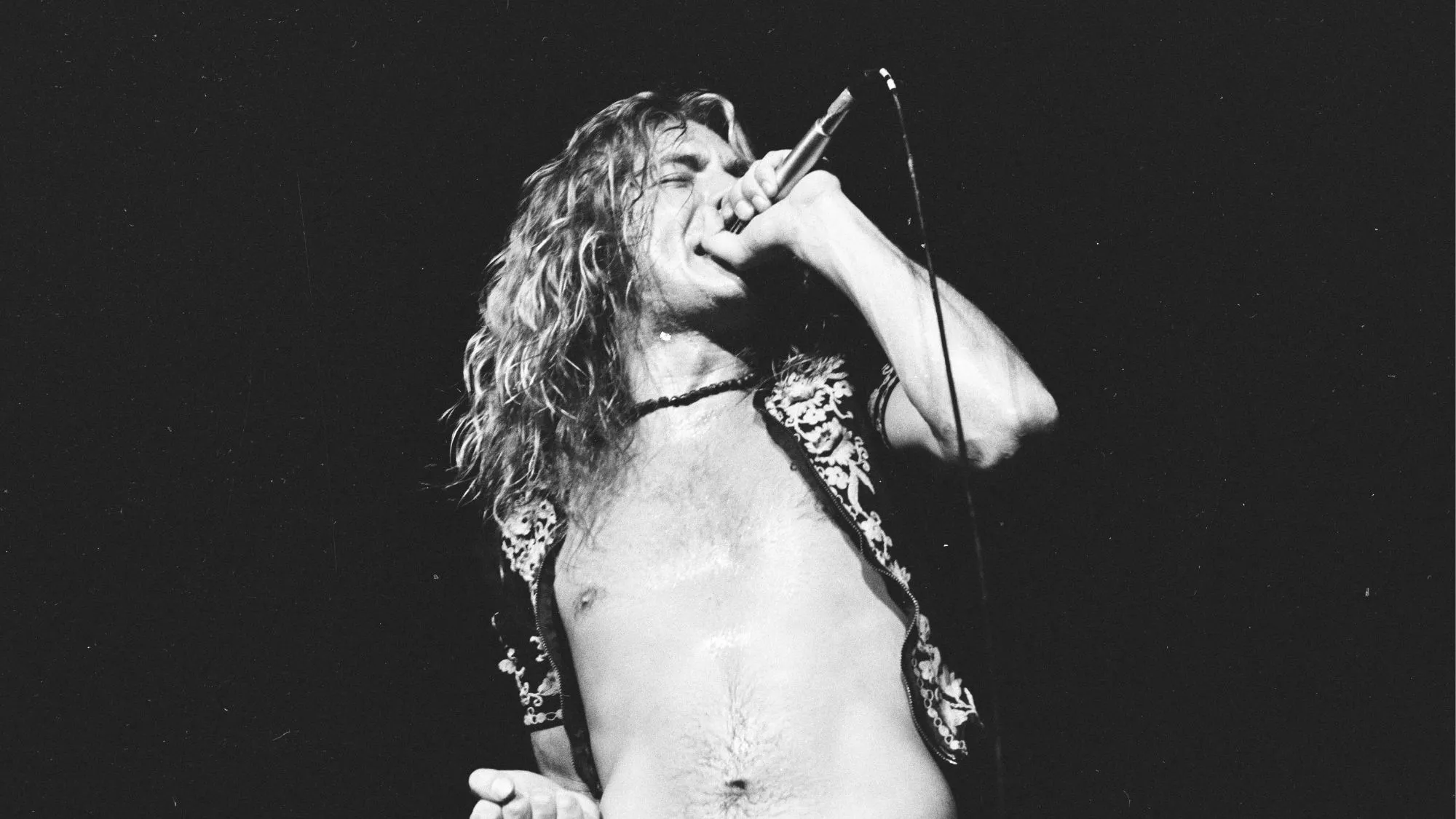
Robert Plant, the preeminent vocalist whose soaring range and stage presence defined the aesthetic of hard rock, marks his birthday on August 20, providing a moment for the music industry to reflect on a career that spans over six decades. Born in 1948 in West Bromwich, Staffordshire, Plant is widely regarded as one of the most significant figures in the history of popular music. As the frontman of Led Zeppelin from 1968 to 1980, he helped architect the blueprint for stadium rock, blending blues, folk, and world music into a sound that sold hundreds of millions of records. Since the dissolution of the band following the death of drummer John Bonham, Plant has maintained a prolific and eclectic solo career, consistently eschewing the easy path of nostalgia in favor of relentless musical exploration.
The Formative Years and the Rebellion Against Convention
The trajectory of Robert Plant’s life was nearly diverted by the practical expectations of post-war British society. Raised in the industrial "Black Country" of the English Midlands, Plant was pressured by his parents to pursue a stable career in accountancy. He began his professional training as a teenager but found the constraints of the profession incompatible with his burgeoning obsession with the American blues. Influenced by the raw emotionality of artists such as Muddy Waters, Sonny Boy Williamson, and Robert Johnson, as well as the rock and roll charisma of Elvis Presley, Plant made the pivotal decision to leave home at the age of 16.
During the mid-1960s, Plant immersed himself in the regional music scene of the West Midlands. He performed with a variety of groups, most notably the Band of Joy, which featured a young, powerhouse drummer named John Bonham. Despite his obvious talent, commercial success remained elusive during these early years. Plant frequently supplemented his meager musical income with manual labor, including a stint in road construction. This period of struggle provided the grit and authenticity that would later characterize his vocal delivery and lyrical themes.
The Formation of Led Zeppelin: A Confluence of Talent
The catalyst for Plant’s international ascent was the dissolution of the Yardbirds in 1968. Guitarist Jimmy Page, looking to fulfill remaining tour dates and form a new musical entity, began a search for a lead singer. After being turned down by several established vocalists, Page was directed toward Plant, who was then performing with a group called Hobbstweedle. Page traveled to a performance at a teachers’ college in Birmingham to witness the young vocalist firsthand.
The audition was transformative. Page later recalled being stunned by Plant’s ability to interpret material, specifically noting his rendition of Jefferson Airplane’s "Somebody to Love." The guitarist was perplexed that a talent of Plant’s caliber had not yet achieved stardom. Following a series of meetings at Page’s houseboat on the Thames, where the two discovered a shared reverence for Delta blues and Indian classical music, the foundation for Led Zeppelin was laid. At Plant’s urging, John Bonham was recruited as the drummer, and with the addition of multi-instrumentalist John Paul Jones, the quartet was complete.
Initially billed as the "New Yardbirds," the group quickly transitioned to the name Led Zeppelin. Their 1969 self-titled debut album was recorded in approximately 30 hours and signaled a seismic shift in the music industry. Plant’s "banshee wail" and Page’s heavy, distorted riffs created a sonic weight that was unprecedented at the time.
Achieving Global Dominance and Cultural Immortality
Throughout the 1970s, Led Zeppelin achieved a level of commercial success and cultural saturation that remains a benchmark for the industry. Between 1969 and 1979, the band released eight studio albums, all of which reached number one on the UK charts, with six topping the Billboard 200 in the United States.
Plant’s role in the band evolved from being a pure blues interpreter to a sophisticated lyricist. Drawing inspiration from Celtic mythology, the fantasy works of J.R.R. Tolkien, and his travels through Morocco and the Himalayas, he infused rock music with a sense of mysticism and grandiosity. Songs such as "Ramble On," "The Battle of Evermore," and "Kashmir" showcased his ability to weave complex narratives into the framework of heavy rock.
The band’s 1971 release, Led Zeppelin IV, solidified Plant’s status as a "Golden God" of rock. The album, which has sold an estimated 37 million copies worldwide, featured "Stairway to Heaven," a track that became the most requested song in the history of FM radio. Plant’s vocal performance on the track—transitioning from a delicate, folk-inspired opening to a powerful, high-energy climax—is frequently cited by critics as one of the greatest vocal takes in recorded history.
The Transition to a Solo Career and Generic Versatility
The sudden death of John Bonham in 1980 brought an abrupt end to Led Zeppelin. While many of his peers in the "dinosaur rock" era continued to tour on the strength of their past hits, Plant made the conscious decision to distance himself from the Zeppelin legacy. He famously stated that continuing without Bonham would be like operating a vehicle with only "25 percent of the driving wheel."
His solo career, which began with 1982’s Pictures at Eleven, was marked by a desire to experiment with contemporary sounds, including synthesizers and world music rhythms. Over the course of 12 studio albums, Plant has collaborated with a diverse array of musicians, demonstrating a refusal to be pigeonholed.
One of the most significant chapters of his post-Zeppelin life was his collaboration with bluegrass artist Alison Krauss. Their 2007 album, Raising Sand, was a critical and commercial phenomenon. Produced by T Bone Burnett, the album departed from the high-octane rock of Plant’s youth, opting instead for a hushed, atmospheric blend of Americana and folk. The project won five Grammy Awards, including Album of the Year, proving that Plant’s artistic relevance was not tied to his 1970s persona.
Statistical Impact and Industry Standing
The magnitude of Robert Plant’s career is reflected in the staggering data associated with his work. Led Zeppelin’s total record sales are estimated to be between 200 million and 300 million units globally. In the United States alone, the Recording Industry Association of America (RIAA) has certified the band with 111.5 million units sold, making them one of the best-selling acts in history.
Plant’s solo endeavors have also maintained a high standard of commercial performance. He has earned several Gold and Platinum certifications for his solo albums and has remained a top-tier touring draw well into his 70s. His current project, the acoustic-based band Saving Grace, continues to perform to sold-out venues, emphasizing intimacy and vocal harmony over stadium-sized spectacle.
In terms of industry recognition, Plant was inducted into the Rock and Roll Hall of Fame as a member of Led Zeppelin in 1995. He was appointed a Commander of the Order of the British Empire (CBE) in 2009 for his services to music. Furthermore, Rolling Stone magazine ranked him number 15 on its list of the 100 Greatest Singers of All Time, noting that his "vocal style has influenced almost every rock singer who came after him."
Broader Implications and Artistic Legacy
Robert Plant’s legacy extends beyond his discography. He redefined the archetype of the rock frontman, combining vocal athleticism with a flamboyant, yet vulnerable, stage presence. His influence can be heard in the work of subsequent generations of vocalists, from Axl Rose and Chris Cornell to Jack White and Greta Van Fleet.
Perhaps his most significant contribution to the modern musical landscape is his advocacy for artistic integrity over commercial exploitation. Despite immense financial pressure and fan demand for a full-scale Led Zeppelin reunion—most notably following their one-off performance at the O2 Arena in 2007—Plant has consistently declined. His commitment to "the muse" and his focus on current creative projects serve as a model for veteran artists navigating the later stages of their careers.
As Robert Plant enters another year of his life, his influence shows no signs of waning. He remains a vital force in the industry, a bridge between the foundational blues of the mid-20th century and the experimental frontiers of the 21st. By prioritizing growth over repetition, Plant has ensured that his name is synonymous not just with the history of rock, but with its ongoing evolution. His journey from a teenage accountant-in-training to a global icon serves as a testament to the power of artistic conviction and the enduring appeal of a voice that remains, even decades later, singular and unearthly.
