

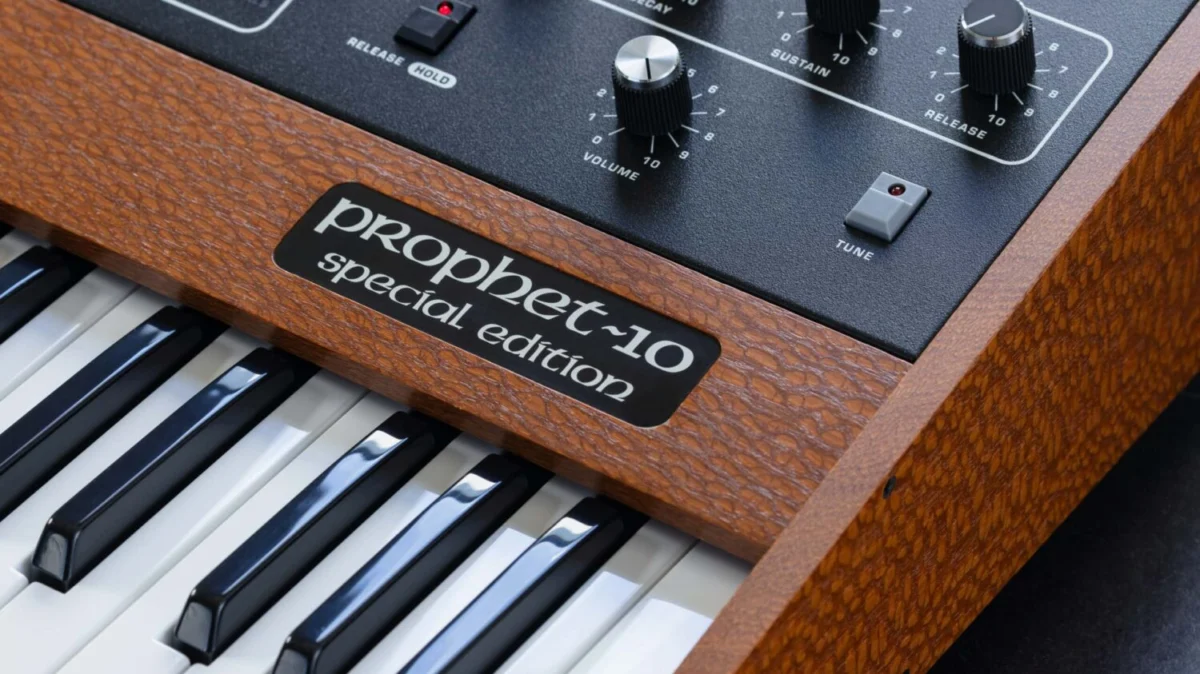
In a comprehensive new technical review, synthesist and producer Claudio Passavanti, known professionally as Doctor Mix, has provided an in-depth analysis of the Sequential Prophet-10, exploring its integration into modern studio environments and its standing within the pantheon of high-end analog synthesis. The Prophet-10, a ten-voice reimagining of the legendary Prophet-5 architecture, represents a significant milestone for Sequential, the company founded by the late Dave Smith. Passavanti’s examination highlights the instrument’s dual-filter design, its expressive polyphonic aftertouch capabilities, and the "Vintage" control—a feature designed to replicate the organic instability of 1970s hardware. As the music industry continues to see a resurgence in analog hardware, the Prophet-10 serves as a bridge between the historical foundations of electronic music and the rigorous demands of contemporary production.
The Evolution of a Polyphonic Legend
To understand the significance of the modern Prophet-10, one must look back to the late 1970s, a period that defined the trajectory of the synthesizer industry. In 1978, Sequential Circuits released the Prophet-5, which was the first fully programmable polyphonic synthesizer. It utilized microprocessors to store and recall patches, a revolutionary leap forward that allowed musicians to move away from the manual patching required by modular systems. However, the original Prophet-10, released shortly thereafter, was a different and more troubled machine.
The initial Prophet-10 was essentially two Prophet-5s stacked into a dual-manual keyboard. While it offered immense sonic power, it was plagued by significant technical hurdles. The heat generated by the internal components led to frequent tuning instability, and the sheer physical weight of the unit made it impractical for many touring musicians. Consequently, the original Prophet-10 sold in very limited quantities and was largely regarded as an experimental precursor rather than a stable production instrument. It remained a "holy grail" for collectors but was rarely seen in professional studio rotations due to its fragility.
The modern iteration of the Prophet-10, released in 2020 as part of the "Rev 4" series, addresses these historical shortcomings while expanding the instrument’s polyphonic ceiling. By doubling the voice count of the Prophet-5 Rev 4, Sequential has provided a solution for players who found the traditional five-voice limit restrictive, particularly when playing complex chords with long release times, which often lead to "voice stealing."
Technical Specifications and the Dual-Filter Architecture
A primary focus of Passavanti’s review is the Prophet-10’s ability to toggle between different eras of analog history. The instrument features a "Filter Select" switch that allows users to choose between two distinct low-pass filter designs. The first is the Rev 1 and Rev 2 filter, which is based on the SSM 2040 chip. This filter is renowned for its creamy, liquid character and its ability to maintain a robust low-end even at high resonance levels.
The second option is the Rev 3 filter, which utilizes the Curtis CEM 3320 chip. This filter design defined the sound of the 1980s, offering a more aggressive, precise, and "reedy" texture that became a staple of pop and film scoring. By including both circuits in a single chassis, Sequential has effectively unified the entire history of the Prophet line into one instrument. This technical versatility allows producers to tailor the harmonic profile of the synthesizer to fit specific mix requirements without needing multiple pieces of vintage hardware.
The internal architecture remains true to the original signal path, featuring two authentic CEM 3340 voltage-controlled oscillators (VCOs) per voice. These oscillators provide the raw, harmonically rich saw, pulse, and triangle waves that formed the basis of countless hit records. The addition of the "Vintage" knob is perhaps the most critical modern innovation. This control allows the user to dial in the amount of component-to-component variation found in older units. At its lowest setting, the Prophet-10 operates with the precision of a modern instrument. As the knob is turned, it introduces subtle fluctuations in the tuning, filter response, and envelope timings, mimicking the behavior of a 40-year-old machine.
Performance and Expressive Control
A significant portion of the Doctor Mix demonstration is dedicated to the Prophet-10’s playability. Unlike many vintage synthesizers that utilized basic on/off keybeds, the modern Prophet-10 is equipped with a premium Fatar keybed that supports both velocity sensitivity and channel aftertouch. Passavanti demonstrates how these features transform the Prophet-10 from a static sound source into a dynamic performance instrument.
Aftertouch, in particular, allows a musician to modulate parameters like filter cutoff or LFO amount simply by applying pressure to the keys after they have been struck. This enables a level of "vocal" expression that is often missing from electronic instruments. When combined with the ten-voice polyphony, the Prophet-10 becomes an ideal tool for cinematic pads and complex atmospheric textures. The ability to hold a ten-note chord and use aftertouch to swell the brightness of the sound creates a sense of movement and life that digital emulations often struggle to replicate.
Furthermore, the "Poly Mod" section remains a cornerstone of the Prophet sound. This modulation matrix allows Oscillator 2 and the Filter Envelope to act as modulation sources for Oscillator 1’s frequency, pulse width, and filter cutoff. This permits the creation of metallic, FM-style tones and aggressive "screaming" leads that are synonymous with the Prophet brand. The unison mode, which stacks all ten voices onto a single note, provides a massive, detuned sound that is a hallmark of classic lead synthesis.
Market Context and Professional Reception
The release of the Prophet-10 Rev 4 occurred during a broader industry shift. Over the last decade, there has been a documented "analog revival," driven by both a nostalgia for classic sounds and a desire for tactile, knob-per-function interfaces in an increasingly software-dominated world. While software plugins have become incredibly sophisticated, the physical interaction with a dedicated hardware instrument remains a preferred workflow for many top-tier producers.
Market analysts note that the Prophet-10 occupies a "luxury" tier in the synthesizer market. With a retail price significantly higher than mass-market digital keyboards, it is aimed at professional studios, film composers, and serious enthusiasts. However, the value proposition lies in its longevity and build quality. Sequential’s decision to use a steel chassis and sustainable black walnut end cheeks reflects a commitment to industrial design that is meant to last decades, much like the original instruments from the 1970s.
Official responses from the synthesis community have been overwhelmingly positive since the Rev 4’s debut. Industry veterans have praised Dave Smith’s ability to "fix" the Prophet-10, turning a historically temperamental design into a stable, reliable studio workhorse. The integration of modern MIDI over USB and a simplified internal layout has also made the unit more serviceable than its predecessors, reducing the long-term cost of ownership for professional facilities.
Broader Implications for Music Production
The Prophet-10’s success signals a wider trend where "limitations" are viewed as creative assets. While a digital workstation might offer thousands of voices and infinite modulation possibilities, the Prophet-10’s fixed architecture forces the user to engage with the core principles of synthesis. This "less is more" philosophy often leads to more distinct and memorable sounds in a musical production.
From a technical standpoint, the Prophet-10 also highlights the importance of phase and harmonic richness in the digital recording chain. Modern High-Definition (HD) audio interfaces are capable of capturing the extreme frequencies and subtle nuances of analog oscillators more accurately than ever before. Producers like Passavanti argue that having a high-quality analog source at the beginning of the signal chain reduces the need for heavy digital processing later in the mixing stage.
The "Vintage" knob technology is also likely to influence future hardware designs. By mathematically modeling the imperfections of old hardware and applying those offsets to real analog components, Sequential has created a hybrid approach to "character" that avoids the pitfalls of purely digital modeling. This suggests a future where analog hardware continues to evolve by incorporating smart digital control systems to enhance, rather than replace, the organic sound of voltage-controlled circuits.
Conclusion
The Sequential Prophet-10, as explored in the Doctor Mix studio session, stands as a definitive statement on the enduring power of subtractive synthesis. By reconciling the ambitious 10-voice vision of 1978 with the reliability and expressive requirements of 2024, Sequential has produced an instrument that is both a tribute to the past and a tool for the future. For the modern producer, the Prophet-10 offers more than just a collection of vintage sounds; it provides a tactile and highly responsive environment for sonic exploration. As Passavanti concludes, the instrument’s "better than you think" status stems from its ability to disappear into the creative process, allowing the musician to focus on the performance rather than the technology. With its robust build, dual-filter heritage, and expanded polyphony, the Prophet-10 remains a benchmark for what a professional analog synthesizer can and should be in the modern era.
