

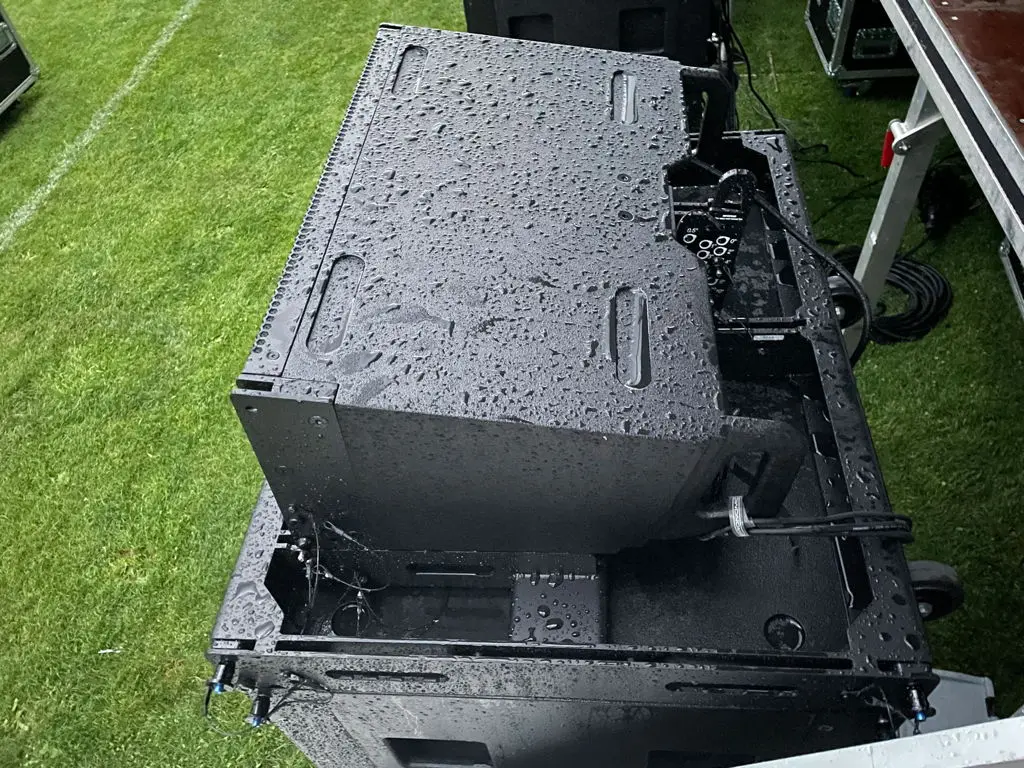
The professional audio landscape is frequently defined by the ability of hardware to withstand the unpredictable nature of outdoor environments. At the recent "40 Years Böbing Open Air" (BOA) festival, held in the picturesque Pfaffenwinkel region of Upper Bavaria, the Pronomic XANA active line-array system underwent a rigorous trial that tested its structural and electronic resilience. Over the course of a five-day continuous operation, the system served as the primary sound reinforcement for the festival’s Second Stage, navigating a gauntlet of extreme weather conditions that ranged from torrential nocturnal downpours to intense direct sunlight that elevated component temperatures to 60 degrees Celsius.
A Historical Context: Four Decades of the Böbing Open Air
The 2024 edition of the Böbing Open Air marked a significant milestone in the event’s history. What began in 1986 as a modest gathering, featuring makeshift stages constructed from agricultural trailers, has evolved into a cornerstone of the regional festival circuit. Over forty years, the BOA has transitioned from a local curiosity into a sophisticated professional operation, now boasting two major stages and a lineup of internationally recognized acts.
The anniversary event reflected this growth, hosting a diverse array of high-energy performers including the punk-rock outfit Turbobier, the metal band Hämatom, the veteran punk group Dritte Wahl, and the family-oriented heavy metal act Heavysaurus. Such a lineup demands a high degree of acoustic versatility and raw power, particularly on the Second Stage, which was tasked with maintaining a sonic presence comparable to the main stage while operating under the logistical constraints of a secondary venue.
Technical Configuration of the XANA System
To meet the demands of the anniversary celebration, the Second Stage was equipped with a comprehensive Pronomic XANA setup. Pronomic, a proprietary brand of Musikhaus Kirstein GmbH based in Schongau, has developed the XANA series to bridge the gap between high-end touring systems and cost-effective solutions for mid-sized festivals and rental companies.
The Main Left/Right configuration consisted of 16 active line-array tops—specifically, eight XANA L-208 TA units per side. These were supported by a massive low-end foundation comprising 14 XANA L-118 SA subwoofers. To ensure coverage for the audience members positioned directly in front of the stage, three additional L-208 TA units were deployed as nearfills.
The XANA L-208 TA is an active system, meaning the amplification and Digital Signal Processing (DSP) are integrated directly into the cabinet. While this simplifies cabling and setup, it places a higher burden on the internal electronics to manage heat and resist moisture—factors that would become critical during the BOA weekend. The L-118 SA subwoofers provided the necessary displacement to handle the aggressive low-frequency requirements of the punk and metal genres featured in the lineup.
Chronology of the Event: From Deluge to Heatwave
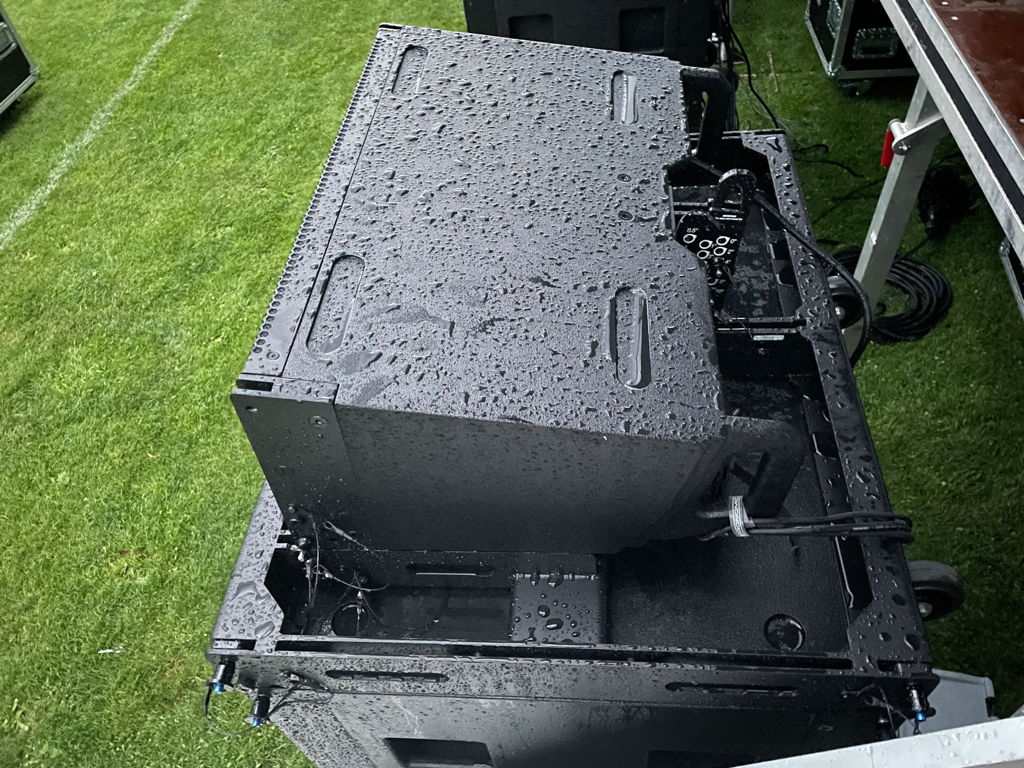
The operational timeline for the XANA system began on Wednesday, coinciding with the initial setup phase. The arrival of the equipment was met with immediate environmental challenges. During the first two nights of the festival period, the region experienced sustained, heavy rainfall. The "sintflutartig" (deluge-like) conditions necessitated the use of specialized XANA rain protection covers for the electronic units.

According to Ruben Raff, the lead developer for the XANA system at Musikhaus Kirstein, the rain protection was not merely a precaution but a vital necessity. The system remained powered and exposed to the elements for two consecutive nights of downpours without a single failure in the signal chain or power distribution.
As the festival transitioned into the main performance days of Friday and Saturday, the meteorological challenge shifted from moisture to thermal stress. The Upper Bavarian sun, combined with the heat-absorbing black finish of the professional audio cabinets, drove internal and surface temperatures of the components to approximately 60 degrees Celsius. In the world of professional electronics, such temperatures often trigger thermal protection circuits, which can lead to reduced output or total system shutdowns. However, the XANA’s cooling architecture and heat dissipation managed to maintain stable operation throughout the peak afternoon sets.
Operational Performance and the Turbobier Stress Test
The true test of any sound system lies in its performance during peak load. This occurred during the set by Turbobier, a band known for high-energy performances and a technical requirement for high Sound Pressure Levels (SPL). The touring sound engineer for Turbobier pushed the XANA system to its operational limits, demanding maximum output to satisfy the band’s signature sound.
Ruben Raff noted that the engineer operated the system at "massive levels," providing a real-world stress test that exceeded standard laboratory benchmarks. "The technician from Turbobier really turned it up. It was a good challenge, but we marched through it without any problems," Raff stated. The ability of the active components to provide consistent headroom under these conditions—and at 60-degree temperatures—indicated a successful integration of the system’s Class-D amplification and DSP limiters.

Industry Engagement and Hands-On Demonstration
Beyond the musical performances, the festival served as a platform for industry professional development. On Saturday afternoon, the team from Musikhaus Kirstein and their partners from Promedia Group Veranstaltungstechnik hosted a hands-on demonstration for visiting event organizers and sound technicians.
This session allowed professionals to inspect the rigging hardware, the software interface for the DSP, and the physical condition of the units after several days of extreme exposure. The feedback from the attending tour technicians was reportedly positive, focusing on the system’s "praxisgerechte" (practice-oriented) details. In an industry where reliability is the primary currency, the fact that the system had survived two days of rain and was currently performing in high heat provided a more compelling sales argument than any technical datasheet.
Strategic Implications for Pronomic and Musikhaus Kirstein
The success of the XANA system at the BOA festival highlights a shift in the professional audio market. Traditionally, large-scale festivals relied exclusively on a handful of premium "Tier 1" brands. However, the development of sophisticated active systems by companies like Musikhaus Kirstein suggests a democratization of high-quality sound reinforcement.
Pronomic’s strategy involves leveraging in-house development to create products that meet the specific needs of the European rental market—namely, durability, ease of transport, and weather resistance. By deploying the XANA system at a high-profile 40th-anniversary event, the company has provided a proof-of-concept for its "house brand" in a professional touring context.
The partnership with Promedia Group further underscores this transition. When professional event technology firms adopt and demonstrate such systems, it signals to the wider market that the equipment is capable of meeting the rigorous standards of the modern "touring everyday."
Conclusion: The Future of the XANA Series
The five-day "baptism by fire" (and water) at the Böbing Open Air has established a baseline for what the Pronomic XANA system can endure. The combination of sustained moisture, extreme thermal load, and high-SPL demands represents the trifecta of challenges for any outdoor line array.
For the organizers of the BOA, the reliability of the Second Stage audio ensured that the 40th-anniversary celebrations proceeded without technical interruptions, maintaining the festival’s reputation for professional execution. For Musikhaus Kirstein, the event served as a successful field test that validated their engineering choices in the development of the XANA L-208 TA and L-118 SA.
As the festival industry continues to face increasingly volatile weather patterns, the emphasis on environmental resilience in audio engineering will only grow. The performance of the XANA system in the Pfaffenwinkel suggests that active, integrated solutions are becoming increasingly viable for the demanding conditions of the international outdoor circuit, providing a balance of performance and durability that was once the exclusive domain of much more expensive boutique systems.
