

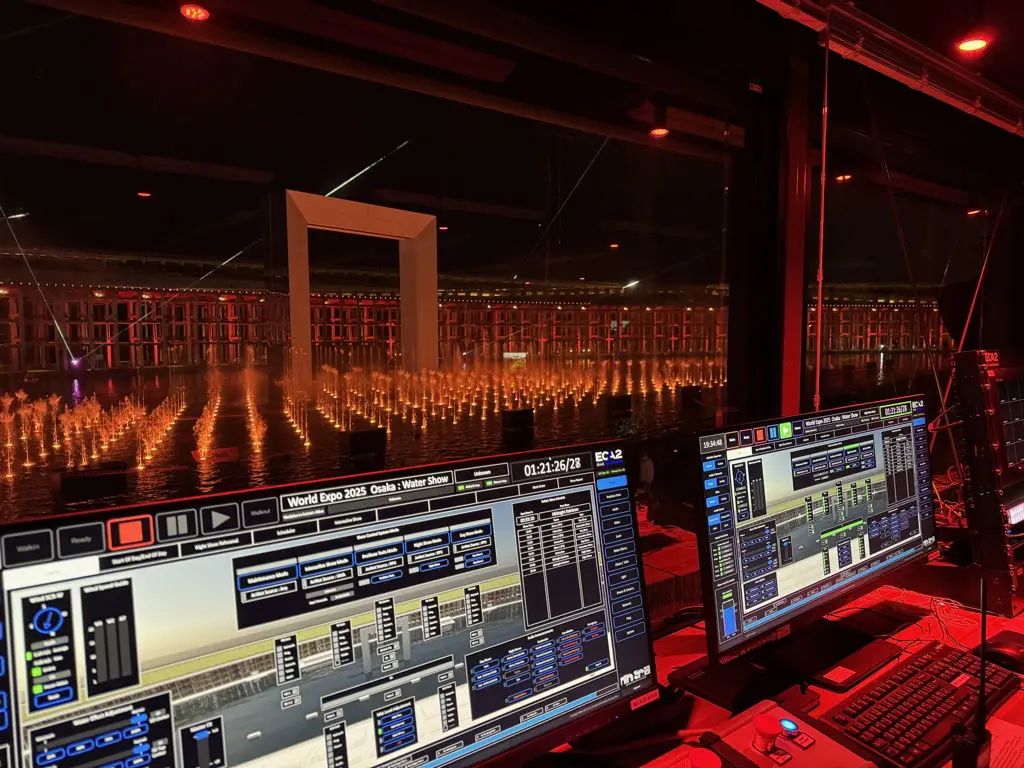
The World Expo 2025, held on the artificial island of Yumeshima in Osaka, Japan, served as a global stage for the pinnacle of human ingenuity, sustainability, and cultural exchange. Among the myriad of attractions designed to captivate millions of international visitors, the nightly multimedia water show, "Under the Midnight Rainbow," emerged as the definitive emotional highlight. Staged at the expansive Water Plaza, the production transformed 8,800 square meters of the bay into a living canvas of light, fire, and fluid motion. To achieve the level of synchronization required for such a massive undertaking—integrating 300 water fountains, 30 flame effect stations, and a complex array of laser, video, and audio systems—the French production powerhouse ECA2 collaborated with db Show Control & Automation. Central to this achievement was an automation topology built on Beckhoff technology, marking a significant milestone in the convergence of industrial automation and large-scale entertainment.
The Vision: Under the Midnight Rainbow
"Under the Midnight Rainbow" was conceptualized as a finale that would resonate with up to 2,500 spectators per performance. The show’s narrative and aesthetic goals demanded a level of precision that traditional entertainment control systems often struggle to maintain at scale. The installation featured 280 straight water jets, eight 3D water jets capable of dynamic kinematics, two massive water screens, and a unique cascade screen. These elements were further enhanced by 30 flame effect stations, fog pumps, and high-definition video mapping projected onto the water surfaces.
The complexity of the Water Plaza environment presented a unique set of variables. Unlike an indoor theater, the outdoor setting of Osaka Bay meant that the show was subject to the whims of nature. Strong coastal winds, humidity, and varying temperatures posed constant threats to the integrity of the choreography. For instance, a sudden gust of wind could drift water jets into the audience or, more dangerously, toward the high-temperature flame stations. Consequently, the technical mandate was clear: the system required absolute reliability and a "deterministic" control environment where every movement was calculated and executed in real-time with microsecond accuracy.
The Chronology of a Technical Masterpiece
The development of "Under the Midnight Rainbow" followed a rigorous timeline that spanned several years of planning and months of on-site integration. The journey began with the conceptual design by ECA2, a firm renowned for its work on global events such as the Olympic Games and previous World Expos. By mid-2024, the technical specifications for the automation system were finalized, identifying the need for a control architecture that could bridge the gap between heavy industrial power and delicate artistic timing.
In late 2024, db Show Control & Automation began the assembly of the control infrastructure. This involved the fabrication of 11 specialized control racks distributed around the perimeter of the Water Plaza. These racks served as the nervous system of the show, connecting the central brain in the control room to the hundreds of mechanical actuators in the water. The integration phase in early 2025 required weeks of "dry" testing, followed by "wet" rehearsals in the Osaka Bay waters. By the time the Expo opened its doors, the system had been stressed-tested against simulated failures to ensure that the six-month run would proceed without interruption. Throughout the 184 days of the Expo, the show ran nightly, culminating in a total viewership of approximately two million people.
Architectural Backbone: The Beckhoff Automation Topology
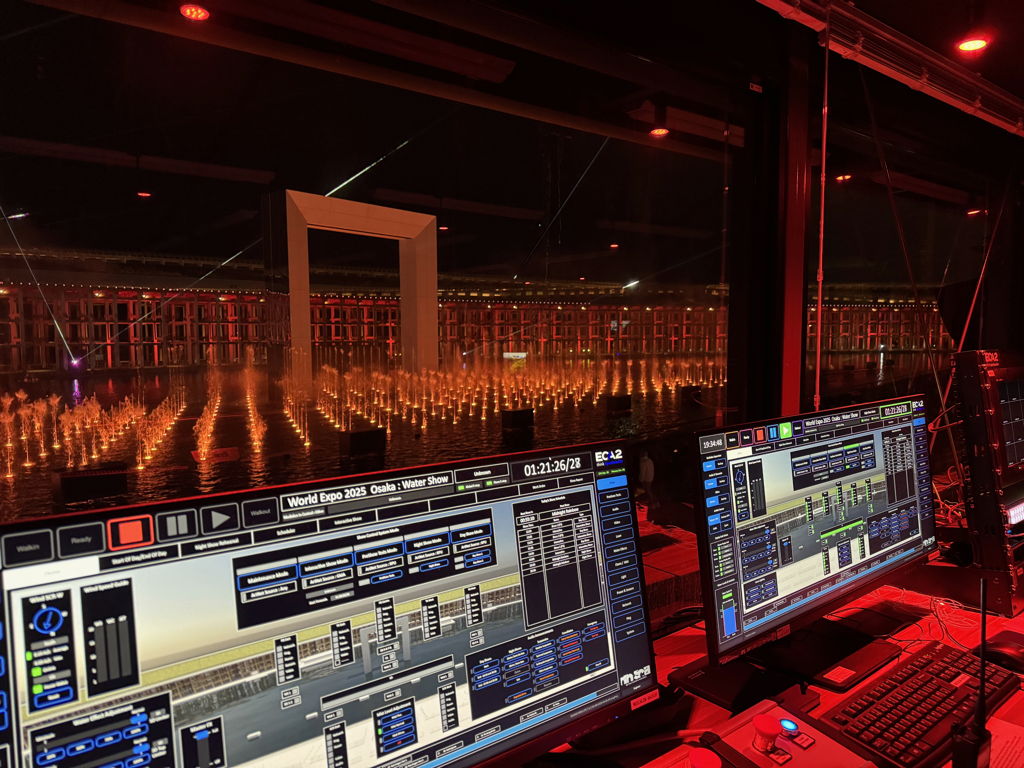
At the heart of the show’s control room sat a Beckhoff CX5240 Embedded PC, serving as the master show controller. This compact yet powerful unit managed the high-level logic of the entire 8,800-square-meter installation. The decision to use industrial-grade hardware was driven by the need for longevity and the ability to handle massive data throughput without the latency issues common in standard PC-based solutions.
The distribution of control was facilitated through EtherCAT, a high-performance Ethernet-based fieldbus system. EtherCAT’s ability to process data "on the fly" allowed the controllers to communicate with nearly 300 frequency converters with unparalleled speed. This was essential for the 3D water jets, which required constant, fluid adjustments to their kinematic positions to create the illusion of dancing water. Craig Pow Chong, Director of Engineering at db Show Control & Automation, noted that the cycle times achieved through EtherCAT were indispensable for maintaining the exact choreography required by ECA2’s creative directors.

Simultaneously, the system utilized standard UDP/TCP-Ethernet protocols to interact with the audiovisual (AV) components. This hybrid approach allowed the automation system to "talk" to the video servers and audio processors, ensuring that every flame burst and water jet was perfectly timed to the millisecond of the musical score and video frames.
Environmental Intelligence and Safety Integration
One of the most innovative aspects of the "Under the Midnight Rainbow" installation was its software-based environmental monitoring system, built directly into the TwinCAT engineering environment. In a typical show, safety overrides are often manual or rely on separate, disconnected systems. However, for the Osaka Expo, db Show Control & Automation integrated a suite of sensors that continuously fed data on temperature, humidity, wind speed, wind direction, and water depth into the main controller.
This "intelligent" monitoring allowed the system to react autonomously to environmental threats. If the sensors detected a critical wind gust blowing toward the spectator stands, the TwinCAT logic would automatically throttle the affected water pumps or disable specific flame effects within a fraction of a second. This prevented water from drenching the audience and ensured that the fire effects remained within safe operating parameters.
Functional safety was further bolstered by Beckhoff’s TwinSAFE technology. By using TwinSAFE terminals (such as the EL1918), the engineering team integrated safety protocols directly into the EtherCAT network via the Fail Safe over EtherCAT (FSoE) protocol. This eliminated the need for complex, parallel hard-wiring for emergency stops and safety interlocks, reducing potential points of failure and simplifying the overall system architecture.
A Paradigm Shift: Ultra-Compact Playback and Data Logging
Traditionally, a show of this magnitude would require several full-height server racks to handle the playback of 32 DMX universes and the logging of system data. For the Osaka project, db Show Control & Automation implemented a "paradigm shift" by utilizing two Beckhoff C6017 ultra-compact Industrial PCs. These devices, which fit in the palm of a hand, operated in a master-backup configuration to handle the entire show playback.
The C6017 units proved that massive processing power no longer requires a massive physical footprint. By running a custom recording and playback platform developed on TwinCAT, these PCs managed the complex DMX and sACN data streams required for the lighting and effects. Furthermore, the TwinCAT Database Server was employed to log every piece of sensor data and system command in real-time. This provided the technical team with a "black box" of information, allowing for deep-dive diagnostics and proactive maintenance throughout the Expo’s duration.
Industry Impact and Future Implications
The success of "Under the Midnight Rainbow" at Expo 2025 Osaka serves as a case study for the future of the themed entertainment industry. The project demonstrated that industrial automation hardware, when paired with flexible software like TwinCAT, offers a superior alternative to proprietary entertainment controllers. David Birchall, CEO of db Show Control & Automation, emphasized that Beckhoff is currently the only manufacturer capable of blending industrial-grade reliability with native support for entertainment-specific protocols like DMX, sACN, and QSC integration.
The implications for the industry are significant. As multimedia shows become more complex and move into increasingly challenging outdoor environments, the demand for "deterministic" control—where the timing of every component is guaranteed—will only grow. The ability to integrate safety, environmental monitoring, and high-speed motion control into a single, cohesive platform reduces both the cost and the risk associated with these mega-productions.
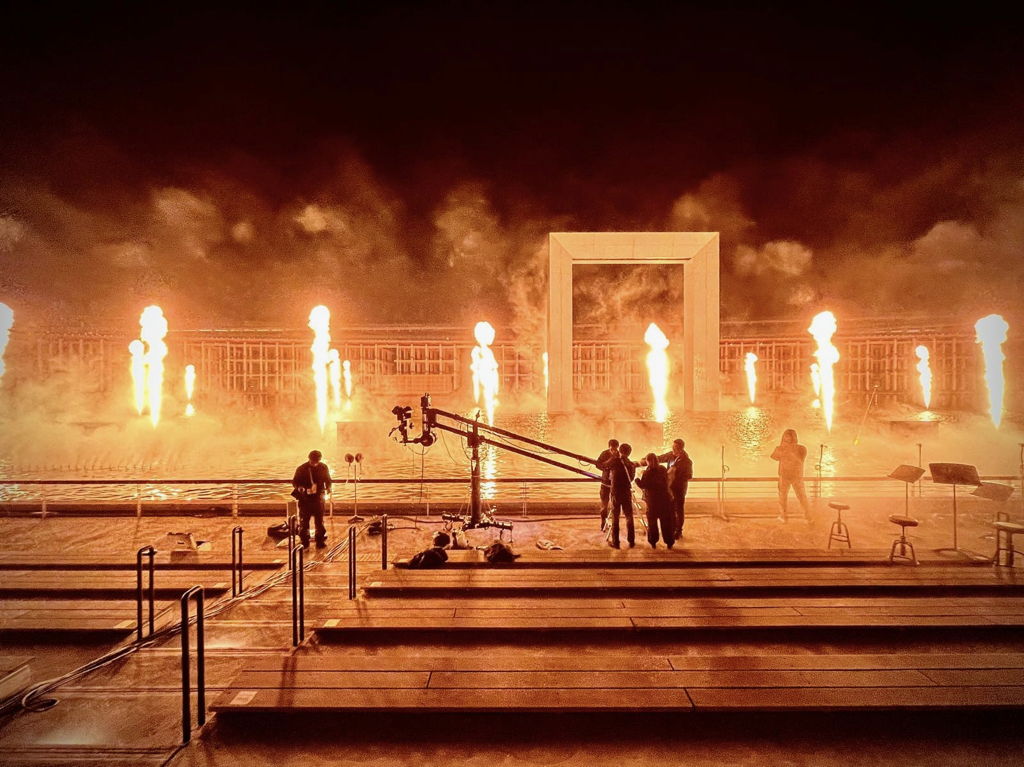
Furthermore, the "zero technical failure" record over a six-month period, involving two million spectators, provides a powerful argument for the adoption of these technologies in permanent theme park installations and urban "placemaking" projects. Following the success in Osaka, reports indicate that a follow-up project of similar scale is already in development, suggesting that the "Osaka Model" of automation will become the new standard for the next generation of global spectacles.
Conclusion: The Legacy of Osaka 2025
As the lights dimmed on the final night of the World Expo 2025, the technical team behind "Under the Midnight Rainbow" could look back on a flawless execution of one of the most complex water shows ever attempted. By merging the artistic vision of ECA2 with the engineering precision of db Show Control & Automation and Beckhoff, the production achieved more than just a visual spectacle; it proved that the future of entertainment lies in the seamless integration of art and industrial science. The Water Plaza at Yumeshima may eventually be cleared for new developments, but the technological blueprints established there will undoubtedly influence the skyline of global entertainment for years to come.
