

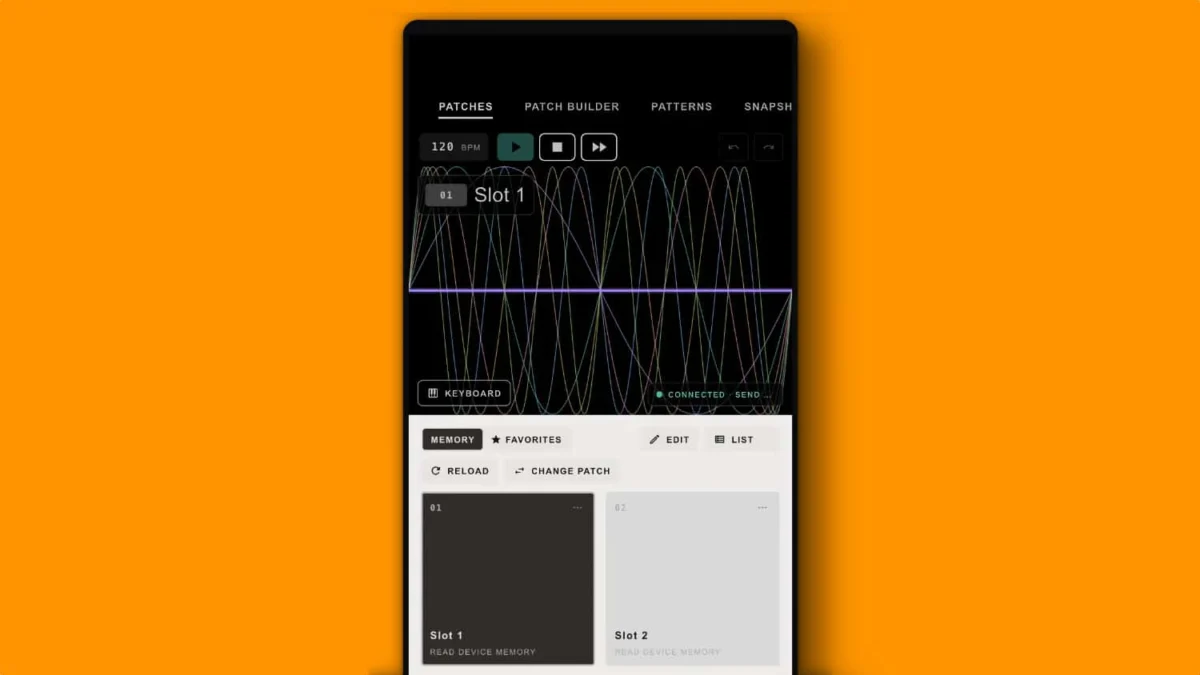
The release of Rithmatic marks a significant advancement for the synthesizer community, specifically targeting users of the Korg volca FM2 by providing a free, multi-platform solution for patch management and sound design. Developed to bridge the gap between complex frequency modulation (FM) synthesis and user-friendly digital interfaces, Rithmatic is now available across macOS, iOS, iPadOS, and Android platforms. The application functions as both a librarian and a sophisticated editor, allowing musicians to bypass the often-cumbersome hardware menus of the volca FM2 in favor of a visual, node-based editing environment. By supporting the legacy Yamaha DX7 patch format, the software ensures that decades of historical sound design are accessible to modern portable hardware users.
The Context of FM Synthesis and the DX7 Legacy
To understand the utility of Rithmatic, one must consider the historical trajectory of FM synthesis. Introduced to the mass market by Yamaha in the early 1980s with the DX7, FM synthesis utilized frequency modulation to create harmonically rich, "glassy," and metallic sounds that defined the era’s pop and cinematic music. Unlike subtractive synthesis, which involves filtering waveforms, FM synthesis relies on "operators"—oscillators that modulate one another. While powerful, the DX7 was notoriously difficult to program due to its limited physical interface and the mathematical complexity of its six-operator architecture.
When Korg released the original volca FM, it sought to replicate this classic sound in a compact, affordable format. However, it was the release of the volca FM2 that truly expanded the possibilities for mobile musicians by doubling the polyphony from three to six voices and adding enhanced MIDI capabilities. Despite these hardware improvements, the challenge of programming complex six-operator FM sounds on a small device remained. Rithmatic addresses this specific pain point, providing a bridge between the sophisticated algorithms of 1980s synthesis and the high-resolution displays of modern smartphones and computers.
Technical Specifications and Node-Based Architecture
The centerpiece of the Rithmatic application is its six-operator FM editor, which utilizes a node-based routing canvas. In traditional FM synthesis, users must choose from a set of fixed "algorithms"—pre-defined configurations of how operators interact as carriers or modulators. Rithmatic’s visual approach allows users to see these relationships clearly, making it easier to understand how changing the output of one operator affects the timbre of another.
The application’s built-in FM engine is a critical feature for sound designers. It allows for the auditioning of patches directly within the software, independent of the hardware. This means a producer can curate and edit sounds while commuting or away from their studio, only syncing with the volca FM2 when the hardware is available. This "offline" capability is further bolstered by the fact that the app requires no network connectivity to function, ensuring privacy and reliability in live performance environments or remote locations.
Comprehensive Patch Management and DX7 Integration
One of the most valuable aspects of Rithmatic is its ability to handle legacy data. The Yamaha DX7 produced a vast library of sounds over its lifespan, many of which are stored in .syx (System Exclusive) or .sys file formats. Rithmatic can import these individual voices, as well as 32-voice bulk banks and ZIP archives. Upon import, the software automatically converts these sounds into native FM2 programs.
The management suite within the app includes several organizational tools:
- Search and Tagging: Users can categorize thousands of patches by genre, mood, or instrument type.
- Favorites and Collections: This allows for the creation of setlists or project-specific sound banks.
- Memory Slot Management: The volca FM2 features 64 internal memory slots. Rithmatic facilitates the seamless transfer of patches into these specific slots or directly into the hardware’s edit buffer for immediate playability.
Connectivity and System Integration
Rithmatic utilizes USB-MIDI SysEx (System Exclusive) communication to interact with the Korg volca FM2. This protocol allows for the bidirectional transfer of complex data, ensuring that every parameter change made in the app is reflected in the hardware in real-time. Because the volca FM2 includes a dedicated MIDI Out/In via 3.5mm jacks and supports MIDI over USB in various configurations, Rithmatic provides a stable link for both studio and mobile setups.

For mobile users, the app’s compatibility with iPhone, iPad, and Android devices is particularly noteworthy. It allows the volca FM2 to remain a truly portable instrument, as the "brain" of the sound design process can reside on a device already carried by the user. The macOS version provides a desktop-class experience for those who prefer to integrate their hardware into a traditional Digital Audio Workstation (DAW) environment.
Chronology of Development and Community Response
The development of Rithmatic follows a trend of "boutique" software solutions emerging to support popular hardware instruments. In the years following the release of the volca FM2, the community relied on a mix of web-based editors and older, often unsupported software. The arrival of a dedicated, cross-platform application that is free of charge represents a shift toward more accessible hardware maintenance.
While official statements from Korg regarding third-party editors are rare, the synthesis community has historically embraced such tools as essential for the longevity of their instruments. Early testers of Rithmatic have noted that the speed of sound design is significantly increased when using a touch-screen or mouse-driven interface compared to the volca’s physical "Edit" knob and small LED screen. The ability to visualize the envelope generators (EG) for all six operators simultaneously is cited as a primary advantage for precision sound sculpting.
Broader Implications for the Synthesizer Market
The release of Rithmatic highlights several ongoing trends in the music technology industry. First, it underscores the continued relevance of FM synthesis. Despite being over 40 years old, the demand for FM sounds remains high in genres ranging from synthwave to modern industrial and ambient music. Second, it demonstrates the importance of the "ecosystem" surrounding a piece of hardware. A synthesizer’s value is often determined not just by its internal components, but by the ease with which users can share, manage, and create new sounds for it.
Furthermore, by offering the software for free, the developers (Made with Best Practice) are contributing to a "democratization" of music production tools. High-quality patch librarians were once expensive proprietary products; now, they are increasingly community-driven or offered as complimentary tools to enhance the value of the hardware. This move puts pressure on other hardware manufacturers to either provide similar first-party software or ensure their MIDI implementation is open enough for third-party developers to step in.
Data Analysis: The Volca FM2 vs. The Original Volca FM
The necessity for an app like Rithmatic is best illustrated by the technical differences between the two generations of Korg’s FM hardware. The original volca FM was a 3-voice instrument, which meant that many classic DX7 patches (designed for 16-voice polyphony) would "choke" or experience note stealing when played on the hardware.
The volca FM2’s move to 6 voices, along with its added reverb and chorus effects, made it a much more faithful reproduction of the DX7 experience. However, more voices and more effects mean more parameters to manage. Rithmatic’s ability to visualize the new effect parameters alongside the operator settings provides a holistic view of the sound that was previously impossible on the hardware’s limited display.
Conclusion and Availability
Rithmatic stands as a comprehensive utility that significantly extends the functional lifespan and creative potential of the Korg volca FM2. By combining legacy support for DX7 patches with a modern, node-based editing philosophy, it serves both as a gateway for beginners and a powerful tool for veteran sound designers.
The application is currently available for download on the Apple App Store for iOS and iPadOS, the Google Play Store for Android, and via direct download for macOS users. As a free utility that operates entirely offline, it is positioned to become a standard tool for the global community of volca users. Its release ensures that the intricate art of FM synthesis remains accessible, manageable, and, most importantly, portable for the modern era of music production.
