

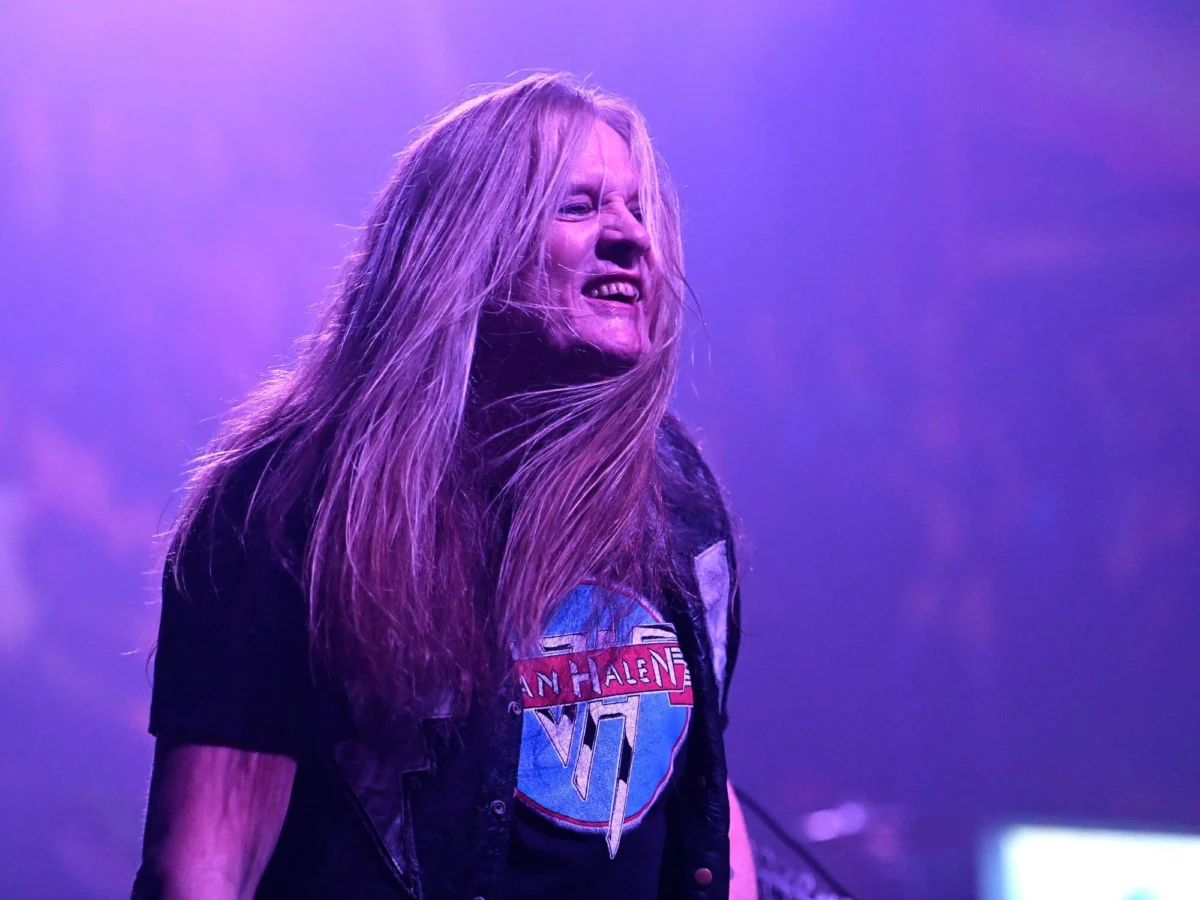
Renowned rock vocalist Sebastian Bach, known for his iconic tenure with Skid Row and his current role as a guest singer for Twisted Sister, has put forth a distinctive claim: he believes he is directly responsible for a surge in the popularity of the name "Sebastian" in the United States during the late 1980s. Speaking in a recent interview with Loudwire, Bach recounted personal experiences and anecdotal evidence, asserting that his burgeoning music career coincided with a notable increase in children being named Sebastian, a name he contends was exceptionally rare prior to his rise to fame.
The Genesis of a Claim: From Childhood Anomaly to Rock Icon
Born in 1968, Sebastian Bach, whose birth name is Sebastian Philip Bierk, detailed a childhood where his given name was an anomaly. "When I was a kid, I was born in 1968, so I was in grade school in 1975/76. Let me tell you something. There was no other kid named Sebastian in the ‘70s," Bach shared with Loudwire. He described moments of discomfort, even recalling tearfully asking his mother, "Why did you name me this name? Why couldn’t you name me Joe?" His mother’s prophetic response, "Listen, honey, you’re gonna like it [one day]," proved accurate as he entered his teenage years and found his unique name to be an asset in the burgeoning music scene. "When I got to be like 13 getting in bands, then it was a great name!" he recounted.
Bach’s career trajectory saw him join Skid Row in 1987, a pivotal moment that would soon launch him into international stardom. The band’s self-titled debut album, released in January 1989, became a multi-platinum success, producing hits like "18 and Life," "I Remember You," and "Youth Gone Wild." This period marked the peak of glam metal’s commercial viability, and Skid Row, with Bach’s charismatic frontman presence and powerful vocals, quickly became one of the genre’s most prominent acts. It was during this intensely visible period, in 1989, that Bach first encountered what he believes was empirical evidence supporting his claim. "Back in 1989, some fan said, ‘Sebastian, do you know about this?’ And it was [one of] these polls of popular names for boys and girls," he explained. "They showed me in ’89 the in the newspaper it had the most popular names and it said Sebastian, but the year before it wasn’t even in the chart! I was the f***in’ guy, okay? Because ’88, nothing. ’89, Sebastian was one of the top names that people were naming their kids. You’re welcome!"
Tracing the Name "Sebastian": A Historical and Statistical Perspective
The name "Sebastian" carries a rich history, deriving from the Greek word "sebastos," meaning "venerable" or "revered." Its origins can be traced to Saint Sebastian, an early Christian martyr, and it gained prominence through figures like the celebrated Baroque composer Johann Sebastian Bach. Historically, the name has enjoyed varying degrees of popularity across different cultures and eras. In English-speaking countries, it has typically been less common than in Romance language-speaking regions like Spain, Portugal, and Italy.
To contextualize Sebastian Bach’s claim, an examination of historical baby naming data provides valuable insight. According to the Social Security Administration (SSA) records for the United States, the name Sebastian did indeed experience a significant ascent in popularity beginning in the late 1980s and continuing into the 1990s. While Bach’s assertion that the name was "not even in the chart" prior to 1989 might be an oversimplification or based on localized polls, the data confirms a pronounced upward trend that coincided with his public visibility.
In 1970, "Sebastian" ranked at No. 444 among male names in the U.S. By 1980, it had slightly improved to No. 370. The decade of the 1980s, however, marked a turning point. By 1988, the year immediately preceding Bach’s referenced newspaper poll, the name had risen to No. 250. The year 1989, coinciding with Skid Row’s debut album and massive commercial success, saw a notable jump to No. 210. This upward trajectory continued steadily throughout the 1990s, with "Sebastian" breaking into the top 200 in 1991 (No. 182) and then into the top 100 in 2000 (No. 90). By 2023, it ranked as the 18th most popular name for boys in the U.S., its highest position to date.
While it is challenging to definitively attribute a naming trend solely to one individual, cultural historians and sociologists acknowledge the profound influence celebrities and prominent public figures can have on popular culture, including naming conventions. The timing of the name "Sebastian"’s accelerated rise aligns remarkably with Sebastian Bach’s peak visibility in the late 1980s and early 1990s. The unique, powerful, and somewhat exotic nature of the name, coupled with the energetic and rebellious image of a major rock star, could certainly have resonated with parents seeking distinctive names for their children.
Anecdotal Validation and Fan Connection
Beyond the statistical data, Bach’s claim is bolstered by recurring personal interactions. He shared that numerous fans have approached him over the years, explicitly stating that they were named after him. "There’s a lot of times people come up to me and say, ‘I was named after you, my parents named me after you,’" he stated. This direct feedback from his fanbase provides a powerful, albeit anecdotal, testament to his perceived influence. Such instances highlight the deep connection between artists and their audience, where the public persona can extend beyond entertainment to shape personal identity and family decisions. This phenomenon is not unique to Sebastian Bach; historical examples include the widespread adoption of names like "Shirley" after Shirley Temple’s fame or "Elvis" in the wake of Elvis Presley’s superstardom.
Beyond the Name: Sebastian Bach’s Current Role and the Future of Rock
In 2023, Sebastian Bach joined legendary heavy metal band Twisted Sister as a guest vocalist, filling in for long-time frontman Dee Snider. This collaboration has generated considerable interest, allowing Bach to continue showcasing his vocal prowess while paying homage to one of rock’s most enduring acts. His involvement with Twisted Sister has also brought him into closer proximity with guitarist Jay Jay French, who has recently gained attention for his outspoken views on the contemporary state of rock music.
French has been a vocal proponent of the controversial sentiment that "rock is dead." Speaking with Sean P. McKenna on Rimshots With Sean for Barstools & Bandtalk earlier this year, French articulated his rationale. "People say to me, ‘What makes you say rock is dead?’ Well, here’s my take on that. When I was 17 years old back in 1969, all my heroes – Beatles, Stones, Who, Zep, Floyd, Hendrix, Dylan, Grateful Dead, Jefferson Airplane; you name it, you name ‘em all – none of them were older than 27," French stated. He continued, "Now think about this for a second. The greatest rock artists in the history of the world, when I was 17, were no older than 10 years [older] than me. Most of them were 25 to 27. Well, I say, name me a 27-year-old rock star right now. And nobody can name one."
French clarified that his assertion is not about the complete absence of rock bands, but rather the genre’s diminished cultural and sociological impact on a mass scale. "I’m not saying that there are no rock bands. I’m just saying that the collective psyche that dictates current music trends and sociological impact of music, it’s not showing up in the rock world in terms of mass acceptance," he explained.
This perspective from a seasoned veteran like French offers a stark contrast to the era Sebastian Bach describes, where a rock star’s influence could be so pervasive as to potentially impact baby naming trends. French’s argument highlights a perceived shift in the music landscape, where rock music, while still retaining a dedicated fanbase, may no longer hold the same dominant position in mainstream popular culture that it once did. The rise of hip-hop, pop, electronic music, and global genres has diversified the musical palate, leading to a fragmentation of mass acceptance across genres. While artists like Sebastian Bach continue to perform and engage with audiences, the cultural ecosystem that propelled names like "Sebastian" into prominence during rock’s heyday has undoubtedly evolved.
Cultural Resonance and Lasting Impact
Sebastian Bach’s claim, while personal and somewhat audacious, opens a fascinating dialogue about the broader influence of cultural figures and the subtle ways they shape societal trends. His narrative intertwines personal identity, the power of celebrity, and the measurable shifts in popular culture. Whether directly responsible or simply a prominent catalyst coinciding with a broader trend, Bach’s story underscores the enduring legacy of rock music and its stars.
In an era where the music industry is constantly redefined by streaming, social media, and evolving tastes, the anecdotes from figures like Sebastian Bach serve as reminders of a time when rock music commanded unparalleled cultural currency. The debate over "rock is dead," as voiced by Jay Jay French, further contextualizes this shift, prompting reflection on what constitutes a "rock star" in the 21st century and how new generations engage with musical genres. Ultimately, Sebastian Bach’s assertion about his name’s popularity is more than just a personal boast; it is a vivid illustration of the profound, often unconscious, ways that art, fame, and identity intersect to leave an indelible mark on the collective consciousness.
