

The guitar industry of the 1980s marked a pivotal and often tumultuous period, characterized by a seismic shift in player preferences and a burgeoning demand for instruments that dramatically diverged from the established archetypes of the preceding three decades. This era witnessed the meteoric rise of innovative, smaller manufacturers such as Kramer, Charvel, and Jackson, which would ultimately ascend to become the industry titans they are recognized as today. Their success was predicated on catering to a new generation of guitarists who craved faster playability, aggressive aesthetics, and enhanced technical capabilities, often embodied by features like double-cutaway bodies, locking tremolos, and high-output pickups.
A Brief History: Gibson’s Foray into the 1980s "Shred" Era
For venerable institutions like Gibson and Fender, this period presented a unique set of challenges. Accustomed to decades of dominance with their iconic single-cut and traditional double-cut designs, adapting to the rapidly evolving landscape proved difficult. While Gibson already possessed models like the Explorer and Flying V—designs that, in retrospect, seemed presciently suited for the more aggressively styled music of the 80s—both brands recognized the imperative to innovate and introduce new models specifically engineered for this nascent era. These efforts, however, largely failed to capture the imagination of the market at the time. Many of these experimental designs, though often forward-thinking, were met with lukewarm reception, leading to a collective sigh of relief within the industry when the 1990s ushered in a renewed appreciation for "Golden Era" guitars, heavily showcased across platforms like MTV.
The Original Victory: Ahead of Its Time
Among Gibson’s more ambitious, yet initially overlooked, ventures of the 1980s was the Victory. Launched at a time when traditionalists still largely held sway, the Victory was a bold departure, offering a double-cut solid-body electric guitar that integrated elements popular with the emerging "shred" movement, yet distinctly maintained Gibson’s core tonal identity. Its design, featuring a longer scale length and a more ergonomic body contour than many of its siblings, was arguably ahead of its time. While other 80s experiments, such as the Corvus, remain largely relegated to historical footnotes, the Victory slowly began to cultivate a dedicated cult following over the ensuing decades. This growing appreciation stemmed from a recognition that its blend of Gibson craftsmanship with modern playability features was, in fact, a blueprint for the high-performance instruments that would later define the modern heavy guitar firmament.

The 2024 Revival: Reintroducing a Cult Classic
The turning tide of perception, much like the belated embrace of the Explorer and Flying V, finally brought the Victory back into the spotlight. Recognizing its untapped potential and the burgeoning demand from connoisseurs and modern players alike, Gibson officially relaunched the Victory into its core product line in 2024. This revival was a significant strategic move, signaling Gibson’s willingness to delve into its more unconventional past and reinterpret designs that resonate with contemporary tastes. The initial hardtail version of the reissued Victory proved to be a considerable success, indicating that the concept had indeed found a far more receptive audience than its 1980s predecessor. The market, now more diverse and open to hybrid designs, was ready for a Gibson that dared to be different.
Introducing the Victory Floyd Rose: Responding to Modern Demands
Building on the strong positive reception of the 2024 reissue, Gibson has now unveiled a brand new iteration two years later: the Gibson Victory Floyd Rose. This model is a direct response to overwhelming player feedback, explicitly designed to cater to the technical demands of today’s guitarists who require precision, stability, and expressive vibrato capabilities. The inclusion of a Floyd Rose vibrato system squarely positions this Victory variant within the wheelhouse of high-performance instruments, addressing one of the most common requests from the community since the initial reissue.
Priced at $2,799 / £2,399, the Victory Floyd Rose represents Gibson’s commitment to offering American-made, high-quality instruments that compete directly with the contemporary market’s best. It merges the foundational elements of its hardtail sibling with a critical enhancement for the modern shredder.
Design and Engineering: A Fusion of Heritage and High-Performance

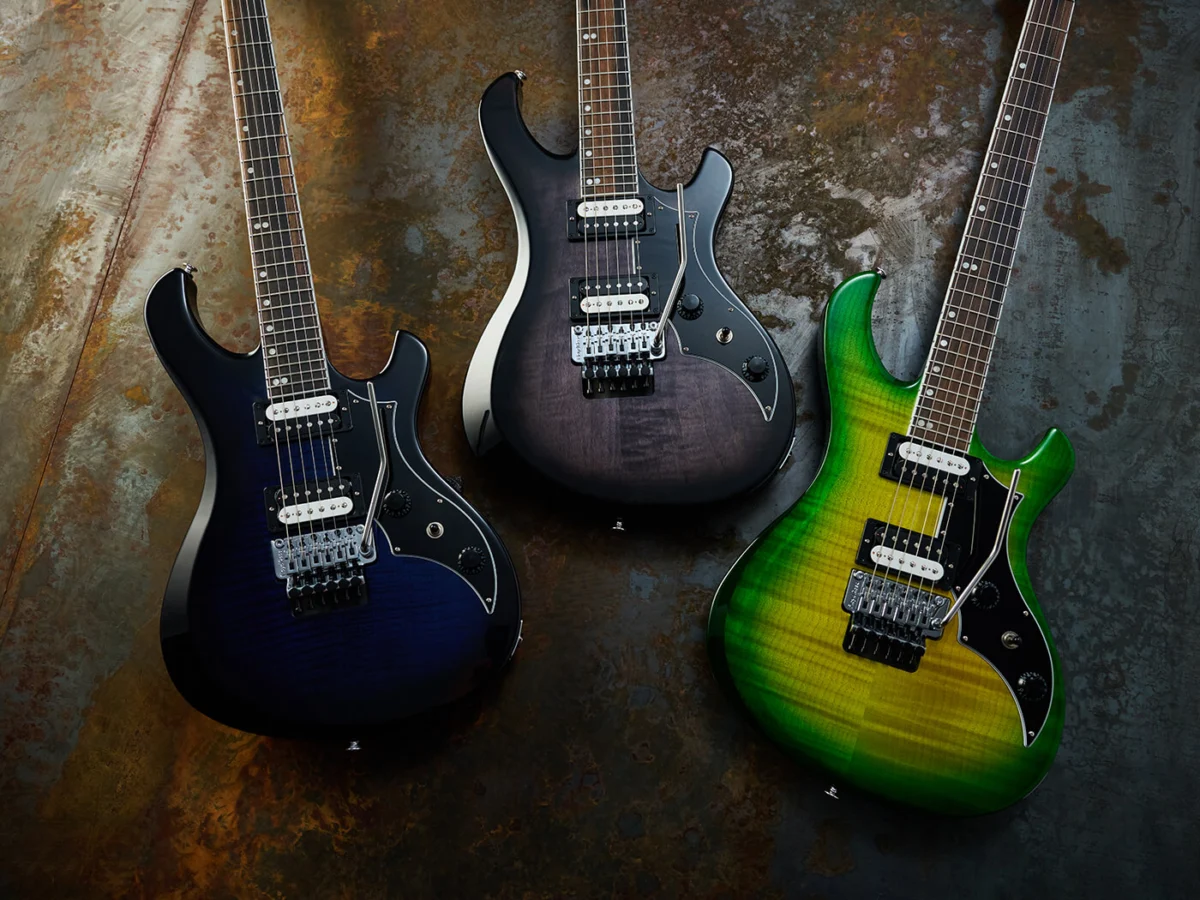
At its core, the Victory Floyd Rose is a solid-body, double-cut electric guitar, echoing the ergonomic and aesthetically distinct silhouette of the original. It features a robust mahogany body, a choice wood renowned for its resonant properties and sustain, capped with a beautifully figured maple top. This combination is a classic Gibson recipe, delivering a rich tonal foundation with enhanced clarity and articulation. The instrument is available in three striking finishes: Deep Ocean Burst, Ebony Burst, and the particularly eye-catching Iguana Burst, each designed to highlight the intricate figuring of the maple cap. The Iguana Burst, in particular, showcases Gibson’s refined finishing capabilities, demanding flawless application to achieve its vibrant depth.
A notable deviation from traditional Gibson specifications is the neck construction and scale length. While maintaining a glued-in, through-neck construction characteristic of Gibson for superior sustain and resonance, the Victory sports a longer-than-usual 25.5-inch scale length. This is a deliberate choice, aligning with the extended scale typically found on Superstrat-style guitars and offering increased string tension, which can enhance clarity for lower tunings and provide a distinct feel for bends compared to Gibson’s more common 24.75-inch scale. The neck itself is crafted from mahogany and features a classic 80s "hockey stick" headstock, a stylistic homage to the era of its conception.
The playability is further optimized by a shred-ready 10-14-inch compound radius mahogany fingerboard, coupled with Gibson’s SlimTaper profile. This combination ensures comfortable chording in the lower registers and effortless soloing as one ascends the neck. The fingerboard hosts 24 medium jumbo frets, providing a smooth playing surface. Above the locking Floyd Rose nut, a set of Grover Mini Rotomatic tuners ensures precise tuning stability, though their primary role becomes secondary once the Floyd Rose locking system is engaged.
Sonic Architecture: The 80s Tribute Humbuckers
The sonic engine of the Victory Floyd Rose comprises a pair of zebra-bobbin 80s Tribute humbucking pickups. These Alnico V-magneted pickups are designed to deliver a nuanced, powerful output that captures the essence of 1980s rock and metal tones without being excessively high-gain. They are engineered to offer warm harmonics and exceptional sustain, providing a depth that is often sought after in modern, high-performance instruments.
Crucially, these pickups are equipped with coil-splitting capabilities, significantly expanding the guitar’s tonal versatility. Players can engage the coil-split on the selected pickup by pulling up on its respective volume pot. Further enhancing the sonic options, pulling up on the tone pot allows for the selection of either the inner or outer coil. This innovative wiring configuration enables a range of sounds, from robust humbucking tones suitable for heavy distortion to brighter, more articulate single-coil-esque voicings, and even passable out-of-phase sounds for unique textural effects. While these split-coil tones may not perfectly replicate a true SSS or HSS configuration, they offer substantial flexibility for live performances and studio work, allowing the Victory to cover a remarkably broad sonic spectrum without necessitating frequent guitar changes.

Construction and Ergonomics: Crafted for the Contemporary Player
Gibson’s commitment to quality has seen a marked resurgence since the brand’s revitalization in 2018. The Victory Floyd Rose exemplifies this renewed dedication, exhibiting exceptional build quality and finishing. The Iguana Burst finish, a challenging hue that leaves no room for imperfections, showcases the expert craftsmanship applied to every inch of the body, neck, and headstock. The figured maple top possesses a compelling three-dimensional quality, inviting visual inspection and reinforcing the premium feel of the instrument.
Ergonomically, the offset double-cut body is designed for player comfort, contouring naturally to the body and encouraging full access to the entire length of the neck. Weighing in at just under 7 pounds, the guitar is lightweight and well-balanced, minimizing player fatigue during extended sessions. The 25.5-inch scale length provides a distinct playing experience compared to a traditional Les Paul, offering slightly more resistance on bends but contributing to a tauter, more articulate response. The SlimTaper neck profile, combined with the compound radius fingerboard, strikes an ideal balance, being slender enough for rapid passages without feeling insubstantial.
The Floyd Rose system performs as expected, providing flawless pitch stability and smooth, expressive vibrato control. While the complexities of string changes inherent to locking tremolos are a minor inconvenience, they are a small price to pay for the unparalleled tuning reliability and dive-bomb capabilities that the Floyd Rose offers.
One point of contention for some technically-minded modern players might be the choice of medium jumbo frets. While the fretwork on the Victory is impeccable—smooth, level, and devoid of rough patches—many contemporary high-performance guitars now feature stainless steel frets for their superior durability and slicker feel. This is not a deal-breaker for all, but it is an area where Gibson could potentially further align with the preferences of the "shred" market, especially given its integration of stainless steel frets in models within its Epiphone Futura line.
Market Positioning and Value: Gibson’s Strategic Offer

The Gibson Victory Floyd Rose stands as a compelling value proposition within the landscape of US-made, high-performance guitars. Its pricing positions it strategically against both its traditional competitors and the more niche shred-oriented brands. The fact that it offers a level of fit and finish often associated with Gibson’s Custom Shop models from a few years prior, yet at a more accessible price point, speaks volumes about the brand’s current manufacturing prowess and strategic intent.
This instrument is not designed to be an all-rounder; it is a specialized tool. Its aesthetics and feature set are unapologetically geared towards hard rock and metal guitarists who seek a distinctive, high-quality instrument that performs under demanding conditions. The "Gibson" inlay on the headstock carries significant weight, assuring players of the heritage and quality synonymous with the brand, even in a non-traditional form factor.
The Broader Implications: Gibson’s Evolving Legacy
The reintroduction and subsequent expansion of the Victory line signify a broader strategic shift for Gibson. Historically, the company has often been perceived as a bastion of tradition, slow to embrace modern innovations. However, the success of the Victory revival demonstrates a newfound agility and a willingness to listen to its global player base. By reinterpreting past designs through a contemporary lens and incorporating features like the Floyd Rose, Gibson is actively diversifying its appeal and reaching out to a demographic that might typically gravitate towards other brands.
This move also reflects a wider industry trend of revisiting and re-evaluating "unloved" or misunderstood designs from previous decades. As guitar culture evolves, so does the appreciation for instruments that were once considered anomalies. The Victory’s journey from an 80s anachronism to a 21st-century cult classic, now with a high-performance upgrade, mirrors the dynamic nature of musical instrument design and the cyclical trends within the guitar community.
Competitive Landscape: Alternatives in the High-Performance Market

While the Victory Floyd Rose offers a unique blend of Gibson heritage and modern performance, several other manufacturers present compelling alternatives in the high-performance segment:
- Jackson USA Signature Chris Broderick Soloist 6 ($5,549 / £4,779): This American-made instrument features a mahogany body with a maple cap, twin DiMarzio humbuckers, and a Floyd Rose. While it shares core specifications with the Victory, its price point is significantly higher, positioning it in a more premium tier.
- PRS Core line Custom 24 Floyd ($4,940 / £3,999): PRS is renowned for its blend of exquisite craftsmanship and modern playability. The Custom 24 Floyd offers a similar mahogany/maple construction with a Floyd Rose, but again, at a substantially higher price, reflecting its status as a flagship model.
- PRS Mark Lettieri Fiore HH ($2,649 / £2,499): This model falls closer to the Victory’s price range and features dual humbuckers, but it comes equipped with a non-locking vibrato, which might not satisfy players specifically seeking a Floyd Rose.
- ESP E-II Horizon FR ($2,789): ESP’s E-II Horizon FR is a direct competitor in terms of build, spec, and target audience. Manufactured in Japan, it offers comparable quality and features, including a Floyd Rose and high-output humbuckers, making it a strong alternative for players prioritizing modern performance.
The Victory Floyd Rose effectively carves out a niche by offering an American-made, historically significant Gibson design with a full Floyd Rose system at a highly competitive price point, often undercutting similarly spec’d US-made rivals.
Conclusion: A Victory for Modern Rock and Metal
In conclusion, the Gibson Victory Floyd Rose is a triumph of design evolution and market responsiveness. It stands as a testament to Gibson’s ability to blend its storied heritage with the demands of contemporary guitarists. For hard rock and metal players seeking an instrument that combines distinctive aesthetics, exceptional build quality, versatile tones, and the unwavering stability of a Floyd Rose, the Victory offers an undeniably attractive package. It’s a guitar that knows its purpose and excels within that domain, providing a powerful, ergonomic, and sonically flexible platform for aggressive playing styles. This latest iteration solidifies the Victory’s place as a legitimate contender in the high-performance guitar market, proving that some ideas, even if initially unappreciated, are destined for eventual success.
