

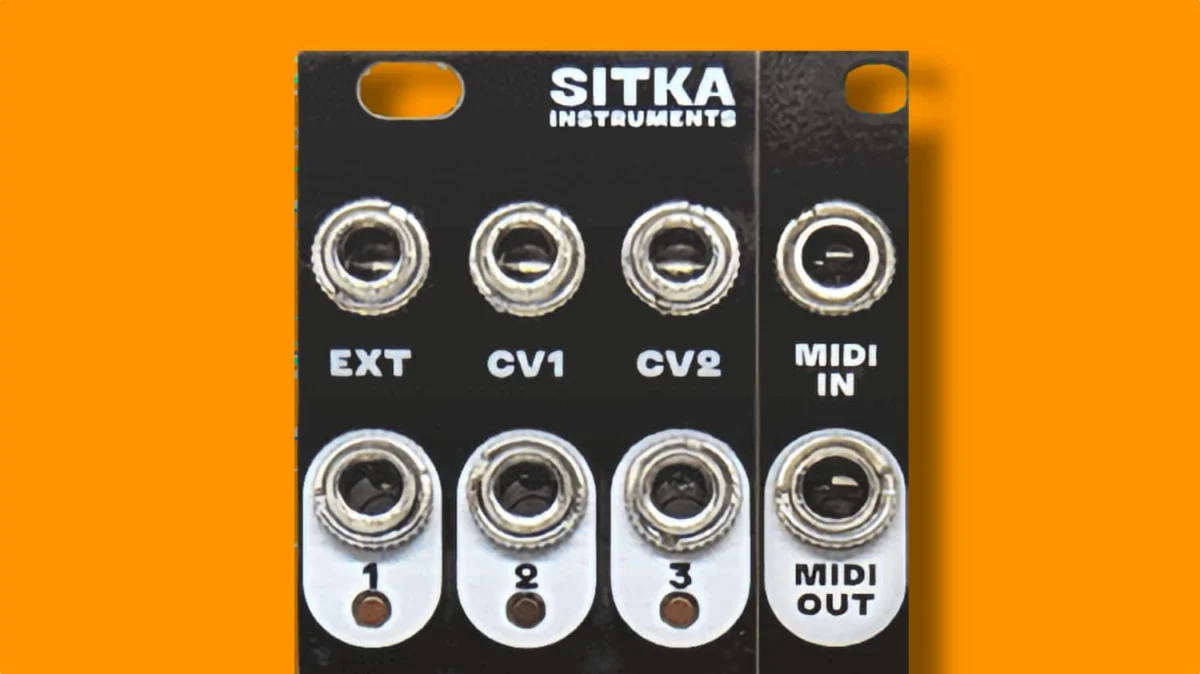
Sitka Instruments has officially announced the transition of its flagship Gravity module, a 6-channel Arduino-based clock and trigger sequencer, to an open-source platform. This move marks a significant shift for the boutique hardware manufacturer, as it invites the global community of synthesists, developers, and DIY enthusiasts to access, modify, and redistribute the underlying firmware and design logic of one of its most versatile Eurorack offerings. The Gravity module, which has gained a reputation for its robust timing capabilities and intuitive interface, is now available for public contribution via GitHub, providing a transparent look into the engineering that powers modern modular rhythm generation.
The decision to open-source Gravity is not merely a technical update but a philosophical commitment to the "give-back" culture that defines much of the Eurorack and maker communities. By releasing the source code, Sitka Instruments allows users to tailor the module’s functionality to their specific performance needs, whether that involves creating custom swing patterns, developing unique algorithmic trigger behaviors, or integrating specialized MIDI protocols. The module remains available for purchase as a completed unit for $199 USD, including the MIDI expander, catering to those who prefer professional factory assembly while simultaneously supporting the DIY sector.
The Technical Foundation of Gravity
At its core, Gravity is designed to serve as the "brain" or central nervous system of a modular synthesizer rig. In the world of Eurorack, timing is the fundamental element that synchronizes disparate oscillators, envelopes, and sequencers. Gravity addresses this need by providing six independent channels of clock and trigger signals. Because the module is built upon the Arduino platform, it utilizes a micro-controller architecture that is familiar to thousands of hobbyists and professional engineers alike. This choice of hardware ensures that the barrier to entry for modifying the code is significantly lower than it would be for proprietary or more complex ARM-based systems.
The module’s primary function is to generate stable, high-resolution clock signals that can be subdivided or multiplied across its six outputs. This allows a performer to run a master tempo while simultaneously sending 16th-note triggers to a drum module, whole-note resets to a sequencer, and irregular, "wonky" rhythmic pulses to an envelope generator. When paired with the optional MIDI Expander, Gravity bridges the gap between the analog voltage world of Eurorack and the digital world of DAWs (Digital Audio Workstations) and external hardware sequencers. This expander allows Gravity to act as a MIDI-to-CV clock converter or a master MIDI clock source, making it an essential tool for hybrid studio setups.
A Three-Year Development Journey: From Hobby to Professional Grade
The evolution of Gravity is a testament to the democratization of hardware development. Lead developer Oleksiy Hrachov began the project three years ago, initially conceptualizing the device as a personal hobby project. At the outset, Hrachov lacked extensive experience in electrical engineering and professional software development. However, the existing ecosystem of open-source hardware provided the necessary blueprints and inspiration to bridge that knowledge gap.
Throughout its three-year development cycle, Gravity underwent numerous iterations. The project began with breadboard prototypes and basic code structures, eventually evolving into a sophisticated multi-channel sequencer capable of handling complex timing tasks with minimal jitter. Hrachov credits the open-source community for his rapid progression, noting that the ability to study the work of experienced developers was the catalyst for his own growth. By making Gravity open source today, Hrachov is completing a developmental circle, providing the same "educational ladder" to the next generation of module designers that he once climbed.
The Strategic Move to Open Source Architecture
The transition to open source is a strategic decision that often extends the lifespan of a hardware product. In the fast-paced Eurorack market, where new modules are released weekly, a closed-source digital module can become "frozen in time" if the original developer moves on to other projects. By hosting the code on GitHub, Sitka Instruments ensures that the community can provide bug fixes, performance optimizations, and feature expansions long after the initial commercial release.
The repository, found at Sitka’s official Git server and mirrored on common platforms, includes the full firmware source code. This transparency allows users to verify the timing accuracy of the module and understand the logic behind its swing and probability engines. For the advanced user, this means the hardware is no longer a "black box." If a performer requires a specific feature—such as a non-standard time signature or a unique trigger delay—they can implement it themselves and re-flash the Arduino-based core.
Analyzing the Impact on the DIY Eurorack Community
The DIY (Do-It-Yourself) movement is a cornerstone of the modular synthesizer industry. Many enthusiasts prefer to build their own modules to save costs and gain a deeper understanding of their instruments. Sitka Instruments’ decision to open-source Gravity directly supports this demographic. By providing the firmware and encouraging DIY builds, the company is fostering a specialized niche of users who may eventually contribute back to the official codebase.

This move also has implications for educational institutions. Arduino-based music technology is a common subject in electronic music and engineering programs. Gravity serves as a real-world case study of how a simple microcontroller can be used to manage complex, multi-threaded timing tasks in a high-stakes performance environment. Students can now study Gravity’s code to learn about interrupt handling, debouncing for physical buttons, and the precise timing loops required for musical synchronization.
Functionality and User Experience
Gravity is designed with a "performance-first" mentality. The front panel features a streamlined interface that prioritizes accessibility during live sets. Despite its deep feature set, the module avoids excessive menu-diving, a common complaint among Eurorack users. The six channels are clearly labeled, and the visual feedback provided by the onboard LEDs allows users to monitor rhythmic patterns at a glance.
Key features of the Gravity system include:
- Six Independent Outputs: Each output can be configured with its own clock division or multiplication factor.
- Rhythmic Complexity: Support for triplets, dotted notes, and irregular subdivisions.
- Internal/External Clocking: The ability to act as a master clock or sync to an external analog pulse.
- MIDI Integration: Through the expander, the module handles MIDI Start, Stop, and Clock messages, ensuring perfect sync with external gear.
- Trigger Sequencing: Beyond simple clocking, the module can generate specific trigger patterns, making it useful for percussion sequencing.
Hardware Specifications and Expandability
The Gravity module adheres to standard Eurorack specifications, ensuring compatibility with the vast majority of modular cases and power supplies. The use of an Arduino-compatible core is a deliberate choice for maintainability. If a user manages to damage the microcontroller through improper power connection or "circuit bending," the part is easily replaceable and inexpensive, unlike custom-fabricated chips used in high-end digital modules.
The MIDI Expander is a critical component for modern workflows. As more musicians integrate computers and hardware samplers into their modular rigs, the need for reliable MIDI-to-CV conversion has grown. Gravity’s expander allows for 24-PPQN (Pulses Per Quarter Note) synchronization, which is the industry standard for MIDI clock. This level of precision ensures that delays, LFOs, and sequencers stay perfectly in phase across both analog and digital domains.
The Role of Arduino in Modern Synthesis
The use of Arduino in Sitka Instruments’ Gravity highlights the ongoing relevance of the platform in the professional audio world. While some critics argue that Arduino lacks the processing power of modern DSP (Digital Signal Processing) chips, Gravity demonstrates that for control-voltage (CV) tasks and timing, the platform is more than capable. The simplicity of the Arduino IDE (Integrated Development Environment) makes it the ideal candidate for an open-source project, as it does not require expensive compilers or proprietary software suites to modify.
By leveraging this accessibility, Sitka Instruments is tapping into a massive library of existing Arduino libraries and community knowledge. This communal intelligence acts as a force multiplier for a small company, allowing a boutique manufacturer to offer features and stability that might otherwise require a much larger engineering team.
Long-term Implications for Sitka Instruments and the Industry
Sitka Instruments joins a prestigious list of manufacturers who have embraced the open-source model. Companies like Mutable Instruments set the gold standard for this approach, and their modules remain some of the most popular in the world precisely because the community was allowed to iterate on the original designs. For Sitka, this move builds significant brand equity and trust within the community.
The pricing of $199 USD for a fully assembled 6-channel clock with MIDI capabilities is competitive. By offering the code for free, Sitka is not cannibalizing its sales; rather, it is adding value to the physical product. A buyer knows that when they purchase Gravity, they are buying a platform that is future-proof and customizable.
As the music technology industry continues to evolve, the trend toward open-source hardware and software appears to be accelerating. Sitka Instruments’ release of Gravity is a clear indicator that the future of modular synthesis lies in collaboration rather than isolation. By lowering the barriers to entry and sharing the fruits of three years of labor, Oleksiy Hrachov and Sitka Instruments are ensuring that Gravity will remain a relevant and evolving tool for years to come, appearing in racks ranging from professional recording studios to bedroom DIY setups. The source code is now live on GitHub, and the modules are available through Sitka Instruments’ official channels and authorized retailers.
