

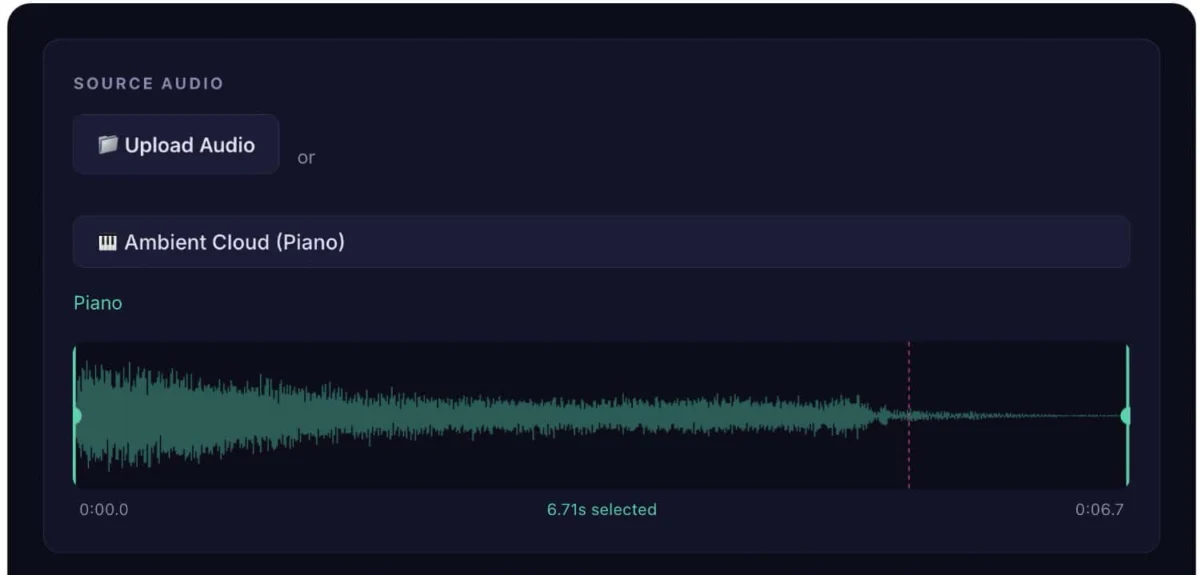
The emergence of SoundTools’ Online Granular Synthesizer represents a significant milestone in the accessibility of sophisticated digital signal processing (DSP) tools, offering a zero-cost, high-performance solution directly within the web browser. Granular synthesis, a method of sound generation that operates on the micro-temporal level, has traditionally required specialized hardware or expensive software plugins. By leveraging modern web standards, SoundTools has eliminated these barriers, providing a platform where audio is fragmented into minute "grains" ranging from 5 to 100 milliseconds. These fragments are then manipulated through various parameters—including pitch shifting, temporal scattering, and layering—to synthesize entirely new sonic textures from existing audio files.
The application is built on a philosophy of privacy and efficiency; unlike many contemporary web services that require user accounts or cloud-based processing, the SoundTools engine operates entirely client-side. This means that audio data remains on the user’s local machine, ensuring data sovereignty while minimizing the latency typically associated with server-side processing. Users are able to record their live manipulations and export the final results as high-fidelity WAV files, bridging the gap between casual experimentation and professional production workflows.
The Technical Mechanics of Granular Synthesis
To understand the impact of the SoundTools release, one must first examine the underlying physics of granular synthesis. At its core, the technique treats sound not as a continuous wave, but as a collection of discrete particles. These particles, or grains, are short bursts of sound energy. When these grains are played back in rapid succession—often hundreds or thousands per second—the human ear perceives them as a continuous stream of sound.
The Online Granular Synthesizer allows users to control the fundamental variables of this process. Key parameters typically include grain duration (the length of each fragment), density (how many grains are generated over a specific period), and position (the point in the source file from which the grain is sampled). By introducing "spray" or randomization to the grain position, the synthesizer can transform a simple vocal recording into a lush, ambient pad or a chaotic mechanical texture. Furthermore, by altering the playback speed of the grains independently of their pitch, the tool allows for time-stretching effects that maintain tonal consistency, a hallmark of modern cinematic and electronic music production.
A Chronology of Granular Development: From Tape to Web
The development of granular synthesis has spanned over seven decades, moving from theoretical mathematics to the real-time browser-based capabilities seen in the SoundTools release.
- 1946: The Gabor Wavelet: Physicist Dennis Gabor proposed the idea that sound could be decomposed into "quanta" of information, balancing time and frequency. This theoretical framework laid the groundwork for granular theory.
- 1950s: Tape Splicing and Iannis Xenakis: The avant-garde composer Iannis Xenakis began experimenting with the physical manipulation of magnetic tape. By cutting tape into tiny segments and reassembling them, he created pieces like Analogique A et B, effectively performing granular synthesis by hand.
- 1970s: Digital Implementation: Curtis Roads, a pioneer in computer music, implemented the first digital granular synthesis system. Due to the limited processing power of the era, these sounds could not be generated in real-time and required hours of "rendering" on mainframe computers.
- 1980s: Real-Time Breakthroughs: Barry Truax developed the first system capable of real-time granular synthesis using specialized microchips. This allowed for live performance and immediate auditory feedback.
- 2000s: Software Proliferation: The rise of Virtual Studio Technology (VST) saw the introduction of popular granular plugins such as Malström (in Reason) and later, Granulator II (for Ableton Live). These tools became staples in the toolkit of electronic musicians.
- 2020s: The Web Audio Revolution: The maturation of the Web Audio API and WebAssembly allowed developers to port high-performance DSP code to the browser. SoundTools’ release is the latest evolution in this timeline, making the technology available to anyone with an internet connection.
Supporting Data and Technological Infrastructure
The performance of the SoundTools Online Granular Synthesizer is facilitated by the Web Audio API, a high-level JavaScript API for processing and synthesizing audio in web applications. This technology allows the browser to access the computer’s audio hardware with low latency, which is essential for real-time synthesis.
Industry data suggests a growing trend toward browser-based creative tools. According to recent developer surveys, the usage of WebAudio and MIDI-over-IP standards has seen a 25% year-over-year increase in implementation within educational and entry-level production environments. The decision by SoundTools to keep the synthesizer free and account-less aligns with the "Open Web" movement, which prioritizes accessible software over proprietary, walled-garden ecosystems.
Furthermore, the local processing model employed by SoundTools addresses a major hurdle in cloud-based creative work: bandwidth. By processing audio locally, the tool avoids the need to upload large 24-bit or 32-bit audio files to a server, making it usable even for individuals with inconsistent internet speeds. The output, exported as a 16-bit or 24-bit WAV file, meets the standard requirements for professional DAW integration.

Market Positioning and Professional Reactions
While SoundTools has not issued a formal corporate press release in the traditional sense, the reception from the online production community has been largely positive. Industry analysts note that "utility" tools like the Online Granular Synthesizer serve as a gateway for younger producers. By providing a professional-grade synthesis engine without the friction of installation or payment, SoundTools positions itself as a leader in the democratization of music technology.
Independent sound designers have highlighted the tool’s utility in "found sound" manipulation. "The ability to drag a field recording directly into a browser tab and immediately begin deconstructing it into granular textures is a significant workflow accelerator," says one industry commentator. "It removes the barrier between inspiration and execution."
From a competitive standpoint, this tool challenges established software developers to reconsider their pricing models for utility-based plugins. When a high-quality granular engine is available for free in a browser, the value proposition of a $99 standalone plugin must shift toward deeper feature sets, such as advanced modulation matrices or multi-channel spatialization.
Broader Implications for Education and Industry
The implications of a free, high-quality browser-based synthesizer extend beyond individual hobbyists. In educational settings, the SoundTools Online Granular Synthesizer provides a standardized platform for teaching the principles of acoustics and digital synthesis. Institutions no longer need to purchase expensive site licenses for specialized software to introduce students to micro-sound composition.
Moreover, this tool reflects a broader shift in the software industry known as "The Great Browser Migration." As browsers become more powerful, the distinction between "web apps" and "desktop apps" continues to blur. This has significant implications for the future of the Digital Audio Workstation (DAW). If synthesis, mixing, and recording can all be performed with high fidelity within a browser, the hardware requirements for music production may decrease, further lowering the entry barrier for creators in developing economies.
The SoundTools release also highlights a critical shift in the perception of privacy in creative tech. In an era where many software companies utilize user data for training AI models or targeted advertising, SoundTools’ commitment to "no uploads" and "no accounts" is a strategic move that builds trust with professional users who are protective of their intellectual property and sample libraries.
Analysis of the Granular Aesthetic in Modern Media
The rise of granular synthesis tools like the one provided by SoundTools coincides with a specific aesthetic trend in modern media. From the "glitch" textures of contemporary electronic dance music (EDM) to the ethereal, shifting atmospheres of prestige television scores, granular synthesis has become the "sound of the future."
The technique is uniquely suited for creating sounds that feel organic yet alien. Because it uses real-world audio as its source, it retains the timbral complexity of acoustic instruments or environmental sounds, but its fragmented nature allows for a level of abstraction that traditional synthesis (like subtractive or FM) cannot easily replicate. By making this complex process "one-click" away, SoundTools is likely to influence the sonic palette of the next generation of content creators, from YouTubers to indie game developers.
Conclusion
The SoundTools Online Granular Synthesizer is more than just a free software utility; it is a testament to the power of modern web technology and a harbinger of a more accessible future for sound design. By combining a sophisticated synthesis engine with a privacy-first, browser-based delivery system, SoundTools has provided a valuable resource for the global creative community. As the boundaries between professional-grade tools and accessible web applications continue to dissolve, the industry can expect a surge in sonic experimentation, driven by tools that prioritize the user’s creative flow over commercial friction. The availability of this synthesizer marks a new chapter in the democratization of audio, ensuring that the complex, beautiful world of granular synthesis is available to anyone with a browser and an imagination.
