

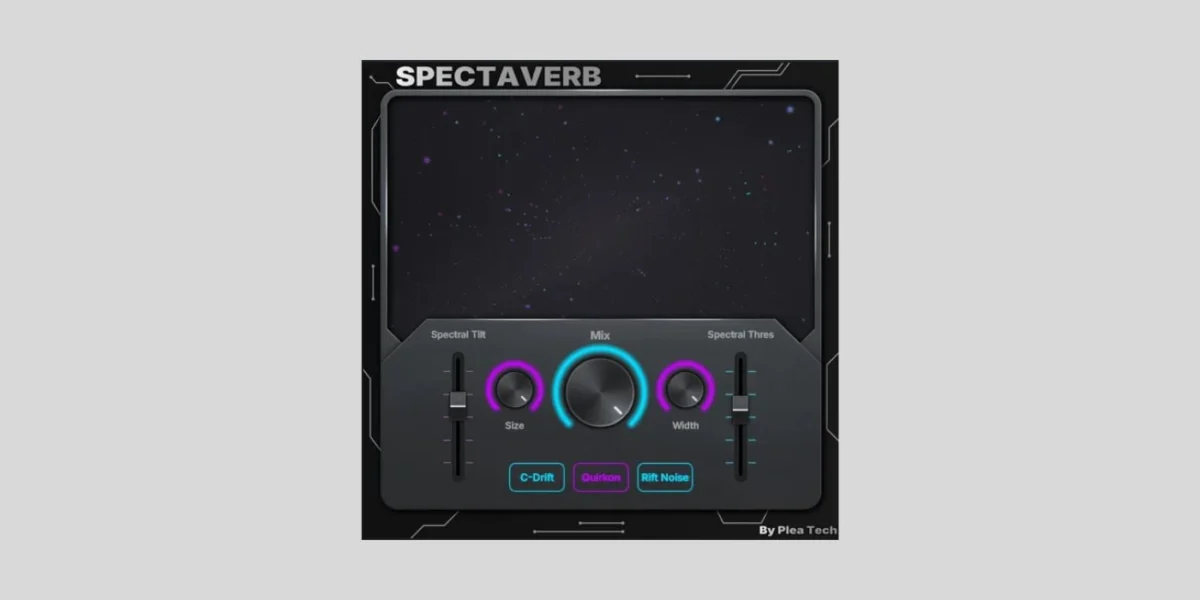
Plea Tech, an emerging developer in the digital audio workstation (DAW) plugin market, has unveiled Spectaverb, a multi-effect plugin poised to significantly impact contemporary sound design. This release follows closely on the heels of their spectral shaping and resonance suppressor, Pure Amber, highlighting a strategic expansion of their product portfolio. Spectaverb distinguishes itself from conventional reverb units by integrating three distinct parallel effect chains, designed to sculpt expansive, evolving, and texturally rich soundscapes. Launched with a "name-your-price" model, mirroring the limited-time free offering of Pure Amber, Plea Tech appears committed to making advanced audio tools accessible to a broad community of producers and sound designers, particularly those operating on Windows systems.
Detailed Examination of Spectaverb’s Architecture
At its core, Spectaverb is not merely a reverb but a sophisticated multi-FX engine, meticulously engineered to transform even the most rudimentary audio signals into complex, atmospheric textures. The plugin’s innovative architecture is built around three parallel effect chains, each contributing a unique sonic dimension before converging into a final reverb and limiting stage. This parallel processing paradigm is a cornerstone of advanced sound design, allowing for intricate layering and blending of effects that would be challenging to achieve with serial processing or multiple discrete plugins.
The Three Parallel Effect Chains: Space, Texture, and Vintage Character
The design philosophy behind Spectaverb’s three chains is to provide a comprehensive toolkit for spatialization, textural enrichment, and character modulation. This approach grants users unparalleled control over the sonic transformation process, moving beyond simple echo or ambience to create immersive auditory experiences.
Chain One: Crafting Expansive Soundscapes with Spectral Shaping and Stereo Diffusion
The first effect chain is dedicated to the creation of expansive and immersive spatial environments. It primarily focuses on spectral shaping and stereo diffusion. Spectral shaping, a powerful technique rooted in the manipulation of an audio signal’s frequency components, allows users to sculpt the tonal characteristics of a sound in ways that traditional equalization cannot. Instead of merely boosting or cutting fixed frequency bands, spectral processors can dynamically alter the harmonic content, remove resonances, or emphasize specific timbral elements. In Spectaverb, this capability is employed to refine the inherent qualities of a sound, preparing it for spatial expansion.
Complementing spectral shaping is stereo diffusion. Diffusion algorithms scatter reflections over time, blurring the distinct echoes of a traditional reverb into a smooth, dense wash. By emphasizing stereo diffusion, Spectaverb aims to generate a wide, enveloping soundstage, transforming a dry, mono source into a vast, three-dimensional sonic space. This is crucial for creating the "atmospheric soundscape" that Plea Tech highlights, moving beyond simple width to true spatial depth and envelopment. For composers working on film scores, ambient music, or game audio, this chain alone offers significant potential for building foundational sonic beds that are both broad and tonally rich. The ability to subtly or dramatically alter the spectral balance while simultaneously diffusing the sound allows for the creation of unique reverbs that are tailored precisely to the source material, avoiding the "one-size-fits-all" trap of many conventional reverb plugins.
Chain Two: Dynamic Textures through Noise, Flanging, and Flutter
The second parallel chain injects dynamic movement and textural richness into the evolving sound. This is achieved through a combination of noise generation, flanging, and flutter effects. Noise, when carefully modulated and blended, can add a layer of organic grit, ethereal hiss, or even rhythmic propulsion, enhancing the perceived texture of a sound. It moves beyond simple static noise, suggesting a nuanced integration that responds to the input signal or internal modulation.
Flanging, a classic modulation effect, creates its distinctive sweeping, comb-filter sound by mixing a signal with a slightly delayed, phase-shifted copy of itself. The subtle or dramatic movement introduced by flanging can imbue a sound with a sense of motion, depth, and metallic sheen. Historically, flanging has been a staple in psychedelic rock, funk, and electronic music, valued for its ability to animate static sounds.
Flutter, often associated with the subtle pitch variations inherent in analog tape playback, adds a touch of organic instability and vintage character. Unlike the more pronounced modulations of chorus or tremolo, flutter is typically more subtle, imparting a gentle, wavering quality that can make a digital sound feel more "alive" and less sterile. When combined, these three elements in the second chain allow users to sculpt intricate textural layers, adding anything from a gentle shimmer to aggressive, swirling motion, crucial for sounds intended to evolve and captivate over time. This chain is particularly valuable for experimental sound design, where traditional melodic or harmonic elements are augmented by complex textural backdrops.
Chain Three: Deepening Character with Saturation, LFO-Driven Color, Granular Shimmer, and Chorus Width
The third effect chain pushes the sonic manipulation even further, focusing on adding depth, vintage character, and extended textural possibilities. This chain features saturation, LFO-driven color, and optional chorus width or granular shimmer. Saturation introduces harmonic richness and warmth, often associated with analog equipment. By gently overdriving the signal, saturation can thicken a sound, add perceived loudness, and introduce pleasant harmonic distortion, giving it a more "finished" or "vintage" quality.
LFO-driven color suggests a dynamic tonal shaping where an assigned Low-Frequency Oscillator (LFO) continuously modulates a filter or other tone-shaping parameter. This creates continuous, evolving timbral shifts, preventing the sound from becoming static and adding a sense of organic movement that can be subtle or dramatic depending on the LFO’s rate and depth. This dynamic coloring is essential for sounds that need to sustain interest over long durations, such as pads or drones.
To further extend the sonic palette, users can introduce either chorus width or granular shimmer. Chorus duplicates a signal and detunes it slightly, adding thickness and width, a classic effect for vocal and synth pads. Granular shimmer, however, represents a more advanced form of textural generation. Granular synthesis breaks down an audio sample into tiny "grains" (milliseconds in length) which can then be manipulated in terms of pitch, duration, density, and playback order. Applying this to create a "shimmer" suggests high-pitched, ethereal textures generated from the input signal’s grains, creating glittering, crystalline, or even otherworldly effects. This choice between chorus and granular shimmer provides a powerful means to further refine the stereo image and textural complexity, catering to diverse creative needs, from classic wide pads to avant-garde sonic textures.
The Final Stage: Reverb and Limiting
After traversing these three distinct parallel chains, the processed audio is fed into a final reverb and limiter stage. This last reverb acts as a cohesive element, blending the disparate textures, spaces, and characters into a unified, ambient whole. It provides a final touch of spatial glue, ensuring that the complex layers created by the parallel chains resonate within a consistent acoustic environment. The inclusion of a limiter at the very end is a practical consideration, preventing output clipping and ensuring that even the most heavily processed and amplified soundscapes remain within controllable dynamic ranges, ready for integration into a mix. This thoughtful final stage ensures that the plugin is not just a sound design tool but also production-ready.
User Interface and Workflow Innovations
Despite the intricate underlying processing, Plea Tech has designed Spectaverb with a focus on intuitive usability. The plugin boasts "just a handful of adjustable controls," which is a significant achievement given the depth of its multi-effect capabilities. This minimalist approach is particularly beneficial for real-time sound design, allowing users to make quick, impactful adjustments without getting lost in an overwhelming array of parameters.
The 3D Tunnel Display: Visualizing Sonic Transformation
A standout feature of Spectaverb’s interface is its "3D tunnel display." While the exact mechanics are not detailed, such a display typically offers visual feedback on how the audio signal is being shaped and diffused in a three-dimensional space. This visual representation can be invaluable for guiding sound design decisions, allowing users to "see" the spread, depth, and movement of their sound as they manipulate controls. For complex spatial and textural effects, visualizers can bridge the gap between abstract parameters and their audible results, making the sound design process more intuitive and engaging, especially for those who benefit from visual cues alongside auditory feedback.
Target Audience and Creative Applications: From Cinematic Beds to Experimental Soundscapes
Spectaverb is clearly positioned for producers and sound designers seeking to transcend conventional sound processing. Its capabilities align perfectly with the demands of cinematic scoring, where expansive, evolving pads and drones are essential for setting mood and atmosphere. Ambient music producers will find its ability to generate multi-layered, ethereal textures invaluable. Furthermore, its experimental nature, particularly with the inclusion of granular shimmer and dynamic textural elements, makes it highly appealing to avant-garde electronic musicians and game sound designers who require unique, non-traditional sound effects and immersive environmental audio. The plugin’s core promise is to transform "simple sounds into something more cinematic, experimental, or ethereal," fulfilling a growing niche in modern audio production.
Plea Tech’s Strategic Product Launch
The simultaneous attention given to Spectaverb and Pure Amber signals a deliberate strategy by Plea Tech to establish a strong foothold in the plugin market. Releasing two innovative plugins in close succession generates considerable buzz and demonstrates the developer’s commitment to pushing sonic boundaries.
The Simultaneous Release of Pure Amber: A Complementary Tool
Pure Amber, described as a spectral shaping and resonance suppressor, serves as an excellent complement to Spectaverb. While Spectaverb focuses on creating new spaces and textures, Pure Amber’s primary function is to refine and clean existing audio by taming harsh resonances and shaping the spectral content. This pairing suggests that Plea Tech envisions a workflow where users might first process a sound with Pure Amber for clarity and tonal balance, and then send it through Spectaverb to imbue it with complex atmospheric qualities. Offering Pure Amber for free for a limited time is a classic marketing strategy to attract users to the Plea Tech ecosystem, building goodwill and encouraging exploration of their other offerings.
The "Free/Name-Your-Price" Model: Accessibility and Community Building
The "free/name-your-price" model for Spectaverb is a significant indicator of Plea Tech’s philosophy. This model lowers the barrier to entry, allowing anyone to access the plugin regardless of their budget. It fosters community engagement by encouraging users to contribute what they believe the software is worth, or simply to try it out without financial commitment. This approach often leads to wider adoption, more user feedback, and a stronger, more loyal user base. In a crowded plugin market, offering high-quality tools with flexible pricing can be a powerful differentiator, appealing especially to bedroom producers and independent artists.
Windows Exclusivity: Market Focus and Technical Considerations
Spectaverb, like Pure Amber, is a Windows-exclusive plugin. While this might limit its reach to a segment of the macOS user base, it allows Plea Tech to focus its development resources and potentially optimize the plugin for specific Windows audio APIs and system architectures. The Windows platform represents a vast market share in the personal computing and digital audio sectors. Many DAWs are cross-platform, but a significant portion of music producers and sound designers continue to operate exclusively within the Windows environment. This strategic choice may enable Plea Tech to deliver a highly stable and optimized product for its chosen platform, avoiding the complexities and resource demands of cross-platform development for a new company.
Broader Industry Context and Technological Trends
Spectaverb’s introduction arrives at a time when the digital audio plugin market is experiencing unprecedented innovation, particularly in the realm of creative effects and sound design tools.
The Evolution of Multi-Effect Plugins: Beyond Traditional Reverb
For decades, reverb plugins primarily aimed to emulate physical spaces or classic hardware units. However, the last decade has seen a strong shift towards more experimental and design-oriented effects. Multi-effect plugins like Spectaverb represent the cutting edge of this evolution, moving beyond simple spatial simulation to comprehensive sound transformation. Producers are increasingly looking for tools that can generate entirely new sounds and textures from existing material, rather than just adding an effect layer. This demand is driven by the increasing complexity of modern music production, film scoring, and game audio, where unique sonic identities are paramount.
The Rise of Spectral Processing in Modern Sound Design
Spectral processing, once a niche technology, has become increasingly mainstream. Tools that offer granular control over the frequency domain, whether for surgical repair or creative synthesis, are highly sought after. Spectaverb’s integration of spectral shaping within its first chain is a testament to the power and versatility of this technology, showcasing its ability to contribute not just to corrective audio work but also to expansive sound design. The ability to manipulate the very "DNA" of a sound opens up endless creative possibilities.
The Demand for Cinematic and Ethereal Sounds
The increasing influence of film, television, and video games on contemporary music has fueled a significant demand for "cinematic" and "ethereal" sounds. These often involve vast soundscapes, evolving textures, and emotionally resonant atmospheres. Spectaverb directly addresses this demand by providing dedicated tools for crafting such sonic environments, streamlining a process that might otherwise require complex routing of multiple plugins. Its emphasis on transforming simple sounds into something "bigger" aligns perfectly with the aesthetic goals of modern media composers.
The Role of Free and Accessible Tools in the Creative Ecosystem
The mention of MDV-II by Temecula DSP, a free Alesis Midiverb II emulation, highlights the vibrant ecosystem of free and accessible plugins that coexist with commercial offerings. These free tools often serve as entry points for new producers, provide specialized functions, or offer emulations of classic hardware, complementing the more complex and innovative plugins like Spectaverb. Plea Tech’s "name-your-price" model for Spectaverb further contributes to this accessibility, democratizing advanced sound design for a broader user base.
Implications for Sound Designers and Music Producers
Spectaverb’s release carries several implications for the broader audio production community.
Enhancing Creative Workflows: By consolidating multiple sophisticated effects into a single, intuitive plugin, Spectaverb has the potential to significantly streamline creative workflows. Instead of juggling several plugins for spatialization, modulation, and textural generation, users can achieve complex results within one interface, fostering a more fluid and uninterrupted creative process. This efficiency is crucial for meeting tight deadlines in professional contexts and for maintaining creative momentum in personal projects.
Democratizing Complex Sound Manipulation: The combination of powerful features, intuitive controls, and a flexible pricing model democratizes access to advanced sound design techniques. Previously, achieving sounds of this complexity might have required a deep understanding of modular synthesis, advanced signal routing, or a substantial investment in high-end plugins. Spectaverb offers a more accessible pathway to creating sophisticated, evolving soundscapes.
The Future of Digital Audio Workstation Integration: The trend towards highly integrated, multi-functional plugins suggests a future where DAWs become even more powerful ecosystems, with individual plugins offering increasingly comprehensive sound design capabilities. Spectaverb exemplifies this trend, pushing the boundaries of what a single plugin can achieve in terms of sonic transformation.
Conclusion
Spectaverb by Plea Tech represents a compelling addition to the digital audio plugin landscape. By re-imagining the concept of reverb as a multi-effect sound design platform, it offers a powerful and intuitive tool for creating cinematic, experimental, and ethereal soundscapes. Its three parallel effect chains, spanning spectral shaping, dynamic textures, and vintage character, coupled with a streamlined interface and a 3D visualizer, position it as a significant asset for contemporary producers and sound designers. The strategic release alongside Pure Amber and the accessible "name-your-price" model underscore Plea Tech’s commitment to innovation and community engagement. For Windows users seeking to transform simple sounds into something truly extraordinary, Spectaverb appears to be an essential exploration.
Availability Information:
Spectaverb is available for download on a "FREE/Name-your-price" basis via Plea Tech’s Gumroad store. Users are also reminded to secure Pure Amber, which is currently offered free for a limited time. The plugin is exclusively available for Windows operating systems.
