

The global independent music sector has undergone a radical transformation over the last decade, transitioning from a peripheral segment of the industry to a dominant force in the digital streaming era. According to recent industry reports from MIDiA Research, independent artists—those operating without major label backing—are the fastest-growing segment of the music business, generating over $1.2 billion in annual revenue. However, this democratization of music production and distribution has resulted in a hyper-saturated market where visibility is increasingly difficult to achieve. In this climate, networking and professional collaboration have shifted from being optional career enhancers to essential survival strategies. Industry analysts suggest that the "lone wolf" model of artistry is being replaced by a "community-centric" approach, where social capital is as valuable as creative output.
The Macro-Economic Landscape of Independent Music
To understand the necessity of modern networking, one must look at the shift in how music is consumed and discovered. In the traditional industry model, gatekeepers such as A&R executives and radio programmers dictated career trajectories. In the contemporary landscape, the "Creator Economy" relies on algorithmic discovery and peer-to-peer amplification. Data indicates that collaborative tracks often perform better on streaming services like Spotify and Apple Music, as they allow artists to "cross-pollinate" their audiences, effectively doubling their reach with a single release. This phenomenon has led to a surge in interdisciplinary partnerships, where musicians, visual artists, and digital creators work in tandem to create multifaceted brand experiences.
A Chronology of the Networking Shift
The evolution of artist networking can be categorized into three distinct eras. The "Analogue Era" (pre-2000) was defined by physical proximity to industry hubs like Nashville, Los Angeles, or London, where networking occurred in high-barrier-to-entry environments such as backstages and private studios. The "Early Digital Era" (2000–2015) saw the rise of platforms like MySpace and early SoundCloud, which removed geographical barriers but created a "broadcast-only" culture where artists often shouted into a void.

The current "Collaborative Era" (2016–Present) is characterized by the integration of social networking into the creative process itself. Tools like BandLab and Discord have turned the act of making music into a social event. This era emphasizes the "Third Space"—environments that are neither the home nor the traditional office/studio—where creatives can gather without the pressure of a formal commercial output.
Strategic Pillar 1: Interdisciplinary Synergy in Local Ecosystems
While digital tools are pervasive, the "hyper-local" movement has regained traction as a method for standing out. Local arts scenes, encompassing visual arts, theater, and performance poetry, offer untapped networking potential for musicians. Engaging with these sectors provides a unique "Sync" opportunity—the placement of music in other media.
For example, the rise of immersive art installations has created a high demand for original soundscapes. A musician attending a local gallery opening may find a sculptor or digital animator in need of a sonic component for their work. This type of collaboration does more than just provide a soundtrack; it places the musician’s work in front of an entirely different demographic. Theater companies and independent film collectives similarly require original compositions, offering musicians a chance to build a portfolio in "applied music," which can lead to lucrative licensing deals and professional scoring opportunities.
Strategic Pillar 2: The Physical Rebound and Structured Feedback Collectives
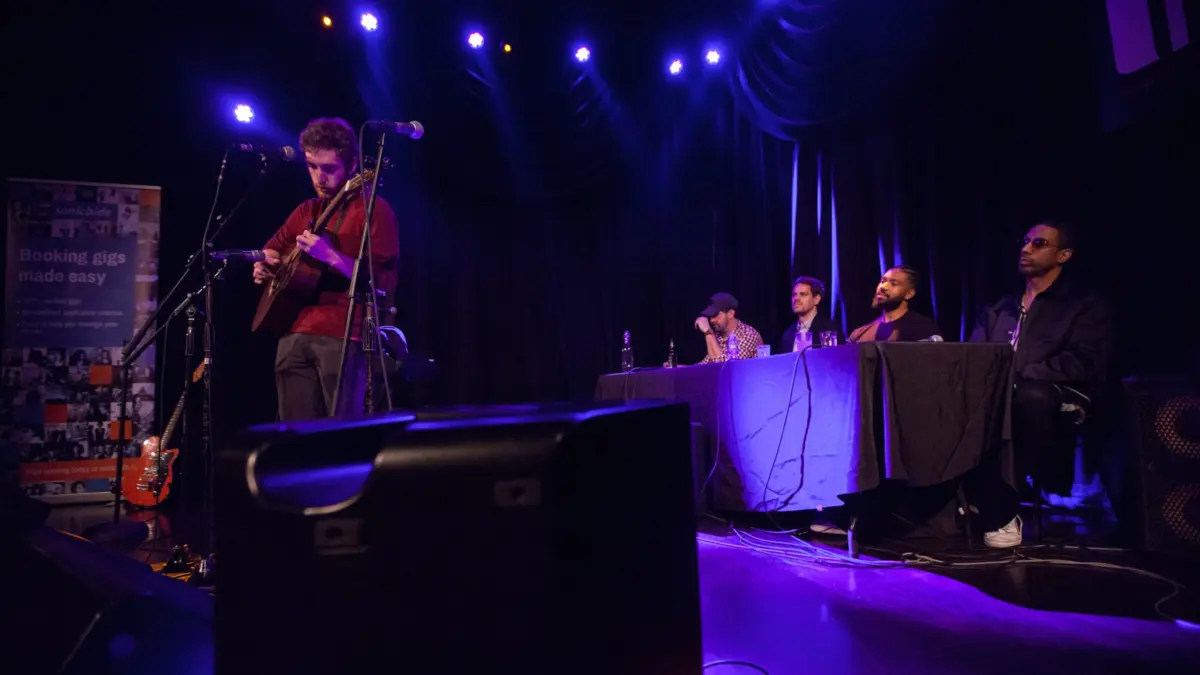
In response to the isolation of digital production, there has been a significant rise in structured physical gatherings, such as the "Feedback Collective" panels and songwriting workshops hosted by industry platforms like Sonicbids. These events serve a dual purpose: they provide professional development and facilitate high-value networking.

Unlike traditional "open mic" nights, which can sometimes lack professional focus, structured workshops and jam sessions create a "low-stakes, high-reward" environment. When a rock guitarist interacts with a jazz saxophonist in a controlled jam setting, the resulting "genre-bending" can lead to the development of a unique sonic identity. These sessions also act as a live audition. Observing a peer’s work ethic, technical proficiency, and interpersonal skills in a workshop setting is often a more effective precursor to a successful partnership than an exchange of emails. Statements from workshop participants often highlight that the "soft skills" learned in these environments—such as receiving constructive criticism and navigating creative disagreements—are just as vital as the musical connections made.
Strategic Pillar 3: Technological Intermediation and Collaborative Platforms
The digital landscape for networking has matured beyond the general-purpose social media of Instagram and X (formerly Twitter). Specialized platforms are now acting as digital intermediaries that facilitate creative "matchmaking."
- BandLab: With over 60 million users, this platform allows for real-time, cloud-based collaboration. It functions as a social network where the "product" is the project file itself.
- SoundCloud: While primarily a hosting site, its "comment-on-the-waveform" feature remains a powerful tool for direct engagement.
- Discord: Many independent artists are now building private "servers" where they invite other creators to share stems, give feedback, and organize "collab raids."
Data from these platforms suggests that artists who engage in at least one collaborative project per quarter see a 20% higher retention rate among their followers. This is attributed to the "novelty factor" that collaborations bring to an artist’s discography, keeping the content stream fresh without the need for a full solo album cycle.
Strategic Pillar 4: The Festival Labor Market as a Networking Catalyst
Music festivals are often viewed through the lens of performance, but for the independent musician, the "backstage economy" of volunteering offers a more direct path to industry insiders. Volunteering in production, artist relations, or hospitality places an artist in the same physical space as tour managers, booking agents, and headlining performers.

The logic behind this strategy is "proximity bias." Industry professionals are more likely to work with individuals they have seen perform reliably under pressure. A volunteer who excels at stage management or artist hospitality demonstrates a level of professionalism that is highly sought after in the touring world. Chronological data from artist biographies frequently shows that many mid-tier successful artists began their careers as "crew" for larger acts, using the opportunity to learn the mechanics of the industry while building a network of high-level contacts.
Strategic Pillar 5: The Democratization of A&R through Fan Engagement
The final frontier of modern networking is the blurring of the line between "fan" and "collaborator." The "1,000 True Fans" theory, posited by Kevin Kelly, suggests that an artist doesn’t need global stardom to be sustainable; they need a dedicated core. In the networking context, this core acts as a decentralized A&R team.
By utilizing surveys, polls, and direct-messaging on platforms like Patreon or Discord, musicians can tap into their audience’s collective network. It is not uncommon for a fan to have a professional connection to a venue owner, a graphic designer, or another musician. Engaging the fanbase in the decision-making process—such as asking who they would like to see the artist collaborate with—creates a sense of "psychological ownership" among the audience. This increases fan loyalty and often leads to "warm introductions" that would be impossible to secure through cold outreach.
Fact-Based Analysis of Implications
The shift toward proactive networking and collaboration has several long-term implications for the music industry:

- Diversification of Revenue: Artists who network across disciplines (e.g., music and gaming, music and fashion) are less reliant on streaming royalties alone.
- Reduced Barrier to Entry: Collaborative networks allow artists to "pool" resources, such as sharing the costs of a publicist or a high-end recording studio.
- Mental Health and Longevity: The independent music path is famously taxing. Community-based models provide a support system that mitigates the burnout associated with the "solopreneur" lifestyle.
- The Rise of the "Micro-Scene": Instead of a single global sound, networking is fostering thousands of "micro-scenes" that are commercially viable within their own niches.
Conclusion: The Long-term Viability of Collaborative Models
Networking and collaboration are no longer secondary to the craft of music; they are integral to the professionalization of the independent artist. By moving beyond traditional silos and embracing interdisciplinary, digital, and fan-based strategies, musicians can build a resilient career infrastructure. Each connection made at a local art event, every hour spent volunteering at a festival, and every collaborative stem shared online contributes to a larger web of opportunity. As the industry continues to evolve, the artists who thrive will be those who view their career not as a solo performance, but as a series of strategic, community-driven partnerships. The data is clear: in the modern music economy, the strength of the network determines the height of the platform.
