

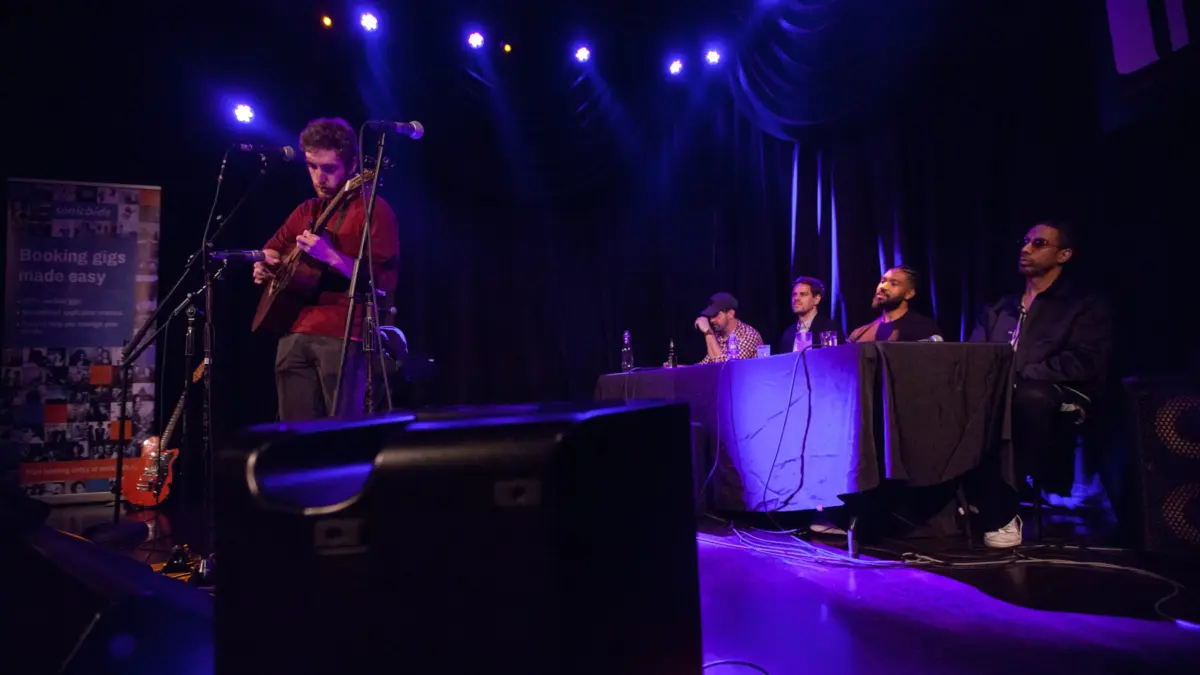
The independent music sector has witnessed an unprecedented surge in recent years, with the "DIY" movement transforming from a niche subculture into a dominant economic force within the global entertainment industry. According to industry reports from Midia Research, independent artists are the fastest-growing segment of the music business, generating over $1.2 billion in 2022 alone. However, this growth has brought about a saturation of the digital marketplace, making traditional methods of "breaking through" increasingly obsolete. For the modern independent musician, the path to sustainability no longer relies solely on algorithmic luck but on the deliberate construction of professional networks and cross-disciplinary collaborations. Recent initiatives, such as the Feedback Collective series hosted by Sonicbids, highlight a shifting paradigm where community engagement and pedagogical workshops are becoming as essential as the music itself.
The Evolution of Music Networking and the Rise of the Independent Sector
The history of music networking has transitioned from the high-barrier-to-entry "A&R" era of the late 20th century to the decentralized, peer-to-peer landscape of the 2020s. In the previous era, networking was a vertical process where artists sought the favor of gatekeepers at major labels. Today, the process is horizontal. Success is increasingly found through "lateral networking"—building relationships with fellow artists, local organizers, and professionals in adjacent creative fields.
This evolution is driven by the democratization of production technology. As the cost of recording has plummeted, the volume of music released daily has skyrocketed, with over 100,000 tracks uploaded to streaming platforms every 24 hours. In this environment, the "lonely genius" trope is being replaced by the "collaborative entrepreneur." Networking is no longer just about finding a manager; it is about creating a localized ecosystem that can support touring, marketing, and creative development without the need for traditional corporate backing.

Leveraging Interdisciplinary Synergy at Local Art Events
One of the most underutilized strategies for independent musicians is the engagement with non-musical art scenes. Local galleries, theater troupes, and spoken-word communities offer a fertile ground for "cross-pollination," a term used by industry analysts to describe the merging of different audience bases. When a musician provides a live score for a gallery opening or a theatrical production, they are not merely performing; they are accessing a demographic that may not frequent traditional music venues.
The logic behind this is rooted in the "Attention Economy." By aligning with a visual artist, a musician taps into the visual artist’s established credibility and follower base. For example, a sculptor’s exhibition provides a captive audience for a musician’s soundtrack, often leading to "sync" opportunities—where music is synchronized with visual media. These environments are often less competitive than music-only venues, allowing for more meaningful conversations with attendees and organizers. The objective is to position music as a vital component of a larger cultural experience rather than a standalone product.
The Role of Educational Workshops and Collaborative Jam Sessions
The emergence of the "Feedback Collective," a series of panel discussions and songwriting workshops hosted by Sonicbids, serves as a primary example of how structured networking can foster professional growth. These events provide a dual function: they serve as a platform for skill acquisition and a high-density networking environment. Unlike a standard concert, where the boundary between performer and audience is rigid, workshops and jam sessions dissolve these barriers.
Hosting a jam session or a workshop allows an artist to establish themselves as a "community node." In network theory, a node is a point where multiple connections intersect. By taking the initiative to organize a session—whether in a community center or a private studio—a musician gains the "first-mover advantage." This positioning facilitates introductions between diverse genres, such as the fusion of classical instrumentation with electronic production, which can lead to the discovery of "blue ocean" musical territories—markets with little competition and high innovation potential.

Digital Infrastructure and the Architecture of Online Collaboration
While mainstream social media platforms like Instagram and TikTok are essential for discovery, they are often criticized for their "low-signal" environment, where meaningful professional connection is buried under viral trends. In response, professional-grade collaboration platforms such as BandLab and SoundCloud have evolved to provide specialized tools for remote partnership.
BandLab, for instance, offers a cloud-based Digital Audio Workstation (DAW) that allows musicians from different continents to work on the same project file in real-time. This technological infrastructure has removed geographical barriers to networking. A musician in Nashville can provide vocal tracks for a producer in Berlin, expanding their reach into international markets. The data suggests that collaborative tracks often perform better on streaming algorithms; when two artists release a song together, the track is pushed to both artists’ "Release Radar" and "Discover Weekly" playlists, effectively doubling the initial reach. Professional networking on these platforms requires a shift from "broadcasting" (posting content) to "engaging" (providing technical feedback and proposing specific project outlines).
The Strategic Value of Event Volunteering and Industry Immersion
For emerging artists, the "backstage economy" of music festivals and industry conferences offers a direct line to decision-makers. Volunteering at events like South by Southwest (SXSW), Glastonbury, or local independent festivals provides a "fly-on-the-wall" perspective of the industry’s inner workings. This immersion allows artists to observe the logistical, financial, and technical challenges faced by organizers, making the artist a more informed and professional partner in the future.
The networking opportunities in these settings are organic. A volunteer working in artist relations or stage management interacts with tour managers, sound engineers, and talent buyers in a high-stakes, high-trust environment. These interactions often lead to more sustainable professional relationships than a cold email or a passed-out demo. Industry veterans often cite "reliability" and "presence" as the two most important factors in artist development; by showing up and contributing to the success of an event, an artist demonstrates both.

Fanbase Utilization as a Networking Catalyst
The "1,000 True Fans" theory, popularized by Kevin Kelly, posits that an artist does not need mainstream stardom to be successful, but rather a dedicated core of supporters. Modern networking strategies have expanded this theory to include fans as "active agents" in an artist’s career. Utilizing a fanbase for networking involves shifting the fan’s role from a passive consumer to a collaborator or scout.
Independent musicians are increasingly using digital tools—surveys, Discord servers, and Patreon communities—to solicit advice on potential collaborators. This not only increases fan engagement but also leverages the collective knowledge of the audience. A fan in a specific city may have a connection to a local venue or a graphic designer, providing a "warm introduction" that would otherwise be inaccessible. This democratic approach to career management fosters a sense of ownership among the fanbase, leading to higher retention rates and a more robust support system.
Data-Driven Analysis of Collaborative Impacts
The impact of these networking strategies is measurable. Data from the "Independent Music Insider" report indicates that artists who engage in at least three collaborative projects per year see a 40% higher growth rate in their monthly listeners compared to solo acts. Furthermore, cross-disciplinary collaboration—such as music for film or art—increases an artist’s chances of being featured in non-music press, providing a secondary stream of publicity and social proof.
The economic implications are also significant. By building a network of peers, independent musicians can engage in "cost-sharing" for tours and marketing campaigns. Sharing a tour van, a publicist, or a street team reduces the financial overhead for each individual artist, making professional-level operations more viable for those without label support.

Official Responses and Industry Sentiment
Industry professionals, including representatives from Sonicbids and various A&R firms, have voiced a consistent message: the "product" is no longer just the song, but the network surrounding the artist. During the Feedback Collective Panel Discussion, speakers emphasized that the ability to navigate professional relationships is now a "core competency" for any musician seeking longevity. The sentiment among talent buyers is also shifting; many now look for artists who bring a "community" with them, rather than just a high follower count. This reflects a preference for "engaged reach" over "vanity metrics."
Conclusion and Future Implications for the Music Economy
The landscape of independent music is moving toward a model of "co-opetition"—a blend of cooperation and competition where artists work together to grow the total market share for independent music. As the barriers between different art forms continue to blur, the most successful musicians will be those who view themselves as part of a broader creative ecosystem.
The strategies of embracing local art events, hosting educational workshops, utilizing specialized digital platforms, volunteering within the industry, and activating the fanbase represent a holistic approach to career development. These are not merely "tips" for networking but are the fundamental pillars of a modern music career. By focusing on the value of the community, independent musicians can transcend the limitations of the traditional industry and build a sustainable, creative future. The transition from a solitary artist to a networked professional is the defining challenge of the current era, and those who master it are poised to lead the next wave of musical innovation.
