

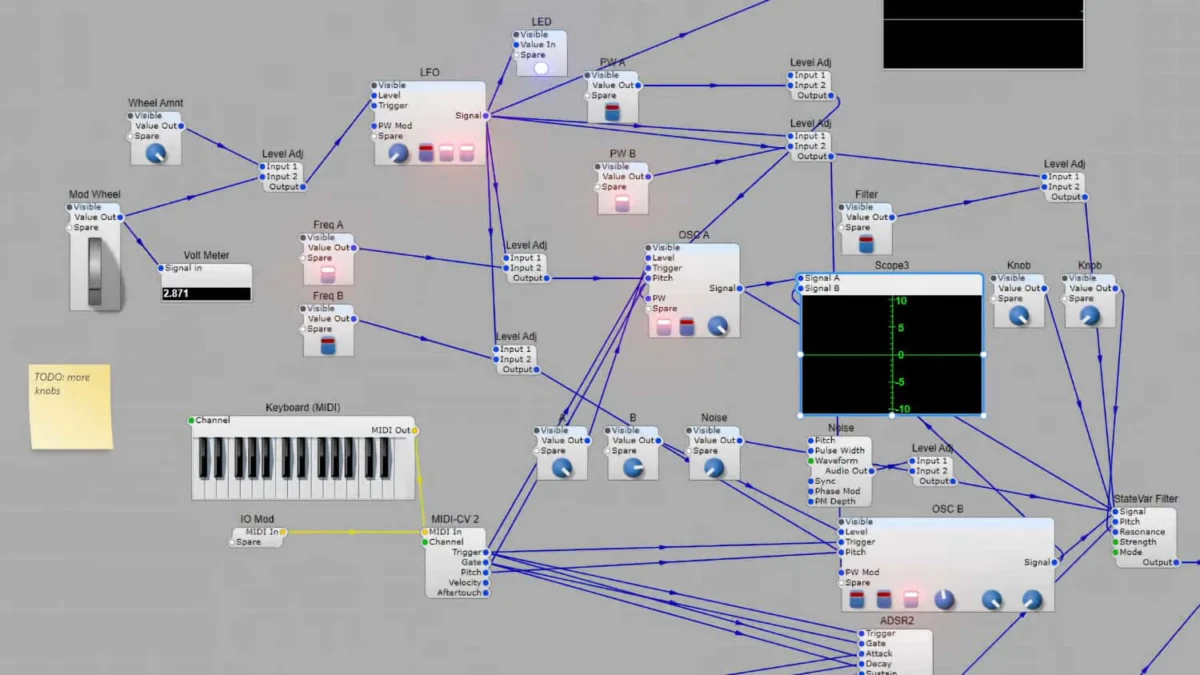
The long-standing landscape of modular audio software development has reached a significant milestone with the announcement from developer Jeff McClintock regarding the beta release of SynthEdit 1.6. For the first time in the software’s 37-year history, the visual development environment is available for the macOS platform, breaking its long-term exclusivity to Windows and signaling a new era of cross-platform accessibility for independent plugin designers. This update not only introduces compatibility with Apple’s ecosystem but also confirms that a Linux version is currently in active development, positioning SynthEdit as a comprehensive multi-platform tool for the modern audio engineering community.
The Evolution of a Visual Development Pioneer
SynthEdit occupies a unique position in the history of music technology. Originally introduced by Jeff McClintock in 1987, the software predates the widespread adoption of the Virtual Studio Technology (VST) standard by nearly a decade. In its earliest iterations, SynthEdit served as a playground for modular synthesis on personal computers, allowing users to experiment with digital signal processing (DSP) without the steep learning curve associated with traditional programming languages like C++ or Assembly.
As the digital audio workstation (DAW) market matured in the late 1990s and early 2000s, SynthEdit evolved into a powerful compiler for VST instruments and effects. It became the foundational tool for a generation of "bedroom developers" who created thousands of freeware and budget-friendly plugins that populated the hard drives of electronic musicians worldwide. However, for decades, these creations were largely restricted to Windows users. The architecture of SynthEdit was deeply intertwined with Windows-specific APIs, making a port to macOS a monumental technical challenge that required a fundamental rebuilding of the software’s core engine.
Core Functionality and the Visual Paradigm
At its heart, SynthEdit 1.6 maintains the visual modular philosophy that has defined the software since its inception. The environment operates on a graphical canvas where developers place functional blocks, known as modules, which represent various audio components such as oscillators, filters, envelopes, and sequencers. These modules are connected via virtual patch cables, mimicking the workflow of a hardware modular synthesizer.
One of the primary advantages of SynthEdit is its built-in panel designer. This feature allows developers to transition from the "under-the-hood" DSP logic to the user interface (UI) design within the same application. Users can drag and drop sliders, knobs, and buttons, skinning them with custom graphics to create professional-looking plugins. The version 1.6 update ensures that these interfaces are now compatible with the graphical requirements of macOS, including support for Retina displays and the specific window-handling protocols of the Mac operating system.
Bridging the Gap to macOS and Apple Silicon
The transition to macOS is the most significant structural change in the history of SynthEdit. Historically, the software’s reliance on Windows-only technologies meant that any plugin created within the environment was effectively locked out of the lucrative Apple market, which is preferred by a large percentage of professional music producers and recording studios.
The release of SynthEdit 1.6 Beta addresses this by supporting the export of both VST3 and Audio Unit (AU) plugins for Mac. The inclusion of AU support is particularly critical, as it is the native format for Apple’s Logic Pro and GarageBand, two of the most widely used DAWs in the industry. Furthermore, the timing of this release aligns with the industry-wide shift toward Apple Silicon (M-series chips). While the beta is undergoing rigorous testing, the move toward a cross-platform framework suggests that McClintock is preparing the software for long-term viability in an ARM-based computing environment.
Technical Specifications and Extensibility
While SynthEdit is marketed as a "no-code" solution, it remains a highly sophisticated tool that can be extended by those with programming expertise. The software supports third-party C++ modules, allowing advanced users to write their own DSP code and integrate it into the SynthEdit environment as a custom module. This hybrid approach—combining visual ease-of-use with the raw power of C++—has allowed SynthEdit to remain competitive against other visual environments like Cycling ’74’s Max/MSP or Native Instruments’ Reaktor.
The 1.6 update focuses on modernizing the export process. By focusing on VST3, SynthEdit aligns with Steinberg’s current standards, ensuring better CPU efficiency and improved MIDI handling compared to the aging VST2 format. The beta release also includes optimizations for multi-core processing, a necessity for modern high-voice-count polyphonic synthesizers and complex effects chains.
Chronology of Development and Future Roadmap
The path to SynthEdit 1.6 has been a multi-year journey of refactoring and modernization.

- 1987: Initial launch as a modular synthesis tool for Windows.
- Early 2000s: Transition to a VST plugin creator, fueling the "freeware revolution."
- 2010s: Migration from 32-bit to 64-bit architecture, ensuring compatibility with modern DAWs.
- 2020-2023: Internal development of the cross-platform engine and porting of core DSP libraries to be platform-agnostic.
- 2024 (Current): Release of the 1.6 Beta with macOS support.
- Future: Expected stabilization of the Mac version and the introduction of a Linux-compatible build.
The mention of a Linux version in development is particularly noteworthy. While Linux currently holds a smaller share of the professional audio market, its growth in the "prosumer" and hobbyist sectors—driven by platforms like Bitwig Studio and Reaper—has created a demand for more native plugins. By supporting Windows, Mac, and Linux, SynthEdit 1.6 aims to provide a "write once, deploy everywhere" workflow for independent developers.
Implications for the Plugin Market and Independent Developers
The expansion of SynthEdit to macOS is likely to have a ripple effect across the independent software market. For years, many talented developers using SynthEdit were unable to monetize their work effectively because they could not reach Mac users. This limitation often forced developers to eventually migrate to more complex frameworks like JUCE, which requires extensive knowledge of C++.
With SynthEdit 1.6, the barrier to entry for creating cross-platform commercial plugins is significantly lowered. This could lead to a resurgence of boutique plugin companies and a more diverse marketplace of specialized audio tools. Small-scale developers can now prototype, design, and export a plugin for both Windows and Mac without the overhead of maintaining two separate codebases or hiring specialized porting engineers.
Comparative Analysis of Visual Programming Environments
In the broader context of audio development, SynthEdit competes with several established platforms. Max/MSP is often cited as the industry standard for experimental music and interactive media, while Reaktor is favored for its high-quality internal library and integration with the Native Instruments ecosystem.
However, SynthEdit’s primary strength has always been its ability to export standalone, royalty-free plugins. Unlike Max or Reaktor, which often require the end-user to own the parent software or a "Player" version to run the creations, SynthEdit exports standard VST and AU files that function independently. This makes it a more attractive option for developers looking to sell their own branded products. The 1.6 update brings SynthEdit closer to the capabilities of FlowStone (formerly DSP Robotics), another visual programming tool, but with a renewed focus on the specific needs of the macOS audio community.
Community Reaction and Industry Response
The announcement has been met with significant interest from the SynthEdit user community, many of whom have been requesting Mac support for over a decade. Early testers of the beta have noted that while the interface remains familiar to long-time users, the underlying performance on macOS is surprisingly stable for an initial beta release.
Industry analysts suggest that this move is a necessary survival tactic. As the software industry moves toward subscription models and high-integration ecosystems, standalone tools like SynthEdit must remain versatile to survive. By embracing macOS and Linux, Jeff McClintock is ensuring that SynthEdit remains a relevant tool for the next generation of audio innovators.
Availability and Beta Testing
SynthEdit 1.6 is currently available for download through the official SynthEdit website. The developer has opted for a transparent "free demo" model, which allows users to explore the full functionality of the software with no expiration period, though exported plugins may include a nag screen or limitations until a license is purchased. This approach encourages community feedback during the beta phase, which is essential for identifying bugs across the vast array of hardware configurations present in the macOS and Windows ecosystems.
As the beta progresses, users can expect frequent updates to address compatibility issues with specific DAWs and to refine the performance of the newly introduced Audio Unit export functionality. The Linux version remains in the "in development" stage, with no official release date yet announced, though its inclusion in the roadmap signifies a clear commitment to a truly universal development environment.
The release of SynthEdit 1.6 Beta represents more than just a software update; it is a fundamental shift for a tool that has been a cornerstone of the DIY audio community for decades. By breaking the "Windows-only" mold, SynthEdit is poised to empower a new wave of creators to bring their sonic visions to a global, multi-platform audience.
