

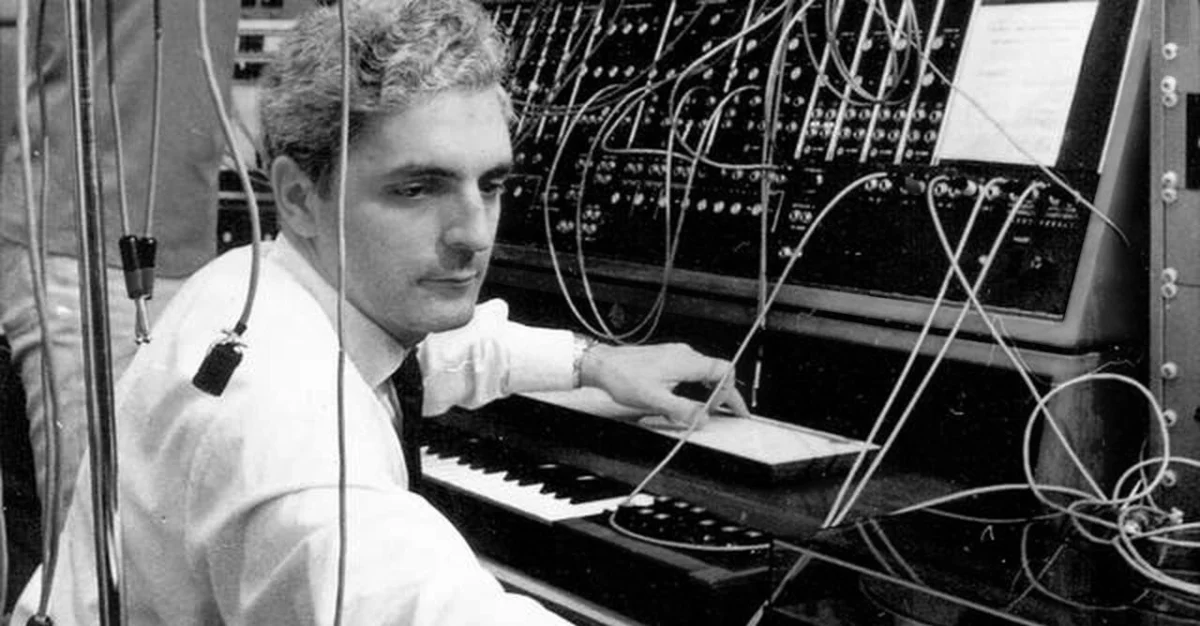
The Bob Moog Foundation has officially reached its 20th year of operation, marking two decades of dedicated service to the preservation of electronic music history and the advancement of science education. Established as an independent 501(c)(3) nonprofit organization, the Foundation serves as the primary custodian of the legacy left by Dr. Robert Moog, the visionary inventor whose work revolutionized modern music. Under the continuous leadership of Executive Director Michelle Moog-Koussa, the daughter of the late pioneer, the organization has evolved from a nascent memorial project into a multifaceted cultural institution with a global reach. This milestone anniversary highlights the organization’s success in navigating the precarious landscape of nonprofit management, where a significant percentage of new entities fail within their first five years due to financial instability or lack of clear mission focus.
The Foundation’s longevity is attributed to its three-pronged approach to legacy preservation: the Dr. Bob’s SoundSchool educational program, the physical and digital Moog Archives, and the Moogseum, a flagship interactive facility located in Asheville, North Carolina. By diversifying its efforts across education, historical conservation, and tourism, the Bob Moog Foundation has secured its place as a cornerstone of the electronic music community.
The Genesis of a Legacy: Historical Context and Foundation Origins
To understand the significance of the Foundation’s 20-year milestone, one must consider the profound impact of Dr. Robert Moog himself. In 1964, Bob Moog introduced the first commercially viable voltage-controlled synthesizer, a breakthrough that allowed musicians to manipulate electronic signals with a degree of precision and expression previously thought impossible. His inventions, ranging from the massive modular systems used by Wendy Carlos and Keith Emerson to the portable and iconic Minimoog, effectively birthed the genre of electronic music and influenced nearly every facet of modern audio production.
Following Dr. Moog’s passing in 2005, there was an immediate and pressing need to ensure that his vast collection of schematics, correspondence, and prototype instruments were not lost to time or private collection fragmentation. While many associated the Moog name exclusively with the manufacturing of instruments, the Bob Moog Foundation was established as a separate entity from Moog Music Inc. to focus on the humanitarian and educational aspects of his life’s work. Since its formal inception in 2006, the Foundation has operated without direct corporate funding from the instrument manufacturer, relying instead on a grassroots network of donors, grants, and specialized fundraising initiatives.
A Chronology of Growth: Two Decades of Milestones
The trajectory of the Bob Moog Foundation is defined by several key developmental phases that have expanded its influence from a local Asheville initiative to an international authority on synthesis.
2006–2010: Foundation and Archival Rescue
The initial years were focused on the monumental task of organizing Dr. Moog’s personal archives. This period involved the stabilization of thousands of documents, including hand-drawn circuit diagrams that mapped the evolution of the Moog ladder filter and other foundational technologies.
2011–2014: The Launch of Dr. Bob’s SoundSchool
In 2011, the Foundation launched its most ambitious project to date: Dr. Bob’s SoundSchool. This curriculum-based initiative was designed to teach the physics of sound to elementary school students. By using the synthesizer as a teaching tool, the Foundation bridged the gap between science, technology, engineering, art, and mathematics (STEAM). By 2014, the program had expanded from a few local pilot classrooms to a standardized curriculum reaching thousands of students annually.
2015–2018: Global Outreach and Fundraising Innovation
Recognizing the need for sustainable income, the Foundation pioneered the "Synth Raffle" model. By raffling off meticulously restored vintage synthesizers—often donated by high-profile supporters—the organization generated significant revenue while engaging the synthesizer enthusiast community. This period also saw an increase in "Moogmentum" campaigns, which sought to build the capital necessary for a physical museum.
2019–Present: The Moogseum and the Modern Era
In May 2019, the Foundation opened the Moogseum in downtown Asheville. The facility serves as a physical convergence point for the Foundation’s three pillars, featuring interactive exhibits that explain how synthesis works, a timeline of Dr. Moog’s life, and a rotation of archival materials. Despite the challenges posed by the global pandemic shortly after its opening, the Moogseum has remained a top-rated destination for music history, contributing to the local economy and the global understanding of electronic music.
Educational Impact: Data and Methodology of Dr. Bob’s SoundSchool
At the heart of the Foundation’s mission is the belief that music and science are inextricably linked. Dr. Bob’s SoundSchool (DBSS) has become the organization’s most statistically significant achievement. The program consists of a 10-week curriculum primarily targeting second-grade students. It covers essential scientific concepts, including vibrations, waveforms, pitch, and the movement of sound through different media.

Data provided by the Foundation indicates that the program has reached over 30,000 students since its inception. In the 2022-2023 academic year alone, the curriculum was implemented in over 100 classrooms across the Asheville region and beyond. Pre- and post-testing of students consistently shows a marked increase in the understanding of physical science concepts. By utilizing theremins and oscillators—tools that provide immediate auditory feedback to physical actions—the program fosters a "maker" mindset among young learners, encouraging them to view technology as a creative outlet rather than just a consumer product.
Preservation of the Moog Archives: Safeguarding Technical History
The Moog Archives represent one of the most comprehensive collections of electronic music history in the world. This repository includes more than 10,000 items, ranging from rare photographs and business records to technical drawings that predate the digital age. The preservation of these materials is a meticulous process involving climate-controlled storage and high-resolution digitization.
The importance of the archives extends beyond mere nostalgia. For engineers and historians, these documents provide a blueprint for the evolution of analog electronics. The Foundation’s work in this area has facilitated scholarly research and helped verify the provenance of historic instruments. Recent efforts have focused on the "Bob’s Desk" exhibit at the Moogseum, which recreates Dr. Moog’s workspace, providing a tangible connection to the late inventor’s creative process.
Financial Sustainability and Community Response
Operating as an independent nonprofit requires a complex strategy for financial viability. The Bob Moog Foundation does not receive ongoing government subsidies or endowment draws that sustain larger national museums. Instead, it relies on a diverse revenue stream consisting of Moogseum admissions, merchandise sales from its online store, and high-stakes raffles.
The response from the professional music community has been a critical component of this success. Notable artists, including Rick Wakeman, Gary Numan, and Jean-Michel Jarre, have expressed public support for the Foundation’s work. Inferred statements from the Board of Directors emphasize that the 20th anniversary is not merely a celebration of the past, but a commitment to the future. Supporters often cite the Foundation’s ability to remain "human-centric" in an increasingly digital world as a primary reason for their continued contributions.
The "BMF Raffle" has become a particularly effective tool. By offering a vintage Memorymoog or a Minimoog signed by industry legends, the Foundation taps into the collector market to fund its educational programs. This circular economy—where the history of the instrument funds the education of the next generation—has been lauded by nonprofit analysts as an exemplary model of mission-aligned fundraising.
Broader Impact and Future Implications for the Industry
The 20-year milestone of the Bob Moog Foundation carries implications that extend far beyond the city limits of Asheville. In an era where music education is frequently subject to budget cuts in public schools, the Foundation’s SoundSchool provides a scalable model for how private organizations can supplement STEM/STEAM education.
Furthermore, the Foundation’s success signals a broader cultural shift in how electronic music is perceived. Once relegated to the fringes of "experimental" or "academic" music, the synthesizer is now recognized as a foundational instrument of the 20th and 21st centuries. By treating the history of synthesis with the same academic rigor as classical music history, the Foundation has helped elevate the status of electronic instrument design to a recognized art form.
Looking ahead, the Foundation aims to expand the digital reach of its archives, making its historical assets accessible to researchers worldwide. Plans for the next decade include the potential expansion of the Moogseum and the further integration of virtual reality experiences to teach sound synthesis to those who cannot visit the physical location in North Carolina.
As the Bob Moog Foundation enters its third decade, it remains a testament to the power of a legacy when managed with transparency, passion, and a clear focus on the public good. The organization has successfully transitioned from a family-led effort to preserve a father’s work into a global institution that ensures the "science of sound" continues to inspire future generations of innovators and artists. Through its continued work, the Foundation ensures that while Dr. Robert Moog may have passed, his spirit of curiosity and invention remains very much alive in classrooms, museums, and studios around the world.
