

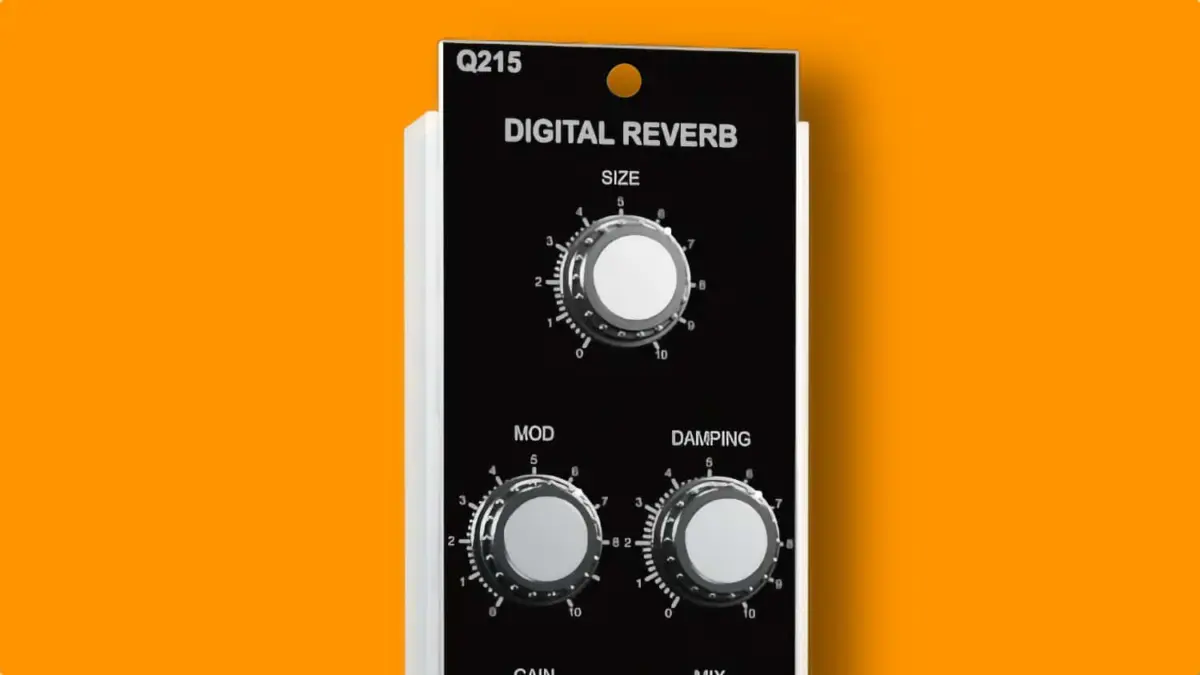
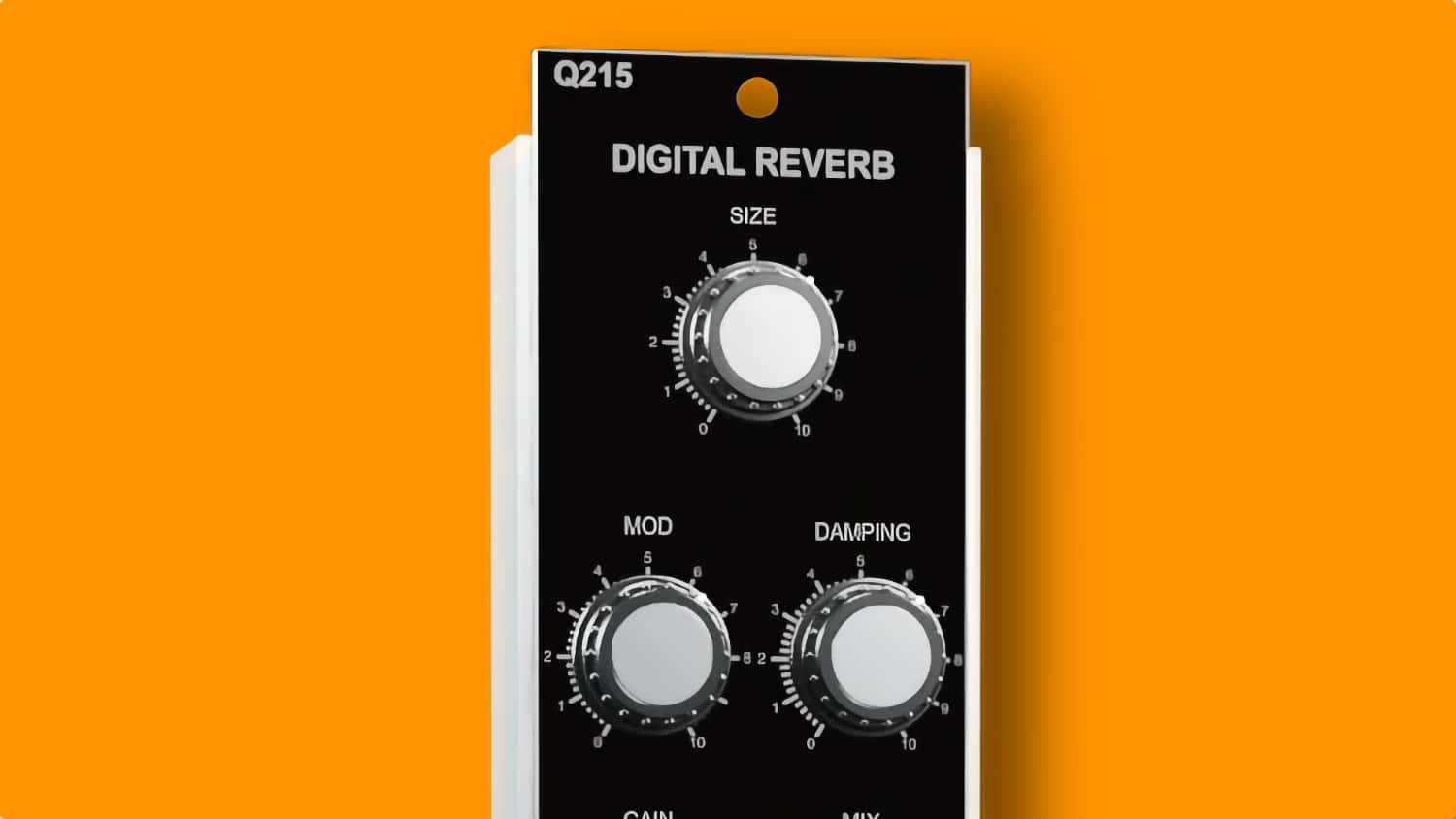
Synthesizers.com, a prominent manufacturer specializing in the Moog Unit (MU) modular format, has officially announced the launch of the Q215 Digital Reverb. This new addition to their expansive catalog is a multi-mode stereo reverb designed specifically to meet the high-voltage requirements and physical dimensions of 5U modular systems. Positioned as a versatile spatial processor, the Q215 aims to bridge the gap between vintage digital aesthetics and modern modular flexibility. The module is currently available for pre-order at a price point of $379 USD, with the manufacturer projecting a shipping commencement date in late November 2026. This announcement marks a significant expansion for the MU format, providing users with a dedicated, high-fidelity stereo effects solution that maintains the tactile ergonomics characteristic of large-format modular synthesis.
Technical Specifications and Architectural Design
The Q215 Digital Reverb is engineered to accommodate a wide variety of signal types, distinguishing it from many Eurorack-centric effects that are strictly limited to modular levels. While it is designed to process the standard +/-5V signals common in modular synthesis, the inclusion of a dedicated gain control allows it to interface seamlessly with line-level equipment. This makes the Q215 an ideal processor not only for oscillators and filters but also for external hardware such as drum machines, samplers, and polyphonic synthesizers.
The architecture of the Q215 supports both mono-to-stereo and stereo-to-stereo processing. This flexibility is critical for modular users who wish to maintain a stereo image throughout their signal chain or for those looking to expand a monophonic sound source into a lush, three-dimensional space. The front panel features a robust layout consistent with the Synthesizers.com aesthetic, utilizing 1/4-inch jacks for all audio inputs and outputs. This physical format ensures durability and provides the "big knob" experience that MU enthusiasts prefer for precise real-time manipulation during live performances or studio sessions.
One of the standout technical features of the Q215 is its approach to headroom management. The built-in gain control serves a dual purpose: it allows users to calibrate the module for various input sources to prevent unwanted digital clipping, but it can also be intentionally pushed to induce "slight clipping." This saturation adds a layer of harmonic complexity to the signal before it enters the digital processing stage, offering a more "organic" or "analog" feel to the resulting reverberation.
Algorithmic Diversity and Period-Accurate Emulation
At the core of the Q215 Digital Reverb is a suite of diverse algorithms designed to cover a broad spectrum of acoustic and synthetic spaces. Synthesizers.com has placed a particular emphasis on "period-accurate" sample rate adjustments. By manipulating the internal sample rates of specific algorithms, the module can recreate the unique sonic signatures of early digital reverb units from the 1970s and 1980s.
Among the most highlighted algorithms are the two "Abstract Large Hall" modes. These modes are specifically designed to be "dark and gritty," a characteristic achieved by locking the internal processing to a 32kHz sample rate. In the realm of digital audio, a 32kHz sample rate limits the high-frequency response (Nyquist frequency) to 16kHz, which naturally rolls off the "sheen" often associated with modern, high-definition digital reverbs. This results in a warmer, more brooding atmosphere that complements the thick, harmonically rich tones produced by analog modular oscillators.
While the full list of algorithms includes standard rooms, plates, and springs, the "Abstract" designations suggest a focus on sound design and experimental textures. These algorithms are likely tuned to provide long decay times and complex diffusion patterns that evolve over time, making them suitable for ambient music, drone compositions, and cinematic soundscapes.
The MU Format and Historical Context
The release of the Q215 is a significant event for the MU (Moog Unit) community. The MU format, often referred to as "5U" or "Dotcom" format, traces its lineage back to the original Moog modular systems of the 1960s and 70s. While the Eurorack format (3U) has seen a massive surge in popularity over the last two decades due to its compact size and lower entry cost, the MU format remains a staple for professionals and enthusiasts who value the physical scale, electrical stability, and historical continuity of larger modules.
Synthesizers.com, founded by Roger Arrick, has been the primary torchbearer for this format since the late 1990s. By introducing a modern digital reverb in this form factor, the company is addressing a specific need within the community. Historically, reverb in large-format modular systems was often handled by massive spring reverb tanks or external rackmount processors. The Q215 integrates high-quality digital spatialization directly into the rack, preserving the "all-in-one" philosophy of modular synthesis while utilizing modern DSP (Digital Signal Processing) power.
Chronology and Development Timeline
The development of the Q215 follows a period of renewed interest in digital-analog hybrid systems. Synthesizers.com has a history of providing rock-solid analog modules—oscillators, filters, and amplifiers—but the inclusion of sophisticated digital effects represents an evolution in their product line.
- Initial Concept: Development of a high-headroom digital engine capable of handling modular voltage levels began as a response to user requests for a "clean but characterful" spatial processor.
- Prototyping Phase: Engineers focused on the "Gain" stage and the 32kHz sampling logic to ensure that the "dark and gritty" characteristics met the aesthetic standards of analog purists.
- Official Announcement: October 2026 – The Q215 is officially unveiled with mockup images and technical specifications provided to the public.
- Pre-order Phase: Commencing immediately upon announcement, allowing the manufacturer to gauge demand and finalize production batches.
- Expected Shipping: Late November 2026 – The first units are scheduled to reach customers, just ahead of the end-of-year holiday season.
Market Positioning and Pricing Analysis
At $379 USD, the Q215 is positioned as a mid-to-high-tier module. Within the MU ecosystem, this pricing is competitive, especially considering the stereo capabilities and the inclusion of specialized algorithms. When compared to high-end Eurorack reverbs, which often retail between $350 and $500, the Q215 offers significant value, particularly given the increased cost of manufacturing larger faceplates and utilizing 1/4-inch hardware.
The module is likely to appeal to three primary demographics:
- Legacy Modular Owners: Users with vintage Moog or early Synthesizers.com systems looking to modernize their signal chain without leaving the MU ecosystem.
- Studio Producers: Musicians who use modular systems as high-end outboard gear and require the ability to process line-level signals through "musical" digital effects.
- Live Performers: Artists who benefit from the large, tactile controls of the 5U format, which are less prone to accidental adjustments in a dark or high-pressure performance environment.
Industry Implications and Future Outlook
The introduction of the Q215 suggests that Synthesizers.com is committed to the long-term viability of the MU format by integrating modern digital conveniences. As more musicians look for "hybrid" setups that combine the tactile feel of analog with the precision of digital, modules like the Q215 become essential.
The decision to implement "period-accurate" limitations (like the 32kHz sample rate) reflects a broader trend in the synthesizer industry: a move away from "perfect" digital audio toward "characterful" digital audio. By embracing the limitations of early digital technology, Synthesizers.com is providing a tool that feels sonically consistent with the analog modules it sits alongside.
Furthermore, the Q215’s ability to handle line-level signals may signal a shift in how modular manufacturers view their market. By making the module "line-level friendly," Synthesizers.com is lowering the barrier for non-modular users to integrate 5U hardware into their workflows. This could potentially lead to a wider adoption of the format among a new generation of electronic musicians.
As the shipping date in late 2026 approaches, the community’s focus will likely turn to the specific nuances of the remaining algorithms. If the Q215 performs as promised, it will likely become a cornerstone module for MU systems, providing the essential "final touch" to complex patches and solidifying Synthesizers.com’s position as a leader in the large-format modular market.
Conclusion of Main Facts
The Q215 Digital Reverb stands as a testament to the enduring appeal of the MU modular format. By combining a wide range of reverb styles—from the dark, 32kHz "Abstract Large Hall" to cleaner, modern spaces—with the physical robustness of 5U hardware, Synthesizers.com has created a versatile tool for the modern synthesist. With its $379 price point and November 2026 release date, the Q215 is poised to become a significant addition to the landscape of modular synthesis, offering a unique blend of vintage grit and modern stereo processing power.
