

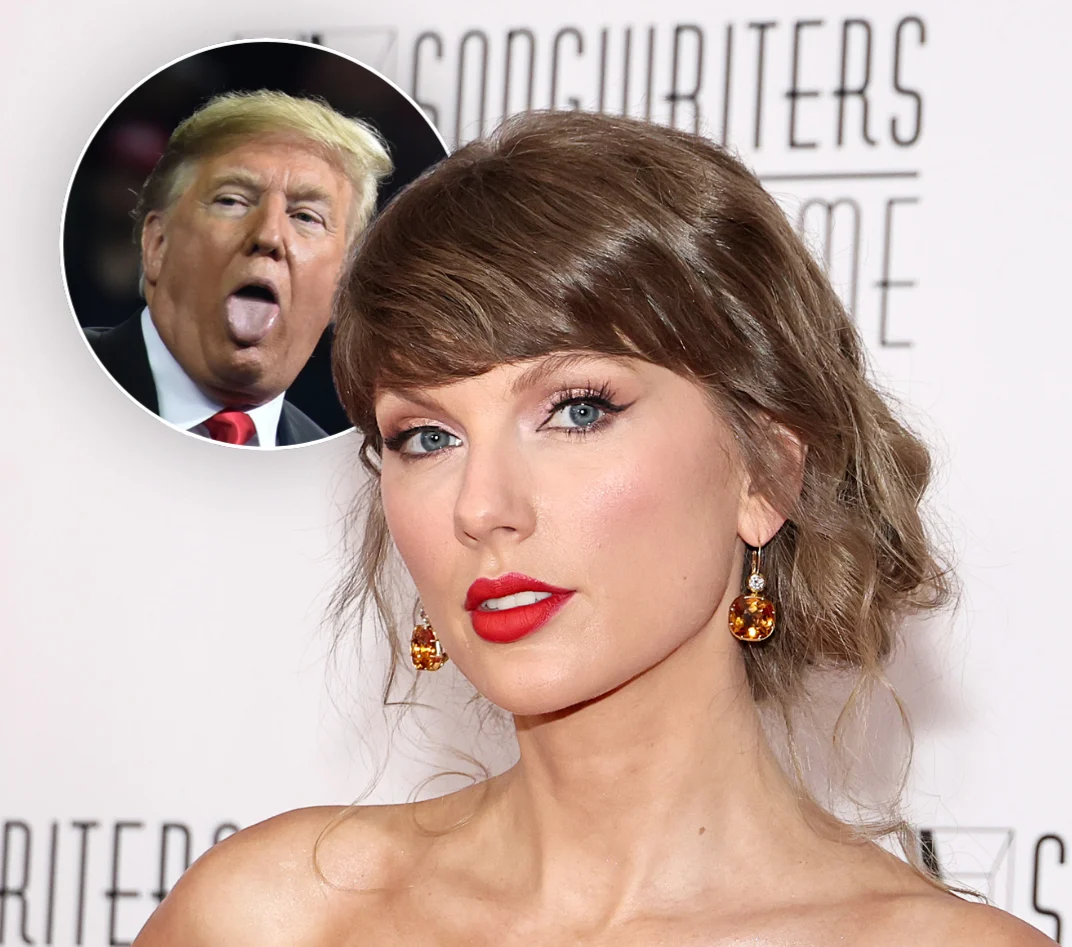
The digital battleground of the 2024 presidential election saw a significant escalation this past week as the campaign of former President Donald Trump faced widespread copyright enforcement from the team representing global pop superstar Taylor Swift. Since its launch in late July 2024, the "Team Trump" TikTok account has leveraged popular music, including several tracks by Swift, in its content. However, this strategy appears to have reached a critical juncture, with Swift’s representatives initiating comprehensive action to remove her copyrighted material from the campaign’s posts, marking a notable intersection of pop culture, intellectual property law, and high-stakes politics.
The Incidents: Unauthorized Music Use and Swift’s Response
The series of events began to draw widespread attention following a specific post by the "Team Trump" TikTok account last week. The video featured an AI-generated clip depicting Donald and Melania Trump observing fireworks, set to the audio of Swift’s Folklore track, "August." The accompanying on-screen text read, "Mood because it’s August and Donald Trump is your president," a clear reference to the song’s title and a presumptive political statement. The caption, designed to be provocative, further declared, "I’m sure @Taylor Swift is going to be super excited we used her song!" complete with the hashtags #taylorswift, #maga, and #august. This deliberate taunt, seemingly aimed at eliciting a reaction, quickly garnered attention across social media platforms.
Swift’s team, known for their vigilant protection of her intellectual property, responded swiftly. By Friday, the audio for "August" was muted on the "Team Trump" post, indicating a successful copyright claim and removal. This initial action was not an isolated incident.
Following the muting of "August," the "Team Trump" account escalated its use of Swift’s music, this time employing audio from a live version of her song "Red" in a post that directly parodied the artist’s acclaimed album of the same name. The video featured text overlaying an image of the former president, proclaiming, "Did you know Taylor Swift wrote a whole album about the color of the Republican Party," followed by the title, "Red (Donald Trump’s Version)." The caption extended this parody, re-imagining Swift’s song titles from her Red album with Trump-themed political spins, such as "Everything Has Changed (At Our Southern Border)." This move not only utilized Swift’s music but also directly appropriated her "Taylor’s Version" re-recording campaign, a widely publicized effort by Swift to reclaim ownership of her master recordings.
Predictably, this second instance of unauthorized use also resulted in swift action. The audio for "Red (Donald Trump’s Version)" was subsequently removed, further signaling a concerted effort by Swift’s team to curb the campaign’s use of her catalog. In fact, by the end of the weekend, reports indicated that audio from at least ten different Taylor Swift songs had been systematically removed from posts across both the "Team Trump" TikTok account and the White House’s official TikTok account, underscoring the comprehensive nature of the copyright enforcement.
A History of Contentious Relations: Trump vs. Swift
The recent TikTok incidents are not an isolated skirmish but rather the latest chapter in a long-standing and often contentious relationship between Donald Trump and Taylor Swift. Their dynamic, which began as a relatively benign lack of engagement, evolved into open antagonism as Swift increasingly embraced political activism.
For years, Taylor Swift largely remained apolitical, a stance that drew both praise for her broad appeal and criticism for her perceived silence on social issues. This changed dramatically in 2018 when Swift publicly endorsed Democratic candidates in her home state of Tennessee, breaking her long-held silence. In subsequent years, she became increasingly vocal in her opposition to the Trump administration, articulating her views on issues such as LGBTQ+ rights, racial equality, and women’s rights, and expressing her dismay at policies and rhetoric she found divisive. Her 2020 Netflix documentary, "Miss Americana," provided a candid look into her decision to become politically active, highlighting her internal struggle and ultimate conviction to use her platform.
Donald Trump, known for his keen awareness of celebrity influence and his tendency to respond to perceived slights, initially dismissed Swift’s political leanings. However, as Swift’s political engagement grew and she openly endorsed figures like Joe Biden and Kamala Harris, Trump’s tone shifted. In August 2024, the Trump campaign, or supporters, circulated AI-generated images falsely suggesting Swift had endorsed him for president, a tactic likely aimed at confusing voters or discrediting Swift’s actual political alignment. The following month, on his own social media platform, Truth Social, Trump posted a blunt declaration: "I HATE TAYLOR SWIFT!" This public outburst came after Swift explicitly stated her intention to vote for Kamala Harris for US president, solidifying the public perception of an antagonistic relationship between the two figures.
Swift’s influence, particularly among younger voters and women, is undeniable. Her fan base, often referred to as "Swifties," is vast and highly engaged, making her endorsements potentially significant in tight electoral races. The political implications of her support, or lack thereof, have been a subject of intense media scrutiny and strategic consideration for both political parties.
The Noah Kahan Precedent: A Parallel Battle
The Trump campaign’s strategy of utilizing popular music from artists who do not support their political agenda is not unique to Taylor Swift. Just last month, a similar controversy unfolded involving folk-pop artist Noah Kahan. The White House’s TikTok and Instagram accounts, the latter in collaboration with the @POTUS account, used Kahan’s song "American Cars" from his The Great Divide album to soundtrack a video of President Biden visiting a General Motors facility in Michigan.
Kahan, like Swift, quickly reacted to the unauthorized use of his music for political purposes. He publicly commented on the Instagram post, stating unequivocally, "Would never approve of my music being used in support of you or this administration." This direct and unambiguous statement from the artist led to the swift removal of the audio from both the Instagram and TikTok posts, demonstrating that artists are increasingly prepared to assert their rights and political positions against campaigns.
However, the "Team Trump" TikTok account, known for its provocative style, responded to the Kahan incident with a defiant post. It overlaid a screengrab of Kahan’s comment onto a video of Donald Trump, accompanied by the text, "And for that reason we will be posting Noah Kahan Music." The audio used in this particular post was an unauthorized, user-uploaded clip of Kahan’s song "Orbiter," and as of the latest reports, it remained active, highlighting the cat-and-mouse game between campaigns and artists, and the complexities of content moderation on social media platforms.
Copyright Law, Political Campaigns, and Social Media Platforms
The disputes surrounding the use of copyrighted music in political campaigns underscore a critical tension between freedom of political expression and intellectual property rights. In the United States, copyright law generally grants creators exclusive rights to reproduce, distribute, perform, and display their works. Unauthorized use constitutes infringement. While "fair use" doctrine allows for limited use of copyrighted material without permission for purposes such such as criticism, commentary, news reporting, teaching, scholarship, or research, political campaign ads typically do not fall under this protection, especially when used for commercial or promotional purposes.
The Recording Industry Association of America (RIAA), which represents major record labels, has a long history of actively policing the unauthorized use of copyrighted music by political campaigns. They routinely issue public statements and cease-and-desist letters to campaigns, regardless of political affiliation, that use music without proper licensing. The RIAA’s stance is clear: campaigns must obtain licenses for any music they use, just like any other commercial entity. These licenses typically involve payments to songwriters, publishers, and record labels.
Social media platforms like TikTok play a crucial role in enforcing these copyright protections. Under the Digital Millennium Copyright Act (DMCA), platforms are generally protected from liability for user-generated content, provided they have mechanisms in place for copyright holders to request the removal of infringing material (known as "DMCA takedowns"). When a copyright holder like Taylor Swift’s team identifies unauthorized use, they can issue a takedown notice to TikTok. The platform then typically removes or mutes the infringing content to comply with its legal obligations and terms of service. TikTok’s policies explicitly prohibit the posting of content that infringes on copyright.
The "Team Trump" campaign’s apparent strategy of using music from artists known to oppose the former president can be interpreted in several ways. One interpretation is that it’s a deliberate trolling tactic, designed to provoke reactions, generate controversy, and garner attention, regardless of the negative sentiment from the artists. The "I’m sure @Taylor Swift is going to be super excited we used her song!" caption exemplifies this approach. Such tactics can create a "viral" moment, driving engagement and discussions, even if much of it is critical. Another perspective is that the campaign seeks to appropriate popular culture to connect with younger voters on platforms like TikTok, even if it means risking copyright infringement and alienating the artists themselves. The demographic reach of TikTok, heavily skewed towards younger audiences, makes it an attractive, albeit challenging, platform for political outreach.
Strategic Implications for the 2024 Election
The ongoing skirmishes over music rights on social media platforms have several implications for the 2024 election cycle.
Firstly, they highlight the increasing importance of digital and social media strategies in modern political campaigns. Platforms like TikTok, with their vast user bases and algorithmic reach, are central to how campaigns attempt to communicate with and influence voters, especially younger demographics who are less likely to consume traditional media. The "Team Trump" account’s very existence on TikTok, despite calls for a ban on the platform due to national security concerns, underscores its perceived strategic value.
Secondly, these incidents emphasize the growing political agency of artists and celebrities. Taylor Swift, Noah Kahan, and many others are no longer content to remain silent on political matters, and they are willing to use their legal rights and public platforms to ensure their work is not used to promote ideologies or candidates they do not support. This trend reflects a broader cultural shift where artists are increasingly expected, and willing, to engage with sociopolitical issues.
Thirdly, the copyright disputes present a dilemma for campaigns. While using popular music can make political content more engaging and shareable, doing so without proper licensing carries legal risks, potential fines, and negative publicity if the artist publicly objects. For campaigns like Trump’s, which thrive on controversy, the negative publicity might be seen as a feature, not a bug, generating headlines and discussion. However, for artists, unauthorized use can dilute their brand, misrepresent their political views, and undermine their artistic control.
Finally, these events underscore the blurred lines between entertainment, politics, and intellectual property in the digital age. The deliberate use of a politically opposed artist’s music, combined with AI-generated content and provocative captions, illustrates a new frontier in political campaigning where cultural touchstones are weaponized for partisan gain, and where the rules of engagement are constantly being tested and redefined by both campaigns and content creators. As the 2024 election draws closer, it is highly probable that the intersection of pop culture, copyright law, and political strategy will continue to generate headlines and shape the narrative in unexpected ways. The Swift-Trump saga on TikTok serves as a potent reminder that even a catchy tune can become a battleground in the high-stakes world of presidential politics.
