

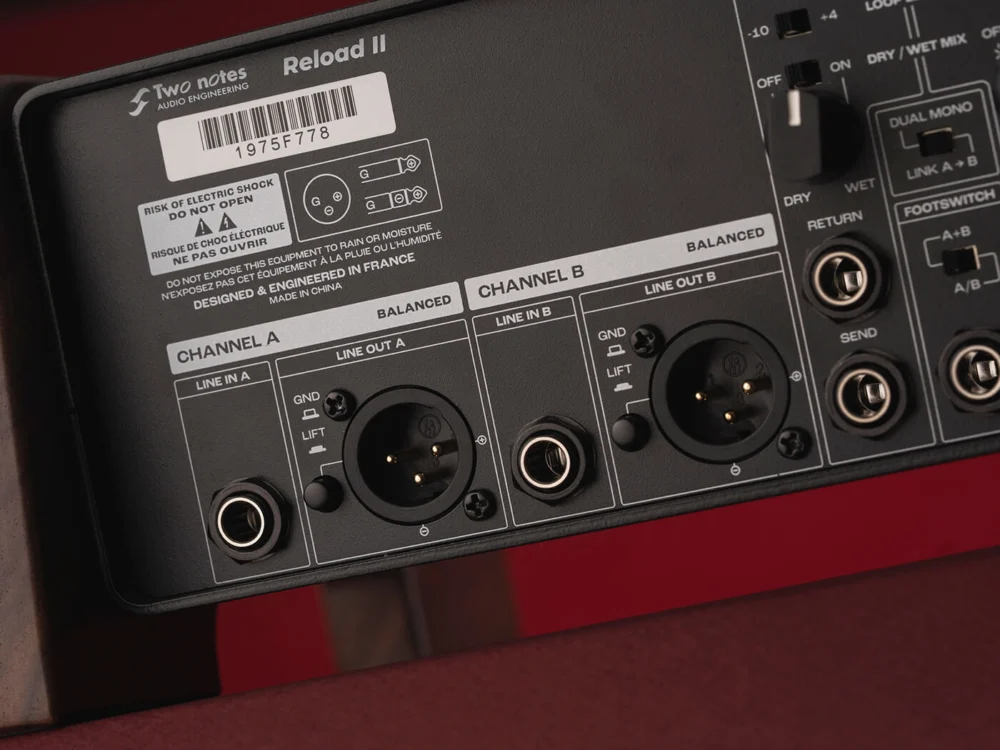
The Two Notes Reload II, priced at $1,099/£999, marks a significant return to the market for a product line that had previously carved out a niche as a discreet yet highly effective tool for guitarists. Its predecessor, the original Two Notes Reload, was often regarded as a well-kept secret within professional guitar circles, frequently operating outside the spotlight that shone brightly on competitors like the Universal Audio OX Amp Top Box. Despite being overshadowed in marketing presence and sleek aesthetics, the original Reload was celebrated by those in the know for its robust feature set and unparalleled usability, proving itself a formidable asset both on stage and in the studio.
Background: The Evolution of Amp Management Solutions
The landscape of guitar amplification has undergone a profound transformation over the past two decades. As recording moved increasingly into home studios and live performances sought silent stage solutions or consistent front-of-house mixes, the traditional challenges of harnessing high-wattage tube amplifiers became more pronounced. Tube amps, beloved for their organic tone, dynamic response, and rich harmonic content, often require being pushed to higher volumes to achieve their characteristic "sweet spot." This inherent requirement clashed with the demands for attenuated volume, silent recording, and versatile signal routing.

This evolving environment led to the proliferation of reactive load boxes and attenuators. Devices designed to absorb the power output of a tube amplifier, allowing it to be driven hard without deafening volume, and often providing a line-level output for recording or sending to an impulse response (IR) loader. The original Two Notes Reload emerged in this context, offering not only attenuation but also integrated features like its proprietary Wall Of Sound cabinet emulator plugin. This software provided access to a vast library of virtual cabinets and microphones, many developed in collaboration with renowned amplifier and cabinet manufacturers, offering guitarists unprecedented control over their recorded tone. Its discontinuation a few years prior left a void, creating anticipation for a successor that could build upon its strengths.
The Genesis of Reload II: A Ground-Up Rework
Two Notes has positioned the Reload II as a "ground-up rework" rather than a mere iteration, signaling a comprehensive re-engineering effort. This commitment to innovation is most strikingly evident in its load response architecture, which has received the unprecedented "Celestion-Approved Load Response" badge. This distinction is a testament to a collaborative development process with Celestion, arguably the most authoritative name in guitar speakers, ensuring a level of authenticity and performance previously unachieved in the market.
Guillaume Pille, founder and CEO of Two Notes, underscored the importance of this collaboration: "With a completely new load architecture developed for Reload II, it was essential that the response didn’t just perform well technically but behave in a way that felt authentic to both players and amplifier." He further elaborated that the design process culminated in an impedance curve inspired by Celestion’s iconic driver lineup. This was not a simple emulation of a single speaker but rather an analysis and averaging of impedance characteristics across a diverse range of Celestion drivers. This methodological approach, as Pille explained, "delivers a balanced, musically responsive load that works optimally across the broadest possible range of amplifiers, rather than being tailored to a single tonal reference." This technical innovation ensures that the Reload II can faithfully interact with a wide array of tube amplifiers, preserving their unique tonal nuances regardless of their specific output characteristics.

Design Philosophy and Robust Construction
Beyond its internal engineering, the Reload II also presents a significant aesthetic and build quality upgrade. The utilitarian metal casing and basic black knobs of the original have been replaced with a sophisticated brushed-steel front panel, neatly organized controls, and elegant faux-wood side panelling. This design overhaul signals Two Notes’ intention to position the Reload II as a premium, flagship product, aligning its outward appearance with its high-end internal components and performance.
The unit’s substantial weight is not merely a design choice but a direct consequence of the robust engineering required to manage significant amplifier power. The internal components are designed to absorb up to 200 watts of amplifier output, necessitating heavy-duty resistors and efficient heat dissipation mechanisms. This robust construction is critical for ensuring reliability and consistent performance, especially when dealing with the high voltages and currents inherent in tube amplifier operation. The enhanced build quality not only contributes to its durability but also subtly communicates the professional-grade nature of the device, instilling confidence in its ability to handle demanding studio and live environments.
Multifaceted Functionality: Beyond Attenuation

While its attenuation and cabinet simulation capabilities are central to its appeal, the Two Notes Reload II is engineered as a comprehensive studio and live solution, offering a much broader range of functionalities.
- High-Fidelity Attenuation: The core function of the Reload II as an attenuator allows guitarists to drive their tube amplifiers into their tonal sweet spot at any volume level. Crucially, it retains the highly coveted linear volume control from its predecessor, enabling precise, smooth increments from barely audible bedroom levels to full-volume stage presence. This linear response is superior to stepped attenuation, which can sometimes result in abrupt volume jumps and a less natural feel.
- Two-Channel Solid-State Power Amplifier: The Reload II integrates a powerful two-channel solid-state amplifier, capable of outputting 215 watts per channel. This feature dramatically expands its utility, allowing it to drive guitar cabinets or FRFR (Full Range, Flat Response) speakers from various sources, including line-level outputs from preamps, digital modellers, or even the Reload II’s own re-amped signal. Each channel also features a stereo effects loop, further enhancing its routing flexibility.
- Advanced Re-amping Capabilities: For studio professionals, the Reload II excels as a re-amping device. It allows guitarists to record a dry guitar signal and then send it back through their tube amp (connected to the Reload II) at a later stage. This provides the flexibility to experiment with different amplifier settings, microphone placements (virtually via Genome), or effects processing after the initial performance has been captured, saving countless hours and ensuring optimal tone.
- Stereo Wet-Dry-Wet Setups: A particularly compelling application is its ability to facilitate a wet-dry-wet amplifier setup using just one amplifier. This configuration typically involves a central "dry" signal from the amplifier and two "wet" signals (often delayed and reverbed) sent to separate power amplifiers and speakers. The Reload II’s integrated power amplifier and stereo effects loops make this complex setup achievable with remarkable simplicity, allowing guitarists to create expansive, immersive soundscapes.
- Vintage Amp Integration with Effects Loops: Many iconic vintage amplifiers, such as the Marshall JCM800 referenced in the original review, lack integrated effects loops. This forces guitarists to route time-based and modulation effects (like delay, reverb, chorus) through the front input of the amplifier, often resulting in a tone where the effects completely overpower or muddy the core amplifier sound. The Reload II’s stereo effects loop provides a crucial workaround. By placing the effects in this loop, after the amplifier’s preamp and power section (but before the cabinet), the effects can blend seamlessly with the amp’s tone, preserving clarity and allowing for a more balanced mix. This transforms the usability of vintage amps for modern players.
- Digital Modeller Integration: The line-in facility is a boon for users of digital modellers (e.g., Kemper, Neural DSP Quad Cortex). It allows these units to be connected directly to the Reload II’s power amplifier channels, enabling them to drive traditional guitar cabinets or FRFR speakers. This bridges the gap between the digital and analog realms, offering modellers a more traditional "amp in a room" feel for monitoring or live performance, or even integrating them into a hybrid setup.
Real-World Performance and the Genome Software
The true test of any amplifier management solution lies in its ability to preserve the character of the connected amplifier. The review highlights a test with a Mesa Mark IV head, an 85-watt amplifier known for its complex tonal characteristics and difficulty in achieving usable low-volume tones. The Reload II demonstrably succeeded in this challenge. At very low volumes, the Mesa’s signature punch and grunt were immediately recognizable, allowing for bedroom-friendly practice without sacrificing tone. The linear volume control proved invaluable here, enabling fine adjustments without jarring jumps.
A common side effect of attenuation is a perceived loss of high-end or depth. While the Reload II provides presence and depth controls to compensate for this, the review noted that these were largely unnecessary during testing, indicating the high fidelity of the attenuation circuit. The subtle loss of detail often associated with attenuation was "barely perceptible," confirming the effectiveness of the Celestion-approved load response in maintaining amplifier integrity across various volume levels.

The accompanying Genome software, included with a lifetime license, represents a significant leap forward from the original Wall Of Sound plugin. Genome features a sleek, user-friendly interface with a flexible 10-block signal chain, allowing users to build complex virtual rigs with amps, cabinets, and effects. The highlight is the DYN-IR cabinet technology. Unlike static impulse responses, DYN-IRs are dynamic, allowing users to precisely position virtual microphones (e.g., Royer 121, Shure SM57) on different areas of the speaker cone and at varying distances. This level of control mirrors real-world microphone placement, offering nuanced tonal sculpting.
The review’s A/B testing, comparing the Reload II’s emulated tone to an actual mic’d cabinet and a high-end digital profiler (Fractal Audio Systems Axe FX III Mark IV), yielded striking results. The Reload II’s emulation was described as "blown away by the accuracy of the tone," with the amplifier’s character "instantly recognizable" and devoid of the "fizzy" top-end often found in lesser emulations. This high level of fidelity, combined with Genome’s comprehensive effects and tone-shaping tools (graphic EQ, reverb), establishes the Reload II as a top-tier solution for direct recording and silent practice. The promise of regular updates and a growing library of third-party cabinets further solidifies Genome’s long-term value.
Market Position and Broader Implications
The Two Notes Reload II enters a competitive market but distinguishes itself through its comprehensive feature set, innovative Celestion-approved load response, and robust software ecosystem. At its price point, it represents a substantial investment, yet the sum of its parts—a world-class attenuator, an ultra-accurate cab simulator, a powerful two-channel amplifier, and a versatile effects loop system, all bundled with a lifetime Genome license—justifies its cost. It’s not merely a single-purpose device but a foundational piece of gear for modern guitarists navigating the complexities of tube amplification.

In a musical era where digital modellers have gained significant traction, the Reload II reaffirms the enduring appeal and practicality of tube amplifiers. While modellers excel at replicating a vast array of sounds, the fundamental appeal for many guitarists remains the tactile, organic response of a real tube amp. Devices like the Reload II bridge this gap, allowing musicians to retain their cherished tube amps while adapting to contemporary recording, performing, and practicing environments. The fact that leading modellers like Kemper and Neural DSP Quad Cortex are designed to profile real amplifiers further underscores the irreplaceable value of tube technology. The Reload II allows guitarists to fully exploit their tube amps’ potential without the traditional volume constraints, ensuring that the magic of hot tubes can be enjoyed responsibly and flexibly. It sets a new benchmark for what a load box can achieve, proving that the synergy between classic amplification and cutting-edge technology can deliver an unparalleled playing experience.
Competitive Landscape Analysis
Understanding the Reload II’s value also requires a brief look at its key competitors:
- Fryette Power Station ($1,199 / £899): The Fryette Power Station is a formidable rival, offering a high-end amplifier attenuator and an effects loop, similar to the Reload II. Its unique selling point is a built-in 60-watt valve power stage, allowing it to boost the volume of low-wattage amplifiers or serve as a standalone power amp. While highly regarded for its tone preservation, it does not include its own cabinet emulation software, requiring users to integrate third-party solutions via its line-out.
- Universal Audio OX Reactive Amp Attenuator with Speaker Modelling ($1,499 / £1,259): Often considered the industry standard, the UA OX Box combines reactive load attenuation with an extensive suite of speaker and cabinet emulations. Its digital interface and direct recording capabilities are robust. However, it is generally more expensive than the Reload II, and its firmware and software updates have been less frequent, leading some users to feel that while it got it "right the first time," it may not evolve as dynamically as newer platforms.
- Suhr Reactive Load Box ($599 / £419): A more accessible option, the Suhr Reactive Load Box is popular for its simplicity and effective reactive load. Its impedance curve is famously based on a Celestion Greenback in a 4×12 cabinet, providing a warm and dynamic emulation. However, it is a simpler device, limited to an 8-ohm input and lacking the integrated power amp, effects loop, or comprehensive software ecosystem of the Reload II or OX Box.
The Two Notes Reload II emerges from this comparison as a comprehensive, technologically advanced solution that not only addresses the core needs of attenuation and cab simulation but also significantly expands the possibilities for guitarists in both studio and live settings. Its Celestion-approved load response, powerful integrated amplifier, and feature-rich Genome software make it a compelling choice for those seeking to maximize the potential of their tube amplifiers in the modern age.
