

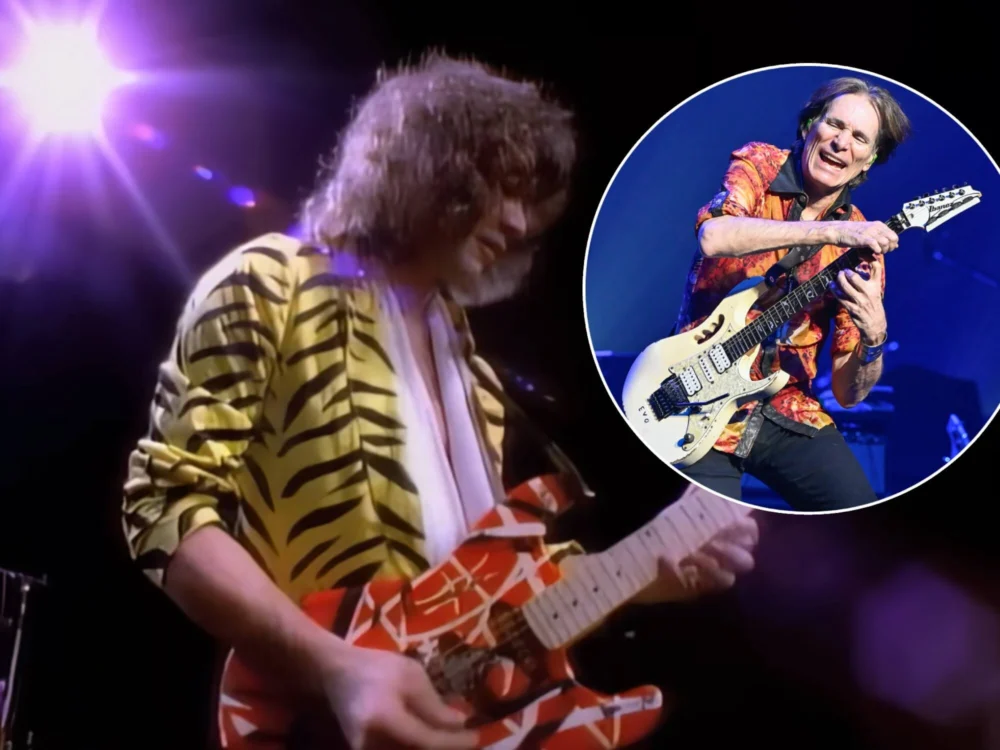
A groundbreaking musical collaboration has brought together an eclectic mix of global talent to reimagine Van Halen’s iconic 1980s anthem, "Jump," as a pivotal track for the impending FIFA World Cup 2026. Guitar virtuoso Steve Vai, Latin pop superstar J Balvin, acclaimed vocalist Amber Mark, and Blink-182 drummer Travis Barker have lent their distinct styles to this new rendition, released under Coca-Cola’s Real Thing Records label in partnership with Capitol Records. This ambitious project aims to blend rock legacy with contemporary pop and hip-hop sensibilities, creating a vibrant soundtrack for one of the world’s most anticipated sporting events. The track, initially teased through Coca-Cola’s "Bubbling Up" campaign, marks a significant convergence of music, sports, and global brand marketing, signaling the intensifying build-up to the quadrennial football spectacle.
The Enduring Legacy of Van Halen’s "Jump"
Originally released in 1984 on Van Halen’s seminal album 1984, "Jump" quickly transcended its rock roots to become a cultural phenomenon. It represented a bold, and at the time, somewhat controversial departure for the Pasadena-based hard rock quartet, known primarily for their blues-infused, high-energy guitar rock. The track’s defining feature was its prominent synthesizer riff, played by the late Eddie Van Halen, which anchored the song and propelled it to unprecedented commercial success. "Jump" soared to the top of the Billboard Hot 100 chart, becoming Van Halen’s only number-one single in the United States and their most successful track globally. Its infectious melody, uplifting lyrics, and high-octane energy made it an instant classic, appealing to a broader audience beyond the band’s traditional rock base. The song’s innovative blend of hard rock power with pop accessibility was a testament to Eddie Van Halen’s diverse musical genius, showcasing his proficiency not only as a guitarist but also as a keyboardist and songwriter.
The commercial impact of "Jump" was immense, contributing significantly to 1984 becoming the band’s best-selling studio album in the U.S., achieving Diamond certification from the RIAA for sales exceeding 10 million copies. Beyond its chart performance, "Jump" cemented its status as an arena anthem, a staple at sporting events and celebrations worldwide. Its universal appeal lies in its ability to evoke feelings of exhilaration and unity, qualities that resonate deeply with the spirit of athletic competition. This intrinsic connection to sport was formally recognized prior to the 2012 Summer Olympics, when "Jump" was voted the most popular sporting anthem in a poll conducted among members of PRS for Music, a testament to its enduring power as a motivational and celebratory soundtrack. The decision to select "Jump" for the FIFA World Cup 2026 cover therefore leverages decades of established cultural resonance, tapping into a collective memory of triumph and excitement.
The FIFA World Cup 2026: A Global Spectacle
The FIFA World Cup 2026, set to be hosted jointly by the United States, Canada, and Mexico, represents an unprecedented expansion of the tournament. For the first time, 48 national teams will compete, an increase from the traditional 32, necessitating a broader geographical footprint for host cities. Sixteen cities across the three North American nations – 11 in the U.S., 2 in Canada, and 3 in Mexico – will stage the matches, promising a monumental logistical and cultural undertaking. This expanded format is projected to draw record-breaking attendance figures and viewership numbers, solidifying its position as the most watched sporting event globally. The tri-national hosting arrangement itself is historic, symbolizing a spirit of collaboration and unity across borders, themes that Coca-Cola and FIFA aim to amplify through promotional campaigns and associated cultural content.
Music plays an indispensable role in the World Cup experience, acting as a unifying force that transcends language and cultural barriers. Official anthems and associated tracks become synonymous with the tournament, embodying its spirit and creating lasting memories for fans. From Shakira’s "Waka Waka (This Time for Africa)" in 2010 to Ricky Martin’s "La Copa de la Vida" in 1998, these songs contribute significantly to the festive atmosphere and global identity of each World Cup. The selection of "Jump" for the 2026 edition, particularly with its reimagined, diverse lineup, strategically aligns with the tournament’s expanded, inclusive vision. It aims to capture the varied emotions of football fandom – "the joy, the heartbreak, and the hope," as Joshua Burke, Head of Global Music & Culture Marketing at Coca-Cola, articulated. This sentiment underscores the belief that music can bottle the collective experience of millions of fans sharing the same feelings simultaneously.
Coca-Cola’s Strategic Music and Culture Marketing
Coca-Cola has a long-standing tradition of integrating music into its global marketing strategies, recognizing its unparalleled ability to connect with diverse audiences on an emotional level. The establishment of Real Thing Records, an in-house label, further solidifies Coca-Cola’s commitment to creating authentic, culturally relevant music content that aligns with its brand ethos. This initiative allows the beverage giant to directly commission and release music, providing a platform for unique collaborations and artistic expressions tied to major campaigns. The partnership with Capitol Records, a venerable institution in the music industry, adds significant leverage in terms of production, distribution, and artist relations, ensuring the new "Jump" cover receives a high-quality, professional rollout.
The "Bubbling Up" campaign, which first teased the "Jump" cover earlier this year, serves as a strategic precursor to the main event. This phased approach builds anticipation and gradually introduces the concept to the public, creating buzz and familiarizing audiences with the reimagined track ahead of the World Cup. It’s a testament to modern marketing’s multi-layered approach, where content is rolled out across various platforms and timelines to maximize engagement. By aligning with a globally recognized classic like "Jump" and infusing it with contemporary star power, Coca-Cola is not merely selling a beverage; it is curating an experience, positioning itself at the intersection of sports, music, and global youth culture. This strategy aims to reinforce the brand’s identity as a facilitator of shared moments of happiness and celebration, integral to events like the World Cup.
Assembling the All-Star Ensemble: A Fusion of Talent
The selection of artists for the "Jump" cover is a deliberate move to bridge generational gaps and cultural divides, creating a sound that appeals to a broad international demographic.
Steve Vai: Honoring a Guitar God’s Legacy
The inclusion of Steve Vai is particularly significant, offering a profound nod to the original’s guitar legend, Eddie Van Halen. Vai, a bona fide guitar virtuoso celebrated for his technical prowess, innovative compositions, and expressive playing, steps into the immense shoes left by Eddie. His task was not merely to replicate the iconic solo but to "recreate – and put his own spin on" it, a challenge only a musician of Vai’s caliber could undertake. This decision adds an intriguing layer of historical continuity: Vai famously joined David Lee Roth’s solo band in the mid-1980s after Roth’s departure from Van Halen. In that role, Vai was tasked with performing Eddie Van Halen’s famously acrobatic guitar parts on songs like "Panama" and "Hot for Teacher" night after night. This prior experience provides Vai with a unique understanding and respect for Eddie’s work, making him a fitting choice to reinterpret the "Jump" solo. His presence assures a level of guitar mastery that honors the original while injecting a fresh, contemporary perspective rooted in rock tradition.
J Balvin: The Global Latin Pop Phenomenon
J Balvin’s participation injects a powerful dose of global Latin pop influence into the track. As one of the best-selling Latin music artists with over 35 million records sold worldwide, Balvin has played a crucial role in the global expansion of reggaeton. His distinctive flow and ability to seamlessly blend genres make him an ideal candidate to introduce an extended rap verse, a key element that pushes the cover further into modern pop territory. His global appeal, particularly in markets critical to the FIFA World Cup’s viewership, ensures the track resonates with a vast, diverse audience, bridging the gap between classic rock and contemporary urban sounds. Balvin’s involvement underscores the inclusive nature of the project, mirroring the diverse cultural landscape of the World Cup itself.
Amber Mark: A Modern Vocal Perspective
Singer Amber Mark brings a soulful, contemporary R&B sensibility to the track. Her unique vocal style and ability to infuse warmth and depth into her performances offer a "modern perspective" that complements the foundational elements of "Jump." Mark’s quote, "Van Halen’s ‘Jump’ is one of those rare songs that transcends generations, so approaching it came with a lot of respect… Being able to honor the original while bringing a modern perspective was incredibly special," highlights the delicate balance struck by the collaborators. Her contribution ensures the song remains fresh and relevant to today’s listeners while maintaining a respectful dialogue with the original.
Travis Barker: The Rhythmic Powerhouse
Travis Barker, the dynamic drummer of Blink-182, provides the rhythmic backbone for the reimagined "Jump." Known for his explosive energy, intricate fills, and genre-defying drumming, Barker’s involvement guarantees a powerful and contemporary percussive foundation. His ability to fuse punk rock intensity with hip-hop rhythms and pop sensibilities makes him a versatile choice capable of driving the track with both precision and raw power, perfectly suiting the high-energy demands of a World Cup anthem. His inclusion further broadens the track’s appeal across rock, pop, and alternative fan bases.
Deconstructing the Reimagined Track: A Sonic Analysis
The new rendition of "Jump" meticulously preserves the original’s unmistakable synth stabs, ensuring immediate recognition for long-time fans while establishing a familiar foundation. This conscious decision to keep the iconic keyboard motif "front and center" is crucial for maintaining the song’s identity and its nostalgic appeal. However, the track strategically leans "further into modern pop territory" through its innovative arrangements and the contributions of its diverse cast.
J Balvin’s extended rap verse represents the most significant departure from the original’s structure. This addition transforms the song’s narrative, embedding it within a contemporary lyrical framework that reflects modern storytelling and rhythmic sensibilities. The integration of rap not only updates the track but also expands its genre classification, making it accessible to a wider demographic accustomed to hip-hop and reggaeton influences in popular music.
Steve Vai’s interpretation of Eddie Van Halen’s guitar solo is a focal point of the reimagined track. Vai, known for his extraordinary technical command and distinctive melodic phrasing, approaches the solo with a deep reverence for Eddie’s original brilliance. While retaining the essence and melodic contours of the original, Vai infuses it with his signature flair, incorporating subtle harmonic variations, advanced techniques, and a personal touch that distinguishes his performance. This allows the solo to feel both familiar and refreshingly new, a fitting tribute from one guitar legend to another. The production values reflect a contemporary polish, likely featuring crisp, layered instrumentation that maximizes the impact of each artist’s contribution while ensuring a cohesive sonic landscape. The overall effect is a vibrant, cross-genre fusion that celebrates the original’s spirit while boldly venturing into new musical territories.
Cultural and Commercial Implications
The release of this reimagined "Jump" carries significant cultural and commercial implications. Culturally, it acts as a bridge between generations, introducing a rock classic to a younger, globally diverse audience through the lens of contemporary pop and hip-hop. It demonstrates the enduring power of iconic music to be reinterpreted and revitalized for new contexts, fostering intergenerational musical dialogue. For fans of Van Halen, it offers a fresh perspective on a beloved track, potentially sparking renewed interest in the band’s catalog. For new listeners, it serves as an entry point into the rich history of rock music, presented in an accessible, modern format.
Commercially, the collaboration is a masterstroke of synergistic marketing. Coca-Cola leverages the immense global reach of the FIFA World Cup and the established popularity of "Jump" to enhance its brand visibility and reinforce its association with celebratory, unifying moments. The star power of Steve Vai, J Balvin, Amber Mark, and Travis Barker ensures widespread media attention and a built-in audience across multiple musical genres. This multi-faceted appeal is designed to maximize streaming numbers, digital downloads, and overall engagement, driving brand affinity during a period of intense global focus on the World Cup. The track’s success will be measured not just in chart performance but in its ability to become an unofficial anthem for the tournament, ingrained in the memories of millions of fans worldwide. It underscores a growing trend where major brands act as curators and producers of cultural content, blurring the lines between advertising and entertainment.
The Animated Visuals and Broader Rollout
Accompanying the single’s release is an animated music video, directed and designed by McFlyy. This visual component is integral to the track’s broader rollout, offering a dynamic and engaging narrative that complements the song’s energy. The video features stylized animated versions of the performers, bringing their personalities and musical contributions to life in a vibrant, imaginative setting. Notably, the video includes an animated cameo from young football star Lamine Yamal, further cementing the direct link between the music and the upcoming World Cup. Yamal’s inclusion strategically taps into the excitement surrounding emerging talent in global football, connecting the track to the future of the sport.
This animated approach allows for creative freedom in depicting the diverse influences of the song and the global nature of the World Cup, transcending the limitations of a live-action video. It serves as a powerful marketing tool, designed for widespread sharing across digital platforms and social media, amplifying the track’s reach and impact. As the road to the FIFA World Cup 2026 ramps up, the "Jump" cover, with its innovative musical blend and compelling visual narrative, is positioned to be a central part of the tournament’s pre-event festivities and a memorable soundtrack for the global football community. The strategic release of the song and its accompanying video marks a significant milestone in the World Cup’s promotional cycle, promising to ignite anticipation and foster a sense of collective excitement across the globe.
