

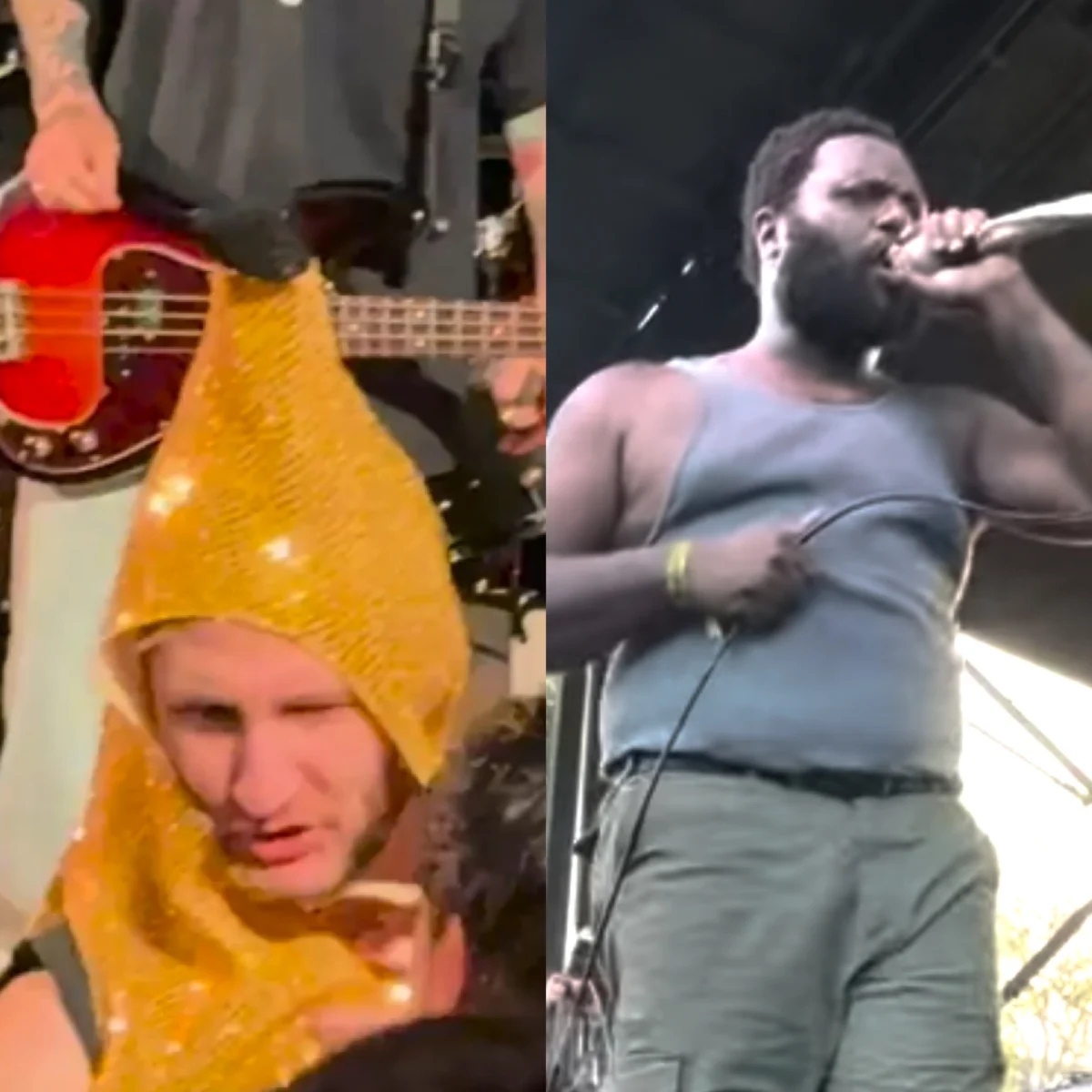
The summer of 2026 became indelibly marked by a peculiar yet profound incident, now famously known as the "Banana Man Controversy," which originated at a Toronto concert featuring the Baltimore hardcore band End It. In early June of that year, during a performance, frontman Akil Godsey confronted a concertgoer clad in a full banana costume, accusing him of seeking undue attention. "You don’t get rewarded for doing that shit," Godsey declared from the stage, addressing the crowd. "He wanted the attention, and now he has it." The vocalist then publicly offered the band’s setlist to anyone who would strip the costumed individual of his outfit, an act that swiftly escalated into a multi-faceted public debate encompassing concert etiquette, artistic expression, digital harassment, and the unwritten rules of subculture.
The Catalyst: Toronto, Early June 2026
The incident unfolded during End It’s set, a band known for its raw energy and uncompromising stance within the hardcore punk scene. Hardcore, by its very definition, is often characterized by a fierce commitment to authenticity, community, and a rejection of performative posturing. Mosh pits are less about individual spectacle and more about collective release and shared intensity. It was within this context that a concertgoer, later identified publicly as "Banana Man," appeared in the pit in a bright yellow banana suit. For Akil Godsey, this attire was not merely an eccentric fashion choice but a direct violation of the scene’s ethos—a perceived bid for individual attention that disrupted the collective experience.
Godsey’s on-stage pronouncements were direct and confrontational, aligning with the aggressive, no-holds-barred communication style often found in hardcore music. His call to action, offering a tangible reward (the setlist) for the removal of the costume, ignited an immediate response from the crowd. Accounts from attendees described a chaotic scene where the Banana Man’s costume was indeed removed, albeit under contentious circumstances, transforming a simple concert moment into a flashpoint of controversy.
The Hardcore Ethos and Unwritten Rules
To understand the intensity of Godsey’s reaction, it is crucial to delve into the foundational principles of the hardcore punk subculture. Originating in the late 1970s and early 1980s, hardcore emerged as a faster, more aggressive, and often more politically charged offshoot of punk rock. Its core tenets emphasize DIY (Do It Yourself) ethics, community solidarity, anti-commercialism, and a raw, unpolished authenticity. For many in the scene, the mosh pit is a sacred space—a zone of catharsis and physical expression where pretense is stripped away.
Within this framework, certain behaviors are implicitly encouraged, while others are tacitly discouraged. Stage diving, crowd surfing, and moshing are integral parts of the experience, fostering a sense of communal energy. However, overt attempts to draw individual attention, particularly through elaborate costumes or actions perceived as disruptive or disingenuous, can be viewed with skepticism, if not outright disdain. The focus is meant to be on the music, the band, and the collective experience, not on individual spectacle. Godsey’s actions, from the perspective of many within the hardcore community, were a defense of these unwritten rules and the scene’s integrity against what he perceived as a challenge to its values.
Initial Reactions and Digital Fallout
The immediate aftermath saw the original Banana Man take to Instagram to voice his distress. "People have been trying to dim my sparkle my entire life," he wrote, expressing feelings of being an "unwilling participant" who was "attacked and clothing removed at the direction of a band I paid to see." His statement framed the incident as a personal violation and an act of public humiliation. This post quickly went viral, transcending the niche hardcore community and exploding across broader social media platforms.
The internet, with its capacity for instant amplification and widespread engagement, became the primary battleground for the controversy. Online commenters, many of whom had no prior knowledge of End It or the hardcore scene, weighed in with strong and often polarized opinions. The discourse split into several factions:
- Defenders of End It: These individuals, largely from within the hardcore community, supported Godsey’s actions as a legitimate enforcement of scene etiquette and a stand against perceived attention-seeking. They argued that the Banana Man should have understood the context of a hardcore show.
- Supporters of Banana Man: Many outside the hardcore scene viewed the incident as an unfair public shaming, an assault on individual expression, and a disproportionate reaction to a seemingly harmless costume. They highlighted themes of bullying and the power dynamic between a performer and a fan.
- Condemnations of Harassment: A significant portion of the online discussion shifted to the disturbing turn the controversy took. Akil Godsey, the frontman, quickly became the target of intense online harassment, including racist remarks and death threats. This highlighted the darker side of internet culture, where disagreements can quickly spiral into targeted abuse.
Social media analytics from the period indicated a massive spike in engagement related to "End It," "Banana Man," and "hardcore controversy." Hashtags related to the incident trended for days, with millions of impressions across platforms like X (formerly Twitter), Instagram, and TikTok. News outlets, both music-specific and mainstream, began covering the story, further broadening its reach. This viral spread underscored how easily a subculture incident can be thrust into the mainstream spotlight, often losing its original context in the process.
Akil Godsey’s Response and the Scene’s Standpoint
Amidst the torrent of online abuse, Akil Godsey broke his silence, also via Instagram. His statement was concise and resolute, aiming to contextualize his actions within the hardcore framework. "We’re a hardcore band," he explained. "We do hardcore things." This declaration served as both a defense and a reaffirmation of the band’s identity and the scene’s principles. For Godsey and his supporters, the incident was not an isolated act of aggression but a manifestation of hardcore authenticity—a genre that thrives on directness and eschews anything perceived as disingenuous or distracting from the core musical and communal experience.
Industry observers noted that Godsey’s response, while unapologetic, was strategically framed to appeal to his core audience while simultaneously addressing the broader public’s confusion. It reinforced the idea that hardcore operates under its own distinct set of rules and expectations, often at odds with mainstream concert culture. However, the controversy also forced a discussion within the hardcore scene itself about the boundaries of acceptable behavior, the role of frontmen in policing the pit, and the potential for such actions to be misinterpreted or weaponized online.
The Truce: Jera On Air Festival
Approximately three weeks after the initial Toronto incident, a surprising turn of events occurred at the Jera On Air festival, an annual hardcore punk and metalcore festival held in Ysselsteyn, Netherlands. In a gesture that aimed to de-escalate the ongoing feud, End It initiated a truce. Akil Godsey was seen embracing a different concertgoer, also dressed in a banana costume, on stage. This symbolic reconciliation was met with cheers from the festival crowd, signifying a collective desire to move past the initial acrimony.
During this moment of peace, Godsey was handed a banana, which he promptly tossed into the crowd—a playful acknowledgment of the absurdity that had surrounded the controversy. Reflecting on the whirlwind of attention, Godsey quipped, "Who woulda thought doing something stupid at a show would get me a month of attention?" This statement, delivered with a mix of irony and genuine bewilderment, encapsulated the unexpected trajectory of the incident from a niche concert spat to a widely publicized cultural phenomenon. The Jera On Air moment was widely reported as the definitive end to the "End It Vs. Banana Man Feud," offering a sense of closure to a story that had captivated and divided online communities.
The Lingering Legacy: "No Banana Man" Ink
Just as the world was beginning to file the "Banana Man Controversy" into the annals of internet lore, the saga received an unexpected epilogue. Recently, Akil Godsey revealed new body art that firmly cemented the incident into his personal history and the band’s iconography. At Baltimore’s Red Thorn Tattoo, Godsey acquired a tattoo depicting a running Banana Man cartoon encased within a "prohibited" symbol—a universal sign for "no" or "forbidden." He unveiled this permanent marker of the feud on his Instagram Stories, reigniting discussions about the incident and its lasting impact.
The "No Banana Man" tattoo serves as more than just a personal memento; it is a declaration. It symbolizes Godsey’s unwavering stance on the issue, transforming a fleeting concert moment into a permanent artistic statement. For fans, it’s a nod to an iconic, albeit controversial, chapter in the band’s history. For detractors, it might be seen as an unnecessary continuation of a petty feud. Regardless of interpretation, the tattoo ensures that the "End It Vs. Banana Man Feud Of 2026" will remain a talking point, a visual reminder of the summer when a fruit costume tore a segment of the internet apart.
Broader Implications and Analysis
The Banana Man Controversy, while seemingly trivial at its core, exposed several deeper currents within contemporary culture and the music industry:
- The Digital Echo Chamber: The incident highlighted how quickly a localized event can be amplified and distorted through social media. The speed at which information (and misinformation) travels, coupled with the tendency for online communities to polarize, turned a minor concert dispute into a global debate, showcasing the double-edged sword of digital connectivity.
- Subculture vs. Mainstream: The controversy served as a stark illustration of the clash between niche subcultural norms and mainstream expectations. What is acceptable, even celebrated, within a specific scene (like hardcore’s emphasis on authenticity) can be completely misunderstood or condemned by a broader audience unfamiliar with its unwritten rules.
- Artist-Fan Dynamics: The incident raised questions about the evolving power dynamics between artists and their audiences. While fans pay for a ticket, does that grant them unlimited freedom of expression, or do artists retain the right to dictate the atmosphere of their performances? The debate underscored the complex relationship, particularly in genres where audience participation is integral but also governed by implicit codes.
- The Perils of Online Harassment: The racist remarks and death threats directed at Akil Godsey were a grim reminder of the ease with which online discourse can devolve into targeted abuse. This aspect of the controversy shifted the focus from concert etiquette to the more serious issues of digital safety and accountability.
- Branding and Notoriety: Paradoxically, the controversy undeniably brought End It a level of mainstream recognition they might not have otherwise achieved. While the attention was mixed, it significantly increased their visibility, leading to debates about whether "all press is good press," even when controversial. The band’s subsequent embrace of the "Banana Man" motif, culminating in the tattoo, suggests a strategic (or at least organic) assimilation of the incident into their public persona.
The "End It Vs. Banana Man Feud Of 2026" stands as a vivid case study in how a seemingly minor event can ignite widespread debate, expose societal tensions, and leave an indelible mark on both the individuals involved and the cultural landscape. From a Toronto mosh pit to a permanent tattoo, the saga of the Banana Man is a testament to the unpredictable nature of viral fame and the enduring power of subcultural identity. The question remains: is this truly the end of the Banana Man’s story, or merely another chapter in an ongoing, unexpectedly iconic feud?
