

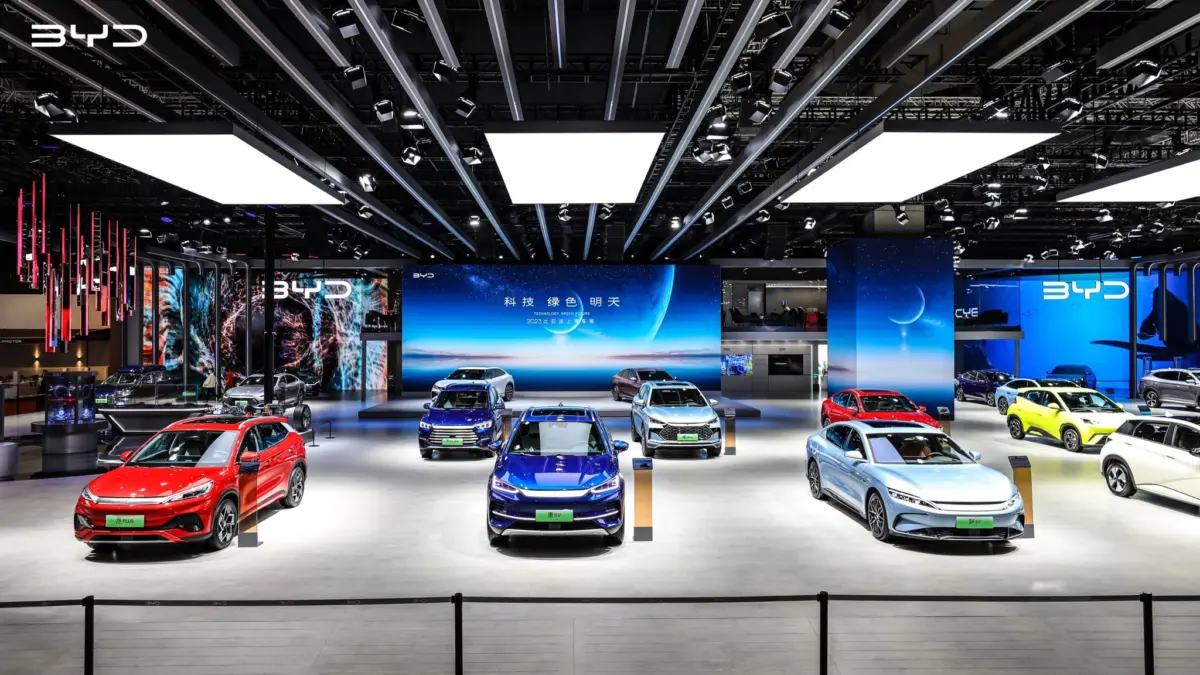
The global automotive industry is currently navigating a period of unprecedented transformation, characterized by a decisive shift from internal combustion engines to "New Energy Vehicles" (NEVs) and a corresponding migration of innovation centers toward the East. Auto Shanghai 2023 served as a critical inflection point in this trajectory, marking the first major international automotive gathering in China following the lifting of stringent "Zero-COVID" restrictions. With over 1,400 vehicles displayed across a sprawling 360,000 square meters of exhibition space, the event signaled not only a return to large-scale physical networking but also a fundamental change in how automotive technology is presented and consumed on the global stage. As European manufacturers struggle to modernize their portfolios to remain competitive, the Chinese domestic industry—and the event technology infrastructure that supports it—has experienced a period of rapid professionalization and technical advancement.
The Scale of Recovery: Auto Shanghai 2023 in Context
The sheer magnitude of Auto Shanghai 2023 highlights the resilience of the Chinese market. Following the cancellation or downsizing of various industry events during the pandemic—most notably the disruption caused by the 2022 Shanghai lockdown—the 2023 exhibition drew nearly one million visitors. This resurgence was corroborated by data from Cision Insights, which reported a 30% increase in media visibility compared to the 2021 iteration of the show. This surge in interest is attributed to a combination of pent-up demand and a genuine curiosity regarding the rapid advancements made by domestic Chinese manufacturers during the years of relative isolation.

The exhibition landscape has shifted from a focus on mechanical prowess to a showcase of digital integration. Of the 150 new models debuted at the fair, 92 were classified as New Energy Vehicles, a category that includes battery electric vehicles (BEVs), plug-in hybrids (PHEVs), and fuel cell vehicles. This shift is reflective of broader market trends; in 2022, Chinese automotive brands achieved a domestic market share of nearly 50% in the passenger car segment, a milestone that underscores the waning dominance of traditional foreign joint ventures.
Chronology of a Changing Industry
To understand the current state of the Chinese event technology sector, one must look at the timeline of the last three years. When the pandemic halted international travel, many expected the Chinese event industry to stagnate. However, according to Tyron Truong, Managing Partner of Studio RGB—a firm that has operated in China for 15 years—the reality was quite the opposite. While the "Shanghai Lockdown" of early 2022 was a period of severe restriction, the preceding and following months were used by domestic firms to consolidate their expertise.
During the period between 2020 and 2023, the absence of international experts forced local technicians to take the lead on high-profile projects. This "forced autonomy" accelerated the transfer of know-how. When borders reopened, the industry that emerged was one that had transitioned from being a mere provider of labor to a sophisticated ecosystem of technical planning and execution. Studio RGB, for instance, utilized the downtime to conduct intensive seminars on lighting, rigging, and warehouse management, ensuring that when the market reopened, the workforce was prepared for the increased complexity of modern booth designs.

The Technical Divide: Local vs. International Standards
A nuanced analysis of the technology used at Auto Shanghai 2023 reveals a bifurcated market. In the realms of lighting and LED display technology, Chinese products now dominate, accounting for approximately 90% of the hardware used on show floors. This is a significant shift from a decade ago, when European brands were the gold standard for high-end displays. The quality of local brands like Gloshine has reached a point where they are now preferred for their cost-effectiveness and immediate availability.
Conversely, the audio and control segments remain a stronghold for international brands. Approximately 90% of audio systems and nearly all high-end control consoles (lighting desks and video mixers) are still sourced from established global manufacturers. This suggests that while China has mastered the mass production of visual hardware, the complex software and processing algorithms required for audio and system integration still lean on international R&D.
Furthermore, the regulatory environment in China has become increasingly stringent. For international service providers, a major hurdle is the divergence in safety certifications. German standards such as VDE or DIN, while prestigious in Europe, do not carry legal weight in Chinese exhibition centers. All equipment and installations must adhere to local safety protocols, which have been tightened significantly in recent years. This necessitates the involvement of local technical planning offices that can bridge the gap between international design expectations and local compliance requirements.

The Workforce Evolution and the "Expat Exodus"
One of the most profound impacts of the pandemic era was the shift in the labor market. The "Expat Exodus"—a term used to describe the departure of international professionals from China during the lockdown periods—has left a visible mark on the industry. Estimates suggest that only about 10% of the pre-pandemic foreign population remains in major hubs like Shanghai and Beijing.
This departure has created a vacuum that is being filled by a new generation of Chinese technicians. Unlike Germany, which utilizes a formal apprenticeship system (the "Duale Ausbildung"), China relies on a more informal, experience-based learning model. While this lacks the theoretical rigour of the German system, the "China Speed" of project execution ensures that technicians gain practical experience at a much faster rate. Truong notes that while some talent was lost to other industries during the pandemic, many dedicated professionals have returned, bringing with them a renewed commitment to the craft.
The Reverse Expansion: Chinese Brands on the Global Stage
Perhaps the most significant trend identified at Auto Shanghai 2023 is the "reverse expansion" of Chinese manufacturers. As brands like BYD, NIO, and Geely (which controls Volvo, Polestar, and Lotus) seek to capture market share in Europe, they are bringing their exhibition requirements with them.

In a notable shift in business logic, Chinese companies are now hiring technical planning firms with a foot in both markets to manage their appearances at European trade fairs, such as the IAA Mobility in Munich. At the 2023 Shanghai show, no fewer than 186 Chinese NEV manufacturers were present, showcasing over 500 new models. For these companies, the goal is no longer just to sell cars in China, but to establish a premium brand presence globally. This has transformed the role of firms like Studio RGB from being facilitators for Western companies in China to being ambassadors for Chinese innovation in the West.
Broader Implications for the Event Industry
The evolution of the Chinese automotive show landscape carries several implications for the global event industry:
- Sustainability and Localization: There is a growing consensus that flying tons of equipment across continents is no longer viable, both economically and environmentally. The trend is moving toward "local sourcing with international oversight." If a high-quality LED wall is available in Shanghai, there is no justification for shipping a similar unit from Frankfurt.
- The End of "Made in Germany" as a Sole Selling Point: While German engineering still commands respect, it is no longer the primary driver of purchasing decisions in the Chinese event sector. Price-performance ratios and the ability to integrate with local digital ecosystems (such as WeChat-based interactive displays) have become more important.
- Digitalization of the Booth: The "intelligent cockpit" trend in vehicles—featuring LiDAR, high-performance chips, and AI—is being mirrored in the exhibition stands themselves. Booths are becoming data-driven environments where visitor movement and engagement are tracked in real-time using the same sensors found in the cars.
Conclusion: A New Era of Collaboration
The success of Auto Shanghai 2023 demonstrates that the physical trade fair remains an essential component of the automotive business, despite the rise of digital launches. However, the power dynamics have shifted. The "Post-Corona Era" in China is characterized by a domestic industry that is more confident, technically capable, and internationally focused than ever before.

For European service providers and manufacturers, the challenge is to move away from a "teacher-student" mindset and toward one of equal partnership. Success in the current Chinese market requires a "boots on the ground" approach, localized management, and a deep understanding of the unique communication styles and price structures of the region. As the automotive world continues its pivot toward electrification and digitalization, the lessons learned on the floor of the Shanghai National Exhibition and Convention Center will likely set the standard for the rest of the decade.
