

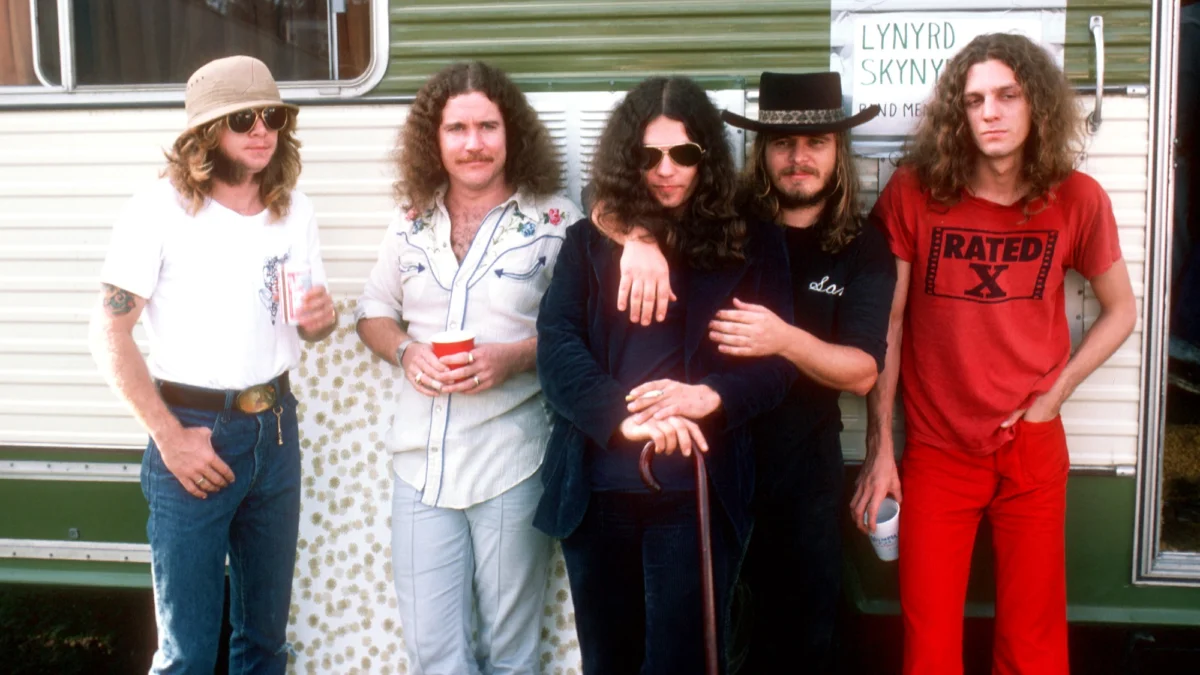
The emergence of the "triple guitar attack" during the 1970s redefined the sonic landscape of American rock music, moving beyond the traditional lead-and-rhythm duo to create a wall of sound that became the hallmark of the Southern rock genre. While the dual-guitar harmony pioneered by groups like the Allman Brothers Band set the foundation, it was the integration of a third guitarist that allowed for complex, three-part contrapuntal arrangements and soaring, interwoven solos. This evolution was not merely an exercise in volume but a sophisticated arrangement of musical layers that required precise synchronization and technical proficiency. Through the analysis of three seminal tracks—Lynyrd Skynyrd’s "Free Bird," Molly Hatchet’s "Dreams I’ll Never See," and The Outlaws’ "Green Grass and High Tides"—the architectural complexity and enduring influence of the three-part guitar moment become evident.
The Genesis of the Triple Guitar Symphony
The mid-1970s marked a period of transition in the music industry, where the raw energy of blues-based rock began to merge with the high-production standards of arena rock. In the American South, this manifested as a genre that blended country storytelling with the aggressive amplification of British blues-rock. The introduction of the third guitar served a dual purpose: it allowed for a richer harmonic structure in the studio and provided a massive, immersive experience during live performances.
Historically, the triple guitar lineup was popularized by Lynyrd Skynyrd, who utilized the distinct styles of Gary Rossington, Allen Collins, and Ed King (later replaced by Steve Gaines). This configuration allowed one guitarist to maintain a rhythmic anchor while the other two engaged in harmonized leads, or alternatively, for all three to engage in a synchronized "guitar army" effect. This technical approach influenced a wave of Florida-based bands, leading to the commercial peaks of Molly Hatchet and The Outlaws.
Lynyrd Skynyrd and the Definitive Crescendo of Free Bird
Originally released on the 1973 debut album Pronounced ‘Lĕh-‘nérd ‘Skin-‘nérd, "Free Bird" remains the most recognized example of the multi-part guitar solo in rock history. The track, which begins as a soulful ballad, undergoes a dramatic structural shift at the seven-minute mark, transitioning into an extended instrumental coda that showcases the band’s technical synergy.
The "Free Bird" solo, primarily composed and executed by Allen Collins on a Gibson Firebird, utilized the technique of overdubbing in the studio to create a dense, three-part harmonic structure. However, it was in the live setting where the triple-threat lineup truly excelled. Collins handled the high-velocity, rapid-fire triplets, while Gary Rossington provided the foundational slide guitar work on a Gibson SG, and Ed King contributed melodic counterpoints.
Data from the Recording Industry Association of America (RIAA) indicates that the album has been certified 2x Platinum, largely buoyed by the cultural longevity of "Free Bird." Musicologists often point to the track’s "bolero" structure—a slow build-up leading to a frenetic climax—as a masterclass in tension and release. The three-part guitar section serves as the ultimate release, creating a visceral experience that a single soloist could not replicate. The interwoven tones, ranging from biting treble to warm mid-ranges, established a blueprint for how multiple guitars could coexist without muddying the frequency spectrum.
Molly Hatchet and the Heavier Evolution of Dreams I’ll Never See
As the 1970s progressed, Southern rock began to adopt heavier, more aggressive textures, bridging the gap between rock and the nascent heavy metal movement. Molly Hatchet, hailing from Jacksonville, Florida, was at the forefront of this shift. Their 1978 cover of the Allman Brothers Band’s "Dreams" (re-titled "Dreams I’ll Never See") serves as a prime example of how a three-guitar lineup could transform a blues-rock standard into a high-octane anthem.
The Molly Hatchet lineup featured Dave Hlubek, Steve Holland, and Duane Roland. This trio provided a "grit and edge" that distinguished them from their predecessors. In "Dreams I’ll Never See," the guitars do not merely play in unison; they create a tiered harmonic structure. The lyrics, which deal with the morose themes of missed opportunities and the weight of memory, are juxtaposed against an anthemic, three-part instrumental break that provides a sense of triumphant defiance.
The production by Tom Werman, who also worked with Cheap Trick and Mötley Crüe, emphasized a "wall of sound" approach. By utilizing three guitarists, the band was able to achieve a level of saturation that made the track a staple of FM radio. The technical achievement here lies in the "interwoven solo," where each guitarist occupies a specific niche—one handling the low-end rhythmic chugging, one taking the mid-range melodic fills, and the third delivering the piercing high-end leads. This division of labor ensured that the "guttural musicianship" remained clear and impactful.
The Outlaws and the Epic Tribute of Green Grass and High Tides
The Outlaws, often referred to as "The Florida Guitar Army," took the concept of the triple guitar attack to its logical extreme. Their signature track, "Green Grass and High Tides," from their 1975 self-titled debut, is a nearly ten-minute epic that concludes with one of the most exhaustive three-part guitar displays in recorded music.
The song was written by Hughie Thomasson as a tribute to the "fallen heroes" of rock, including Jimi Hendrix and Janis Joplin. To honor these legends, Thomasson, along with Billy Jones and Henry Paul, constructed a sequence of solos that escalated in speed and complexity. The track is structured around a series of "trades," where each guitarist takes a turn before converging into a synchronized three-part harmony.
From a technical standpoint, "Green Grass and High Tides" is significant for its use of clean, country-style picking blended with high-gain rock distortion. The interplay between Thomasson’s Fender Stratocaster and the Gibson Les Pauls of his bandmates created a "bright" versus "thick" tonal contrast. Industry analysts note that The Outlaws were the first act signed to Arista Records by Clive Davis, who recognized the commercial potential of their virtuosic live performances. The song remains a benchmark for Southern rock, proving that the triple guitar configuration was capable of sustaining listener interest over long-form compositions.
Technical Analysis: The Mechanics of Three-Part Harmonies
The effectiveness of a three-part guitar solo relies on musical theory, specifically the use of harmony and counterpoint. In a standard two-guitar harmony, players typically perform in "thirds"—one player plays the melody, and the other plays the note two steps up in the scale. When a third guitar is added, the band can complete a full triad (the root, the third, and the fifth), essentially playing moving chords at high speeds.
This technical requirement demands a high degree of "internal clock" synchronization among the musicians. If one guitarist is slightly out of time, the entire harmonic structure collapses into dissonance. Furthermore, the use of different amplifiers and guitar types (humbucker pickups versus single-coil pickups) allows each part to occupy a different frequency, preventing the instruments from masking one another.
Broader Impact and Industry Implications
The legacy of the three-part guitar attack extends beyond the confines of 1970s Southern rock. The technical groundwork laid by Lynyrd Skynyrd, Molly Hatchet, and The Outlaws influenced the development of the New Wave of British Heavy Metal (NWOBHM). Bands such as Iron Maiden eventually adopted a three-guitar lineup (Dave Murray, Adrian Smith, and Janick Gers) to recreate the dense harmonic layers found in these Southern rock classics.
Furthermore, the commercial success of these tracks demonstrated a market appetite for instrumental virtuosity. At a time when the industry was beginning to move toward shorter, more radio-friendly singles, these bands maintained the relevance of the "guitar hero" archetype. The RIAA data for these artists shows consistent catalog sales decades after their release, indicating that the "multi-guitar solo" has a timeless appeal that transcends generational shifts in musical taste.
Conclusion
The integration of three lead guitars into the Southern rock framework was more than a stylistic choice; it was a structural innovation that allowed for unprecedented harmonic depth and emotional power. Through the searing climax of "Free Bird," the gritty resilience of "Dreams I’ll Never See," and the epic tribute of "Green Grass and High Tides," Lynyrd Skynyrd, Molly Hatchet, and The Outlaws proved that the collective strength of a "guitar army" could create a musical experience far greater than the sum of its parts. These compositions remain essential study material for musicians and enduring favorites for audiences, standing as monuments to a period when the guitar solo was the ultimate expression of rock artistry.
