

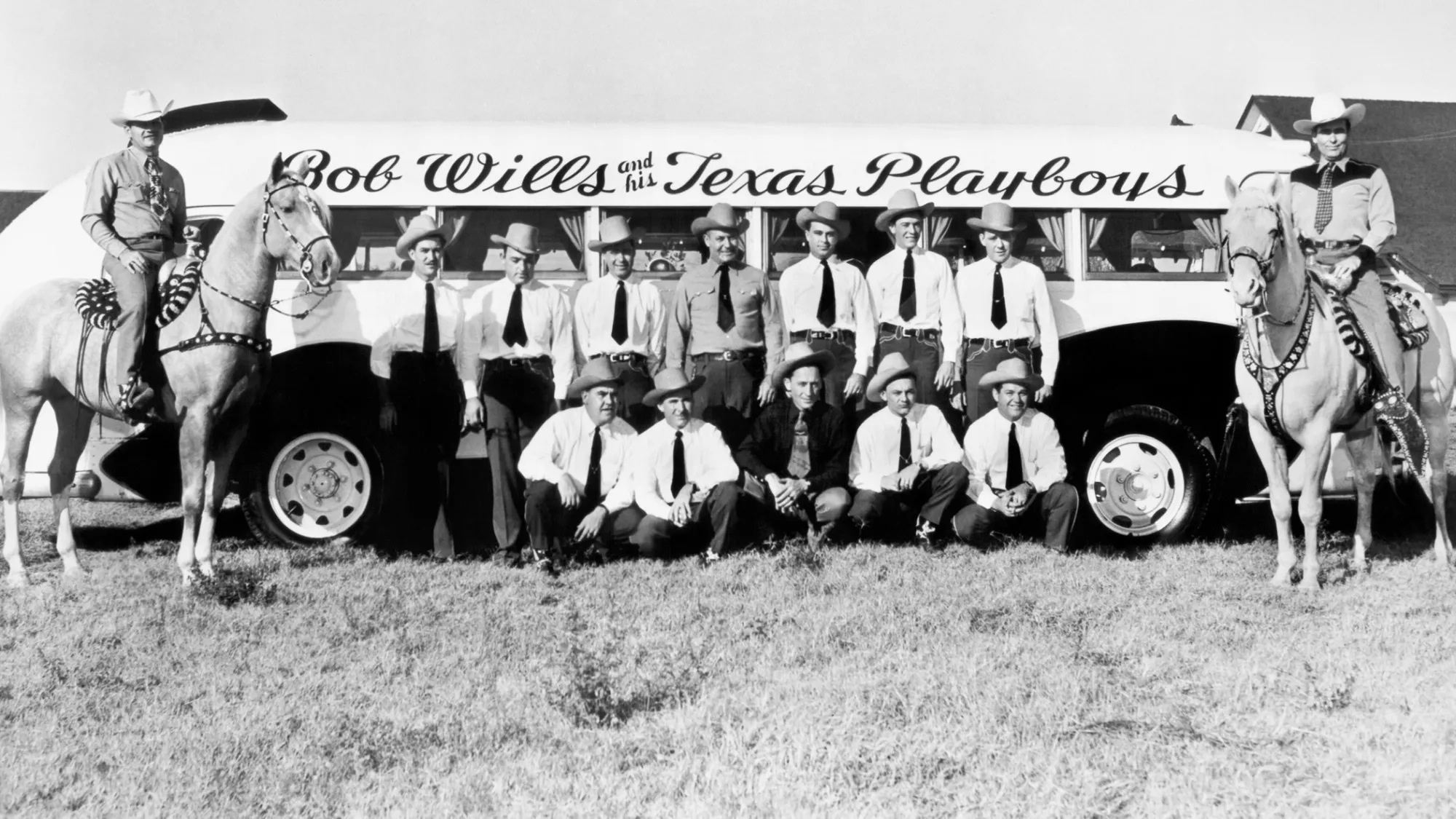
The history of American roots music is inextricably linked to the Wills family, a dynasty that redefined the boundaries between country, jazz, and blues. On September 2, 1912, Johnnie Lee Wills was born in Hall County, Texas, arriving into a family that would soon transform the cultural landscape of the American Southwest. While his older brother, Bob Wills, earned the moniker "The King of Western Swing," Johnnie Lee Wills played a foundational role in the genre’s development, both as a member of the legendary Texas Playboys and as a successful bandleader in his own right. His career spanned the golden age of radio, the rise of the dance hall circuit, and the eventual recognition of Western Swing as a vital piece of American folk heritage.
The Formative Years and the Wills Family Tradition
The musical journey of Johnnie Lee Wills began in the rural expanses of West Texas, a region where community life often centered on ranch dances and fiddle competitions. His father, John Wills, was a champion fiddler who instilled a deep appreciation for traditional melodies in his children. Johnnie Lee’s initial foray into performance was as a rhythm guitarist for his father, providing the steady backbone for the elder Wills’ intricate fiddle work. This apprenticeship in the early 1900s was crucial; it exposed Johnnie Lee to the "breakdown" style of fiddling and the improvisational spirit that would later define Western Swing.
By the early 1930s, the Wills brothers began to professionalize their craft. Bob Wills had joined the Light Crust Doughboys, a band sponsored by the Burrus Mill and Elevator Company and managed by W. Lee "Pappy" O’Daniel. Recognizing his younger brother’s talent and reliability, Bob secured a position for Johnnie Lee within the ensemble. However, tensions with O’Daniel led Bob to depart and form his own group, the Texas Playboys, in 1933. Johnnie Lee joined the new venture, transitioning from guitar to the tenor banjo. This instrumental shift was significant; the percussive, bright tone of the tenor banjo became a signature element of the Texas Playboys’ early sound, helping to bridge the gap between rural string bands and the urban jazz orchestras of the era.
The Tulsa Transition and the Rise of Cain’s Ballroom
In 1934, seeking a market more receptive to their eclectic sound, the Texas Playboys relocated to Tulsa, Oklahoma. This move proved to be the catalyst for the band’s meteoric rise. They secured a daily broadcast slot on KVOO, a powerful 50,000-watt radio station known as "The Voice of Oklahoma." These broadcasts reached listeners across the Great Plains and the Southwest, turning the Wills brothers into regional celebrities.
Parallel to their radio success, the band established a residency at Cain’s Ballroom. Under the management of the Wills family, Cain’s evolved from a mere dance hall into a cultural institution. It was here that Western Swing truly coalesced. The music was a sophisticated hybrid: it maintained the fiddle-driven core of Texas music but incorporated the horn sections, reed instruments, and syncopated rhythms of Big Band swing. Johnnie Lee Wills was an integral part of this evolution, contributing to the tight rhythm section that allowed soloists like steel guitarist Leon McAuliffe to flourish.
The popularity of the Texas Playboys in Tulsa was so immense that the demand for live performances exceeded the band’s capacity. Recognizing a business opportunity and a chance for his brother to establish his own identity, Bob Wills encouraged Johnnie Lee to form a secondary unit to handle the overflow of bookings.
Establishing an Independent Identity: All His Boys
Johnnie Lee Wills initially formed a group called the Rhythmaires, though the ensemble struggled to find its footing in a market dominated by the primary Texas Playboys brand. A brief relocation to Fort Smith, Arkansas, in 1940 with his father also failed to yield significant commercial success. It was only upon his return to Tulsa that Johnnie Lee’s career as a bandleader truly began to thrive.
In 1942, a pivotal shift occurred. As World War II reshaped the American economy and Bob Wills moved his operations to California to capitalize on the burgeoning defense industry workforce, Johnnie Lee remained in Oklahoma. He formed "Johnnie Lee Wills and All His Boys," taking over the prestigious KVOO radio slot and the residency at Cain’s Ballroom. For the next 16 years, Johnnie Lee became the face of Western Swing in Tulsa.
While Bob Wills was known for his flamboyant showmanship and "ah-ha" hollers, Johnnie Lee developed a reputation for a more understated, yet highly disciplined, musical approach. His band was known for its precision and its ability to keep audiences on the dance floor. This period saw Johnnie Lee Wills and All His Boys recording for labels such as Decca and Bullet Records, producing a string of hits that demonstrated his keen ear for commercial appeal and musical innovation.
"Rag Mop" and the Bridge to Rock and Roll
One of the most significant milestones in Johnnie Lee Wills’ career was the 1950 release of "Rag Mop." Co-written by Wills and steel guitarist Deacon Anderson, the song was a runaway hit, reaching number one on the country charts and crossing over into the pop Top 10. "Rag Mop" was characterized by its repetitive, catchy spelling of the title and a driving, rhythmic shuffle.
Musicologists often point to "Rag Mop" as a precursor to the rock and roll explosion of the mid-1950s. Its blend of R&B sensibilities with country instrumentation mirrored the cultural synthesis occurring in Memphis and New Orleans. The song’s success illustrated Johnnie Lee’s ability to adapt to changing musical tastes while remaining rooted in the Western Swing tradition. Additionally, his group was the first to record "Peter Cotton Tail," which became a perennial holiday classic, further cementing his place in the broader American songbook.
Chronology of Key Events
- September 2, 1912: Johnnie Lee Wills is born in Hall County, Texas.
- 1930-1932: Performs as a rhythm guitarist for his father, John Wills, in West Texas.
- 1933: Joins Bob Wills in the newly formed Texas Playboys as a tenor banjo player.
- 1934: The Texas Playboys move to Tulsa, Oklahoma, beginning their historic run on KVOO and at Cain’s Ballroom.
- 1940: Attempts to establish independent bands in Tulsa and Fort Smith, Arkansas.
- 1942: Bob Wills moves to California; Johnnie Lee forms "All His Boys" and takes over the Tulsa residency.
- 1950: "Rag Mop" becomes a national hit, reaching #1 on the Billboard country charts.
- Late 1950s: The long-standing KVOO radio residency concludes as musical tastes shift toward Nashville-style country and rock.
- 1982: Performs at the Smithsonian Institution’s Festival of American Folklife in Washington, D.C.
- October 25, 1984: Johnnie Lee Wills passes away in Tulsa at the age of 72.
Analysis of Musical and Cultural Impact
The impact of Johnnie Lee Wills extends beyond his chart success. He was a stabilizing force in the Western Swing genre. While Bob Wills was the visionary who broke the rules—most notably by defying the Grand Ole Opry’s ban on drums in 1944—Johnnie Lee was the steward who maintained the genre’s presence in its heartland.
His influence is clearly visible in the "Bakersfield Sound" popularized by artists like Merle Haggard and Buck Owens. Haggard, in particular, frequently cited the Wills brothers as his primary inspiration, noting that their music provided a sense of dignity and sophistication to the "Okie" culture during and after the Dust Bowl migration. Johnnie Lee’s insistence on high-quality musicianship and his integration of jazz elements ensured that Western Swing was respected by technical musicians and casual listeners alike.
Data from the Oklahoma Historical Society suggests that during the peak of the KVOO years, Johnnie Lee Wills and All His Boys were among the most consistently employed musical acts in the United States, often performing six or seven nights a week while maintaining a daily radio schedule. This work ethic was a hallmark of the Wills family and a necessity in the competitive post-Depression music industry.
Later Years and Historical Recognition
As the Big Band era faded and the "Nashville Sound" began to dominate country music in the 1960s, Johnnie Lee Wills transitioned into a role as a cultural elder. He remained a beloved figure in Tulsa, operating a Western wear store and continuing to perform at special events and reunions.
In 1982, his contributions were recognized on a national stage when he and his band were invited to represent Oklahoma at the Smithsonian Institution’s Festival of American Folklife. This performance served as a formal acknowledgment of Western Swing as a quintessential American art form, deserving of preservation alongside jazz and blues. The massive crowds in Washington, D.C., were a testament to the enduring appeal of the music Johnnie Lee had championed for half a century.
Johnnie Lee Wills died of heart failure on October 25, 1984. His passing marked the end of an era, but his recordings and the institution of Cain’s Ballroom remain as vibrant reminders of his legacy. Today, he is remembered not merely as the younger brother of the King of Western Swing, but as a master musician and bandleader who helped define the sound of the American West. His life’s work stands as a bridge between the rural traditions of the 19th century and the modern, electrified sounds of the 20th, ensuring that the "Tulsa Sound" continues to resonate in the annals of music history.
