

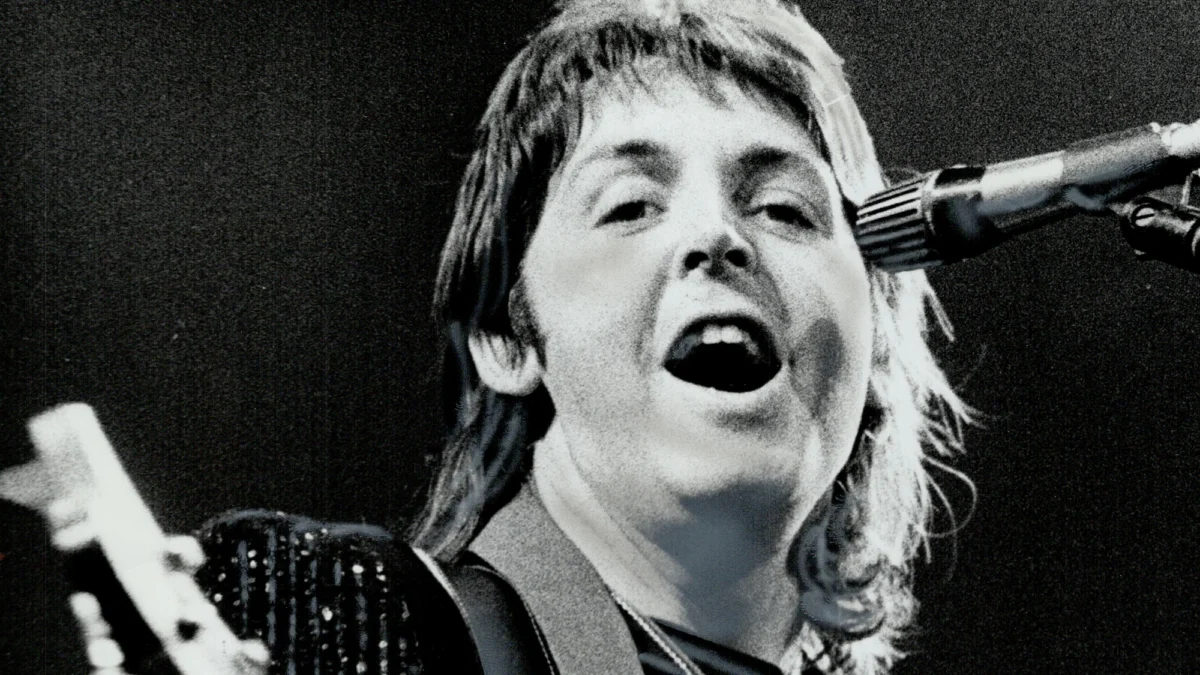
The landscape of contemporary music is frequently defined by the reverence younger generations hold for the pioneers of the 20th century. However, the dynamic between the Beatles co-founder Paul McCartney and the modern musical vanguard offers a compelling reversal of this traditional hierarchy. McCartney, a figure whose influence on the global cultural lexicon is nearly unparalleled, has increasingly positioned himself not merely as a mentor or a legacy act, but as an active student and admirer of the artists who have emerged decades after his own debut. This mutual exchange of creative energy reached a definitive peak with the release of McCartney III Imagined in 2021, a project that saw the legendary songwriter hand-selecting contemporary innovators to remix, cover, or reinterpret tracks from his eighteenth solo studio album. Among the artists who have captured McCartney’s attention are the genre-defying Dominic Fike, the globally-influenced trio Khruangbin, and the avant-pop virtuoso St. Vincent.
The Genesis of McCartney III and the Rockdown Sessions
To understand McCartney’s current affinity for younger artists, one must look at the circumstances surrounding the production of McCartney III. Recorded during the 2020 COVID-19 lockdowns—a period the artist famously dubbed "Rockdown"—the album followed the tradition of his 1970 debut McCartney and 1980’s McCartney II. In each of these instances, McCartney served as the sole performer, playing every instrument and handling the production. This solitary environment fostered a spirit of experimentation that has always been the hallmark of his solo career.
Upon the album’s completion, McCartney sought to extend this experimental spirit by inviting a diverse array of modern musicians to interact with his work. The resulting project, McCartney III Imagined, was not a standard remix album but a curated dialogue between generations. By inviting artists like Dominic Fike, Khruangbin, and St. Vincent into his sonic world, McCartney effectively validated their contributions to the evolving musical landscape while simultaneously revitalizing his own catalog for a streaming-centric audience.
Dominic Fike and the Bold Reimagining of The Kiss of Venus
Dominic Fike, a Florida-born artist known for his seamless blend of alternative rock, hip-hop, and pop, represents a specific type of modern versatility that McCartney appears to find infectious. Fike’s rise to prominence was marked by his 2018 EP Don’t Forget About Me, Demos, which led to a high-profile signing and eventually a role on the hit television series Euphoria. When McCartney selected Fike to take on "The Kiss of Venus," the result was a radical departure from the original acoustic folk-style ballad.
McCartney’s admiration for Fike stems from the younger artist’s willingness to dismantle the source material. In the original version, McCartney utilized a harpsichord-inspired guitar tuning, delivering a performance that echoed the pastoral simplicity of Blackbird. Fike, however, transformed the track into a soulful, R&B-inflected mid-tempo song, adding his own lyrics and a contemporary vocal delivery. McCartney noted that Fike’s "fearless" approach was exactly what he was looking for, stating that a more timid artist might have felt obligated to "stick to the script."
The collaboration served as a significant endorsement of Fike’s artistry. Industry analysts noted that the inclusion of Fike on the project was a strategic bridge between the "Classic Rock" demographic and Gen Z listeners. For Fike, the project was a career milestone that solidified his reputation as a musician’s musician, capable of garnering the respect of the industry’s most decorated figures.
Khruangbin and the Global Rhythm of Pretty Boys
The inclusion of the Houston-based trio Khruangbin on the McCartney III Imagined roster highlights McCartney’s long-standing interest in global sounds and rhythmic experimentation. Comprising bassist Laura Lee, guitarist Mark Speer, and drummer Donald "DJ" Johnson, Khruangbin has earned international acclaim for a sound that blends Thai funk, Iranian pop, Jamaican dub, and surf rock. Their aesthetic is heavily defined by Lee’s melodic, prominent bass lines—a musical trait that undoubtedly resonates with McCartney, himself one of history’s most influential bassists.
Khruangbin’s reimagining of "Pretty Boys" took McCartney’s original commentary on the fashion industry and injected it with a slow-burning, psychedelic groove. McCartney’s reaction to the track was one of visceral excitement, comparing the experience of listening to it to having a "disco" in his own home. This reaction underscores a key aspect of McCartney’s relationship with younger artists: he is looking for music that moves him physically and emotionally, rather than music that simply pays homage to his past.
The choice of Khruangbin also reflects a broader trend in McCartney’s listening habits. Throughout his career, from the Indian influences in the Beatles to his electronic experiments as The Fireman, McCartney has sought out sounds that challenge Western pop conventions. Khruangbin’s ability to synthesize disparate cultural influences into a cohesive, modern sound represents the exact type of innovation McCartney has championed for over six decades.
St. Vincent and the Art-Rock Synthesis
Among the artists McCartney has praised, St. Vincent (Annie Clark) perhaps shares the most DNA with McCartney’s own penchant for high-concept art-pop. A Grammy-winning multi-instrumentalist and songwriter, Clark is known for her intricate guitar work and her ability to balance avant-garde sensibilities with accessible melodies. The professional relationship between the two has extended beyond a single track; they have engaged in high-profile public dialogues, including a featured interview for Rolling Stone where they discussed the mechanics of songwriting and the evolution of their respective crafts.
On McCartney III Imagined, St. Vincent took on the track "Women and Wives." The original version is a somber, piano-driven meditation on the weight of influence and the legacy one leaves behind. St. Vincent’s remix added a layer of modern "cool," utilizing distorted synths and a rhythmic drive that gave the song a new, urban edge. McCartney has frequently cited Clark as one of the most exciting figures in modern music, praising her "genre-bending" capabilities.
The collaboration on "Women and Wives" is particularly notable for how it recontextualized the song’s lyrics. When McCartney sings about the responsibilities of "women and wives, husbands and lovers," it carries the weight of an elder statesman. When St. Vincent interacts with those same themes, it provides a contemporary female perspective that broadens the song’s reach and relevance.
Supporting Data and Market Impact
The strategic value of these collaborations is reflected in the commercial and critical performance of the McCartney III cycle. The original album debuted at Number 1 on the Billboard 200, making McCartney the first artist to have a new Number 1 album in each of the last six decades. However, the release of McCartney III Imagined allowed the project to maintain its momentum in the digital space.
Streaming data indicates that the "Imagined" tracks significantly increased McCartney’s monthly listener count on platforms like Spotify, particularly among listeners aged 18–24. By aligning himself with Fike (who boasts millions of monthly listeners) and St. Vincent (a staple of indie and alternative radio), McCartney effectively bypassed the "legacy act" vacuum that often swallows veteran artists. According to chart data from the UK’s Official Charts Company, the reimagined project helped return the source material to the top of the vinyl and physical sales charts, proving that the cross-generational appeal was a lucrative endeavor.
Chronology of Contemporary Influence
McCartney’s engagement with younger talent is not a recent phenomenon, though it has accelerated in the last decade. A timeline of his contemporary interactions reveals a deliberate effort to stay at the forefront of musical evolution:
- 2014-2015: McCartney collaborates with Kanye West and Rihanna on "FourFiveSeconds" and "Only One." This marked a major shift in his public persona, engaging directly with the titans of modern hip-hop and R&B.
- 2018: During the promotion of Egypt Station, McCartney performs at the Liverpool Institute for Performing Arts (LIPA), an institution he co-founded, specifically to engage with student musicians.
- 2020: The recording of McCartney III takes place in private, but McCartney begins citing modern artists in interviews as his primary listening material during the lockdown.
- 2021: The release of McCartney III Imagined serves as a formal declaration of his respect for artists like Dominic Fike, Khruangbin, Phoebe Bridgers, and Blood Orange.
- 2022-2023: McCartney continues to appear at festivals like Glastonbury, where he shares the stage with younger stars, further cementing his role as the "bridge" between the origins of rock and its future.
Broader Implications for the Music Industry
The relationship between Paul McCartney and artists like Dominic Fike, Khruangbin, and St. Vincent offers a blueprint for how the music industry can handle the aging of its icons. Rather than retreating into nostalgia or attempting to mimic current trends, McCartney has opted for a path of genuine curiosity. He does not try to sound like Dominic Fike; instead, he asks what Dominic Fike can find in a Paul McCartney song.
This approach has significant implications for the preservation of musical legacy. It ensures that the "Beatles school" of songwriting—focused on melody, structure, and emotional resonance—continues to be a living, breathing part of the modern production toolkit. For the younger artists involved, the endorsement of a figure like McCartney provides a level of "artistic gravitas" that is difficult to achieve through streaming numbers alone.
Furthermore, McCartney’s praise for these artists highlights a shift in what is valued in the modern era. He consistently points to "fearlessness," "reimagining," and "surprising" choices as the qualities he admires. In an industry often criticized for being overly formulaic due to algorithmic pressures, McCartney’s focus on these idiosyncratic artists serves as a reminder that original, boundary-pushing music remains the highest currency in the creative world.
Ultimately, Paul McCartney’s late-career flourish is defined by a refusal to remain static. By finding inspiration in the "progeny" of the music world, he has ensured that his own work remains as dynamic and unpredictable as it was when he first stepped into Abbey Road Studios. His admiration for Fike, Khruangbin, and St. Vincent is more than a series of compliments; it is a testament to the enduring power of the creative spirit to transcend time, genre, and generation.
