

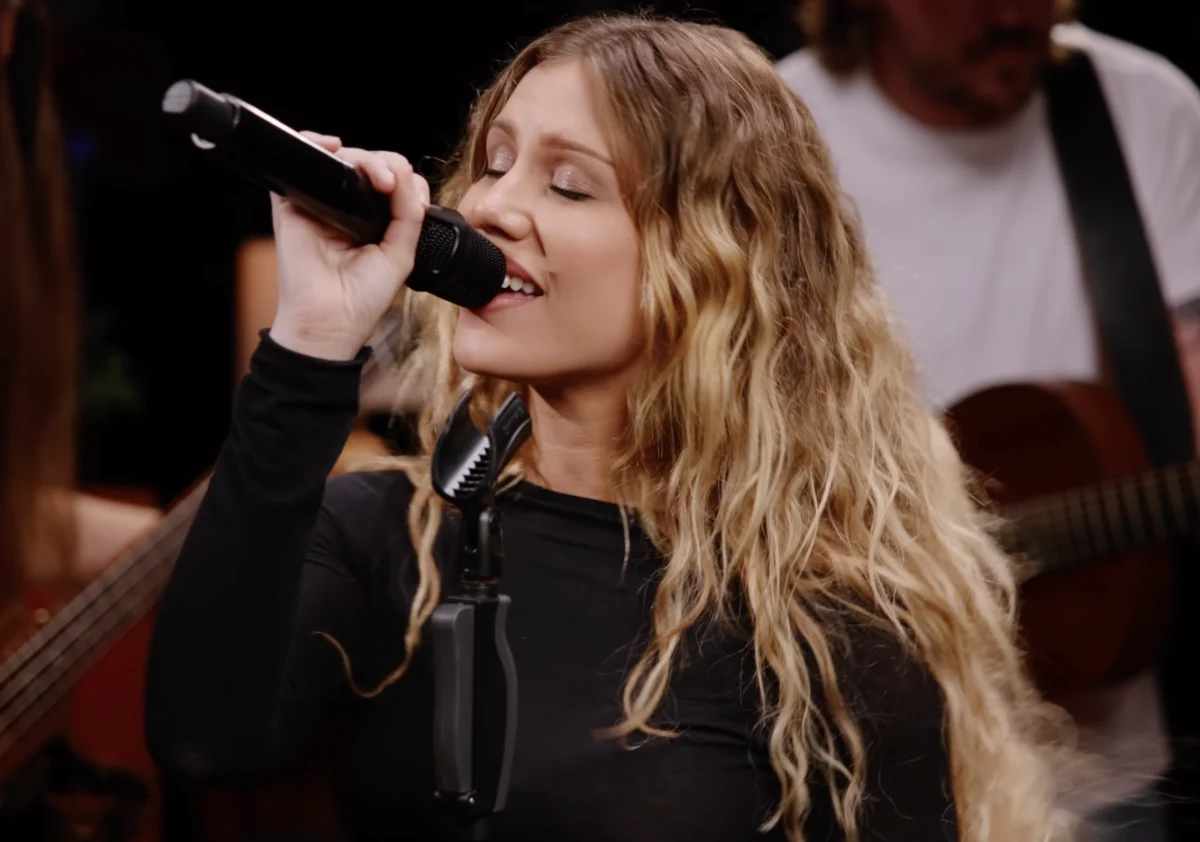
In a significant cultural moment bridging two distinct eras of music, contemporary pop artist Slayyyter recently delivered a compelling cover of Hole’s iconic 1994 track "Violet" for Triple J’s renowned "Like A Version" segment, garnering an immediate and highly enthusiastic endorsement from Hole frontwoman Courtney Love herself. The performance, which showcased Slayyyter’s vocal prowess and interpretive skill, quickly became a focal point of discussion across social media platforms, particularly after Love’s effusive praise, declaring playfully, "@slayyyter will in fact not be returning to St. Louis. She’s employed me to run the salon . Keep wiping the floors with us . It’s a DELIGHT ! ???", signaling a symbolic passing of the torch and a profound validation from an industry pioneer.
The Performance and Initial Reception
Slayyyter’s rendition of "Violet," a cornerstone track from Hole’s critically acclaimed second studio album Live Through This, offered a nuanced interpretation of the grunge-era anthem. While maintaining the raw emotional core of the original, Slayyyter infused it with her signature pop sensibility, resulting in a performance that, though perhaps less overtly gritty than Hole’s original, nonetheless highlighted her considerable vocal capabilities. The cover swiftly dispelled any lingering doubts regarding her technical skill, providing undeniable proof of her ability to navigate complex vocal demands and emotional intensity. The "Like A Version" platform, known for challenging artists to reinterpret beloved songs, served as an ideal stage for this inter-generational musical dialogue.
The immediate online response from Courtney Love was not merely positive but deeply personal and highly symbolic. Her Instagram commentary transcended typical artist-to-artist compliments, employing a metaphor of employment and service ("She’s employed me to run the salon") that suggested a deep respect and a recognition of Slayyyter’s artistry as a successor. This public blessing from Love, an artist often characterized by her fierce independence and discerning eye, carries substantial weight within the music industry and among fans of both artists.
Slayyyter’s Musical Roots and Inspiration
In an accompanying interview with Triple J, Slayyyter elucidated the profound personal connection she shares with Hole’s discography, particularly Live Through This. She revealed that the album was a pivotal influence during her formative high school years, a period when she immersed herself in music discovery through platforms like Tumblr. This digital landscape, rich with "riot grrrl edits" and alternative culture, became her gateway to discovering Hole and, by extension, Courtney Love.
"That’s where I first came across Hole and Courtney Love," Slayyyter explained, emphasizing the transformative impact of this discovery. She elaborated on her fascination with Love’s performance style and unapologetic demeanor: "I became so obsessed with the way she would perform and the way she would tell the crowd to fuck off. I loved everything about it. I feel like I had never experienced music like that." This admiration for Love’s confrontational and authentic stage presence resonated deeply with Slayyyter’s own experiences as a teenager. She described how Love’s music provided a crucial outlet for adolescent angst: "When you’re a teenager, you go through your angsty periods and it would help me get my anger out of my system to listen to that music and scream it in my bedroom. It felt like a full circle thing to cover." This candid reflection underscores the emotional resonance and cathartic power that Live Through This has held for generations of listeners grappling with similar emotions, validating Slayyyter’s choice of cover as a deeply personal homage.
The Enduring Legacy of Hole and "Live Through This"
To fully appreciate the significance of Slayyyter’s cover and Love’s reaction, it is crucial to contextualize Hole’s Live Through This within the broader landscape of 1990s alternative rock. Released in April 1994, just days after the death of Love’s husband, Nirvana frontman Kurt Cobain, the album arrived amidst intense public scrutiny and grief. Despite (or perhaps because of) the surrounding tragedy, Live Through This was met with widespread critical acclaim, lauded for its raw emotional honesty, biting lyricism, and a potent blend of punk aggression and melodic sophistication.
"Violet," in particular, encapsulates the album’s themes of pain, betrayal, and resilience. Its lyrics, often interpreted as a defiant declaration of self-worth in the face of exploitation, became an anthem for many, solidifying Hole’s position as a powerful voice in the grunge movement and for women in rock. The album’s production, handled by Michael Beinhorn, skillfully captured the band’s dynamic range, moving from abrasive guitar riffs to melodic hooks with striking effectiveness. Live Through This is frequently cited as one of the definitive albums of the 1990s, influencing countless artists and cementing Courtney Love’s status as a formidable and uncompromising figure in music and culture. Its continued relevance, nearly three decades after its release, is a testament to its timeless themes and enduring artistic power.
Courtney Love’s Endorsement: A Deeper Dive
Courtney Love’s initial, metaphorical "employment" statement was just one facet of her public embrace of Slayyyter. In subsequent Instagram commentary, Love further solidified her support by recalling a specific piece of Slayyyter’s early work: her first SoundCloud upload, under the moniker "Slater," was a cover of Nirvana’s "Where Did You Sleep Last Night?" (itself a cover of Lead Belly’s interpretation of the traditional folk song "In The Pines"). This revelation adds another layer of historical and familial connection, highlighting Slayyyter’s long-standing engagement with the musical lineage that Love and Cobain represent. Love’s protective declaration, "There will be NO ! Slayter slander in my family’s name," underscored her deep appreciation and personal connection to Slayyyter’s artistic journey, effectively welcoming her into a respected artistic lineage.
This endorsement is particularly noteworthy given Love’s reputation for being outspoken and critical. Her explicit validation of Slayyyter signifies not just an appreciation for a single performance but a recognition of a shared artistic spirit and an understanding of the emotional wellspring from which Slayyyter draws her inspiration. It suggests that Love sees in Slayyyter a continuation of the rebellious, authentic energy that defined her own work, bridging the gap between grunge-era angst and contemporary digital pop.
Slayyyter’s Artistic Trajectory and Future Endeavors
Slayyyter’s cover of "Violet" arrives at a significant juncture in her own burgeoning career. Her recent album, Wor$t Girl In America, has garnered considerable critical acclaim, even being named by Stereogum as "the best album of 2026 so far," a testament to its impact and originality within the contemporary music landscape. This recognition positions Slayyyter as a compelling and evolving artist, capable of both crafting innovative original material and respectfully interpreting influential works.
During her Triple J interview, Slayyyter also offered a glimpse into her forthcoming project: an "inverse album." While details remain officially unannounced, she described the concept as a response to new life experiences since the release of Wor$t Girl In America. "I had this idea to make an inverse album, where everything felt like a flip of a song that came before it. That had certain elements but still a fully new song." This conceptual approach suggests an artist deeply engaged with her creative process, seeking innovative ways to evolve her sound and lyrical themes. The "inverse album" concept itself hints at a meta-commentary on artistic progression, a reflection and reinterpretation of her own past work, much like her cover of "Violet" reflects and reinterprets a foundational piece of her musical upbringing.
The "Like A Version" Phenomenon
Triple J’s "Like A Version" segment, from which Slayyyter’s performance emerged, has become a cultural institution in Australia and beyond. Launched in 2004, the weekly segment features prominent and emerging artists performing a cover of another artist’s song, alongside one of their own original tracks. The program has become celebrated for its ability to showcase artists’ versatility, introduce listeners to new interpretations of beloved songs, and often, create viral musical moments. Artists are encouraged to infuse their unique style into the covers, leading to everything from faithful renditions to radical re-imaginings. The segment has seen countless memorable performances, contributing significantly to the cultural conversation around music and demonstrating the enduring power of interpretation in the creative arts. Slayyyter’s "Violet" cover now stands as another memorable entry in this esteemed series, amplified by the extraordinary reaction from the original artist.
Bridging Generations: Cultural and Musical Implications
The interaction between Slayyyter and Courtney Love, catalyzed by the "Violet" cover, represents more than just a musical exchange; it signifies a powerful generational bridge. For many younger fans, Slayyyter’s performance may serve as an introduction to Hole and the broader riot grrrl movement, offering a new entry point into a vital period of music history. Conversely, Love’s endorsement could draw her existing fanbase towards Slayyyter’s contemporary pop sound, fostering cross-pollination between different musical aesthetics and fan demographics.
This event underscores the cyclical nature of influence in music. The "angst" that Slayyyter found solace in during her teenage years, expressed through Love’s fierce artistry, finds a new echo in Slayyyter’s own work, albeit filtered through a different sonic lens. It highlights how the core emotions of rebellion, vulnerability, and self-assertion remain timeless, continually reinterpreted and expressed by new generations of artists. The digital age, with platforms like Tumblr facilitating discovery and social media enabling direct artist-to-artist validation, further amplifies these connections, creating a dynamic and interactive cultural landscape where legacies are acknowledged, and new paths are forged. The "salon" metaphor used by Love, implying a shared space of creativity and influence, perfectly encapsulates this intergenerational dialogue, suggesting a continuity of artistic spirit rather than a mere succession.
In conclusion, Slayyyter’s rendition of "Violet" is more than just a cover; it is a significant cultural event that reaffirms the enduring power of Hole’s Live Through This and solidifies Slayyyter’s position as a potent force in contemporary music. Courtney Love’s unequivocal endorsement, rich with personal and historical resonance, marks a profound moment of validation, symbolizing a powerful connection between two artists across different eras, united by a shared spirit of authenticity and artistic rebellion. As Slayyyter continues her artistic journey, with an "inverse album" on the horizon, this moment serves as a powerful testament to her growing influence and her deep roots in the alternative music tradition.
