

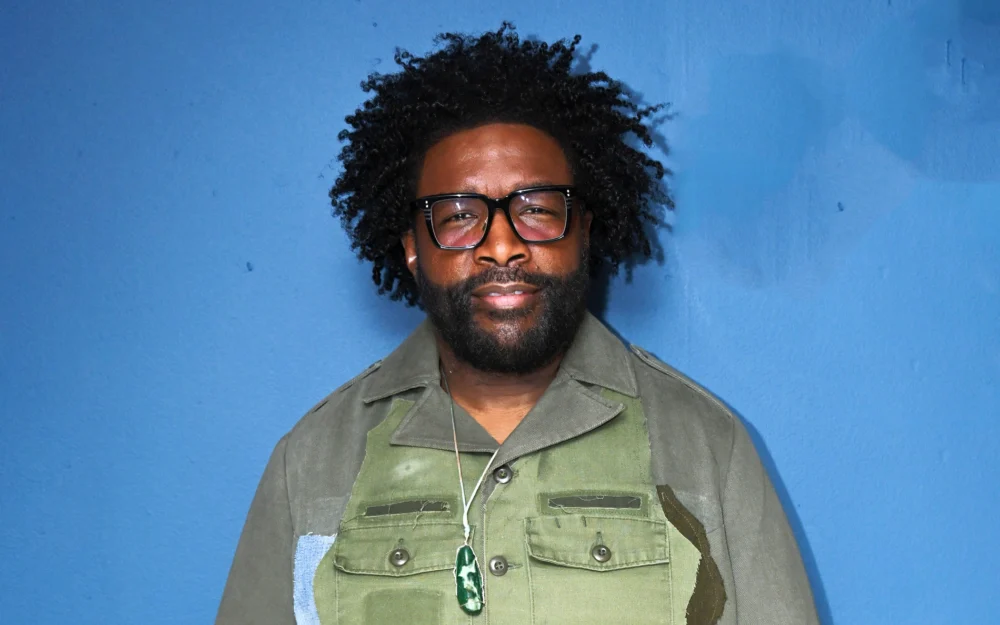
The whispers of a potential reunion among one of hip-hop and R&B’s most revered and influential collectives, the Soulquarians, are growing louder. Questlove, the Grammy-winning drummer for The Roots and acclaimed filmmaker, has recently ignited the speculation with remarks made on his podcast, The Questlove Show. These comments suggest a possible revival of the groundbreaking movement that coalesced in the late 1990s and early 2000s, a period that saw the creation of seminal works that continue to shape contemporary music. The proposed comeback, as hinted by Questlove, is envisioned as a more intimate affair, focusing on the core members who remain.
A Stripped-Down Vision for a Storied Legacy
In a recent episode of The Questlove Show, Ahmir “Questlove” Thompson, the de facto architect of the Soulquarians, shared his aspirations for a renewed chapter for the collective. He revealed that discussions have taken place with surviving original members, specifically mentioning R&B luminary Bilal and acclaimed producer and multi-instrumentalist James Poyser. "James [Poyser], myself, Bilal — the fragments that are left of the Soulquarians… we spoke. The family’s going to get back together," Questlove stated, signaling a concrete step towards actualizing this long-discussed reunion.
The motivation behind this potential resurgence appears to be deeply rooted in a sense of duty and a desire to preserve the artistic ethos that defined the Soulquarians. Questlove articulated a profound feeling of responsibility to "see the mission through" of championing thoughtful, analog-driven music, a mission he feels more acutely following the passing of influential figures associated with the era. While the original article mentioned the deaths of Prince and D’Angelo, it’s important to note that Prince passed away in 2016, and D’Angelo is still living. Questlove’s sentiment reflects a broader concern for maintaining the integrity and spirit of music that prioritizes organic instrumentation and soulful expression in an increasingly digital landscape. "Now that [D’Angelo] is not here, I feel that responsibility more than ever," he conveyed, highlighting a perceived void that the Soulquarians, in some capacity, might help fill.
The Genesis and Golden Age of the Soulquarians
The Soulquarians were not a traditional band with a fixed lineup, but rather a fluid collective of musicians, producers, and artists who converged at Jimi Hendrix’s legendary Electric Lady Studios in New York City. This creative hub fostered an environment of unparalleled artistic synergy, leading to the production of some of the most critically acclaimed and enduring albums in hip-hop and R&B history. The period between 1999 and 2002 marked the zenith of the Soulquarians’ influence, a remarkably fertile time that yielded masterpieces such as D’Angelo’s Voodoo, Erykah Badu’s Mama’s Gun, and Common’s Like Water For Chocolate.
Questlove, in his 2013 memoir Mo’ Meta Blues, eloquently described the initial vision for the collective: "In my head it was this utopian paradise I had always envisioned, the Native Tongues movement recreated." This aspiration aimed to build upon the spirit of collaboration and conscious artistry that characterized earlier groups like the Native Tongues, but with a distinct emphasis on a more mature, introspective, and sonically rich approach. The members, often referred to as "soul brothers," shared a common artistic philosophy that prioritized authenticity, musicality, and a deep connection to soul and jazz traditions, while simultaneously pushing the boundaries of hip-hop and R&B.
The Unforeseen Fractures and Enduring Impact
Despite the extraordinary creative output and the seemingly harmonious environment at Electric Lady Studios, the Soulquarians’ collective momentum faced unforeseen challenges. A pivotal moment that contributed to the eventual dissolution of the original iteration of the group was a 1999 VIBE magazine feature intended to spotlight their burgeoning influence. While the article aimed to celebrate the collective, it inadvertently sowed seeds of discord among its members.
Questlove recounted the incident in Mo’ Meta Blues, describing how the article’s framing led to misunderstandings and a sense of misrepresentation. Mos Def (now Yasiin Bey), upon reading the article, questioned his inclusion and the implicit hierarchy it suggested, reportedly asking, "I’m not an Aquarian… Does that mean I’m not a real Soulquarian?" Similar concerns were raised by Q-Tip, who felt the article implied a subordinate role, stating, "This article makes it look like I work for you." Erykah Badu also expressed dissatisfaction with the piece. Questlove acknowledged the validity of their grievances: "When I [checked out the story], I could see their point… It was at that moment that I realized that the paradise I had imagined wasn’t headed in a good direction." This incident highlighted the delicate nature of fostering a collective identity when dealing with individual artistic egos and the pressures of media attention.
The Legacy and Potential of a Reimagined Collective
The impact of the Soulquarians extends far beyond the albums they directly contributed to. Their innovative approach to production, which blended live instrumentation with cutting-edge sampling techniques, and their lyrical depth, which explored themes of social consciousness, personal introspection, and Black identity, set a new standard for artistic excellence. This era is widely recognized for revitalizing R&B and hip-hop, infusing them with a newfound sophistication and artistic gravitas.
The potential involvement of other living Soulquarians such as Erykah Badu, Common, Q-Tip, and Yasiin Bey remains a subject of anticipation. While Questlove’s recent comments focused on a more intimate reunion with Bilal and James Poyser, the door is not definitively closed on broader participation. The success of any reunion would likely depend on recapturing the original spirit of collaboration and mutual respect that defined their most productive period.
Analyzing the Implications of a Soulquarians Comeback
A contemporary manifestation of the Soulquarians, even in a stripped-down format, carries significant implications for the music industry. In an era dominated by streaming algorithms, viral trends, and often ephemeral content, a resurgence of artists committed to the craft of analog-driven, soulful music could serve as a powerful counterpoint. It could re-emphasize the value of meticulous production, lyrical substance, and genuine musical artistry.
Furthermore, such a reunion could inspire a new generation of musicians and producers to explore the rich sonic textures and thematic depth that characterized the original Soulquarians. It might also offer a platform for revisiting and reinterpreting the foundational principles of soul, funk, and jazz within a modern context, proving that timeless musicality can indeed transcend generational divides. The renewed focus on preserving the legacy of artists like J Dilla, whose genius was central to the Soulquarians’ sound, would also be a welcome development, ensuring his contributions continue to be celebrated and studied.
The pressure Questlove feels to honor the legacy of artists who are no longer with us, coupled with his personal commitment to analog and thoughtful music, provides a compelling narrative for this potential comeback. It speaks to a desire not just to relive past glories, but to actively contribute to the ongoing evolution of music with integrity and purpose. Whether this envisioned reunion materializes in a grand gesture or a more understated artistic exploration, the mere prospect of the Soulquarians resurfacing is a testament to their enduring influence and the profound impact they have had on the cultural landscape. The music world will undoubtedly be watching with keen interest as this chapter unfolds.
