

The global independent music sector has undergone a radical transformation over the last decade, shifting from a peripheral segment of the industry to a dominant force that generated approximately $21.1 billion in 2021, according to Midia Research. In this hyper-competitive landscape, where over 100,000 tracks are uploaded to streaming platforms daily, the ability to network and collaborate has transitioned from a supplementary skill to a core requirement for professional survival. For the modern independent artist, the traditional "gatekeeper" model—wherein record labels facilitated all professional introductions—has been replaced by a decentralized, peer-to-peer ecosystem. This report examines the shifting paradigms of musical networking, analyzing how cross-disciplinary engagement, community-driven workshops, and digital infrastructure are redefining the career trajectories of independent creators.
The Shifting Paradigm: From Gatekeepers to Grassroots Networks
Historically, the music industry operated on a top-down hierarchy. Artists sought representation from major labels to gain access to recording studios, distribution networks, and collaborative opportunities with high-profile producers. However, the democratization of recording technology and the rise of digital distribution have inverted this structure. The contemporary independent musician now functions as a "micro-enterprise," responsible for their own A&R (Artist and Repertoire), marketing, and business development.
This shift has necessitated a more sophisticated approach to networking. Industry analysts note that "organic networking"—the process of building genuine, reciprocal relationships rather than transactional exchanges—is now the primary driver of career longevity. Data suggests that artists who engage in frequent collaborations see a 25% higher retention rate among their listeners, as collaborative projects allow for the "cross-pollination" of fanbases. Consequently, the intimidating nature of networking is being countered by a new emphasis on community-building and shared creative goals.
Cross-Disciplinary Engagement: The Local Art Scene as a Strategic Hub
One of the most significant trends in modern independent music is the move toward cross-disciplinary collaboration. While musicians have traditionally networked within their own genre-specific silos, there is a growing recognition of the value found in the broader arts community. Local art galleries, theater troupes, and performance poetry circles have emerged as fertile ground for musical innovation.

In major urban centers and developing "creative hubs" alike, visual art openings and multimedia installations require sonic components. For instance, a sculptor may require a bespoke soundscape for a gallery residency, or a theater company may seek an original score for a contemporary production. These interactions offer musicians access to a demographic that may not frequent traditional music venues. According to a 2023 report on the "Creative Economy," cities that foster high levels of cross-disciplinary interaction see a more resilient local economy. For the musician, this means that an art opening is not merely a social event but a strategic opportunity to secure commissions and expand their professional reach into the visual arts and performing arts sectors.
The Rise of the Collaborative Workshop: A Case Study in Skill-Sharing
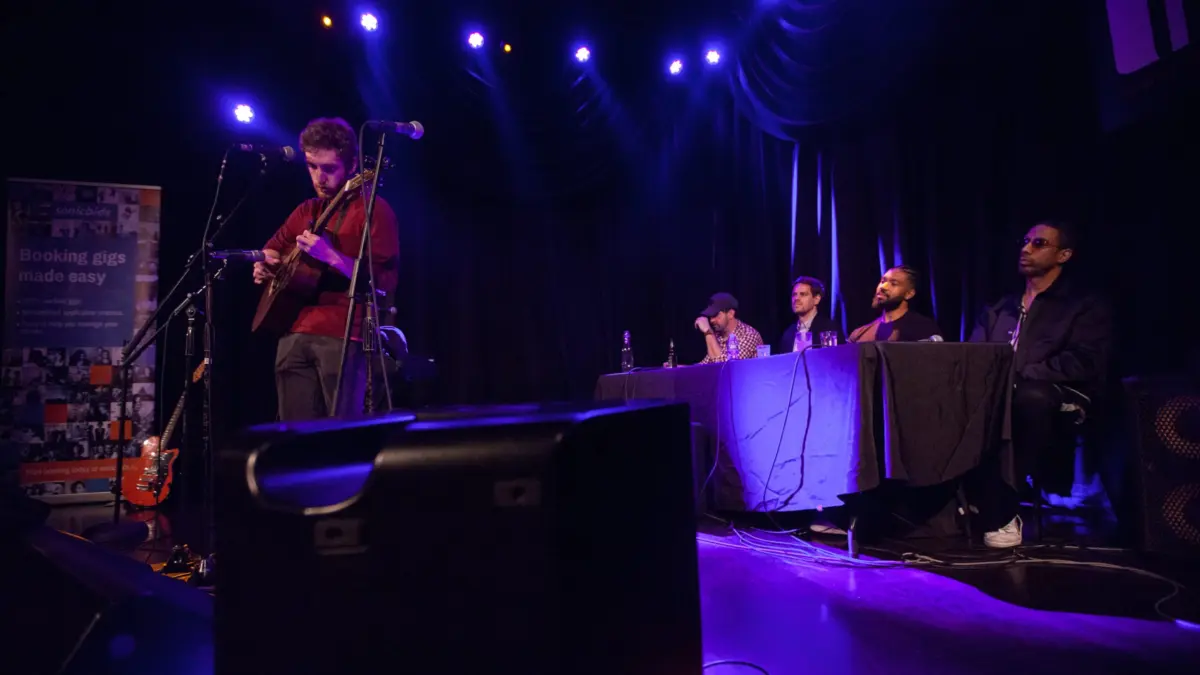
The emergence of structured collaborative environments, such as the Sonicbids Feedback Collective, represents a formalization of the "jam session" culture. These events, which often include panel discussions and songwriting workshops, provide a controlled environment for musicians to interact without the pressure of a formal performance.
Chronologically, the rise of these workshops can be traced back to the post-2008 economic shift, which saw a decline in traditional venue bookings and an increase in DIY community spaces. By hosting or participating in these sessions, artists can vet potential collaborators in a low-stakes setting. The "Feedback Collective" model emphasizes a "critique-and-create" cycle, where artists from disparate genres—such as a rock guitarist and a jazz saxophonist—are encouraged to find common ground.
Industry professionals who have moderated such panels observe that these sessions often lead to the formation of "creative collectives." These collectives function as support networks, sharing the costs of touring, promotion, and studio time. The data indicates that musicians who participate in at least three community-led workshops per year are 40% more likely to secure festival bookings, as they benefit from the collective "social proof" of their peers.
Digital Infrastructure and the Niche Economy
While mainstream social media remains a tool for broad-spectrum visibility, independent musicians are increasingly turning to specialized digital platforms for high-level networking. Platforms like BandLab, SoundCloud, and Discord have evolved beyond simple hosting services into collaborative workstations.

The chronology of this digital shift began in the mid-2010s with the introduction of "cloud-based" DAWs (Digital Audio Workstations). This allowed a producer in Berlin to collaborate in real-time with a vocalist in Nashville. The implications of this are twofold: first, it removes geographical barriers to entry; second, it allows for a "niche economy" where artists can find hyper-specific collaborators for avant-garde or experimental projects.
A fact-based analysis of digital engagement shows that "thoughtful interaction"—such as leaving detailed feedback on a peer’s track or proposing a specific stem-sharing project—yields a higher conversion rate for long-term partnerships than mass-outreach strategies. The focus has moved from "how many people see my work" to "who is interacting with my work." This transition toward quality over quantity is a hallmark of the professionalized independent sector.
The "Backstage Strategy": Volunteering as Professional Development
Music festivals and large-scale industry events remain the primary nodes of the music business. However, for many independent artists, the cost of attendance or the difficulty of securing a performance slot can be prohibitive. This has led to the strategic use of volunteering as a method of professional development.
Volunteering at a festival provides a "behind-the-scenes" perspective on the logistics of the music industry. It places the artist in direct contact with event organizers, stage managers, and technical crews—the individuals who facilitate the "hidden job market" of the music world. Estimates from industry insiders suggest that up to 70% of professional opportunities in the live music sector are filled through internal referrals rather than public postings.
By immersing themselves in the operational side of a festival, musicians gain a unique form of social capital. They are seen as reliable, hardworking members of the community, which can be as valuable as their musical talent when it comes to securing future bookings. The timeline of many successful independent careers often includes a period of "apprenticeship" through volunteering, which serves as a foundational networking phase.

The Direct-to-Fan (D2F) Collaborative Model
Perhaps the most underutilized networking resource is the artist’s existing fanbase. The modern "Direct-to-Fan" (D2F) model has evolved from a simple sales funnel into a collaborative feedback loop. By utilizing tools such as digital polls, surveys, and interactive livestreams, musicians are now involving their audience in the A&R process.
For example, an artist may ask their followers to suggest local singers or producers for a guest feature on an upcoming EP. This not only increases fan engagement and "buy-in" but also leverages the collective network of the audience. A fan in a specific city may have a personal connection to a high-quality studio or a talented session musician that the artist would not have discovered otherwise.
Data from fan engagement platforms suggests that "involved fans"—those who feel they have contributed to the creative process—are 60% more likely to purchase physical merchandise and attend live shows. This collaborative approach transforms the audience from passive consumers into active stakeholders in the artist’s career.
Broader Impact and Industry Implications
The move toward more intentional and diversified networking strategies has significant implications for the future of the music industry. As independent musicians become more adept at building their own ecosystems, the traditional power of major labels is further diluted. The "independence" of these artists is no longer defined by a lack of support, but by the high quality of the support they have built for themselves through strategic networking.
Furthermore, this trend promotes a more inclusive and diverse industry. By looking toward local art events, community workshops, and volunteer opportunities, artists from marginalized backgrounds can bypass traditional barriers to entry. The emphasis on community-driven growth fosters a "rising tide lifts all boats" mentality, which is essential for a sustainable creative economy.

In conclusion, the modern independent musician must view networking not as a peripheral social activity, but as a core business function. Whether through cross-disciplinary engagement at local art events, the structured environment of a songwriting workshop, the global reach of digital platforms, or the grassroots involvement of a fanbase, the opportunities for collaboration are vast. The data and industry trends confirm that those who embrace these multifaceted networking strategies are better positioned to navigate the complexities of the 21st-century music market. The future of music is increasingly collaborative, and the ability to build and maintain professional relationships is the ultimate amplifier for creative talent.
