

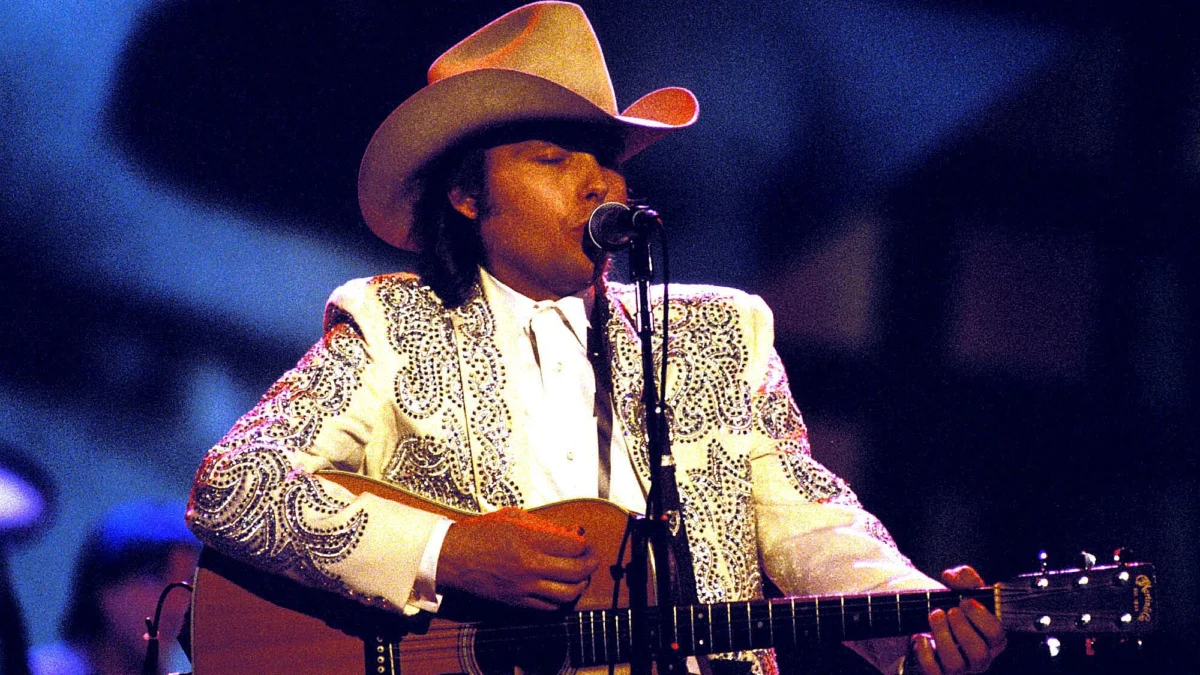
Since his explosive arrival on the national stage in 1986, Dwight Yoakam has occupied a singular space in the American musical landscape, serving as the primary architect for the revival of the "Bakersfield Sound." While many of his contemporaries in the mid-1980s leaned toward the polished, pop-infused "Urban Cowboy" aesthetic that dominated Nashville, Yoakam looked westward to the gritty, electric honky-tonk traditions of California. His career, spanning nearly four decades, is marked by a rigorous commitment to neo-traditionalism, a sharp sartorial style, and a vocal delivery that blends Appalachian mournfulness with rock-and-roll swagger. To understand the enduring influence of Yoakam is to examine the specific compositions that bridged the gap between country music’s storied past and its modern evolution.
The Genesis of a Neo-Traditionalist: Honky Tonk Man
The trajectory of Dwight Yoakam’s career was fundamentally altered with the release of his debut single, "Honky Tonk Man." Originally recorded and made famous by Johnny Horton in 1956, the song was penned by Horton alongside Tillman Franks and Howard Hausey. When Yoakam included the track on his 1986 freshman album, Guitars, Cadillacs, Etc., Etc., he was not merely covering a classic; he was issuing a manifesto.
At the time of the song’s release, the country music industry was undergoing a period of commercial transition. Yoakam’s version of "Honky Tonk Man" reached number three on the Billboard Hot Country Singles chart, a significant feat for an artist who had struggled to find a footing in Nashville before relocating to the punk-rock-heavy scene of Los Angeles. The song’s lyrics—"Well I’m a honky tonk man, and I can’t seem to stop / I love to give the girls a whirl to the music of an old juke box"—resonated with a new audience that appreciated the raw, driving rhythm and the absence of overproduced orchestral arrangements.
The success of this single catalyzed the success of the album, which eventually earned double-platinum certification from the Recording Industry Association of America (RIAA). Music historians often point to this period as the beginning of the "New Traditionalist" movement, which included artists like George Strait and Randy Travis. However, Yoakam’s edge was different; his collaboration with producer and guitarist Pete Anderson created a sonic profile that was as much influenced by the L.A. cowpunk scene as it was by the Grand Ole Opry.
Bridging Generations: Streets Of Bakersfield
If "Honky Tonk Man" established Yoakam’s viability, "Streets Of Bakersfield" cemented his legitimacy within the pantheon of country legends. Released in 1988 as part of the album Buenas Noches From A Lonely Room, the track featured a duet with Buck Owens, the pioneer of the Bakersfield Sound. The song was originally written by Homer Joy and recorded by Owens in 1973, but it failed to achieve major chart success during its initial run.
The 1988 revival served as a symbolic passing of the torch. For Owens, who had been largely retired from the recording industry, the collaboration was a triumphant return to the spotlight. For Yoakam, it was a validation of his artistic philosophy. The song famously recounts the struggles of an outsider trying to find their way in a town that offers little sympathy: "I came here looking for something / I couldn’t find anywhere else / Hey, I’m not trying to be nobody / I just want a chance to be myself."
Statistically, "Streets Of Bakersfield" remains one of the most significant entries in Yoakam’s discography, becoming his first number-one hit on the Billboard Hot Country Songs chart. The inclusion of the accordion, played by Flaco Jiménez, added a Tex-Mex flavor that highlighted the geographical and cultural roots of the California country scene. Industry analysts note that this collaboration helped re-introduce younger audiences to the historical depth of the genre, proving that traditional sounds could still dominate the airwaves in the late 1980s.
The Artistic Peak: A Thousand Miles From Nowhere
By the early 1990s, Yoakam had evolved from a genre-revivalist into a sophisticated singer-songwriter capable of profound emotional complexity. This evolution reached its zenith with the 1993 release of the album This Time. The standout single from this project, "A Thousand Miles From Nowhere," was written solely by Yoakam and showcased a more atmospheric, melancholic production style.
The song’s lyrical content delves into the isolation and disorientation that follows a profound heartbreak. With lines such as "I got heartaches in my pocket / I got echoes in my head / And all that I keep hearing / Are the cruel, cruel things that you said," Yoakam captured a sense of existential dread that was rare in mainstream country radio at the time. The track reached the top five on the country charts and crossed over into the consciousness of general music fans, aided by a visually striking music video that received heavy rotation on CMT and VH1.
This Time remains Yoakam’s best-selling album to date, achieving triple-platinum status. The success of "A Thousand Miles From Nowhere" demonstrated that Yoakam did not need to rely on covers or collaborations to sustain his career. His ability to craft original, high-concept songs allowed him to maintain his relevance during the "Garth Brooks era" of country music, where stadium-rock influences were beginning to overshadow traditional honky-tonk.
Collaboration and Wit: It Only Hurts When I Cry
In 1990, Yoakam released the album If There Was A Way, which featured the clever and rhythmically infectious "It Only Hurts When I Cry." The song was a co-writing effort between Yoakam and Roger Miller, the legendary songwriter known for his wit and unconventional lyrical structures. This partnership resulted in a Top 10 hit that perfectly balanced the sorrow of a breakup with a defiant, almost humorous irony.
The lyrics utilize a series of contradictions to mask the narrator’s pain: "The only time I feel the pain / Is in the sunshine or the rain / And I don’t feel no hurt at all / Unless you count when teardrops fall." This "smiling through the tears" approach is a hallmark of the honky-tonk tradition, where the music is often upbeat enough to dance to, even when the subject matter is devastating.
The collaboration with Miller was seen by critics as a masterclass in songwriting. Miller’s influence brought a rhythmic playfulness to Yoakam’s vocal performance, reinforcing the idea that Yoakam was a student of the craft. This period of Yoakam’s career was marked by high productivity and critical acclaim; If There Was A Way spent 92 weeks on the Billboard Country Albums chart, further proving the longevity of his specific brand of country music.
Chronology of Major Career Milestones
To understand the broader impact of these songs, it is necessary to view them within the timeline of Yoakam’s professional achievements:
- 1986: Release of Guitars, Cadillacs, Etc., Etc. and the hit "Honky Tonk Man." Yoakam wins the ACM Award for Top New Male Vocalist.
- 1988: "Streets of Bakersfield" hits number one. Yoakam establishes himself as the face of the West Coast country revival.
- 1991: Release of If There Was A Way, which yields multiple Top 10 hits, including "It Only Hurts When I Cry."
- 1993: This Time is released, featuring "A Thousand Miles From Nowhere." The album earns three Grammy nominations.
- 1994: Yoakam wins the Grammy Award for Best Country Vocal Performance, Male, for "A Thousand Miles From Nowhere."
- 2000s-Present: Yoakam continues to release critically acclaimed albums like 3 Pears (2012) and Second Hand Heart (2015), while also maintaining a successful career as a character actor in films such as Sling Blade and Panic Room.
Broader Impact and Industry Implications
Dwight Yoakam’s contribution to the music industry extends beyond chart positions and record sales. He effectively bridged the gap between the "high art" of traditional songwriting and the commercial demands of the modern music business. By maintaining his creative independence and refusing to "Nashville-ize" his sound, he paved the way for the Americana and Alt-Country movements that would flourish in the late 1990s and 2000s.
His influence can be heard in the work of contemporary artists like Chris Stapleton, Sturgill Simpson, and Midland, all of whom utilize the same blend of traditional foundations and modern sensibilities. Yoakam’s career serves as a case study in brand consistency; from his signature Stetson hat and denim to his unwavering loyalty to the Telecaster guitar sound, he has remained an identifiable icon in a rapidly changing industry.
Furthermore, Yoakam’s success in Los Angeles rather than Nashville challenged the centralized power of the Tennessee music establishment. He proved that country music was not a regional product but a stylistic one that could thrive in the urban sprawl of Southern California. This geographical shift allowed for a cross-pollination of genres, bringing country music to audiences that might have otherwise dismissed it.
Conclusion
The four songs—"Honky Tonk Man," "Streets Of Bakersfield," "A Thousand Miles From Nowhere," and "It Only Hurts When I Cry"—represent more than just highlights on a "Greatest Hits" compilation. They are the pillars of a career built on the preservation of a specific American sound. Through these tracks, Dwight Yoakam demonstrated that he was a historian, a collaborator, a poet, and a hitmaker. As the country music landscape continues to evolve, the "magic" of Yoakam remains a constant, providing a blueprint for how to honor the past while defining the future. His work ensures that the spirit of the honky-tonk, the grit of the Bakersfield streets, and the loneliness of the open road will remain central themes in the American songbook for generations to come.
