

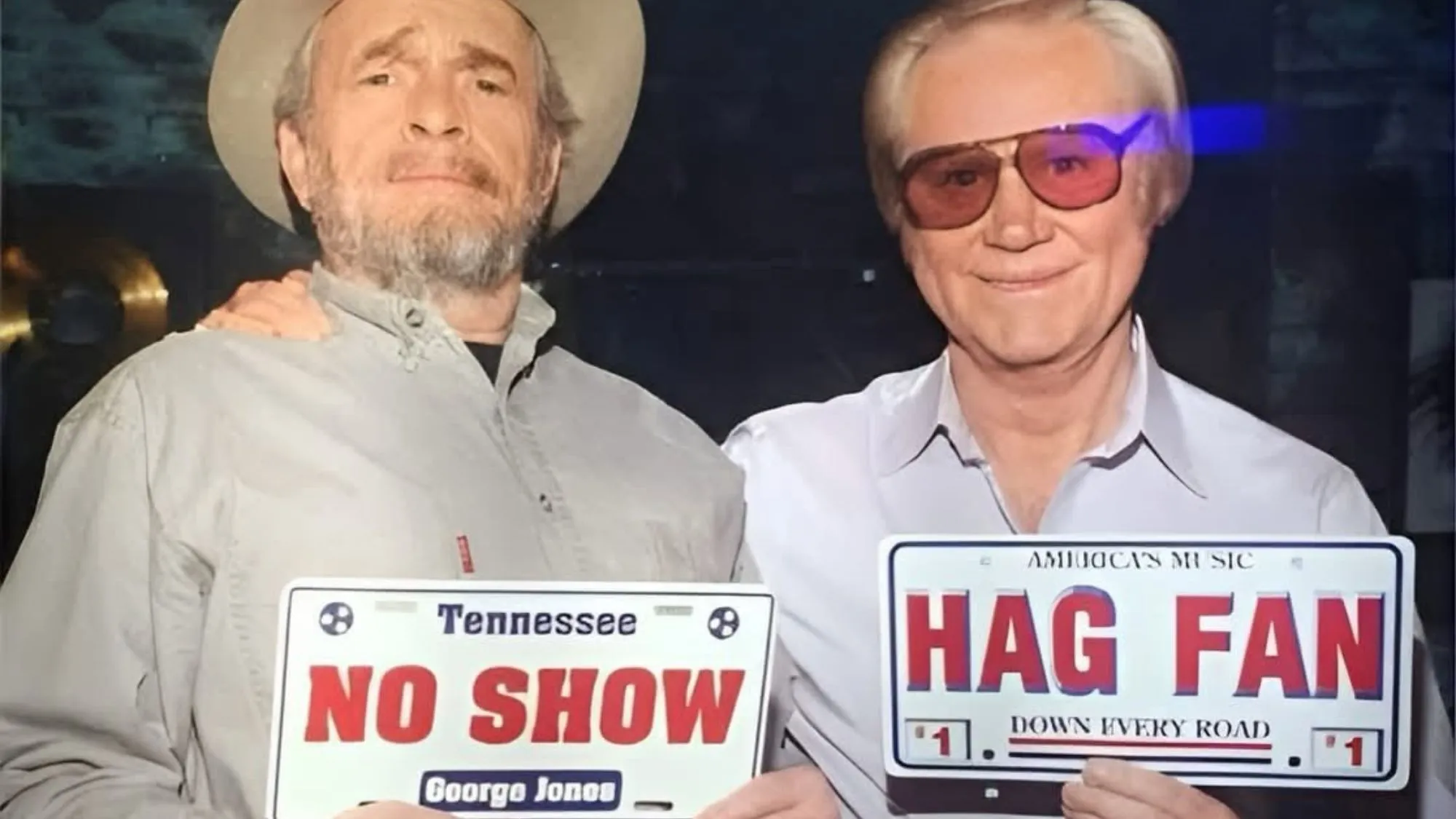
On August 7, 1982, the landscape of country music witnessed a historic convergence as two of the genre’s most formidable titans, George Jones and Merle Haggard, released their duet version of "Yesterday’s Wine." Originally penned and recorded by Willie Nelson in 1971, the song had languished in relative obscurity for over a decade, a casualty of a transitional period in Nelson’s career. However, the 1982 rendition by Jones and Haggard did more than just climb the charts; it served as a profound validation of Nelson’s songwriting genius and solidified the artistic bond between two men often cited as the greatest vocalists in the history of the medium. The success of the single, which reached the summit of the Billboard Hot Country Songs chart, marked a pivotal moment in the early 1980s country music scene, bridging the gap between the "Outlaw" movement and the traditionalist resurgence.
The Genesis of a Masterpiece: Willie Nelson’s 1971 Struggles
To understand the significance of the 1982 duet, one must first examine the fraught circumstances surrounding the song’s inception. In 1971, Willie Nelson was a man at a professional and personal crossroads. Despite having written massive hits for other artists—such as "Crazy" for Patsy Cline and "Hello Walls" for Faron Young—Nelson’s own recording career at RCA Records was foundering. The Nashville establishment, characterized by the polished, string-heavy "Nashville Sound," struggled to categorize Nelson’s idiosyncratic, jazz-influenced phrasing and stripped-down aesthetic.
In a fit of creative defiance, Nelson recorded Yesterday’s Wine, a concept album that followed the life of an "Imperfect Man" from birth to death. The title track, "Yesterday’s Wine," was the philosophical centerpiece of the record, a meditation on aging, mortality, and the fleeting nature of time. Nelson’s lyrics—"We’re yesterday’s wine / We’re aging with time"—offered a weary but resilient perspective on life’s hardships.
Despite its current status as a masterpiece, the album was a commercial failure upon its release in August 1971. The single "Yesterday’s Wine" peaked at a disappointing number 62 on the Billboard country survey. The lack of support from his label and the cold reception from radio programmers left Nelson disillusioned. Shortly after the album’s release, Nelson’s home in Tennessee burned down, an event he took as a divine signal to leave Nashville. He moved to Austin, Texas, entered a brief "retirement," and eventually emerged as the figurehead of the Outlaw Country movement at Atlantic and Columbia Records. It would take eleven years for the industry to catch up to the vision he laid out in 1971.
The Intersection of Two Legends: Jones and Haggard
By the early 1980s, George Jones and Merle Haggard were in vastly different places than Nelson had been in 1971. George Jones was experiencing a massive career Indian summer following the 1980 release of "He Stopped Loving Her Today," often cited as the greatest country song of all time. Merle Haggard, meanwhile, remained a consistent chart-topper and a symbol of blue-collar authenticity. Both men shared a deep reverence for traditional country music and a mutual admiration for each other’s craft.
The relationship between Jones and Haggard was rooted in a 1961 meeting at the Blackboard Café in Bakersfield, California. At the time, Haggard was a rising star in the Bakersfield scene, and Jones was already an established force. Haggard famously recalled Jones entering the venue while Haggard was performing Marty Robbins’ "Devil Woman." Jones, reportedly in a state of typical mid-career intoxication, was so struck by Haggard’s voice that he demanded to know the identity of the singer. This encounter began what Haggard described as a "love affair" based on professional respect.
In a 2013 essay for Rolling Stone, Haggard reflected on Jones’s impact: "It was one of the greatest compliments of my entire life when George Jones said I was his favorite country singer. We loved each other’s stuff so much." This mutual respect made a collaborative project inevitable, though it took over twenty years for their schedules and labels to align.
The 1982 Recording and Chart Performance
In 1982, under the production of the legendary Billy Sherrill, Jones and Haggard entered the studio to record A Taste of Yesterday’s Wine. Sherrill, known for his "Countrypolitan" production style, took a more measured approach with the two legends, allowing their voices to take center stage. Choosing Nelson’s "Yesterday’s Wine" as the lead single and title inspiration was a calculated move that paid off immensely.
The duet version of "Yesterday’s Wine" was released in August 1982, exactly eleven years after Nelson’s original. The chemistry between Jones and Haggard was palpable; Jones’s soulful, elastic baritone provided a perfect counterpoint to Haggard’s crisp, emotive delivery. The song resonated with a public that was beginning to embrace a more mature, reflective style of country music.
The statistical success of the single was immediate and sustained:
- Chart Duration: The song spent a total of 10 weeks on the Billboard Hot Country Songs chart.
- Peak Position: It reached number one, becoming one of the defining hits of 1982.
- Album Impact: The parent album, A Taste of Yesterday’s Wine, peaked at number 4 on the Billboard Top Country Albums chart, proving that the pairing of "The Possum" and "The Hag" was a commercial juggernaut.
Comparative Analysis: Nelson vs. Jones and Haggard
While Willie Nelson’s 1971 version was a solitary, almost haunting prayer, the Jones and Haggard version transformed the song into a shared anthem of survival. Nelson’s original featured a more prominent acoustic guitar and a conversational, weary vocal. In contrast, the 1982 duet utilized a fuller arrangement, typical of the early 80s production standards, which helped it find a home on mainstream country radio.
Musicologists have noted that the duet version benefited from the "biographical weight" both singers brought to the lyrics. By 1982, both Jones and Haggard had lived through highly publicized struggles with substance abuse, legal issues, and failed marriages. When they sang about being "yesterday’s wine," the audience understood that they weren’t just performing a song; they were narrating their own lives. This authenticity is what propelled the song to the top of the charts, providing a level of commercial vindication that Nelson’s avant-garde 1971 production had lacked.
The 2006 Reunion and Final Years
The success of their 1982 collaboration created a demand for a follow-up that would not be satisfied for nearly a quarter-century. In 2006, the duo reunited for Kickin’ Out the Footlights… Again. This project was unique in its structure; rather than a standard duet album, it featured each artist covering five of the other’s hits, followed by four new duets.
The title track of the 2006 album, "Footlights," originally a Haggard solo hit, served as a bookend to their collaborative journey. The lyrics, "After twenty years of picking, we’re / Still alive and kicking down the wall," reflected their enduring relevance in an industry that had shifted toward "New Country" and "Pop Country."
Kickin’ Out the Footlights… Again would serve as George Jones’s final studio album before his death on April 26, 2013. Haggard followed three years later, passing away on his 79th birthday, April 6, 2016. The work they produced together, anchored by the success of "Yesterday’s Wine," remains a cornerstone of the country music canon.
Broader Implications and Cultural Impact
The trajectory of "Yesterday’s Wine"—from a commercial failure in 1971 to a number-one hit in 1982—illustrates the cyclical nature of musical tastes and the importance of artist-led advocacy. Jones and Haggard’s decision to cover the song was a public endorsement of Willie Nelson’s songwriting at a time when Nelson was often viewed more as a cultural icon than a serious composer.
Furthermore, the collaboration set a precedent for the "supergroup" and "duet album" trends that would follow in the 1980s, including The Highwaymen (which featured Nelson, Johnny Cash, Waylon Jennings, and Kris Kristofferson). It demonstrated that veteran artists could maintain chart dominance by pooling their fan bases and leaning into their shared history.
Today, "Yesterday’s Wine" is regarded as a standard. It has been covered by numerous artists, including a notable 2009 version by Blackberry Smoke with George Jones, bringing the song to a Southern Rock audience. However, it is the 1982 version that remains the definitive recording for many fans. It stands as a testament to a time when country music was defined by the strength of its voices and the honesty of its stories. The song’s journey from a frustrated retirement catalyst for Nelson to a triumphant chart-topper for Jones and Haggard remains one of the most compelling narratives in the history of American music.
