

The decade of the 1990s is often characterized by the explosion of grunge and the commercial dominance of hip-hop, yet it also hosted a quiet, profound revolution within the folk and Americana genres. During this era, a group of disparate songwriters demonstrated that the most visceral and transformative poetic lines did not require ornate metaphors or complex structures. Instead, they tapped into a singular, minimalist power, pushing past the conventions of the time to create work that remains deeply profound decades later. By distilling human experience into simple, haunting phrases, artists like Neil Young, Lucinda Williams, and Elliott Smith redefined the boundaries of folk lyricism, proving that simplicity is often the most effective vehicle for revolutionary writing.
The Return of the Veteran: Neil Young and the Mature Romanticism of Harvest Moon
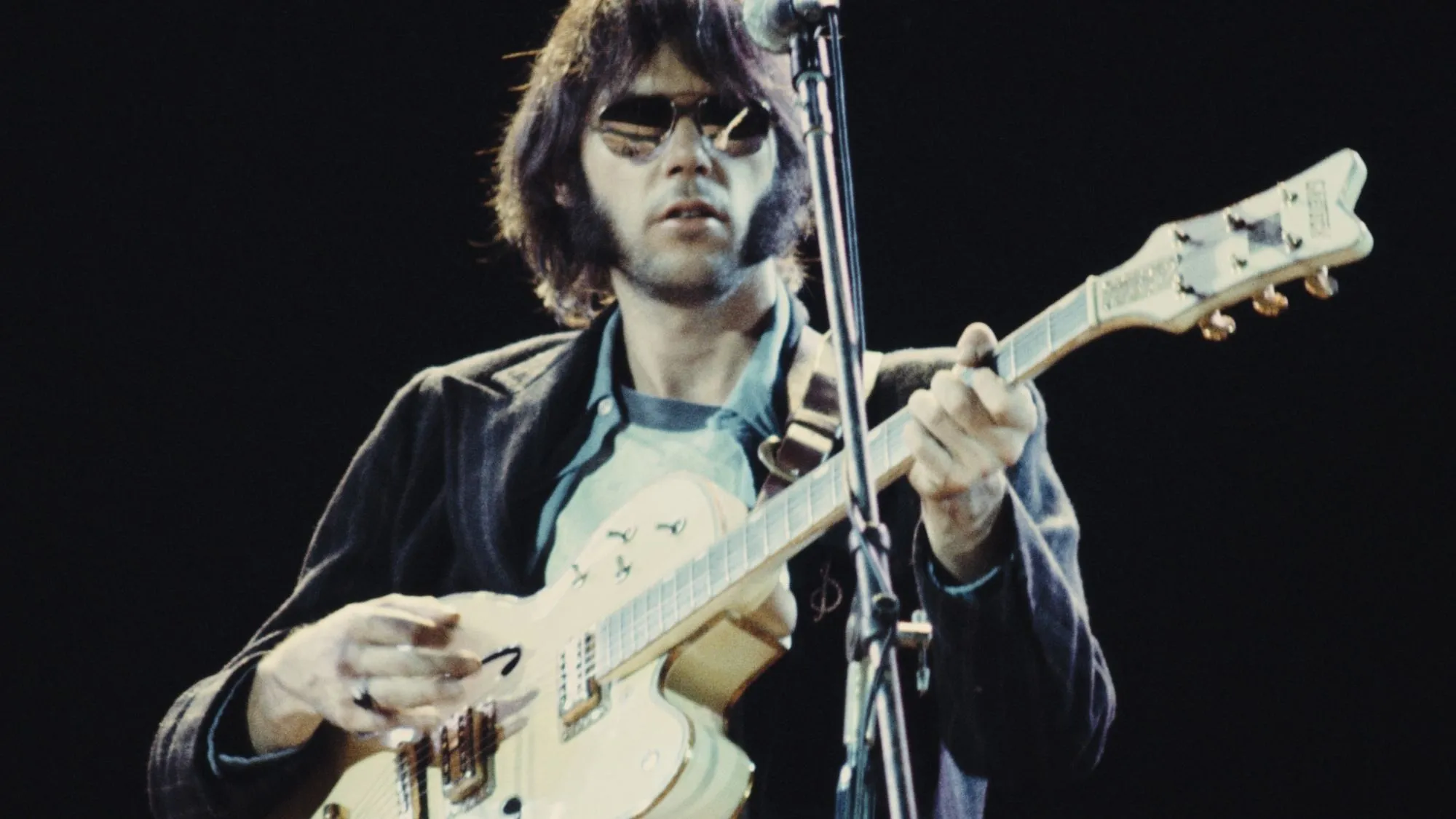
The early 1990s saw a significant resurgence for several artists who had defined the 1970s singer-songwriter movement. Among them, Neil Young achieved a rare feat: releasing an album that served as both a spiritual sequel to his most famous work and a standalone masterpiece of poetic restraint. Released on October 27, 1992, Harvest Moon arrived exactly twenty years after his seminal album Harvest. While the music industry was preoccupied with the loud, distorted sounds of Seattle, Young retreated to a softer, acoustic palette, utilizing the "Stray Gators" backing band to create a work of enduring intimacy.
The title track, "Harvest Moon," stands as a pinnacle of Young’s 1990s output. The lyrics are deceptively straightforward: “Because I’m still in love with you / I want to see you dance again / Because I’m still in love with you / On this harvest moon.” On paper, these lines might appear sentimental or even basic, but within the context of the song’s lulling, rhythmic arrangement, they carry a weight that younger artists often struggle to replicate.
Musicologists note that the power of these lyrics lies in their celebration of longevity rather than the fleeting passion of youth. By 1992, Young was writing from the perspective of a man who understood that the true revolution in love is its endurance. The simplicity of the phrase "I want to see you dance again" evokes a lifetime of shared history, suggesting that the most profound romantic gestures are those that acknowledge the passage of time. The album eventually reached double-platinum status in the United States and Canada, proving that there was a massive audience hungry for this brand of sophisticated, minimalist folk.
Lucinda Williams and the Precision of the Southern Vignette
While Neil Young was exploring the longevity of love, Lucinda Williams was perfecting a style of songwriting that functioned like high-level flash fiction. Her 1998 album, Car Wheels on a Gravel Road, is widely regarded as one of the greatest Americana records ever produced, but its road to completion was famously fraught. Williams spent six years recording and re-recording the tracks, obsessed with capturing the exact "grit" and atmosphere of the American South.
The title track serves as a masterclass in using simple, concrete imagery to evoke complex emotional states. Williams sings: “Pull the curtains back and look outside / Somebody, somewhere I don’t know / Come on now child, we’re gonna go for a ride / Car wheels on a gravel road.” These lines do not explicitly state the theme of the song—which deals with a rootless, perhaps unstable childhood—but they allow the listener to infer the tension through sensory details.
The repetition of the phrase “car wheels on a gravel road” acts as a rhythmic anchor, mimicking the sound of a vehicle in motion. Williams’ ability to pull together vignettes—a dusty suitcase, a set of keys, the look of a child in the backseat—creates a hazy, cinematic quality. Critics have frequently compared her writing to that of Southern Gothic authors like Flannery O’Connor or Eudora Welty. By avoiding flowery language and focusing on the mundane objects of a journey, Williams achieved a level of realism that was revolutionary for the folk-rock genre in the late 90s. The album earned Williams a Grammy Award for Best Contemporary Folk Album and solidified her reputation as a songwriter’s songwriter.
Elliott Smith and the Personification of Internal Struggle
In the Pacific Northwest, a different kind of folk revolution was taking place. Elliott Smith, moving away from the loud, aggressive sounds of his band Heatmiser, began recording intimate, lo-fi folk songs on four-track recorders. His 1997 album, Either/Or, became a landmark of the indie-folk movement, characterized by Smith’s "whisper-thin" vocals and intricate fingerstyle guitar work.
"Between the Bars," one of Smith’s most celebrated tracks, utilizes a simple lyrical conceit that is both beautiful and devastating. The song is written from the perspective of alcohol or addiction, addressing the person who is consuming it: “The promises you’ll only make / Drink up with me now / And forget all about the pressure of days / Do what I say and I’ll make you okay.”
The brilliance of Smith’s writing lies in the seductive, almost lullaby-like quality of the lyrics. He does not use the harsh language of a cautionary tale; instead, he uses the gentle, persuasive language of a friend or a lover. This subversion of the "addiction song" convention was revolutionary. It forced the listener to inhabit the headspace of the struggle, rather than merely observing it from the outside. Smith’s ability to turn the "pressure of days" into a visceral poetic concept through such sparse language highlighted his unique gift for capturing the human condition. Following the inclusion of his music in the film Good Will Hunting, Smith’s minimalist approach reached a global audience, culminating in an Academy Award nomination and a shift in how mainstream media perceived "sad" folk music.
A Chronology of the 1990s Folk Evolution
To understand the impact of these lyrics, it is necessary to view them within the chronological development of the decade’s musical landscape:
- 1990-1991: The "Unplugged" era begins. MTV Unplugged starts featuring artists like Paul McCartney and Bob Dylan, signaling a shift back toward acoustic, lyric-focused performances.
- 1992: Neil Young releases Harvest Moon. It marks a departure from the "Godfather of Grunge" persona he had adopted during his tours with Sonic Youth, re-establishing him as a folk icon.
- 1993-1995: The rise of "Lo-fi." Artists like Beck and Guided by Voices prove that high production values are not necessary for emotional impact, clearing a path for Elliott Smith.
- 1997: Elliott Smith releases Either/Or. The album’s success, coupled with the Good Will Hunting soundtrack, brings minimalist indie-folk into the cultural zeitgeist.
- 1998: After years of delays, Lucinda Williams releases Car Wheels on a Gravel Road. It becomes a commercial and critical juggernaut, defining the modern Americana sound.
- 1999: The decade closes with a fragmented but vibrant folk scene, where the "simple" writing styles of the mid-90s have become the new standard for authenticity.
Data and Analysis: The Commercial Viability of the Minimalist Lyric
While folk music is often viewed through an artistic rather than a commercial lens, the data from the 1990s suggests that this "simple" writing was highly lucrative. Neil Young’s Harvest Moon reached #16 on the Billboard 200, a significant achievement for an acoustic-focused album in the height of the alternative rock era. Lucinda Williams’ Car Wheels on a Gravel Road was her first album to be certified Gold by the RIAA, proving that her literary, detailed approach had broad appeal beyond critics.
Furthermore, the influence of these three artists can be traced through the "Americana" radio charts, which were formalized in the mid-1990s. The success of these lyrics helped create a market for artists like Gillian Welch, Wilco, and later, Iron & Wine and Bon Iver. The "revolutionary" nature of the writing was not just in its poetic quality, but in its ability to command market share without relying on the bombastic production trends of the 1990s, such as the heavy use of synthesizers or gated-reverb drums.
Broader Impact and Implications for Modern Songwriting
The legacy of these 1990s folk lyrics continues to shape the contemporary music landscape. In an era where digital production allows for infinite layers of sound, many modern artists are looking back to the "revolutionary simplicity" of the 90s as a blueprint for authenticity.
The implications of this shift are visible in the rise of the "bedroom pop" and modern "indie-folk" movements. Artists like Phoebe Bridgers, Adrianne Lenker of Big Thief, and Jason Isbell frequently cite Smith, Williams, and Young as primary influences. They mirror the 90s approach of using specific, concrete imagery—the "gravel road" or the "harvest moon"—to ground their songs in a recognizable reality.
Furthermore, the 1990s proved that folk music could be "revolutionary" without being explicitly political in the 1960s sense. While the folk songs of the 60s often looked outward at society, the folk songs of the 90s looked inward at the psyche. The revolution was one of emotional transparency. By stripping away the artifice of complex metaphors, these songwriters made the internal experience universal. They proved that a simple phrase, delivered with conviction and framed by a singular musical vision, could hit harder than the most complex poetic epic. As these artists have aged, the lines they wrote in the 90s have only gained resonance, serving as a testament to the power of writing that is both simple enough to be understood and profound enough to be transformative.
