

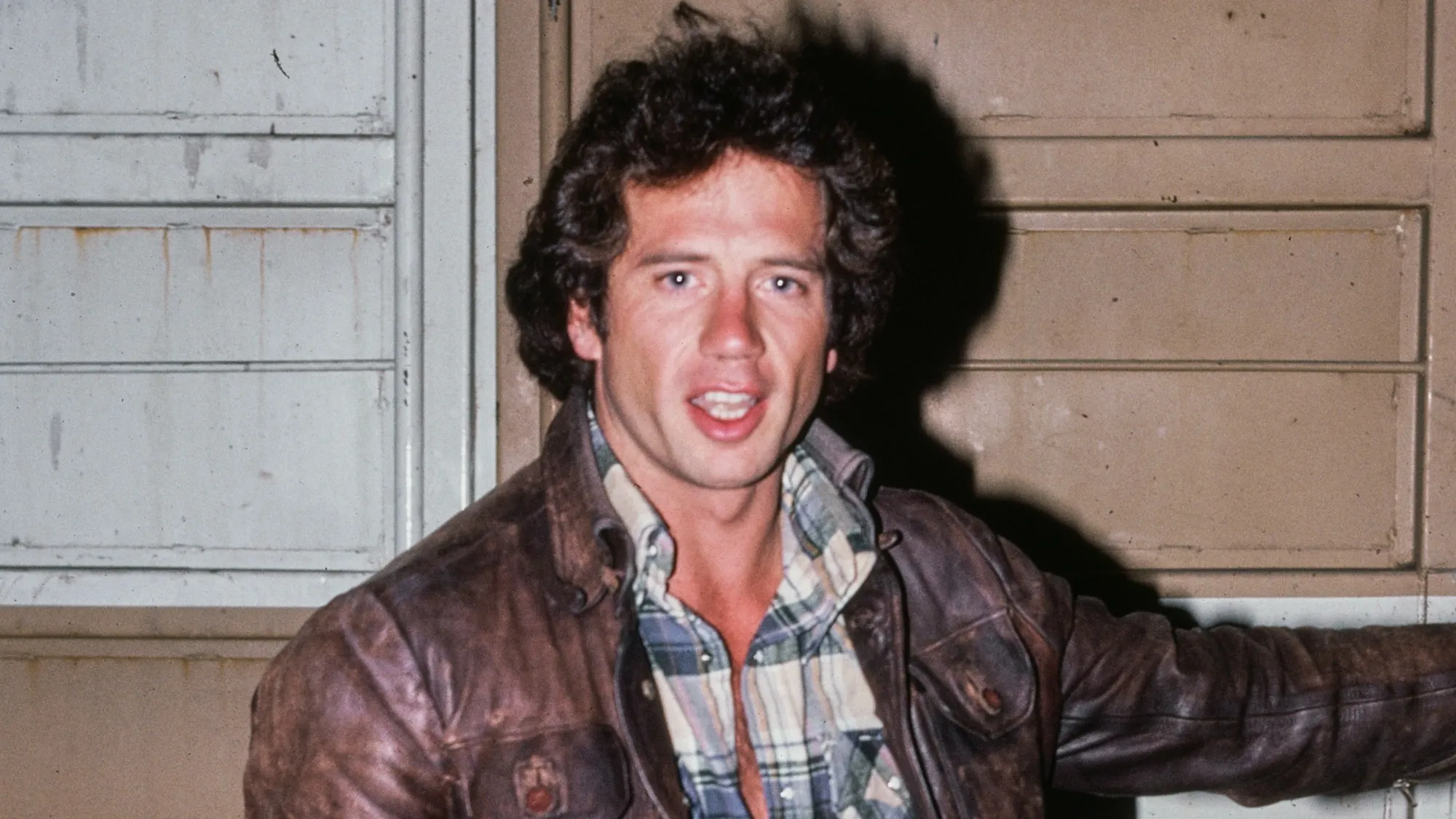
The trajectory of American entertainment in the latter half of the 20th century is often defined by performers who successfully bridged the gap between the populist appeal of television and the rigorous demands of the performing arts. Among these figures, Tom Wopat stands as a quintessential example of versatility, having navigated a career that spans over five decades across television, film, the Broadway stage, and the music industry. Born on September 9, 1951, in Lodi, Wisconsin, Wopat’s journey from a Midwestern dairy farm to international stardom provides a comprehensive look at the evolution of the modern American entertainer. As he celebrates another year of a prolific career, an examination of his contributions reveals a performer who consistently defied typecasting, moving seamlessly from the driver’s seat of the General Lee to the spotlight of the Great White Way.
Early Life and the Foundations of a Performer
Tom Wopat was raised on a dairy farm in Lodi, Wisconsin, one of eight children. This rural upbringing provided a grounded perspective that would later inform his portrayal of salt-of-the-earth characters. However, his interests early on veered toward the arts. While his physical presence suggested an athletic or outdoor-oriented future, his vocal talent and affinity for storytelling led him to the University of Wisconsin–Madison.
It was during his collegiate years that Wopat’s potential as a professional performer began to crystallize. His participation in the university’s production of West Side Story served as a pivotal moment. The discipline required for musical theater, combined with the immediate gratification of live performance, set him on a path toward New York City. Unlike many of his contemporaries who sought fame through the Hollywood system, Wopat’s initial focus was the stage. In 1977, he made his Broadway debut in the musical I Love My Wife, directed by Gene Saks. This early success in the New York theater scene established his credentials as a legitimate triple-threat—an actor who could sing and move with professional precision—well before he became a household name on television.
The Cultural Phenomenon of The Dukes of Hazzard
In 1979, Wopat’s career underwent a seismic shift when he was cast as Luke Duke in the CBS action-comedy series The Dukes of Hazzard. Starring alongside John Schneider, who played Bo Duke, Wopat became an overnight sensation. The show, which followed the adventures of two cousins in the fictional Hazzard County, Georgia, became a ratings juggernaut. At its peak, it was one of the most-watched programs on American television, frequently ranking in the top ten of the Nielsen ratings.
Wopat’s portrayal of Luke Duke—the older, more level-headed of the two cousins—anchored the show’s high-octane stunts and slapstick humor with a sense of reliable charm. The series was more than just a television show; it was a cultural phenomenon that spawned a massive merchandising empire, including toys, clothing, and lunchboxes. However, the success of the show also presented a challenge for Wopat. The "TV star" label often came with the risk of being typecast, a hurdle he would spend the subsequent decades overcoming through a deliberate diversification of his portfolio.
During the height of the show’s popularity, a notable event occurred in 1982 when Wopat and Schneider engaged in a high-profile contract dispute with Warner Bros. Television. Seeking a share of the show’s merchandising royalties, the duo walked off the set and were briefly replaced by Byron Cherry and Christopher Mayer. The ratings dip during their absence underscored the importance of the original cast’s chemistry, and Wopat and Schneider eventually returned to the series, remaining until its conclusion in 1985.
Reclaiming the Stage A Distinguished Broadway Career
Following the conclusion of The Dukes of Hazzard, Wopat made a calculated return to his first love: the theater. While many television actors struggled to find work after their hit series ended, Wopat leveraged his fame to secure roles that showcased his range. His return to Broadway was not merely a celebrity cameo; he earned the respect of the theater community through a series of demanding roles in both revivals and original productions.
One of the highlights of his stage career came in 1999, when he starred as Frank Butler in the revival of Annie Get Your Gun opposite Bernadette Peters. His performance earned him his first Tony Award nomination for Best Actor in a Musical. Wopat has frequently cited this production as a high-water mark of his career, noting the "indescribable" talent of Peters and the enduring quality of the Irving Berlin score.
In 2008, Wopat received a second Tony Award nomination for his role as Tom Grady in A Catered Affair. This role was a significant departure from his previous musical work, requiring a more nuanced, dramatic approach. His ability to hold the stage in a serious drama further solidified his reputation as a versatile actor. Other notable Broadway credits include City of Angels, Guys and Dolls, Chicago (as Billy Flynn), 42nd Street, and Catch Me If You Can. His stage work is characterized by a robust baritone voice and a commanding physical presence, qualities that have made him a staple of the New York theater scene for over forty years.
Musical Evolution and Chart Success
Parallel to his acting career, Tom Wopat developed a significant presence in the music industry. His recording career began in earnest in 1981, when he contributed to the soundtrack of The Dukes of Hazzard. This initial foray into country music led to a recording contract with Columbia Records.
In 1983, he released his self-titled debut album, which signaled his intent to be taken seriously as a recording artist. His musical style in the 1980s was firmly rooted in the country-pop genre that was prevalent at the time. He achieved significant commercial success with his 1986 album A Little Bit Closer. The lead single, "True Love (Never Did Run Smooth)," reached No. 37 on the Billboard Hot Country Songs chart. The album’s title track, "A Little Bit Closer," became his highest-charting hit, peaking at No. 18 in 1988.
As his career progressed, Wopat’s musical interests expanded beyond country. He began exploring the Great American Songbook, recording several albums of jazz and standards. This transition demonstrated his vocal maturity and his ability to interpret complex lyrical material. To date, he has released 12 studio albums, including a collaborative holiday project, Home for Christmas, with his former co-star and lifelong friend John Schneider. His discography serves as a map of his artistic journey, moving from the commercial country sounds of the 80s to the sophisticated jazz arrangements of his later years.
Filmography and Television Beyond Hazzard County
While The Dukes of Hazzard remains his most famous television credit, Wopat’s screen career is extensive. In the 1990s, he enjoyed a recurring role on the hit sitcom Cybill, playing Jeff Robbins, the first husband of Cybill Shepherd’s character. This role allowed him to showcase his comedic timing and introduced him to a new generation of viewers.
His film career includes a notable appearance in Quentin Tarantino’s 2012 Western Django Unchained, where he played U.S. Marshal Gill Tatum. Working with a director of Tarantino’s caliber reaffirmed Wopat’s status as a respected character actor in Hollywood. Other film credits include Main Street, The Understudy, and Taking Chance. On television, he has made guest appearances in critically acclaimed series such as Blue Bloods, Longmire, and The Blacklist, consistently finding work in procedural dramas that value his authoritative yet approachable screen presence.
Chronology of a Multi-Decade Career
To understand the scope of Wopat’s impact, it is helpful to view his career through a chronological lens:
- 1951: Born September 9 in Lodi, Wisconsin.
- Mid-1970s: Studies at the University of Wisconsin–Madison and begins performing in regional theater.
- 1977: Broadway debut in I Love My Wife.
- 1979–1985: Stars as Luke Duke in The Dukes of Hazzard on CBS.
- 1981: Contributes to The Dukes of Hazzard soundtrack, launching his recording career.
- 1983: Releases self-titled debut album on Columbia Records.
- 1986–1988: Achieves peak country music success with hits "True Love" and "A Little Bit Closer."
- 1995–1998: Plays Jeff Robbins on the sitcom Cybill.
- 1999: Receives Tony Award nomination for Annie Get Your Gun.
- 2005: Stars in the Broadway revival of Glengarry Glen Ross.
- 2008: Receives second Tony Award nomination for A Catered Affair.
- 2012: Appears in Quentin Tarantino’s Django Unchained.
- 2014: Releases Home for Christmas with John Schneider.
- Present: Continues to tour as a musical performer and take roles in independent film and television.
Analysis of Professional Impact and Industry Legacy
Tom Wopat’s career offers a compelling case study in the longevity of the American entertainer. In an industry that often pigeonholes actors based on their most famous roles, Wopat successfully transitioned from a teen idol/action star to a respected stage veteran. This transition was not accidental; it was the result of a consistent commitment to craft and a refusal to rely solely on the "Luke Duke" persona.
His success on Broadway is particularly significant. The theater world is often skeptical of television stars attempting to "cross over," yet Wopat’s two Tony nominations and his frequent casting in major revivals suggest a level of skill that transcends celebrity. He is often cited by directors and peers as a "consummate professional," a term that reflects his discipline and technical proficiency in singing and acting.
Furthermore, his musical output reflects a rare versatility. Moving from the country charts of the 1980s to jazz clubs in the 2000s requires more than just a good voice; it requires a deep understanding of different musical languages. By successfully navigating these shifts, Wopat has maintained a steady career even as the media landscape changed around him.
Current Activities and Continued Relevance
Today, Tom Wopat remains an active figure in the entertainment industry. He continues to perform live, often appearing in cabaret settings or as a guest soloist with symphony orchestras. His tour schedule remains active, reflecting a dedicated fan base that spans multiple generations—from those who grew up watching him jump the General Lee to those who discovered his work on the Broadway stage.
In interviews, Wopat often reflects on his career with a sense of pragmatism and gratitude. He remains close with John Schneider, and their enduring partnership remains a point of interest for fans of The Dukes of Hazzard. However, he is equally focused on the future, continuing to seek out scripts and musical projects that challenge him.
As he marks another year, the legacy of Tom Wopat is defined by more than just a single role or a single hit song. It is defined by a half-century of continuous work, a commitment to the performing arts, and the ability to adapt to the changing tastes of the American public. From the rural landscapes of Wisconsin to the high-stakes world of New York theater, Wopat has carved out a unique space in the cultural fabric, proving that versatility and hard work are the ultimate keys to a lasting career in the spotlight.
