

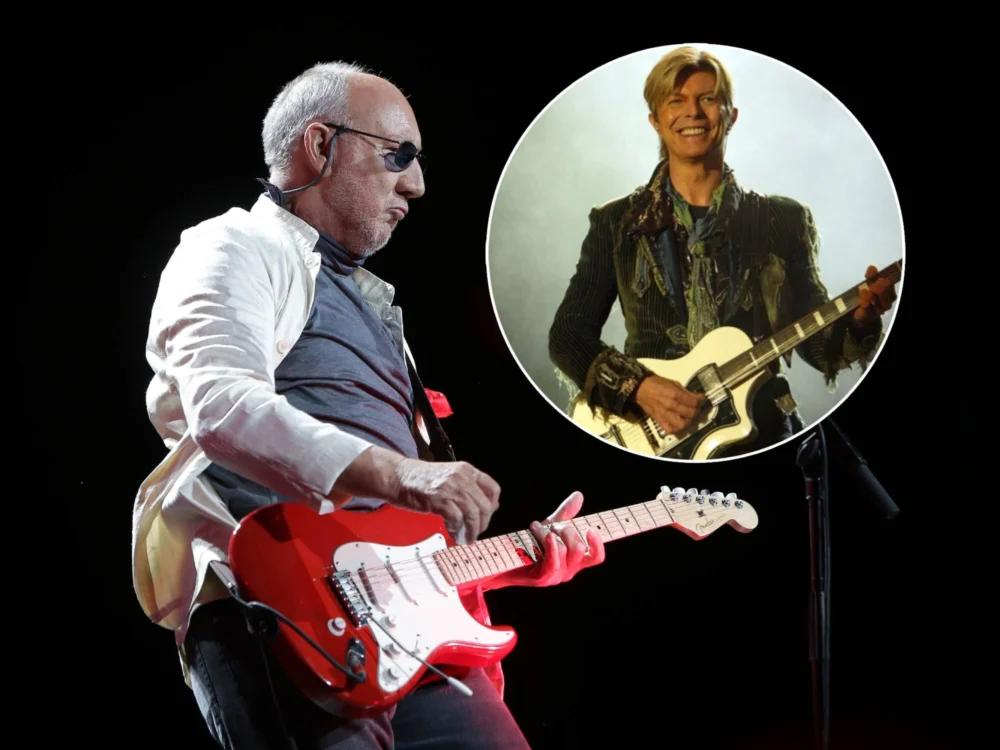
In a recent interview with Spin, legendary producer Tony Visconti has peeled back the curtain on the making of David Bowie’s 2002 album, Heathen, sharing candid anecdotes that illuminate the creative process and the contributions of iconic guest musicians. Among the revelations are a vivid description of Pete Townshend’s raw, one-take guitar performance that left his fingers bleeding, and details regarding Dave Grohl’s remote recording session, accompanied by an unexpectedly high invoice. These insights from Visconti offer a rare glimpse into the collaborative spirit and meticulous artistry that defined one of Bowie’s significant late-career works, marking his first full-album partnership with Visconti in over two decades.
A Renewed Partnership: Bowie and Visconti’s Creative Dynamic
The journey to Heathen was particularly significant for Tony Visconti and David Bowie, representing a powerful reunion after a substantial hiatus. Their creative partnership, one of the most celebrated in rock history, began in the late 1960s and was instrumental in shaping some of Bowie’s most groundbreaking albums. Visconti’s production fingerprints are evident across seminal works such as Space Oddity (1969), The Man Who Sold the World (1970), Young Americans (1975), and the entire "Berlin Trilogy"—Low (1977), ‘Heroes’ (1977), and Lodger (1979). Their last full-album collaboration prior to Heathen was the critically acclaimed Scary Monsters (and Super Creeps) in 1980, an album often cited as a culmination of Bowie’s experimental 1970s output before his more commercially oriented ventures in the 1980s.
The 22-year gap between Scary Monsters and Heathen saw Bowie explore various musical directions, from the massive global success of Let’s Dance (1983) to more experimental projects and the industrial rock of Tin Machine. However, by the late 1990s and early 2000s, Bowie seemed to be re-evaluating his artistic trajectory, moving away from some of the more electronic and avant-garde explorations of albums like Outside and Earthling. The return to working with Visconti signaled a desire for a sound that was both classic and contemporary, rooted in the rich textures and sophisticated arrangements that had defined their earlier collaborations.
Visconti fondly recalled the unique synergy he shared with Bowie in the studio, a dynamic he characterized as a "two-man band." "As for working side-by-side in the studio, we both played many instruments, and I was singing backing vocals with him since the earliest albums," Visconti stated, emphasizing the deeply intertwined nature of their roles. He further explained Bowie’s characteristic impatience, a trait that often led them to handle instrumental duties themselves rather than waiting for external session musicians. "If we wanted a guitar part, we didn’t want to phone for a player and wait until that guitarist was free. David and I shared guitar duties frequently. We were a two-man band." This approach underscored Bowie’s desire for immediacy and control over his artistic vision, a trait Visconti understood and facilitated expertly. Their ability to switch roles, contribute multi-instrumentally, and provide backing vocals created a highly efficient and intensely personal creative environment.
The Genesis of Heathen (2002): A Post-9/11 Reflection
Released on June 11, 2002, Heathen emerged into a world still grappling with the profound impact of the September 11, 2001 attacks. While not explicitly a "9/11 album," its themes of alienation, spirituality, mortality, and a yearning for connection resonated deeply with the collective consciousness of the time. Bowie himself acknowledged the album’s subconscious reflection of the anxieties permeating New York City, where much of the album was conceived and recorded. He spoke of the "sense of loss" and the "feeling of dread" that informed the music, even if not directly referenced in the lyrics.
Heathen was recorded primarily at Philip Glass’s Looking Glass Studios in New York City, a space known for its inspiring atmosphere and high-quality acoustics. The album marked a distinct shift from Bowie’s preceding works, offering a more introspective and melodically rich sound. Critics generally lauded Heathen as a return to form for Bowie, praising its maturity, lyrical depth, and strong musical performances. It achieved moderate commercial success, peaking at number 14 on the UK Albums Chart and number 14 on the US Billboard 200, solidifying its place as a significant entry in Bowie’s extensive discography and signaling a late-career resurgence that would continue with Reality (2003) and culminate in The Next Day (2013) and Blackstar (2016).
The album featured a mix of original compositions and covers, including Neil Young’s "I’ve Been Waiting for You," Pixies’ "Cactus," and the Legendary Stardust Cowboy’s "I Took a Trip on a Gemini Spaceship." The originals, such as "Slow Burn," "Sunday," and "A Better Future," showcased Bowie’s enduring songwriting prowess, combining his signature enigmatic lyricism with lush instrumentation.
Pete Townshend’s Incendiary Cameo: The "Windmill Chords" in One Take
One of the most captivating stories shared by Visconti concerns the impromptu contribution of The Who’s legendary guitarist, Pete Townshend. Townshend, a contemporary and peer of Bowie, visited Looking Glass Studios during the Heathen sessions, leading to an unexpected and memorable recording session.
Pete Townshend’s career with The Who began in the mid-1960s, and he quickly established himself as one of rock’s most innovative and dynamic guitarists. His signature "windmill" strumming technique, often accompanied by feedback and power chords, became a hallmark of The Who’s explosive live performances and studio recordings. His contributions to albums like Tommy, Who’s Next, and Quadrophenia solidified his reputation as a master of both songwriting and guitar pyrotechnics. His presence in the studio with Bowie, two titans of British rock, was a moment laden with historical weight.
Visconti recounted the casual beginning of Townshend’s involvement: "Townshend dropped in for a visit when we were recording in Philip Glass’s studio, Looking Glass. They had a long chat, and I could see camaraderie between old friends." This initial social call quickly evolved into a creative opportunity. "David asked him to play," Visconti explained. However, Bowie and Visconti, seeking to capture Townshend’s quintessential aggressive style, pushed him further. "He did, but we asked him to play a bit more aggressively, and he said, ‘Oh, do you mean Townshend Windmill Chords?’"
What followed was a moment of pure rock legend. Townshend, understanding exactly what was required, unleashed his characteristic ferocity. "He nailed it in one take. Two of his right-hand fingers were bleeding afterwards," Visconti revealed. This detail vividly illustrates the physical intensity Townshend brought to his playing, even in a casual studio setting. While Visconti’s account doesn’t explicitly name the track Townshend played on, it is widely believed and commonly referenced that his contribution was to "Slow Burn," the album’s opening track. The raw, driving guitar riffs on "Slow Burn" certainly bear the hallmarks of Townshend’s aggressive, textured style, perfectly complementing Bowie’s vocals and the song’s brooding atmosphere. This impromptu collaboration not only added an authentic layer of rock history to Heathen but also showcased the mutual respect and effortless synergy between two of music’s most influential figures.
Dave Grohl’s Remote Contribution and the "$10,000 Question"
Another notable, albeit more logistically complex, collaboration on Heathen involved Foo Fighters frontman and former Nirvana drummer, Dave Grohl. By 2002, Grohl had firmly established himself as a multi-talented rock icon, transitioning from his pivotal role in Nirvana to fronting the hugely successful Foo Fighters. His reputation as a powerhouse drummer and a charismatic songwriter and guitarist made him a highly sought-after collaborator.
Grohl’s contribution to Heathen was on Bowie’s cover of Neil Young’s "I’ve Been Waiting for You." Visconti detailed the remote nature of the session, a common practice today but perhaps less ubiquitous in 2002. "The Grohl story is interesting," Visconti began. "He played acoustic guitar, remotely from California, and sent us a file." This method allowed Bowie to tap into Grohl’s talent without requiring his physical presence in the New York studio. However, Visconti’s anecdote also revealed a preference that couldn’t be fulfilled: "His drumming would’ve been better, but that didn’t happen." This implies that while Grohl’s guitar work was appreciated, Bowie or Visconti might have initially hoped for his drumming prowess, which had been a cornerstone of his career.
The most striking detail of Grohl’s involvement, however, revolved around the financial aspect. "Afterwards he sent David an invoice for $10,000," Visconti disclosed. The producer’s reaction was one of disbelief: "Sure, he was on top of his game, but that was ludicrous." This hefty fee for a remote acoustic guitar part, even from a musician of Grohl’s stature, struck Visconti as excessive. He concluded with a lingering question: "I don’t know if David actually paid him that much."
This revelation offers a fascinating glimpse into the economics of celebrity musician cameos in the early 2000s. While session musician fees can vary widely based on experience, reputation, and the nature of the contribution, a $10,000 charge for a single remote acoustic guitar track would indeed be considered substantial, particularly when compared to standard union rates or even fees for many accomplished session players. It speaks to the perceived market value of a name like Dave Grohl and the potential premium attached to his involvement, regardless of the time commitment or complexity of the task. Whether Bowie ultimately paid the full amount remains an intriguing mystery, but the anecdote underscores the often-negotiated value of star power in the music industry.
The Broader Legacy of Heathen
Heathen holds a significant place in David Bowie’s vast discography. It marked a period of artistic revitalization for the artist, demonstrating his enduring ability to create relevant and compelling music well into his fifth decade as a performer. The album’s themes and sonic landscape provided a thoughtful counterpoint to the prevailing anxieties of the early 21st century, showcasing Bowie’s perennial role as a cultural commentator.
The behind-the-scenes stories shared by Tony Visconti do more than just provide interesting trivia; they enrich our understanding of Bowie’s creative process, his collaborative spirit, and the dynamics within a professional recording environment. Visconti’s role as a meticulous producer and a close confidant offers unparalleled access to the intricacies of Bowie’s artistry. His accounts highlight Bowie’s trust in his collaborators, his pursuit of specific sonic textures, and his willingness to embrace both planned and serendipitous contributions from other musical luminaries.
The collaboration with Pete Townshend underscored the respect and camaraderie among rock’s elder statesmen, demonstrating how even a casual visit could ignite a powerful creative spark. Townshend’s visceral performance on "Slow Burn" (as widely believed) infused the track with an undeniable authenticity and raw energy, cementing its status as a standout on the album.
Conversely, the story of Dave Grohl’s remote contribution, particularly the discussion surrounding his fee, provides a candid look at the commercial realities that sometimes intersect with artistic endeavors. It highlights the premium placed on star power and the logistical shifts in music production brought about by evolving technology. Despite the financial query, Grohl’s acoustic guitar work on "I’ve Been Waiting for You" contributed to the album’s diverse sonic palette, blending seamlessly into Bowie’s interpretation of Neil Young’s classic.
In conclusion, Tony Visconti’s recent revelations offer invaluable insights into the making of Heathen, an album that stands as a testament to David Bowie’s enduring artistic vision. These anecdotes, chronicling spontaneous collaborations and the practicalities of professional recording, further cement the album’s place not just as a significant work in Bowie’s canon, but also as a fascinating chapter in the broader narrative of modern rock history. Visconti continues to serve as an indispensable chronicler of Bowie’s creative life, ensuring that these rich stories endure, adding depth and color to the legend of one of music’s most iconic figures.
