

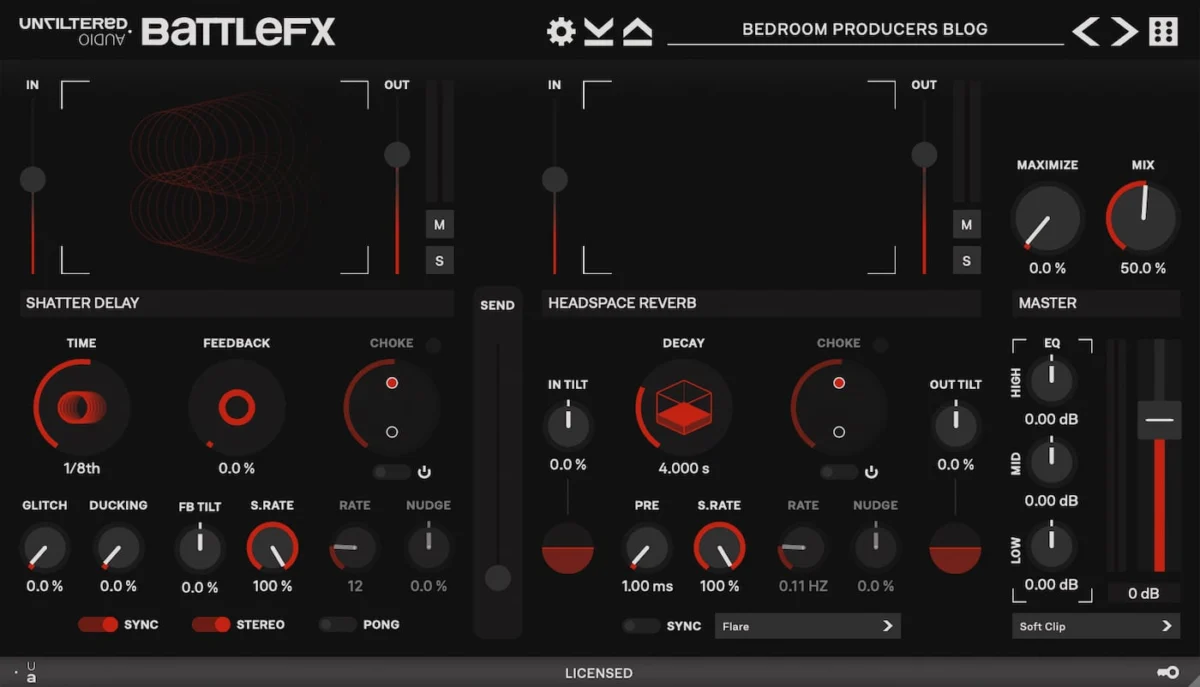
Unfiltered Audio, a developer renowned for its innovative audio processing tools, has officially released BattleFX, a new multi-effect plugin now available to music producers and sound designers at no cost. This standalone plugin integrates and enhances two highly acclaimed effects previously exclusive to Unfiltered Audio’s popular Battalion drum synthesizer and SILO granulator: the Shatter Delay and Headspace Reverb. The release marks a significant move in the digital audio workstation (DAW) plugin market, providing professional-grade sound design capabilities to a broader audience.
The introduction of BattleFX is particularly noteworthy for its strategic positioning within the competitive landscape of free VST plugins. By extracting and refining key components from its established commercial products, Unfiltered Audio is not only democratizing access to its advanced algorithms but also showcasing its core technology to potential new users. The plugin is designed to be a versatile tool, capable of transforming any audio track with its comprehensive suite of delay, reverb, and master effects, all wrapped in a visually appealing and highly customizable interface.
Core Components: The Genesis of BattleFX
BattleFX is built around two primary effect modules: the Headspace Reverb and the Shatter Delay. Both modules have a lineage tracing back to Unfiltered Audio’s existing product line, signifying a deliberate strategy to make these powerful tools more accessible.
The Headspace Reverb module is an evolved version of the reverb engine originally featured in the SILO granulator, a plugin celebrated for its unique textural capabilities. In BattleFX, Headspace Reverb comes equipped with ten distinct modes, each engineered to offer a unique sonic character rather than mere subtle variations. These modes include ‘Dark,’ ‘Rusty,’ ‘Saturated,’ ‘Glitter,’ ‘Crayon,’ ‘Bokeh,’ ‘Flare,’ ‘Flutter,’ ‘Hollow,’ and ‘Austere.’ Each mode provides a fundamentally different algorithmic approach to reverberation, allowing for a vast spectrum of spatial and atmospheric effects, from dense, decaying tails to shimmering, ethereal washes. For instance, ‘Dark’ might emphasize low-frequency resonance for moody soundscapes, while ‘Glitter’ could introduce high-frequency harmonics and modulation for sparkling textures.
Beyond its diverse modes, the Headspace Reverb offers granular control over its parameters. Users can shape the reverb’s tonal qualities with input and output tilt EQs, ensuring the effect blends seamlessly with the source material. Syncable pre-delay and decay controls allow for precise rhythmic integration or expansive, drawn-out atmospheres. A distinctive sample-rate control enables degradation of the reverb’s fidelity, pulling the sound into more lo-fi or "gnarly" territories as the rate is reduced. This feature is particularly valuable for experimental sound design, offering a unique avenue for sonic transformation. The inclusion of such a robust and versatile reverb, often considered a premium feature in paid plugins, immediately positions BattleFX as a significant offering in the free plugin ecosystem.
The Shatter Delay, on the other hand, is a creative granular delay engine derived from the send effects section of Unfiltered Audio’s Battalion drum synthesizer. Battalion is known for its innovative approach to drum synthesis and sound manipulation, and the Shatter Delay brings that same spirit of creativity to a standalone effect. What sets Shatter Delay apart is its granular buffer, meticulously designed to prevent unwanted pitch artifacts even when delay times are rapidly modulated or changed. This ensures a cleaner, more musical response, making it suitable for both subtle rhythmic echoes and extreme sound fragmentation.
Key controls within the Shatter Delay include comprehensive feedback options, complemented by a feedback tilt filter for sculpting the timbre of the repeats. A ‘choke’ function allows for dynamic control over the delay tail, cutting off repeats for sharper, more percussive effects. The ‘Glitch’ control introduces smooth Brownian motion to the delay time, generating organic and unpredictable rhythmic variations. For stereo enhancement, a ‘Stereo’ mode processes the glitch effect independently on the left and right channels, creating wider and more immersive soundscapes. Like the Headspace Reverb, Shatter Delay also features a sample-rate destruction control, enabling users to introduce digital artifacts and lo-fi textures to the delay repeats. Further enhancing its versatility are a ‘Pong’ mode for classic ping-pong stereo delays and a ducking function on the output, which dynamically reduces the delay volume when the input signal is present, ensuring clarity in the mix.
Advanced Interactivity and Master Processing
BattleFX distinguishes itself further with an innovative automatic choke system that operates across both the delay and reverb buffers. This system automatically chops the effect buffers at repeating intervals, governed by a Euclidean pattern knob. This allows for complex, rhythmic gating and stutter effects that can be either free-running or tempo-synced to the host DAW. The system also includes a "nudge" function, allowing the pattern to be shifted slightly off the beat in either direction. This seemingly subtle control is crucial for injecting a sense of organic groove and human feel into otherwise rigid patterns, particularly effective for creating dynamic ducking patterns when combined with the ‘Maximize’ knob on noisy input material. The Euclidean pattern generator, a concept rooted in ancient Greek mathematics, is increasingly popular in modern music production for its ability to create complex yet musically coherent rhythmic sequences with minimal effort.
The master section of BattleFX consolidates essential sound-shaping tools, borrowing the ‘Maximize’ and EQ functions directly from Battalion’s master output. The ‘Maximize’ control acts as a sophisticated limiter, allowing users to push the overall loudness of the processed signal without introducing harsh clipping. The integrated EQ offers broad tonal adjustments to the combined output of both effects. Additionally, the master section introduces a multi-mode distortion unit, offering ‘soft clip,’ ‘hard clip,’ and ‘wave fold’ algorithms. These options provide a spectrum of saturation and distortion effects, from subtle warmth and grit to aggressive, waveform-mangling textures. Dedicated Solo/Mute buttons for each effect block (Shatter Delay and Headspace Reverb) facilitate focused sound design and A/B comparison, enhancing workflow efficiency.
Interface Design and User Experience
A key factor contributing to BattleFX’s immediate appeal is its meticulously designed user interface. The original review highlighted its "top-notch," "super clean, super crisp" aesthetic, a sentiment widely echoed by early adopters. Unfiltered Audio has clearly prioritized visual clarity and intuitive interaction, ensuring that the plugin is not only powerful but also enjoyable to use. The interface avoids clutter, presenting controls logically and accessibly, which is crucial for complex multi-effect units.
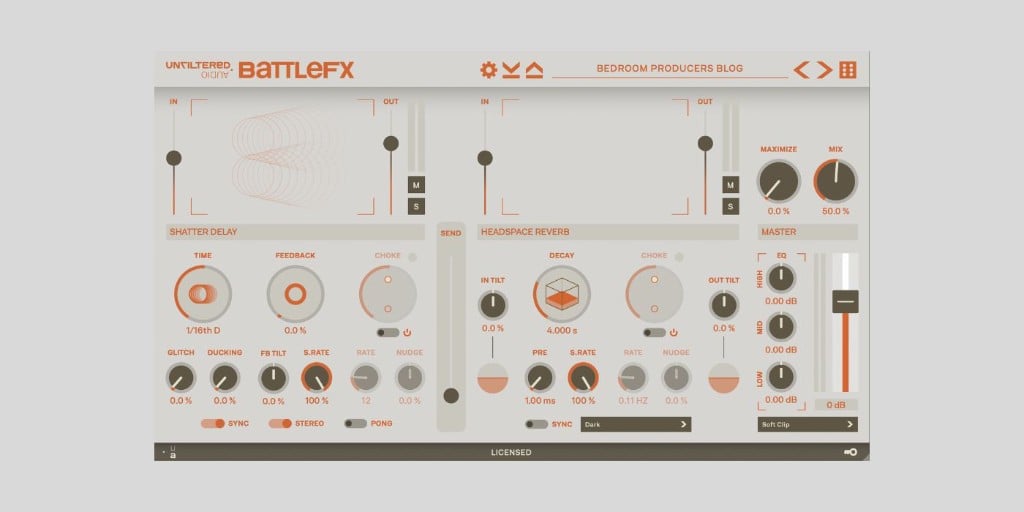
A notable feature is the extensive customization options for the visual theme. Users can choose from a variety of color schemes, including light and dark modes, with or without accent colors. For those who enjoy spontaneity, a randomize theme function allows for quick aesthetic changes. This level of customization not only caters to individual preferences but also contributes to a more personalized and engaging user experience, potentially reducing visual fatigue during long sound design sessions. A well-designed interface can significantly lower the barrier to entry for new users and accelerate the learning curve, making advanced features feel more approachable.
Acquisition and Installation Process
While the core functionality and design of BattleFX have received widespread acclaim, the download and activation process presents a minor, albeit easily surmountable, hurdle. Unlike some free plugins that offer direct downloads, BattleFX requires a brief, albeit free, checkout process through the Unfiltered Audio website. Users must add BattleFX to their cart and complete a free transaction, after which they receive an email containing a unique license key and a link to the installer.
Upon running the installer and opening the plugin for the first time in a DAW, users are prompted to enter their email address and the provided license key. This online activation method, while requiring a few more steps than a simple download, bypasses the need for a separate, often cumbersome, license manager application. This streamlined approach to authorization is generally preferred by users who wish to avoid additional software clutter on their systems. The entire process, as reported, typically takes less than five minutes, ensuring a swift transition from download to creative application.
BattleFX is compatible with major operating systems and plugin formats, ensuring broad accessibility across different production environments. It is available in VST3, AU, and AAX formats, supporting both macOS (including native Apple Silicon and Intel architectures) and Windows operating systems. This wide compatibility ensures that the plugin can be seamlessly integrated into virtually any modern DAW setup.
Unfiltered Audio’s Legacy and Market Impact
Unfiltered Audio has established a strong reputation in the audio plugin market for its commitment to experimental and creative sound design tools. Their product lineup, which includes acclaimed plugins like Sandman Pro, SpecOps, Dent, Byome, and Triad, consistently pushes the boundaries of conventional audio effects. The decision to release BattleFX for free is consistent with their philosophy of empowering producers with powerful, unique tools. By making the advanced delay and reverb engines from Battalion and SILO available as a standalone, free product, Unfiltered Audio is not only expanding its user base but also reinforcing its brand identity as a leader in innovative audio processing.
The release of BattleFX contributes to a growing trend in the music software industry where high-quality free plugins serve multiple purposes. For developers, they act as powerful marketing tools, introducing users to their technological prowess and potentially converting them into customers for paid products. For producers, especially those with limited budgets, these free offerings democratize access to sophisticated sound design capabilities, fostering creativity and lowering the entry barrier into professional music production. BattleFX, with its depth of features and polished execution, is poised to become a staple in the sound design arsenals of countless producers, from hobbyists to seasoned professionals.
Industry observers suggest that BattleFX could significantly impact the free plugin landscape, setting a new benchmark for what producers can expect without financial investment. The combination of a highly versatile granular delay, a multi-mode reverb, and a robust master section—all within a single, free plugin—is an uncommon offering. This level of functionality typically resides in commercial products, making BattleFX a remarkable value proposition.
Broader Implications for Sound Design
The availability of BattleFX opens up new avenues for sound design and music production. The granular nature of the Shatter Delay, combined with its pitch-artifact-free operation, allows for intricate rhythmic manipulations and evolving textures previously difficult to achieve without specialized tools. The Headspace Reverb’s diverse modes and destructive sample-rate control offer a palette for crafting everything from pristine, vast spaces to gritty, lo-fi environments. When these two powerful effects are chained and modulated by the Euclidean choke system, and then further processed through the master distortion and maximization, the creative possibilities become virtually limitless.
Producers working in genres such as electronic music, ambient, film scoring, and experimental sound art will find BattleFX particularly appealing for its ability to generate unique atmospheres, complex rhythmic delays, and rich, evolving soundscapes. Even for traditional genres, the plugin offers innovative ways to add depth, character, and movement to vocals, instruments, and percussion. The ease of integration into existing workflows and the absence of a price tag make it an indispensable addition for anyone looking to expand their sonic vocabulary.
In conclusion, Unfiltered Audio’s release of BattleFX is a significant event for the music production community. It represents a generous offering of advanced sound design tools, showcasing the company’s commitment to innovation and accessibility. By providing a professional-grade multi-effect plugin for free, BattleFX is not only empowering a new generation of producers but also raising the bar for what is expected from complimentary software in the ever-evolving world of digital audio.
