

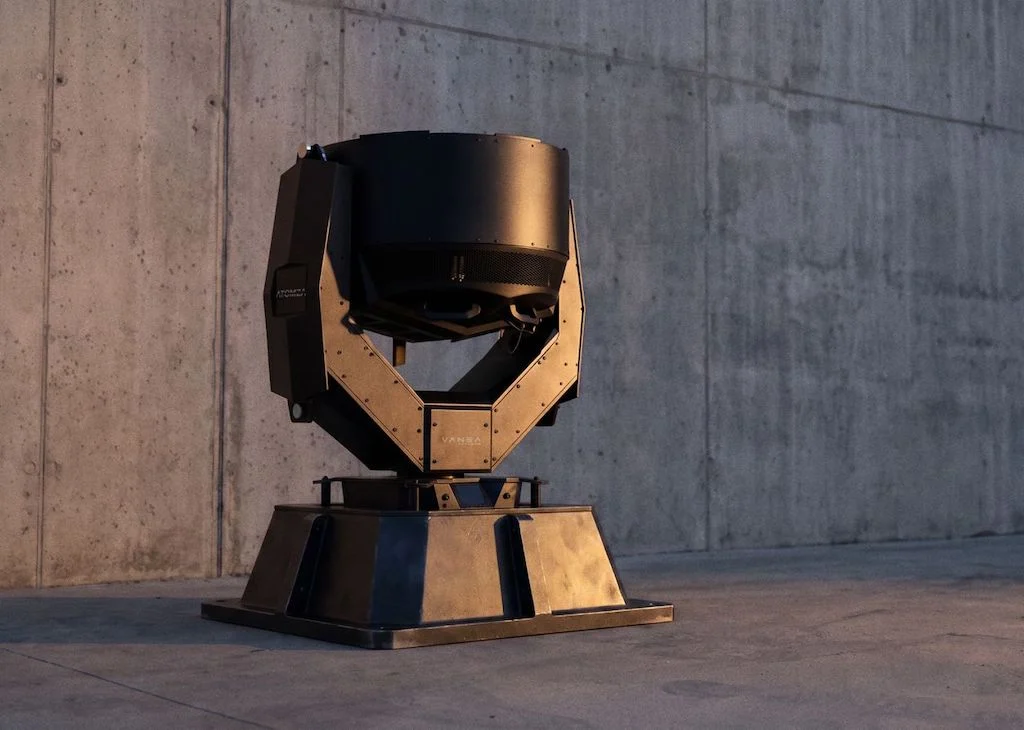
The landscape of European security technology underwent a significant shift this week as Munich-based Vanea Defence officially unveiled Atomza, a drone defense system specifically engineered to bypass the legal and operational restrictions that have long hindered private sector counter-UAV (Unmanned Aerial Vehicle) efforts. As the first system of its kind globally to be cleared for use by private operators without sovereign or executive authority, Atomza represents a pivotal transition in how critical infrastructure and large-scale public events are protected from aerial threats. By utilizing a non-kinetic optical effector, the system provides a defensive capability that was previously the exclusive domain of military and police forces, effectively opening a multi-billion-euro market for civilian security solutions.
A Technological Solution to a Legal Impasse
For years, the primary challenge in civilian drone defense has not been technical, but legal. Standard counter-drone measures typically fall into two categories: kinetic and electronic. Kinetic measures—such as interceptor drones, nets, or projectiles—pose significant risks of collateral damage, particularly in densely populated areas or over crowds. Electronic measures, such as signal jammers, interfere with the radio frequency spectrum, often violating telecommunications laws and potentially disrupting essential services like GPS, Wi-Fi, and emergency communications. Because of these risks, the deployment of such systems has been strictly reserved for state authorities under "hoheitliche Befugnisse" (sovereign powers).
Atomza addresses this impasse through the use of directed photonic radiation. Unlike jammers that scramble signals or lasers that physically melt components, Atomza’s non-kinetic optical effector targets the optical sensors of a drone. By saturating these sensors with high-intensity light, the system renders the drone’s "vision" inoperable, effectively blinding its navigation and surveillance capabilities. Crucially, because this method does not interfere with the electromagnetic spectrum or involve physical destruction that could lead to falling debris, it does not constitute a legal "intervention" in the traditional sense. This distinction allows private security firms, stadium operators, and industrial site managers to deploy the system legally within existing regulatory frameworks.
The Rapidly Evolving Threat to Critical Infrastructure
The timing of Vanea Defence’s product launch coincides with a period of heightened concern regarding the security of European critical infrastructure (KRITIS). Since the early 2020s, the proliferation of low-cost, high-capability consumer drones has created a new category of security vulnerability. These devices can be used for industrial espionage, unauthorized filming, or, in more extreme scenarios, the delivery of hazardous payloads.
Industry data highlights the scale of the challenge. According to the European Union Aviation Safety Agency (EASA), reports of unauthorized drone sightings near major European airports have increased by over 40% in the last three years. In Germany alone, the Deutsche Flugsicherung (DFS) has recorded hundreds of disruptions annually, leading to significant economic losses and safety risks. Furthermore, the use of drones in modern geopolitical conflicts has demonstrated their potential as asymmetric tools of disruption, prompting a re-evaluation of security protocols for power plants, water treatment facilities, and government buildings.
Jens Hillenkötter, Executive Vice President for Unmanned Aircraft Systems & Counter-UAVs at Vanea Defence, emphasized the urgency of the situation during the product announcement. He noted that the question for security directors is no longer whether they need protection, but how quickly they can implement solutions that comply with local laws while providing genuine deterrent and neutralization capabilities.
Chronology of Development and Strategic Implementation
Vanea Defence was established in Munich in 2025 as a specialized brand of the publicly listed SCP Standard Capital Partners AG. The company was founded with the specific mission of localizing defense technology production within Europe to ensure strategic sovereignty.
- Early 2025: Vanea Defence begins development of its proprietary AI model, focusing on the identification and classification of aerial objects in complex urban environments.
- Late 2025: Prototyping of the photonic effector begins, with a focus on minimizing power consumption while maximizing the effective range of the optical blinding technology.
- Spring 2026: Initial closed-field testing with German security authorities and selected KRITIS operators. These tests focused on the system’s ability to neutralize "dark drones"—UAVs that do not broadcast a remote ID and are invisible to traditional radio-frequency sensors.
- August 2026: Official launch of Atomza and the commencement of marketing to civilian operators.
- Upcoming Q4 2026: Scheduled military-grade stress tests with international partners to evaluate the system’s performance in high-intensity electronic warfare environments.
The development cycle of Atomza reflects a broader trend toward "dual-use" technology—innovations that serve both military and civilian purposes but are optimized for the legal and safety requirements of the latter.
European AI and the Quest for Strategic Sovereignty
At the heart of the Atomza system is a proprietary Artificial Intelligence model developed entirely within Europe. This is a significant point of differentiation for Vanea Defence, particularly as concerns grow regarding the data security and "backdoor" vulnerabilities of defense software developed outside the European Union.
Dr. Oliver Hartkorn, Co-Founder and CTO of Vanea Defence, stated that the decision to train their AI from the ground up in Europe was a strategic necessity rather than a mere regulatory checkbox. The AI is responsible for the automated detection, tracking, and engagement of drones. By analyzing visual and thermal data in real-time, the system can distinguish between a harmless bird, a recreational kite, and a malicious drone within milliseconds. This high degree of accuracy is essential for civilian applications, where false positives can lead to unnecessary panic or the disruption of legitimate activities.
By maintaining control over the entire technological stack—from the AI algorithms to the hardware components—Vanea Defence aims to provide a "sovereign" solution. This ensures that the data collected by the sensors remains within the operator’s jurisdiction and that the system cannot be remotely disabled by foreign entities.
Market Implications for Event Management and Aviation
The immediate beneficiaries of the Atomza system are expected to be operators of large-scale public events and major airports. For organizers of music festivals, sporting events, and political rallies, drones represent a multifaceted threat: they can be used for illegal broadcasting, pose a physical risk if they crash into crowds, or be used to disrupt the event. Until now, these organizers had to rely on the presence of police units equipped with counter-drone technology, which are often stretched thin and cannot be present at every private event.
With Atomza, event security teams can now integrate drone defense into their standard operational procedures. The system’s ability to prevent "collateral damage"—a term used to describe the unintended consequences of shooting down a drone or jamming signals—makes it particularly attractive for use over inhabited areas. If a drone is neutralized via photonic blinding, it typically enters a "failsafe" mode (such as hovering in place or returning to its takeoff point) rather than falling uncontrollably from the sky.

In the aviation sector, the system offers a localized defense layer for airport perimeters. While major airports are protected by state-level security, smaller regional airports or private airfields often lack the resources or legal clearance to deploy military-grade jammers. Atomza provides a scalable solution that can be integrated into existing perimeter security networks without interfering with the complex array of radio and radar signals necessary for air traffic control.
Analysis of Broader Security Trends
The launch of Atomza signifies a broader democratization of high-end defense technology. As the barriers between "military" and "civilian" threats continue to blur, the tools required to counter those threats must also evolve. The shift toward non-kinetic, legally compliant systems suggests a future where security is not just about "force," but about intelligent, surgical intervention.
Industry analysts suggest that the counter-UAV market is poised for exponential growth. Estimates from market research firms indicate that the global anti-drone market could exceed $15 billion by 2030, with the civilian sector accounting for an increasingly large share. Vanea Defence, through its parent company SCP Standard Capital Partners AG, is positioned to capture a significant portion of this market by offering a product that solves the primary hurdle for private adoption: legal liability.
Furthermore, the integration of Atomza into a wider "product family" of defense solutions—including advanced threat detection networks—indicates that Vanea Defence is looking beyond individual hardware units toward a comprehensive "Security-as-a-Service" model. This approach allows operators to build modular defense grids tailored to the specific geography and risk profile of their sites.
Conclusion and Future Outlook
As Vanea Defence begins the civilian rollout of Atomza, the security industry will be watching closely to see how the system performs under real-world conditions. The success of this photonic effector technology could set a new standard for urban security, potentially leading to a revision of international guidelines regarding the use of active defense measures by non-state actors.
With military tests scheduled for the coming weeks and the first civilian installations expected to be operational by the end of the year, Atomza represents a significant milestone in the protection of the modern public square. By aligning technological innovation with the realities of the legal landscape, Vanea Defence has not only introduced a new product but has effectively created a new category of civil protection. The move reinforces Munich’s status as a hub for European defense technology and marks a proactive step toward securing the continent’s airspace against the challenges of the 21st century.
