

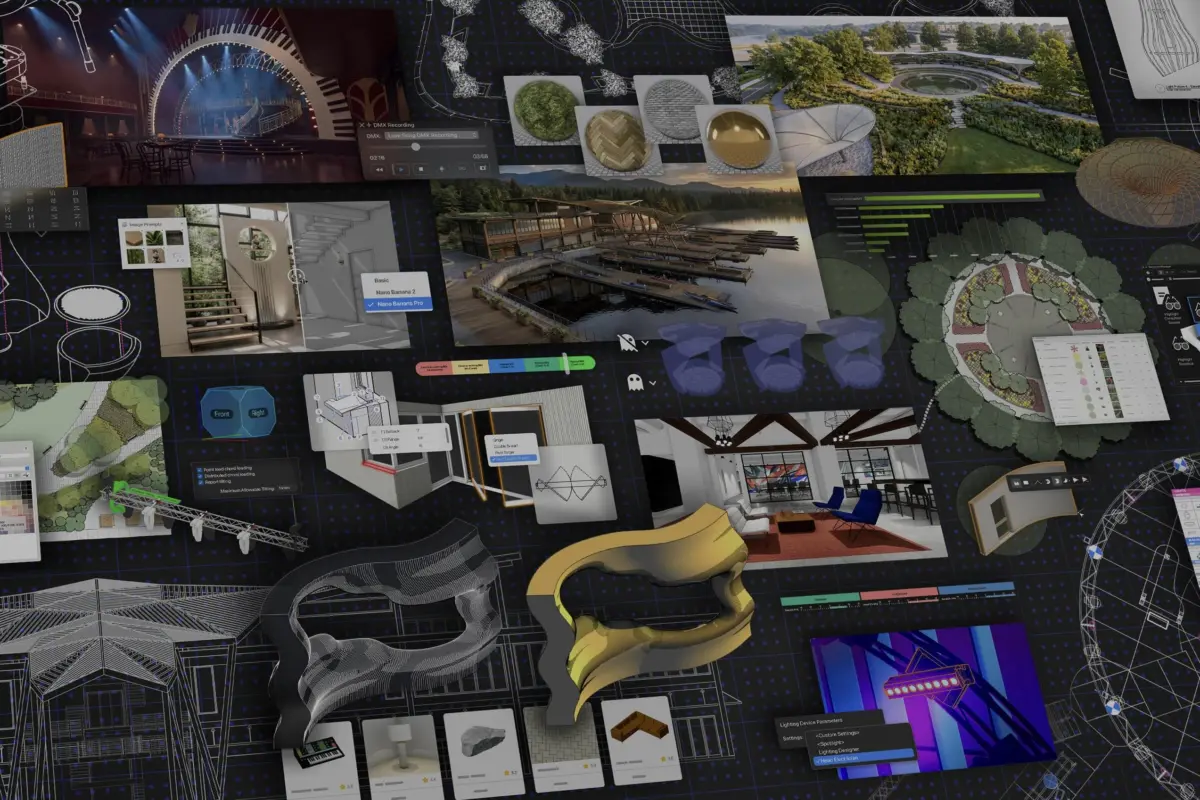
The release of the German version of Vectorworks 2027 marks a significant milestone for the architecture, engineering, and construction (AEC) industries, with a specialized focus on the entertainment and event technology sectors. This latest iteration of the Building Information Modeling (BIM) and Computer-Aided Design (CAD) software introduces a robust suite of enhancements specifically tailored for Vectorworks Spotlight, Braceworks, and ConnectCAD. By prioritizing technical planning, documentation efficiency, and the integration of cutting-edge artificial intelligence, the software manufacturer aims to streamline the complex workflows inherent in modern stage design, rigging, and audio-visual engineering. The update arrives at a critical juncture for the global event industry, which is increasingly demanding higher precision, faster turnaround times, and seamless cross-platform compatibility.
Core Performance and Graphical Architecture
At the heart of Vectorworks 2027 is a fundamental overhaul of its core graphics module. As event productions grow in scale—ranging from massive stadium concert tours to intricate corporate presentations—the demand for software that can handle high-polygon models without sacrificing performance has never been greater. The new version addresses this through optimized memory management and a redesigned rendering pipeline that allows for faster screen redraws even when navigating large, data-heavy files.
Beyond raw performance, the user interface has undergone a series of ergonomic refinements. Data visualizations, which are essential for identifying specific equipment or cable types within a dense 3D model, can now be organized into reusable sets. This allows designers to switch between different analytical views—such as power consumption maps or weight distribution charts—with a single click. Furthermore, tool palettes have been made more flexible, enabling users to dock and arrange their workspace to suit specific phases of a project, whether they are in the initial creative sketching phase or the final technical documentation stage.
Advancements in Technical Planning: Cabling and Signal Flow
For technicians and system integrators, the updates to cable planning and ConnectCAD represent some of the most practical improvements in the 2027 release. The software now allows for a unified planning environment where power and data cabling coexist on the same foundation. This integration is vital for modern "smart" stages where every light fixture, motor, and sensor requires both power and a network connection.
A key feature in this update is the ability to define connections directly at the device or symbol level. This eliminates the need for manual workarounds when mapping complex signal paths. The internal structure of distributors and break-out boxes can now be visually edited, providing a clear representation of how signals are split or combined. Crucially, the cable tools now account for "break-out" and "break-in" lengths, ensuring that the bill of materials generated by the software matches the physical reality of the cables required on-site.
In the realm of ConnectCAD, which handles the schematic design of electronic systems, the process of placing connectors on schematic devices has been simplified. The tool now remembers the user’s most recent settings and can automatically assign connector names based on customizable naming conventions. These incremental improvements in automation are designed to reduce the risk of human error in large-scale system designs, where a single mislabeled port can lead to significant delays during installation.
Precision Rigging and Load Analysis with Braceworks
Safety and precision are the cornerstones of event rigging, and Vectorworks 2027 introduces several features to enhance the Braceworks module. One of the most anticipated additions is the ability to save schematic views of complex lighting rigs as reusable sets. These sets can be transferred across different projects, carrying over all associated legends, data stamps, and dimensions. For touring productions that move through various venues, this feature significantly reduces the time required to adapt a standard rig to different architectural constraints.
The placement of rigging components such as bridles and chain hoists has been refined for greater accuracy. Users can now position these elements with higher precision within the 3D space, which is critical for accurate load calculations. To further support safety standards, the software features a revised load hierarchy. This allows engineers to conduct a more granular review of individual attachment points, ensuring that every motor and truss section remains within its safe working load (SWL) limits. This level of detail is essential for compliance with increasingly stringent international safety regulations for temporary structures.
Lighting Design and the Evolution of Industry Standards
The entertainment industry is moving toward a more collaborative and standardized ecosystem, driven by the General Device Type Format (GDTF) and the My Virtual Rig (MVR) file format. Vectorworks 2027 expands its support for these standards, facilitating a smoother exchange of data between the CAD environment, lighting consoles, and pre-visualization software.
Lighting designers can now edit GDTF gobos directly within the Vectorworks interface, allowing for immediate visual feedback on how a projected texture will look on stage. The MVR import process has also been enhanced, giving users the ability to selectively import specific layers or data sets rather than the entire file. Additionally, fixture modes can now be assigned via drag-and-drop, simplifying the process of patching a show.
For designers using the Showcase feature, the ability to invert pan and tilt directions for individual fixtures without altering the DMX values or the patch is a major workflow improvement. This allows for quick adjustments on-site when a fixture is hung in a different orientation than originally planned, ensuring that the 3D model remains synchronized with the physical rig.
Audio Planning and Spatial Visualization
Recognizing the growing complexity of acoustic design in event spaces, Vectorworks 2027 introduces the "Listening Level" (Hörerebene) tool. This feature allows designers to create measurement grids directly within the 3D event model. Through the MVR format, these grids can be exported to external audio analysis and simulation software.
Once the external software calculates the sound pressure levels (SPL) and coverage, the resulting data can be re-imported into Vectorworks. The software then visualizes these decibel levels spatially within the model, providing a clear heat map of sound distribution. This enables designers to identify acoustic "dead zones" or areas of excessive volume early in the planning phase, leading to better-sounding events and more efficient speaker placement.

The Integration of Artificial Intelligence and Real-Time Rendering
Perhaps the most forward-looking aspect of the 2027 release is the deep integration of Artificial Intelligence. Vectorworks has incorporated the "Nano Banana" image models developed by Google into its AI Visualizer. While a free basic model is available to all users, the "Nano Banana Pro" and "Nano Banana 2" variants offer advanced capabilities, including 2K resolution and the ability to use multiple reference images to guide the AI’s creative output. This allows designers to quickly generate high-quality mood boards and conceptual renderings based on their 3D geometry and a few text prompts.
Furthermore, a new AI Assistant has been embedded directly into the Vectorworks interface. Unlike traditional help menus, this assistant can interact with both the UI and the active document. It can answer "how-to" questions, suggest optimized workflows, or help locate specific tools based on the user’s current task. This represents a shift toward "context-aware" software that acts as a co-pilot for the designer.
To complement these AI features, the integration of Maxon’s Redshift rendering engine has been further optimized. Redshift provides synchronized, real-time rendering that utilizes physically-based lighting, shadows, and materials. This allows designers to present photorealistic visualizations to clients without the long wait times traditionally associated with high-end rendering.
Mobile Connectivity and the Hybrid Workflow
The modern design process is no longer confined to the desktop. The "Morpholio by Vectorworks" integration bridges the gap between digital precision and hand-drawn creativity. Designers can export their Vectorworks plans to an iPad, where they can use the Morpholio Trace app to sketch over the top of the CAD data. These sketches can then be re-imported into the main Vectorworks file, allowing for a hybrid workflow that combines the speed of freehand drawing with the accuracy of a BIM model. This is particularly useful for site surveys and initial client meetings where rapid ideation is required.
Industry Context and Long-term Implications
The release of Vectorworks 2027 comes at a time when the "digital twin" concept is becoming standard in the entertainment industry. By providing tools that cover everything from initial sketches to real-time load analysis and acoustic simulation, Vectorworks is positioning itself as a central hub for the entire production lifecycle.
Industry analysts suggest that the emphasis on AI and open standards like GDTF/MVR will be the primary drivers of growth in the CAD market over the next five years. As the German version becomes available, the local market—supported by the distributor ComputerWorks—is expected to see a high adoption rate among technical directors and event agencies. The ability to manage complex data within a single environment not only reduces the likelihood of errors but also contributes to more sustainable production practices by optimizing material usage and logistics.
In conclusion, Vectorworks 2027 represents a comprehensive update that balances high-level creative features with the practical, technical tools required by today’s event professionals. By integrating AI, improving performance, and deepening its commitment to industry standards, the software provides a robust platform for the future of entertainment design and technical documentation.
