

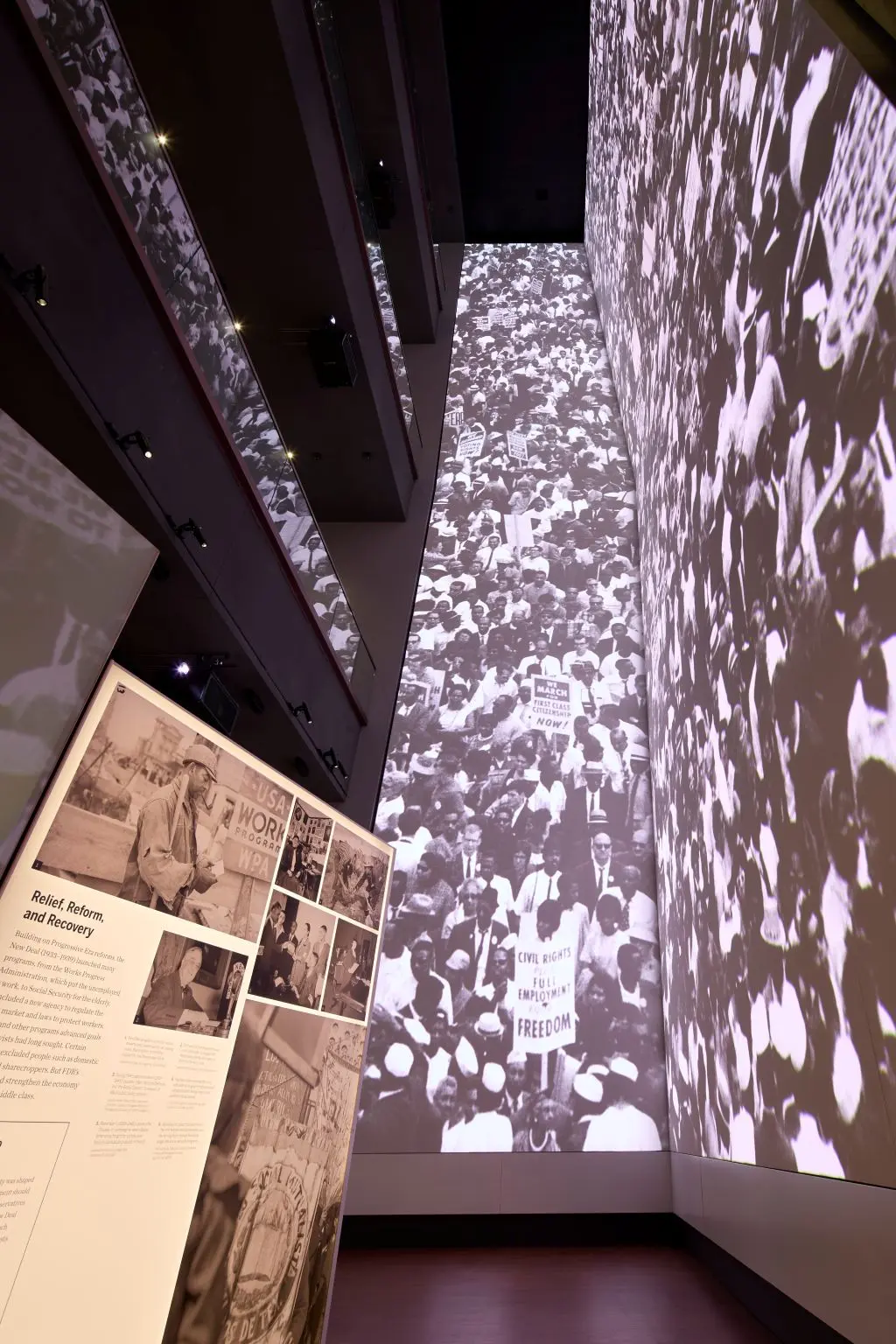
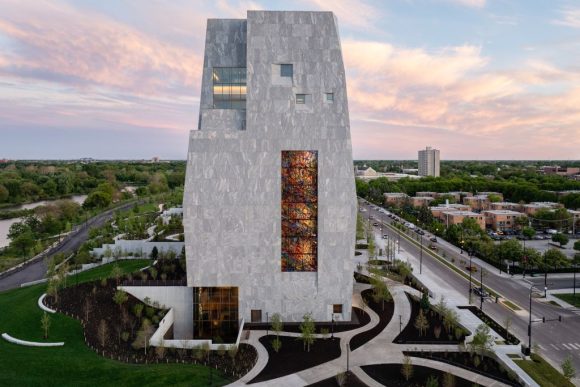
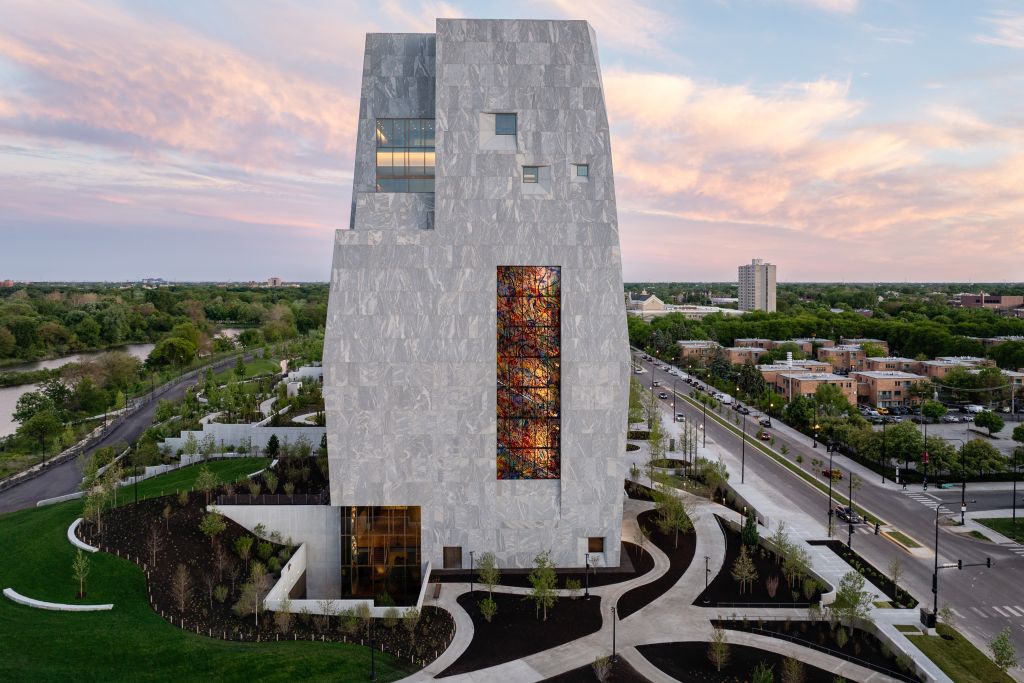
The Obama Presidential Center, a sprawling campus dedicated to the legacy of the 44th President of the United States, officially opened its doors to the public in Chicago’s historic Jackson Park on June 19, 2026. While the center’s architecture and its place in the South Side’s urban fabric have garnered significant attention, the interior of the museum represents a landmark achievement in audiovisual integration and digital storytelling. Central to this immersive experience is a sophisticated network of 35 Pixera media servers from the Austrian technology firm AV Stumpfl. These systems manage everything from standard 4K displays to the centerpiece of the museum: a massive, four-story projection titled "Power of Words," which serves as the literal and metaphorical spine of the exhibition space.
The museum occupies four levels of the eight-story museum tower, using a combination of film, interactive media, and large-scale environmental projections to chronicle the lives and careers of Barack and Michelle Obama. The decision to lean heavily into high-end digital technology was a deliberate narrative choice. As the first U.S. president to utilize social media as a primary tool for grassroots organizing and governance—earning him the moniker of the "first digital president"—Barack Obama’s story is inextricably linked to the evolution of modern communication. The AV infrastructure at the center does not merely display information; it reflects the technological landscape that defined an era.
A Unified Technological Ecosystem
The scale and variety of the exhibits required a highly flexible yet centralized AV solution. Paul Horst, Head of Exhibition AV Systems for the Obama Foundation, led the planning and implementation of the museum’s digital components. The primary challenge was the diversity of the installations: the museum features 23 exhibits powered by single screens, seven complex multi-monitor applications, and five high-resolution multi-projector systems.
To manage this complexity, Horst’s team sought a media server platform that could scale across various use cases while remaining within a single, manageable ecosystem. "We chose Pixera to consolidate our entire media playback into a unified environment," Horst explained. The platform provided the necessary hardware for smaller, localized displays while offering the processing power and software flexibility required for the museum’s most demanding large-format installations.
The multi-monitor setups are particularly noteworthy, with the largest configurations utilizing up to eleven synchronized screens. These are driven by a "Director" server and two "Client" units, ensuring frame-accurate synchronization across the entire array. By utilizing the full spectrum of Pixera hardware, the foundation was able to tailor the processing power to the specific needs of each exhibit, avoiding the inefficiencies of a fragmented system.
The Power of Words: A Vertical Cinematic Experience
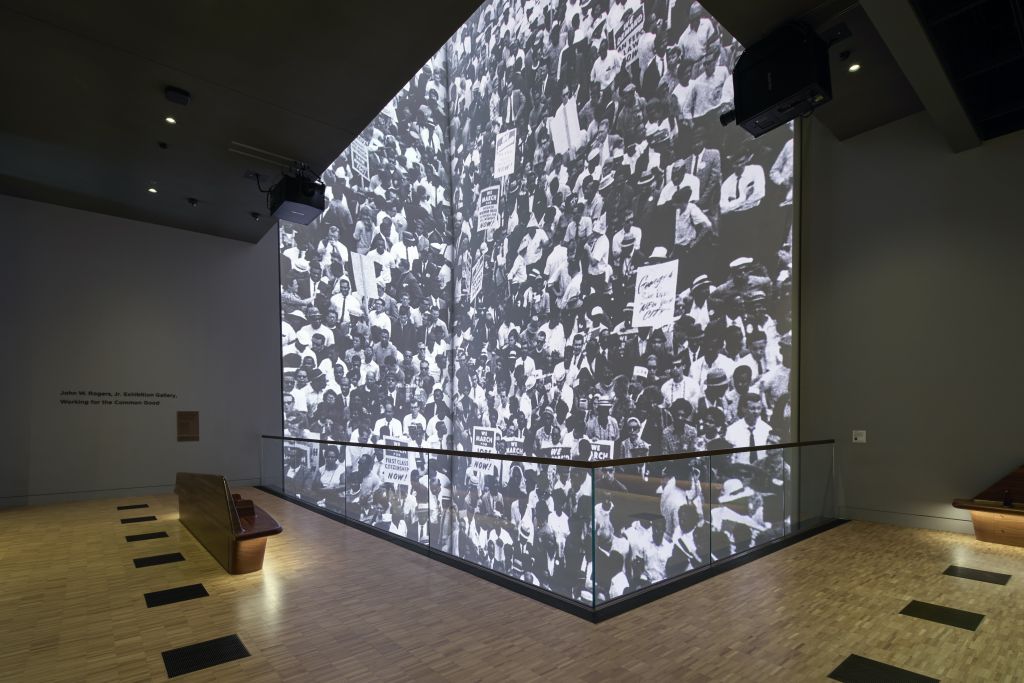
The crown jewel of the Obama Presidential Center is "Power of Words," a vertical projection that spans the entire interior height of the museum tower. This installation connects the four exhibition floors, creating a continuous visual canvas that visitors encounter as they move through the space. The content is designed to provide orientation on each level while simultaneously expanding into a cohesive, multi-story visual narrative that explores the impact of President Obama’s rhetoric.
The technical execution of "Power of Words" required a sophisticated blend of visual and auditory engineering. Jeremy S. Bloom, the project’s lead sound designer, integrated more than 89 speakers into the walls, floors, and ceilings surrounding the projection. Each floor functions as its own distinct audio zone, yet they are all synchronized through the Pixera system, which handles approximately 40 tracks of uncompressed audio simultaneously with the video playback.
Bloom’s workflow highlighted the flexibility of the Pixera platform during the final stages of production. Working on-site without the benefit of a traditional post-production studio, Bloom had to finalize the spatial audio mix while viewing the images at their full four-story scale. "Pixera made this process entirely seamless," Bloom noted. Using a Dante network, he was able to send LTC (Linear Timecode) to the media servers with a single click, allowing him to control the entire playback system directly from his workstation. This real-time synchronization allowed the creative team to make precise adjustments to the atmosphere and timing of the exhibit without the delays typically associated with large-scale media rendering.
Real-Time Warping and Geometric Challenges
The architectural design of the museum tower presented significant geometric challenges for the projection team. Because the interior walls of the "Power of Words" exhibit vary in width—widening in the middle floors compared to the top and bottom—the projected content required complex de-warping to appear natural to the human eye.
To solve this, the media producers utilized a workflow that bypassed traditional offline rendering. High-resolution After Effects compositions were fed directly into the Pixera servers via NDI (Network Device Interface). This allowed the team to see the "warped" content on the actual four-story wall in real-time. Adjustments to the geometry could be made and verified instantly, ensuring that the typography and imagery remained undistorted regardless of the viewer’s vantage point on different floors.
Furthermore, the museum employs an automated projection calibration system developed by Scalable Display Technologies. This system generates MPCDI (Multiple Projection Common Data Interchange) files that Pixera processes through an automated sequence. This sequence is triggered by Medialon, the museum’s overarching show control system. When a recalibration is required, the Pixera module automatically pauses the content timelines, deactivates the outputs, and hands control to the Scalable software. Once the cameras have mapped the projection surface and updated the alignment, Pixera restarts the outputs and timelines without requiring manual intervention from the technical staff.
Centralized Control and Operational Efficiency
For a facility of this size, ease of operation was a primary concern. The AV team developed custom, web-based user interfaces within "Pixera Control." These interfaces allow museum technicians to perform routine maintenance and operational tasks without needing deep expertise in the server software. Through these panels, staff can start or stop timelines, switch outputs, restart render engines, or select specific video frames for use in photography.
These custom controls are embedded as panels within ISAAC (Integrated Systems Architecture and Control), the central management platform for the entire museum. This integration allows the Obama Foundation to monitor and control the center’s entire media inventory from a single location, ensuring high uptime and rapid response to any technical issues.
To mitigate risks during the construction phase, Horst’s team built a 1.8-meter (6-foot) scale model of the "Power of Words" projection surface in a laboratory setting. Using smaller Pixera servers and compact projectors, they simulated the mapping, audio synchronization, and control sequences long before the final hardware was installed in the tower. This proactive testing phase meant that when the systems were deployed at full scale, the team was confident in the stability and performance of the infrastructure.
Chronology and Strategic Impact
The development of the Obama Presidential Center has been a decade-long endeavor. Following the selection of Jackson Park as the site in 2016 and a protracted legal and environmental review process, groundbreaking occurred in September 2021. The five-year construction period coincided with rapid advancements in AV technology, leading the foundation to select Pixera for its forward-looking capabilities in real-time rendering and control integration.
The center’s opening in June 2026 marks a significant shift in the landscape of presidential libraries. Traditionally, these institutions have functioned as archives with static displays. The Obama Presidential Center, however, leans into the "living museum" concept, where technology is used to foster engagement rather than just present facts.
From an economic and cultural perspective, the integration of such high-end technology serves a dual purpose. It establishes the center as a premier global destination for tourism and education, while also providing a high-tech training ground for local youth through the center’s various community programs. The use of industry-standard tools like Pixera, Dante, and NDI ensures that the technological footprint of the museum remains relevant and maintainable for years to come.
As museums worldwide continue to move toward more immersive and interactive environments, the Obama Presidential Center stands as a case study in how to deploy large-scale AV systems effectively. By prioritizing a unified ecosystem and investing in robust control infrastructure, the Obama Foundation has created a digital legacy that is as dynamic as the presidency it commemorates. The successful integration of 35 media servers to power a four-story narrative confirms that in the modern museum, the medium is indeed an essential part of the message.
