

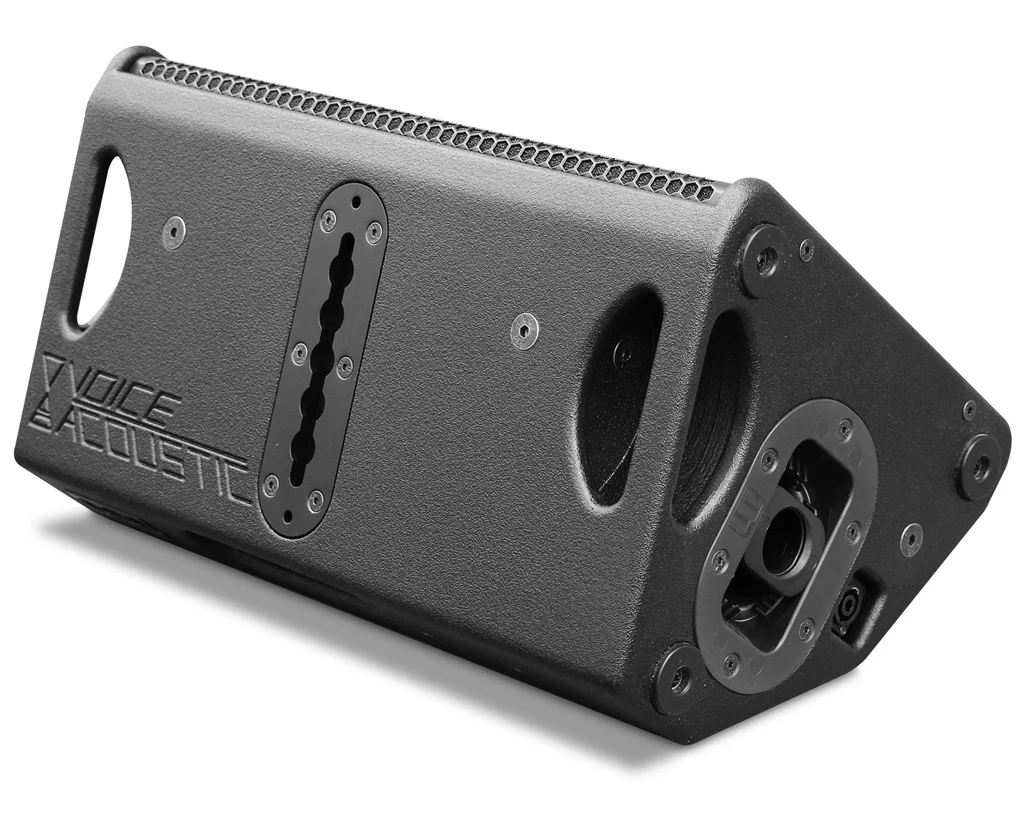
In an industry often characterized by rapid product cycles and planned obsolescence, the German professional audio manufacturer Voice-Acoustic has reached a significant milestone that challenges the status quo of the pro-audio market. Based in Dörverden, the company has officially marked fifteen years of production for its flagship two-way loudspeaker, the Modular-10. Since its market debut in 2011, the Modular-10 has remained virtually unchanged in its core technical composition, utilizing the same chassis components and internal cabinet architecture. This rare consistency serves as the cornerstone of the company’s sustainability strategy, which prioritizes long-term utility and investment protection over frequent hardware iterations. As the professional lighting and sound industry prepares for the upcoming LEAT Con, the Voice-Acoustic team is set to showcase this enduring technology in Hall A1, emphasizing that true innovation can sometimes be found in the refinement and preservation of a perfected design.
Technical Specifications and Engineering Foundations
The Modular-10 was conceived as a high-performance, multifunctional loudspeaker capable of serving as both a standalone full-range system and a high-output mid-high unit in larger configurations. At its heart, the system employs a 10-inch low-frequency transducer manufactured by the Italian specialist Eighteen Sound. This specific woofer is noted for its high sensitivity, which the manufacturer rates at 100 dB (1W/1m). By maintaining the use of this specific chassis for a decade and a half, Voice-Acoustic ensures that every Modular-10 unit ever produced retains a consistent sonic signature, allowing older units to be seamlessly integrated with brand-new stock in large-scale deployments.
For high-frequency reproduction, Voice-Acoustic utilizes a 1-inch compression driver from B&C Speakers, another titan of Italian transducer engineering. This driver is coupled with a rotatable 90 x 40-degree horn, a feature that provides significant flexibility for both horizontal and vertical mounting. The ability to rotate the horn allows sound engineers to optimize coverage based on the specific acoustic requirements of a venue, whether the speaker is mounted on a tripod, flown from a truss, or used as a high-grade floor monitor.
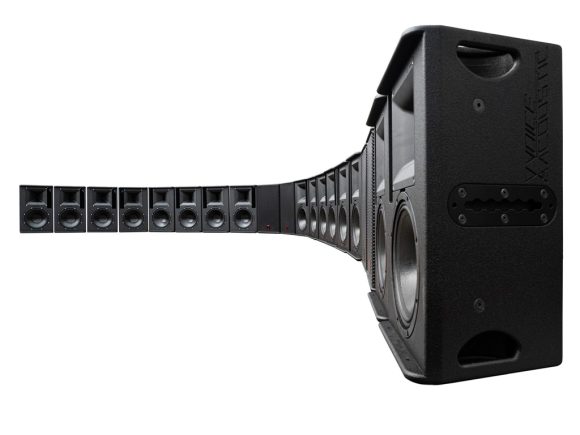
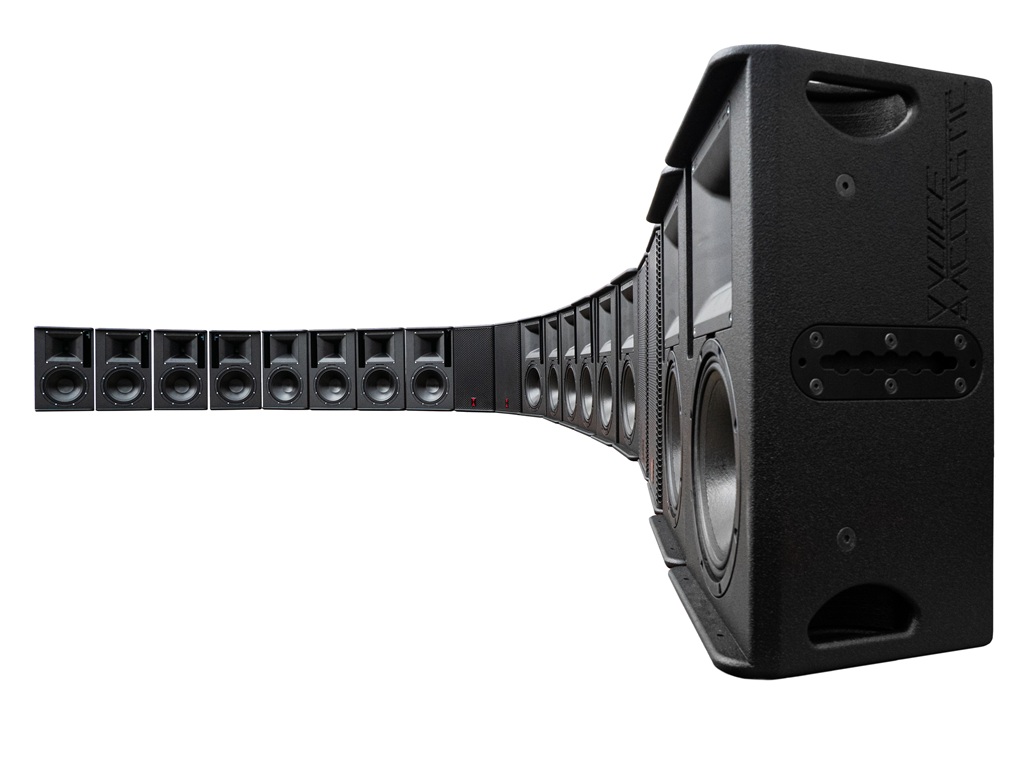
The cabinet itself is constructed from high-quality birch plywood, a material chosen for its acoustic neutrality and physical durability. One of the most distinctive features of the Modular-10 is its pronounced trapezoidal shape, featuring a side angle of nearly 20 degrees. This specific geometry was not an aesthetic choice but a functional one, designed to facilitate the creation of horizontal arrays. When multiple units are placed side-by-side, the cabinet angle aligns with the horn’s dispersion pattern to minimize phase interference and comb filtering, resulting in a more coherent wavefront and improved speech intelligibility.
A Chronology of Innovation and Intellectual Property
The journey of the Modular-10 began in early 2011, a period when the professional audio market was shifting toward more compact yet powerful point-source systems. Stefan Rast, the founder and CEO of Voice-Acoustic, sought to create a tool that offered "no-compromise" performance for rental companies. In March 2011, Rast filed for a utility model (Gebrauchsmuster) for the specific acoustic and geometric concept of the speaker. This was officially registered with the German Patent and Trade Mark Office (DPMA) in June 2011 under the registration number 20 2011 003 809.2.
Parallel to the development of the cabinet geometry, Voice-Acoustic introduced the "Easyfly" mechanism. This proprietary rigging system was integrated into the Modular-10 during its first production run in 2011. The Easyfly system represented a significant advancement in workflow efficiency, as it allowed for the tool-less mounting of rigging hardware. By eliminating the need for specialized tools or complex bolting procedures on-site, the system reduced setup times and minimized the risk of human error during installation. Like the cabinet design, the Easyfly mechanism was also registered with the patent office in 2011, securing the company’s intellectual property and establishing a unique selling point that remains relevant today.
Over the ensuing fifteen years, the "evolution" of the Modular-10 has been remarkably subtle. The company has avoided the industry trend of releasing "MKII" or "MKIII" versions that render previous models obsolete. Instead, they have focused on minor cosmetic and durability upgrades. The original textured paint finish was eventually replaced with a high-durability Polyurea coating, providing better resistance to the rigors of touring. The handles were redesigned to improve ergonomic handling, and the rear connection panel was updated to align with the brand’s modern visual identity. However, the internal crossover, the volume of the cabinet, and the specific drivers have remained identical, ensuring 100% acoustic compatibility across fifteen years of production.
Sustainability through Investment Protection
The decision to maintain a fifteen-year product lifecycle is a deliberate rebuttal to the "fast-tech" philosophy. From Voice-Acoustic’s perspective, sustainability in the professional audio sector is best achieved through longevity. When a product remains in production and remains technically relevant for over a decade, the environmental footprint associated with manufacturing, shipping, and disposing of "next-generation" models is significantly reduced.
For the end-user—typically rental houses and fixed installation contractors—this approach translates into direct economic benefits. In the rental market, inventory consistency is paramount. A company that purchased ten Modular-10 units in 2012 can purchase ten more in 2026 and deploy all twenty as a single, uniform system. There is no need for separate DSP presets, no variation in rigging hardware, and no audible difference between the old and new units. This "system continuity" protects the initial capital investment of the customer, as the equipment does not lose value due to being superseded by a newer, incompatible version.

Furthermore, the long-term availability of spare parts is a critical component of this sustainability model. Because the chassis and components have not changed, Voice-Acoustic can guarantee that even the earliest units can be repaired with original parts. This extends the operational life of the hardware far beyond the typical five-to-seven-year cycle seen in many other electronics sectors.
Industry Implications and Market Analysis
The success of the Modular-10 highlights a growing demand for "honest engineering" in the pro-audio sector. Analysts note that while digital processing and Class-D amplification have seen rapid advancements, the fundamental physics of moving air via a transducer have remained relatively stable. By selecting high-quality components from the outset, Voice-Acoustic bypassed the need for frequent hardware updates, instead relying on the inherent quality of the Eighteen Sound and B&C components.
This strategy also fosters a strong secondary market. Professional audio equipment often retains higher resale value when the model is still being actively manufactured. The Modular-10 has become a "staple" product, much like certain industry-standard microphones or mixing consoles that remain in use for decades. This reliability builds brand loyalty, as customers come to view Voice-Acoustic not just as a hardware vendor, but as a stable partner in their business growth.
The broader implication for the industry is a shift toward "circularity." By producing goods that do not need to be replaced, Voice-Acoustic aligns itself with European Union directives regarding the "right to repair" and the reduction of electronic waste. While many manufacturers talk about sustainability in terms of recyclable packaging or solar-powered factories, Voice-Acoustic’s approach addresses the root cause of industrial waste: the short product lifecycle.
Looking Ahead: LEAT Con and Beyond
As Voice-Acoustic prepares for LEAT Con in 2026, the company stands as a testament to the viability of a "slow-growth" and high-quality manufacturing philosophy. Stefan Rast, the company’s founder, remains vocal about the pride the team feels regarding the Modular-10’s history. According to Rast, the fact that the speaker is still in demand after fifteen years is the ultimate validation of their original engineering choices. It proves that when a product is designed correctly from the beginning, there is no need to change it for the sake of marketing.
Visitors to LEAT Con in Hall A1 will have the opportunity to see the Modular-10 in person and discuss the company’s future roadmap. While Voice-Acoustic continues to innovate in other areas—such as advanced system amplifiers and larger line array systems—the Modular-10 remains the "soul" of the brand. It serves as a constant reminder that in the world of professional audio, reliability, consistency, and long-term value are the true benchmarks of excellence.
In conclusion, the fifteen-year anniversary of the Modular-10 is more than just a corporate milestone; it is a case study in sustainable industrial design. By prioritizing high-grade components, securing intellectual property early, and resisting the urge to follow fleeting market trends, Voice-Acoustic has created a product that defies the passage of time. As the industry moves toward 2027 and beyond, the Modular-10 will likely remain a fixture on stages and in venues worldwide, continuing to deliver high-fidelity sound while protecting the investments of those who trust in its design.
