

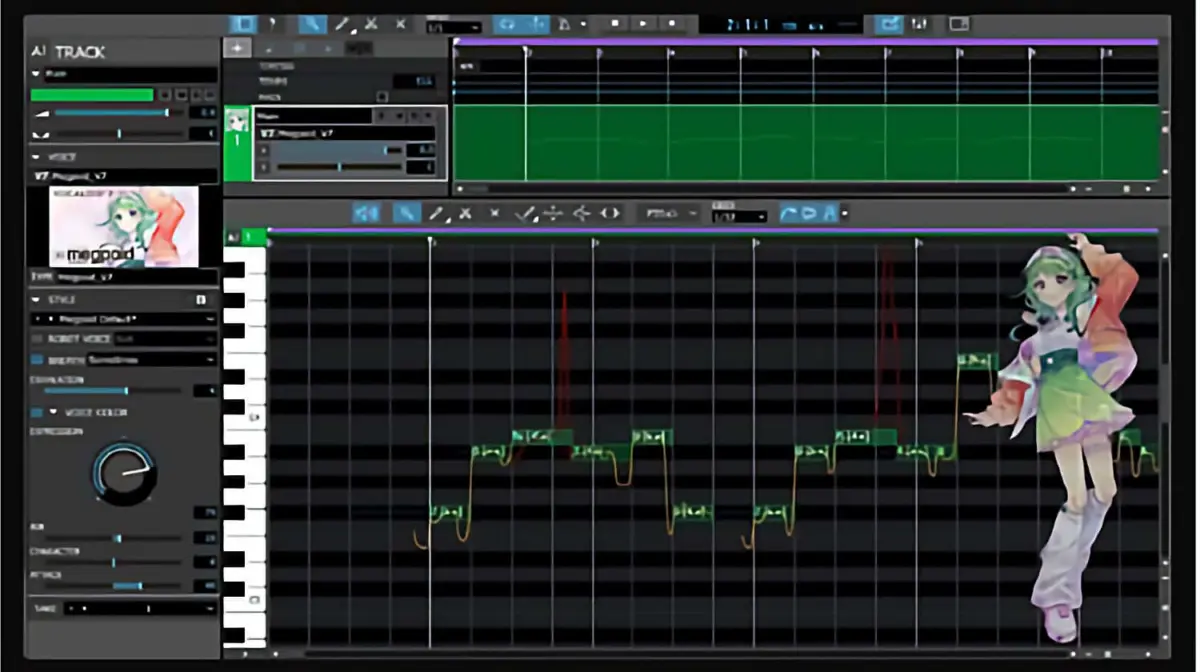
Yamaha Corporation has officially announced the release of VOCALOID7, the latest iteration of its industry-defining singing voice synthesis software. This new version marks a transformative shift in the platform’s development, introducing a second-generation AI synthesis engine designed to bridge the gap between artificial vocal tracks and human performance. By prioritizing natural phrasing, nuanced articulation, and deeper integration with professional digital audio workstations (DAWs), Yamaha aims to solidify VOCALOID’s position in an increasingly competitive market of AI-driven musical tools. The release includes significant updates to the software’s core architecture, a suite of new expressive controls, and a revamped workflow for users of Steinberg’s Cubase.
The Evolution of Singing Voice Synthesis: A Technological Leap
Since its commercial debut in 2003, VOCALOID has undergone numerous transformations, evolving from a niche tool for experimental musicians into a global cultural phenomenon. The transition from VOCALOID6 to VOCALOID7 represents Yamaha’s continued commitment to artificial intelligence as the primary driver of vocal realism. While previous versions relied heavily on concatenative synthesis—the process of joining fragments of recorded human speech—VOCALOID7 utilizes a more sophisticated neural network approach.
The cornerstone of this update is the second-generation VOCALOID:AI engine. This engine has been trained on vast datasets of human vocal nuances, allowing it to predict and replicate the subtle transitions between notes that often reveal the "robotic" nature of synthesized speech. The engine does not merely play back samples; it generates a vocal performance based on the context of the melody and lyrics provided by the user. This results in smoother glissandos, more realistic vibrato, and a reduction in the artifacts traditionally associated with pitch-shifting algorithms.
Advanced Control: ATTACK and VOICE TYPE Parameters
To provide producers with more granular control over these AI-generated performances, Yamaha has introduced two pivotal features: ATTACK and VOICE TYPE. These tools are designed to address the specific needs of professional mixers and composers who require high levels of customization.
The ATTACK parameter allows users to adjust the pronunciation and articulation of specific notes. In human singing, the way a consonant leads into a vowel—the "attack" of the sound—varies based on the emotional intensity of the phrase. With VOCALOID7, users can manually sharpen or soften these transitions, ensuring that lyrics are intelligible and that the vocal delivery matches the energy of the backing track. This is particularly useful in genres like rock or electronic dance music, where aggressive vocal delivery is often required.
Complementing this is the VOICE TYPE functionality. This feature allows for the manipulation of vocal characteristics within a single voicebank. Traditionally, changing the "character" of a singer required switching to a different library or using external processing. VOICE TYPE enables users to shift the timbre—making it breathier, more resonant, or more nasal—on the fly. This functionality is currently exclusive to VOCALOID7-specific voicebanks, highlighting Yamaha’s push for a new ecosystem of high-fidelity vocal assets.
Seamless Workflow: Integration with Steinberg Cubase
One of the most significant practical improvements in VOCALOID7 is its enhanced integration with Steinberg Cubase. As Yamaha owns Steinberg, the synergy between the two platforms has long been a focal point for development. In this version, the VOCALOID editor is more deeply embedded within the Cubase environment through what is effectively an optimized ARA2-style workflow.
Users can now input notes and lyrics directly into the Cubase Key Editor, eliminating the need to toggle between separate application windows. This "single-window" approach significantly reduces the friction of the creative process. Furthermore, essential parameters such as EXPRESSION and the new ATTACK controls are accessible directly within the DAW’s interface. For professional studios where time is a critical factor, this integration streamlines the vocal production pipeline, allowing for real-time adjustments during the arrangement phase rather than treating vocal synthesis as a post-production task.
Preservation of Artistic Intent: Pitch Curve Locking
A common challenge in vocal synthesis is the loss of "performance data" when switching between different virtual singers. Yamaha has addressed this in VOCALOID7 with the introduction of pitch curve preservation. This feature allows a producer to lock the specific pitch fluctuations, portamento, and vibrato patterns they have meticulously edited.
When a user decides to audition a different voicebank for a track, the software can now reproduce the exact pitch curve on the new voice. This ensures that the emotional "soul" of the performance remains intact, regardless of the vocal texture being used. This feature is expected to be a favorite among songwriters who use VOCALOID for prototyping, as it allows them to maintain the integrity of a vocal melody while experimenting with different "vocalists."
A Diverse Ecosystem: New Voicebanks and Character Integration
The launch of VOCALOID7 is accompanied by the release of five exclusive voicebanks, each catering to different musical styles and aesthetic preferences. These include:
- AI Megpoid: A high-fidelity AI version of the classic GUMI voicebank, known for its versatility across pop and rock genres.
- GekiyakuV and KazehikiV: Voices that offer unique, often more experimental or emotive qualities popular in the "Vocalo-P" independent producer community.
- NurseRobot_TypeT and LUCI: Modern additions that provide contemporary textures suitable for electronic and experimental pop.
Each of these voicebanks includes "VOCALOID7 Editor Lite," a standalone version of the software that supports up to two tracks. This "Lite" version serves as an entry point for hobbyists and new users who may not yet be ready to invest in the full professional suite but wish to explore the capabilities of the new AI engine.
Additionally, the VOCALOID7 interface now allows for the display of character artwork and illustrations alongside the music production tools. This acknowledgement of the "character-driven" nature of the Vocaloid community bridges the gap between the technical software and the vibrant fan culture that surrounds virtual singers like Megpoid.
Historical Context and Market Chronology
To understand the impact of VOCALOID7, one must look at the timeline of the industry. For nearly two decades, Yamaha held a virtual monopoly on high-quality singing synthesis. However, the last five years have seen the rise of formidable competitors such as Dreamtonics (Synthesizer V) and CeVIO AI. These competitors utilized AI-driven neural synthesis early on, challenging Yamaha’s dominance.
- 2018: Yamaha released VOCALOID5, focusing on a modernized UI and "drag-and-drop" functionality.
- 2021-2022: Competitors like Synthesizer V gained massive traction due to their high degree of realism and low CPU overhead.
- 2022: Yamaha responded with VOCALOID6, its first foray into full AI synthesis.
- 2024: The release of VOCALOID7 marks a "refinement era," where Yamaha is not just catching up to AI standards but seeking to surpass them through professional-grade DAW integration and superior control parameters.
Pricing, Availability, and Strategic Upgrades
Yamaha has positioned VOCALOID7 with a competitive pricing strategy aimed at both retaining its existing user base and attracting newcomers. The VOCALOID7 Editor is priced at $129 USD. However, the most notable aspect of the pricing structure is the upgrade path.
Owners of VOCALOID versions 3 through 6, as well as owners of the VOCALOID Editor for Cubase, are eligible for a discounted upgrade price of $69. In a move to quickly migrate the user base to the new platform, Yamaha is offering a promotional upgrade price of $39 through December 20, 2026. This aggressive, long-term promotion suggests that Yamaha is prioritizing ecosystem adoption over immediate per-unit profit, likely in response to the free or lower-cost "Lite" versions offered by competitors.
The software comes bundled with the "asa" voicebank, providing users with an immediate high-quality vocal option upon installation. Additional professional-grade voicebanks are priced between $90 and $92 USD, maintaining the premium positioning of the VOCALOID brand.
Industry Impact and Implications
The release of VOCALOID7 carries significant implications for the music industry, particularly in the realms of demo production, independent music creation, and media scoring.
For independent creators, particularly those in the "Vocaloid-P" scene in Japan and the growing international community, the improved AI engine lowers the barrier to entry for creating professional-sounding music. The ability to generate realistic vocals without a recording studio or a human session singer has long been the draw of the software, and VOCALOID7 pushes this capability to its most polished state yet.
In the professional sphere, the deep Cubase integration makes VOCALOID7 a viable tool for film and game composers. Often, composers use synthesized voices to "sketch" vocal parts for directors before hiring live talent. With the realism offered by the second-generation AI engine, these sketches can now sound closer to the final product, helping stakeholders better visualize the end result.
Furthermore, the introduction of VOICE TYPE and ATTACK controls suggests a move toward "vocal design" rather than just "vocal synthesis." Producers can now treat a vocal track with the same level of sound-design precision they apply to synthesizers or drum machines. This could lead to new genres of music where the "unnatural" yet "human-like" qualities of AI vocals are explored as a deliberate aesthetic choice.
Official Stance and Future Outlook
While Yamaha has focused its official communications on the technical merits of the VOCALOID:AI engine and the efficiency of the Cubase workflow, the broader industry views this release as a definitive statement of intent. By offering a robust upgrade path and focusing on the professional user experience, Yamaha is reasserting its role as the standard-bearer for the technology it invented.
As AI continues to permeate every facet of creative production, VOCALOID7 stands as a specialized, ethical alternative to "deepfake" vocal technologies. By utilizing licensed voicebanks and providing creators with sophisticated tools to manipulate those voices, Yamaha maintains a structured environment for AI music production that respects intellectual property while pushing the boundaries of what is technologically possible.
The VOCALOID7 software and its accompanying voicebanks are now available for download via the official VOCALOID website. As the community begins to experiment with the new engine, the music industry will be watching closely to see how these advancements influence the next generation of digital compositions.
